
Talbot’s Damsel
Chrysiptera talboti
| Stock | Variations | Price | Quantity | |
|---|---|---|---|---|
| Out of Stock | 1 - 2" - Indo-Pacific | Original price was: $24.99.$12.99Current price is: $12.99. | Email me |
Every order ships with our standard 3-hour live arrival guarantee. Need more time? Add our 5-Day Guarantee at checkout.
Full guarantee terms →Ships Monday – Thursday for next-day arrival at your nearest FedEx Hold location — typically ready by 9 AM. We monitor every delivery.
Shipping details →
Monday – Friday 8 AM – 9 PM
Saturday 12 PM – 4 PM
Sunday 12 PM – 9 PM
Healthy, stable animals from vetted suppliers — inspected before packing, shipped overnight. Decades of experience built this model so we can deliver premium livestock at 30%+ less than you'd pay elsewhere.
| Care Level | Easy |
|---|---|
| Temperament | Semi-Aggressive |
| Reef Safe | Yes |
| Functional Benefit | Ornamental Only |
| Diet Type | Omnivore |
| Mininum Tank Size | 20 gallons |
| Max Size | 3 inches |
| Temperature | 72–78°F |
| pH Range | 8.1–8.4 |
| Specific Gravity | 1.022–1.025 |
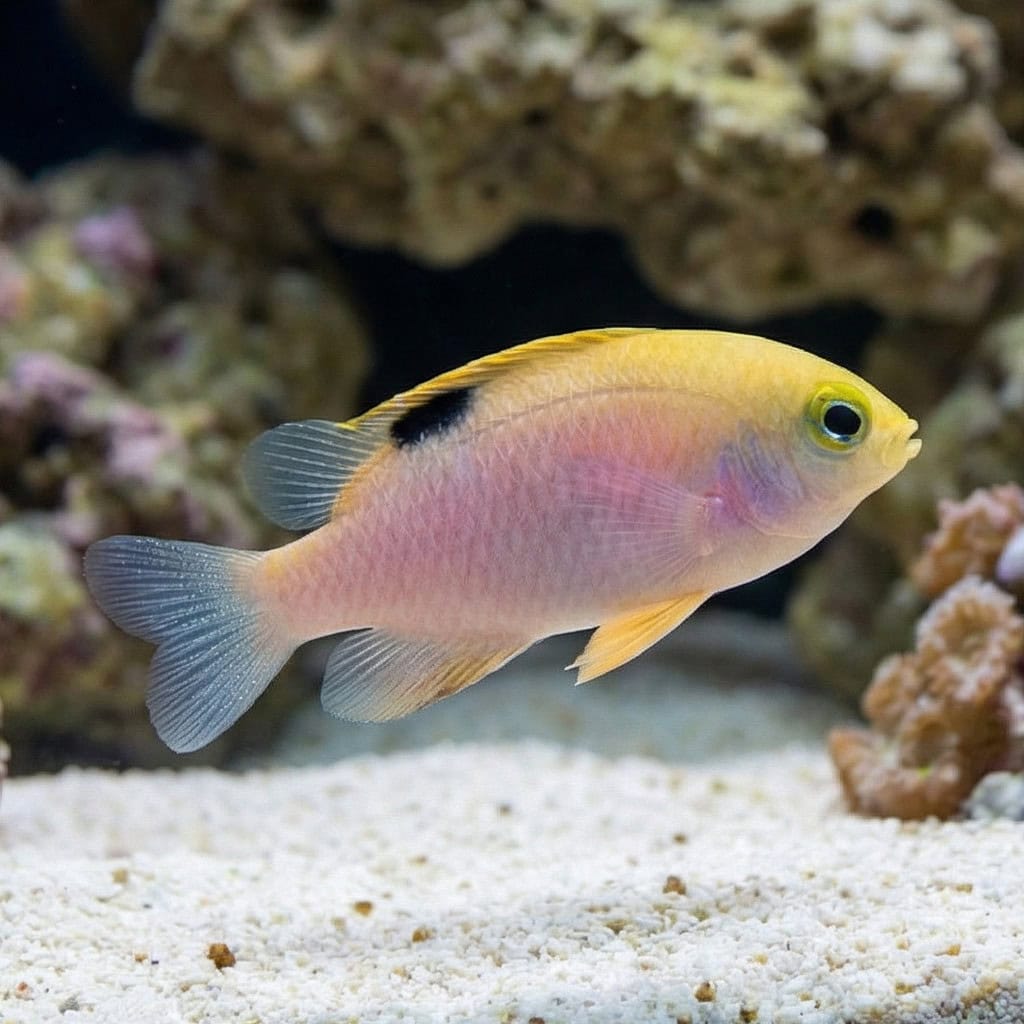
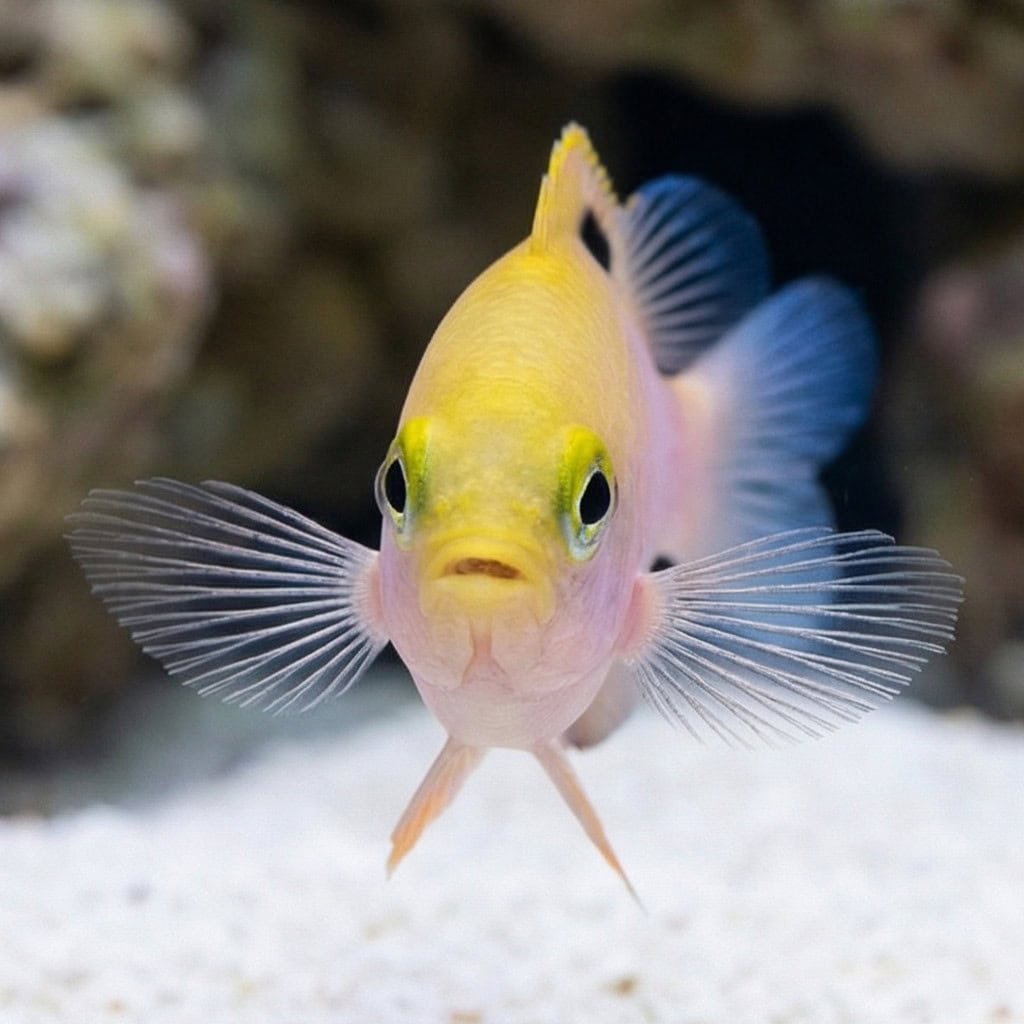
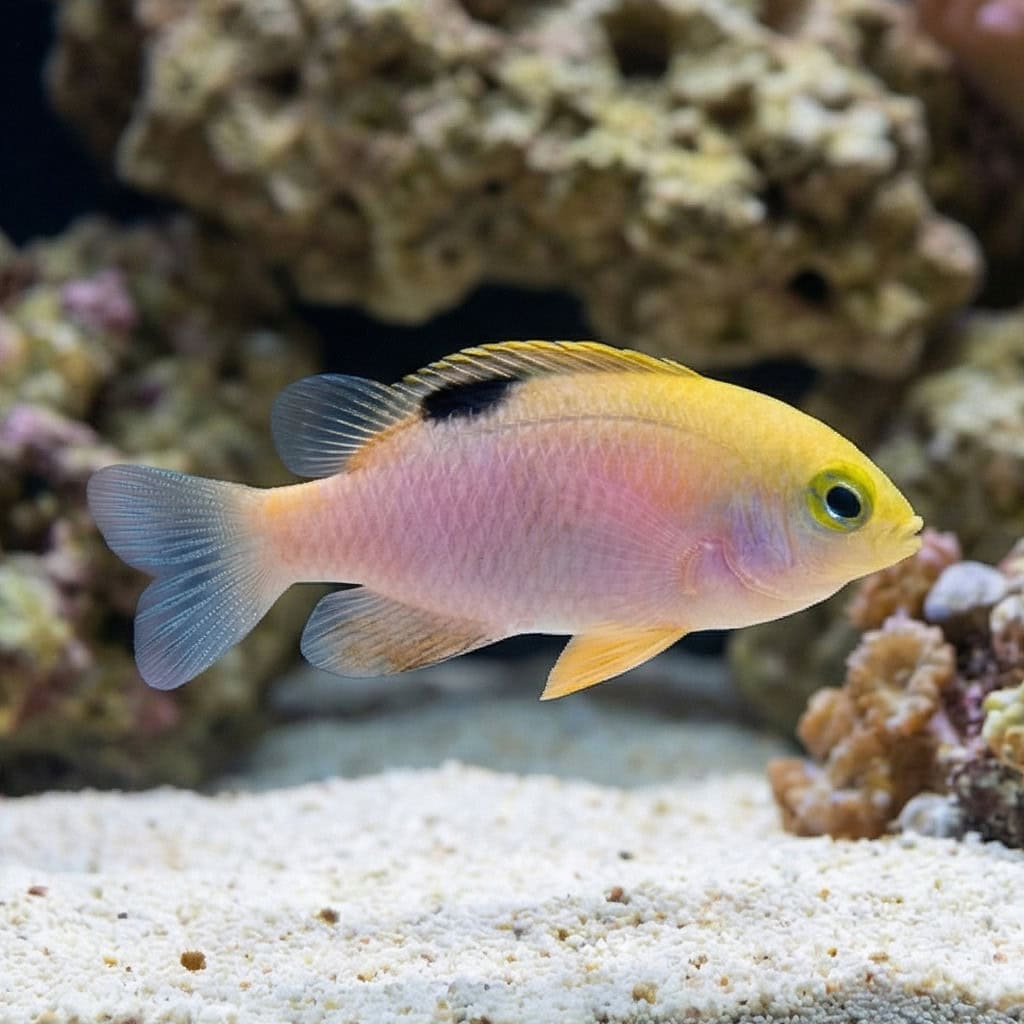
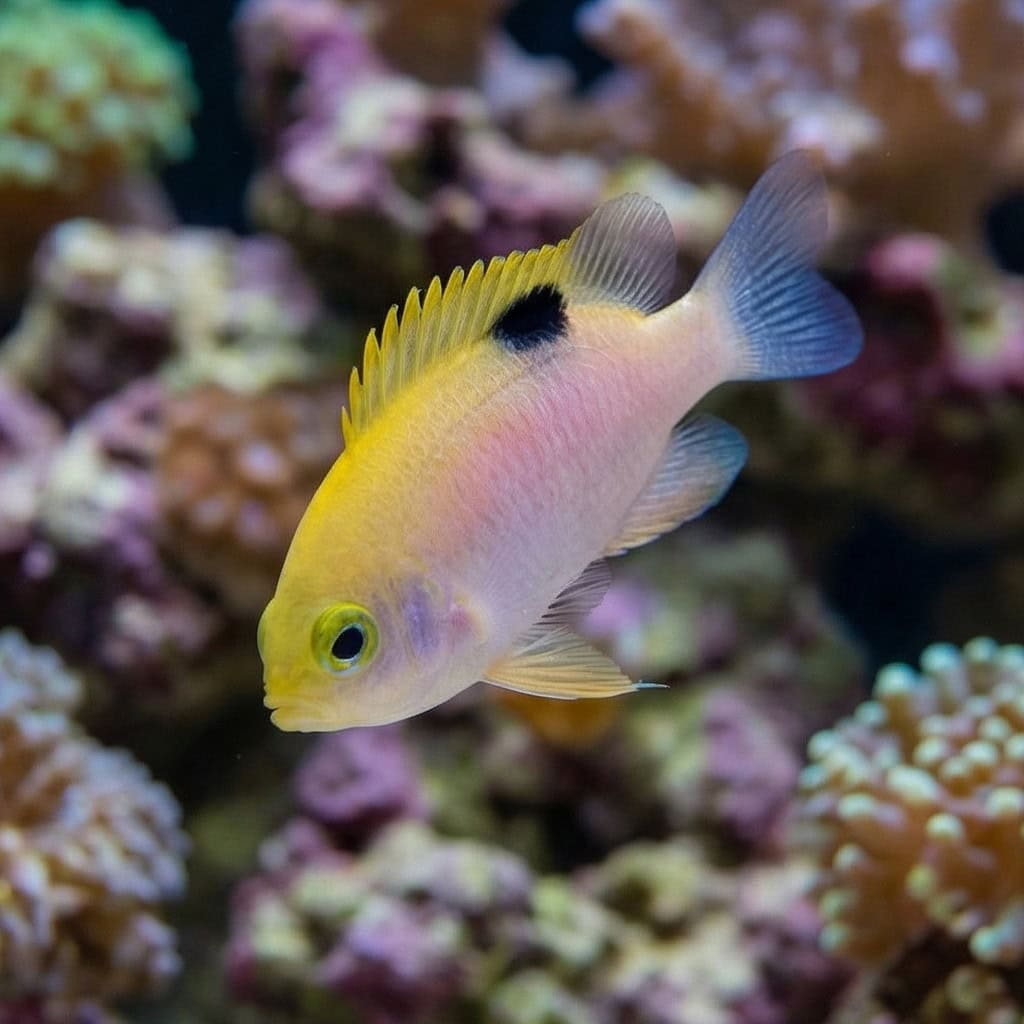
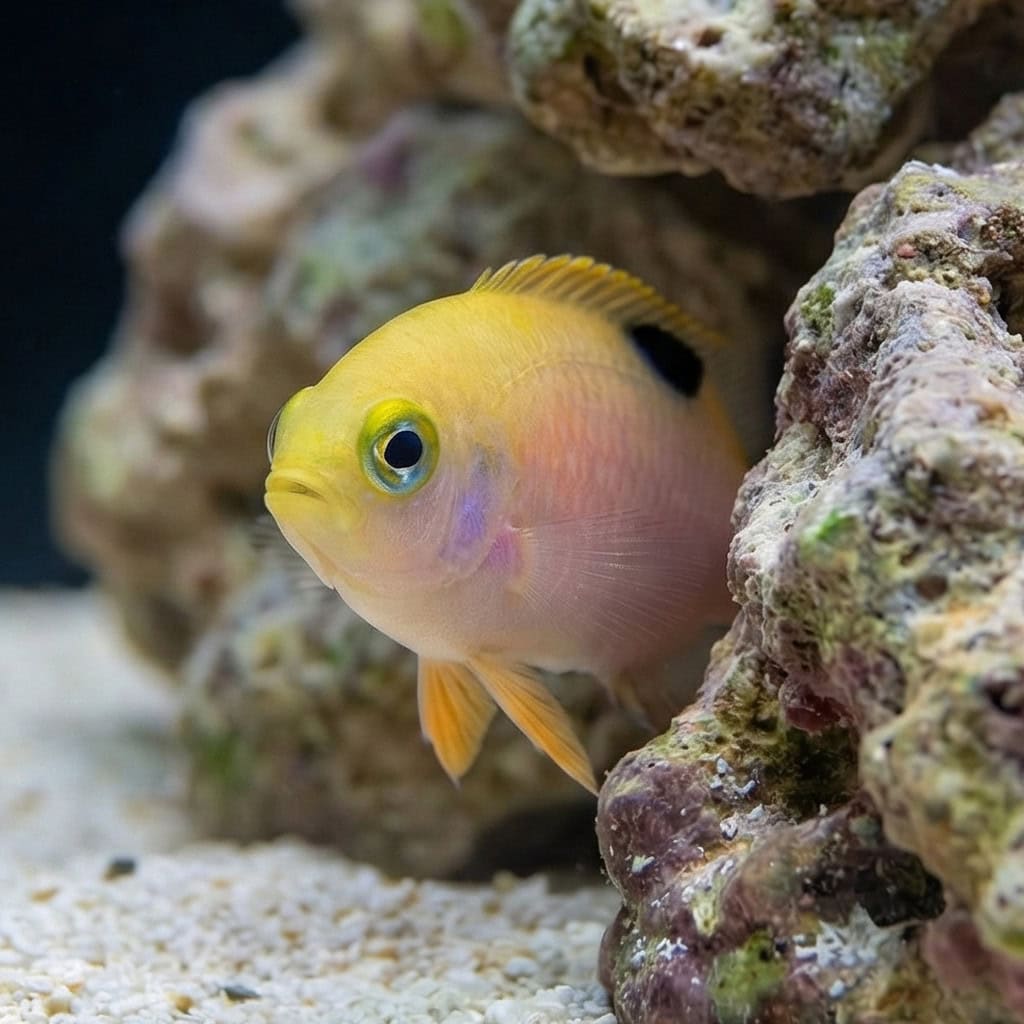
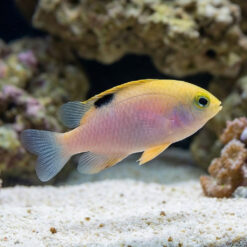
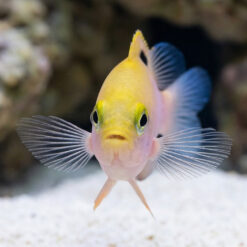
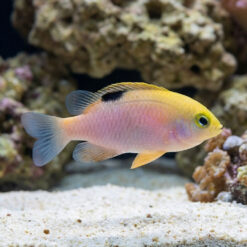
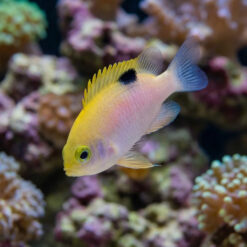
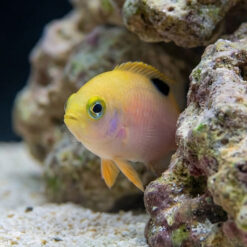
Talbot’s Damsel (Chrysiptera talboti) is a compact Chrysiptera damselfish commonly kept as a reef-safe, hardy community fish. It’s known for a yellow head and ventral fins, a contrasting darker body tone, and a distinct black spot near the rear of the dorsal area, originating from the Indo-Pacific region.
What You’ll Observe:
- Patrols a favorite “home base” in the rockwork and makes quick loops into the open water between check-ins
- Learns feeding time fast and comes out promptly when food hits the surface
- Uses crevices and overhangs as an on/off “station,” often returning to the same spot each day
- In busier tanks, spends more time out in front; in quieter tanks, stays closer to its chosen corner
Provide several small caves and branching rockwork so it can pick a stable resting spot and still move freely around the aquascape. Offer a mixed menu of small frozen foods plus quality pellets or flakes, and feed in multiple small portions so it can eat comfortably alongside other fish. If you want more than one, introduce a pair or a small group of juveniles at the same time so they settle in together.
Does a Talbot’s Damsel dig or move sand around the rocks?
Many keepers report it will “excavate” a small sleep spot or den by moving sand away from a chosen rock edge, especially after lights-out.
Can I keep two Talbot’s Damsels together long-term?
It’s most consistent when they’re added together (as a pair or small group) so they establish space at the same time rather than one claiming the tank first.
Why does it chase other fish only near a specific rock area?
Owners commonly notice the most direct “push back” happens close to the damsel’s home base; away from that zone, it often acts much more neutral.
How long does it take to look “settled in” after adding it?
A typical pattern is exploration on day one, then a few days of choosing a regular hideout, followed by more consistent open-water swimming once it has a routine.
Will it stay visible, or disappear into the rockwork a lot?
Most reports describe a fish that stays tied to the rockwork but remains easy to spot because it repeatedly returns to the same ledge or corner and comes out quickly for food.
Our selection process means you get robust, well-adjusted specimens that settle in quickly.
Only logged in customers who have purchased this product may leave a review.
Recently viewed products
Reviews
There are no reviews yet.