
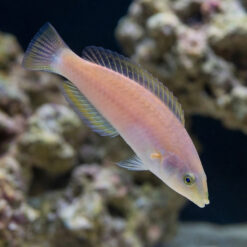
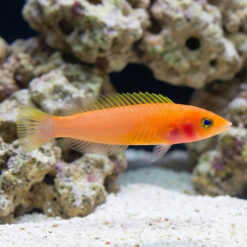
Small Tail Pencil Wrasse
Pseudojuloides cerasinus
Original price was: $127.99.$66.99Current price is: $66.99.
| Stock | Variations | Price | Quantity | |
|---|---|---|---|---|
| Only 1 left | 2.25 - 3.5" - South Pacific | Original price was: $127.99.$66.99Current price is: $66.99. |
-
+
|
Every order ships with our standard 3-hour live arrival guarantee. Need more time? Add our 5-Day Guarantee at checkout.
Full guarantee terms →Ships Monday – Thursday for next-day arrival at your nearest FedEx Hold location — typically ready by 9 AM. We monitor every delivery.
Shipping details →
Monday – Friday 8 AM – 9 PM
Saturday 12 PM – 4 PM
Sunday 12 PM – 9 PM
Healthy, stable animals from vetted suppliers — inspected before packing, shipped overnight. Decades of experience built this model so we can deliver premium livestock at 30%+ less than you'd pay elsewhere.
| Care Level | Expert |
|---|---|
| Temperament | Peaceful |
| Reef Safe | With Caution |
| Functional Benefit | Ornamental Only |
| Diet Type | Carnivore |
| Mininum Tank Size | 70 gallons |
| Max Size | 5 inches |
| Temperature | 72–78°F |
| pH Range | 8.1–8.4 |
| Specific Gravity | 1.022–1.025 |
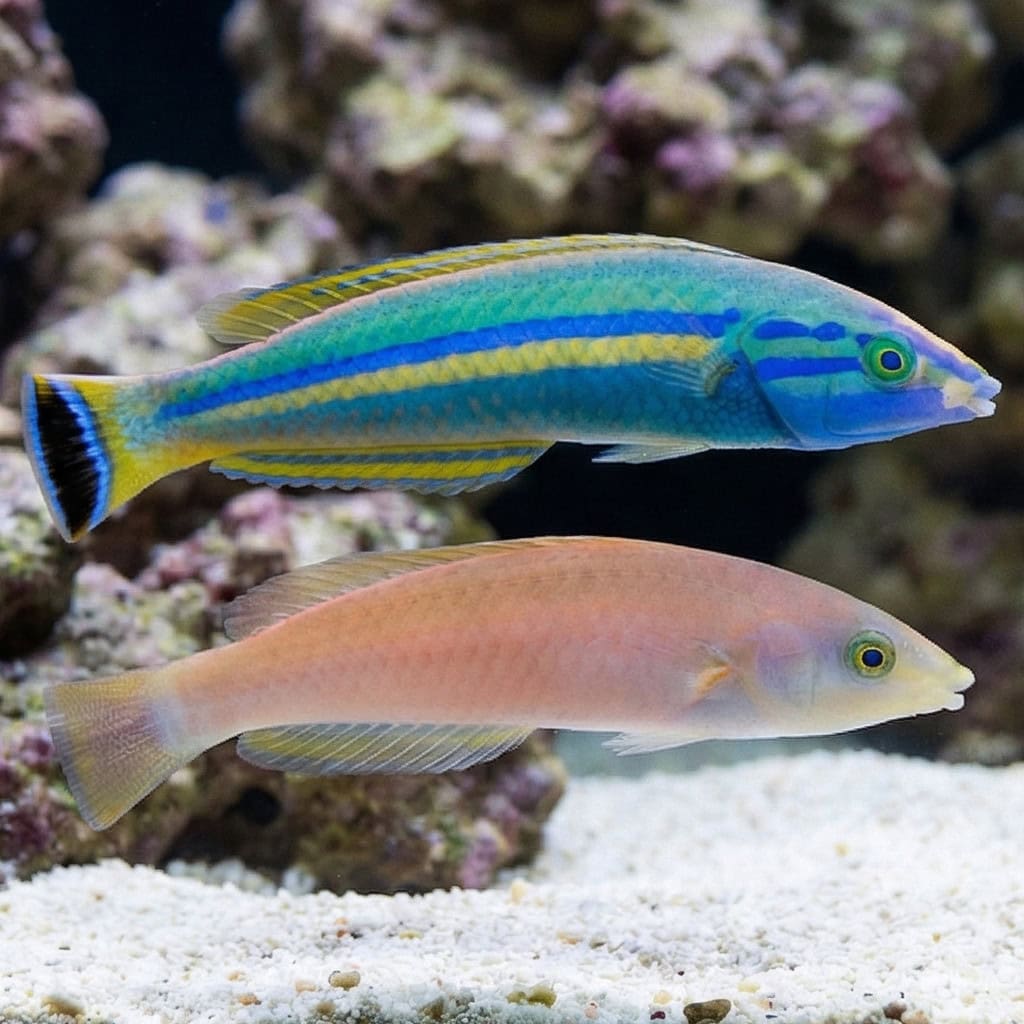
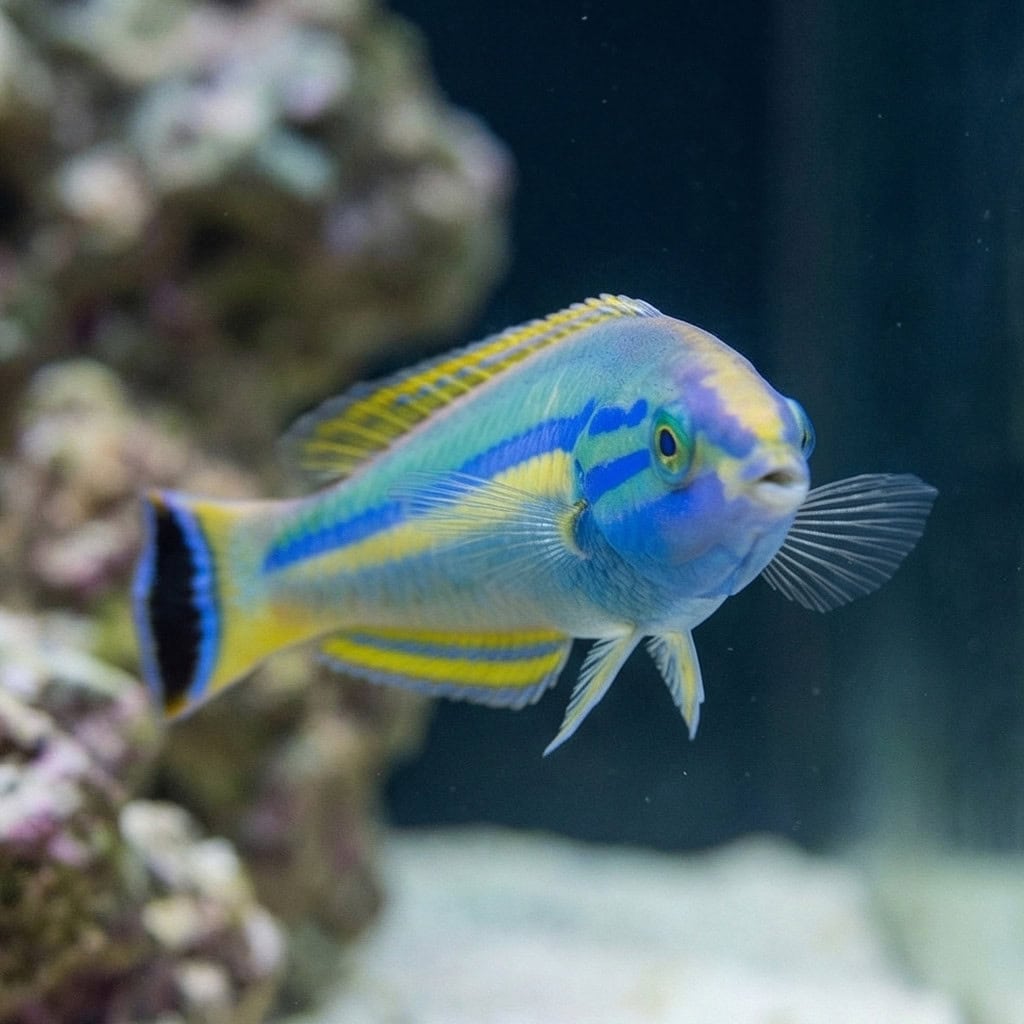
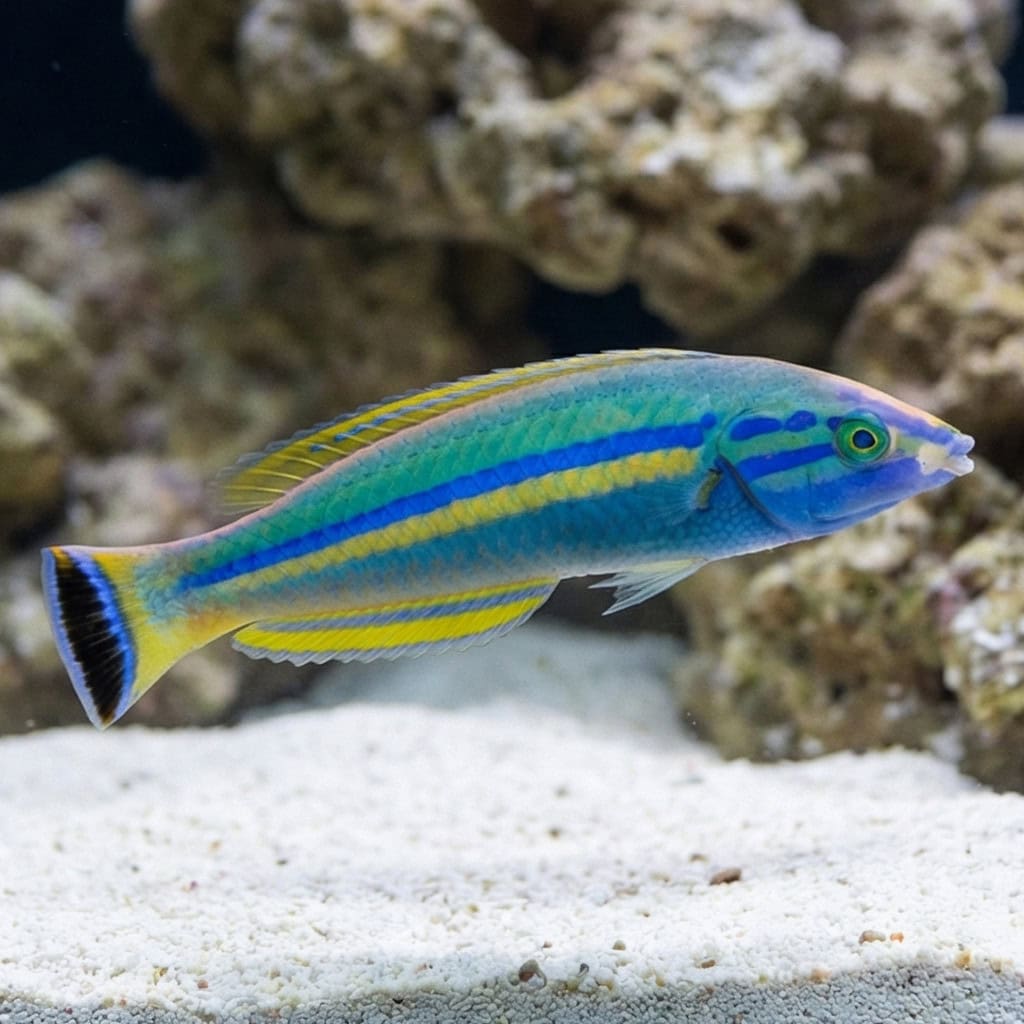
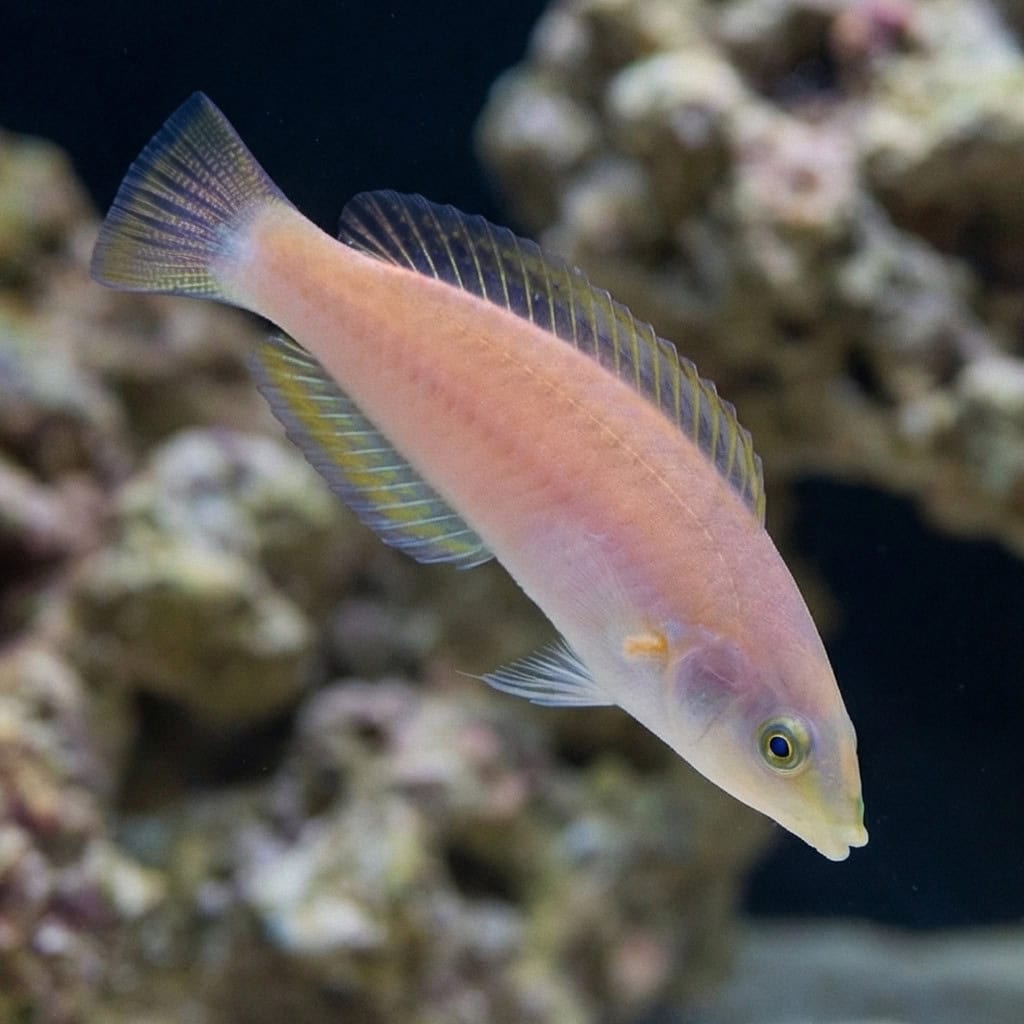
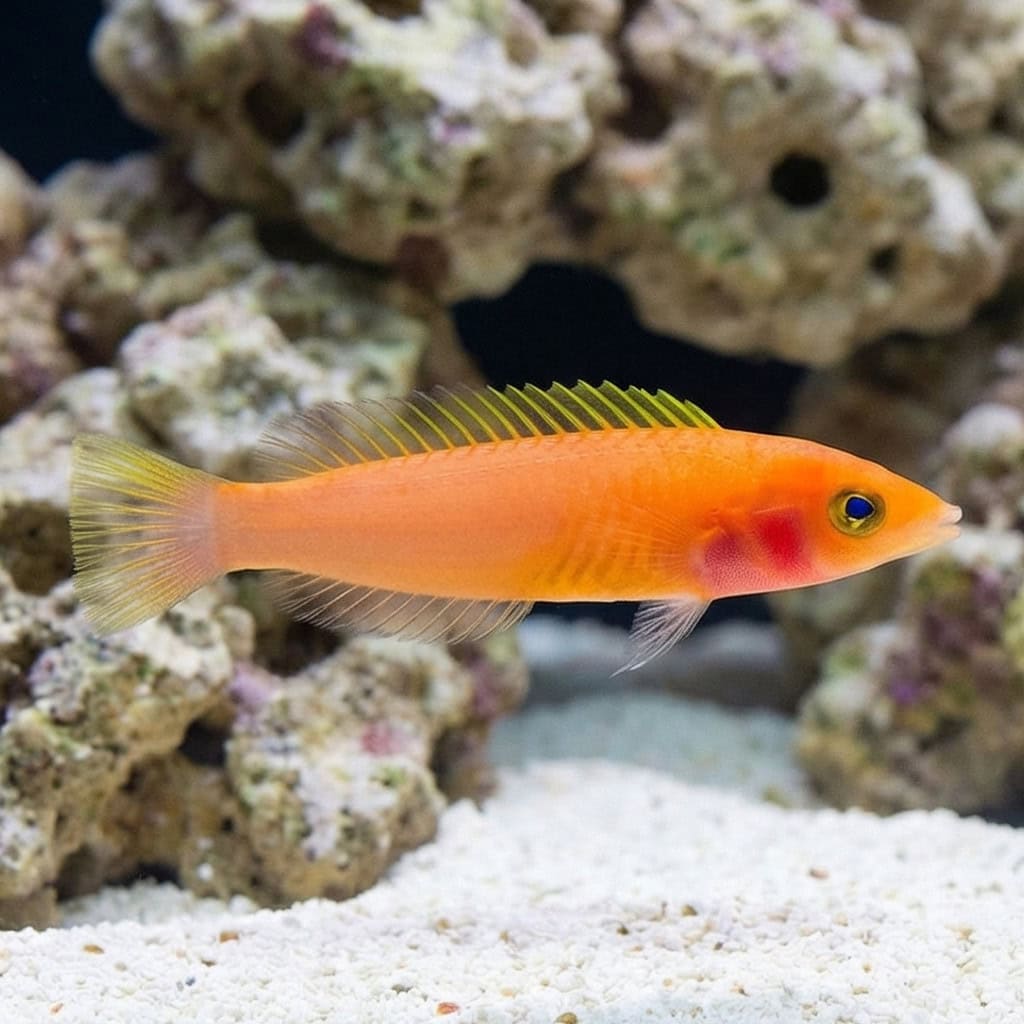
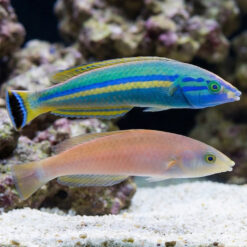
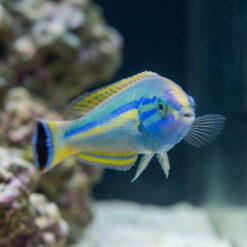
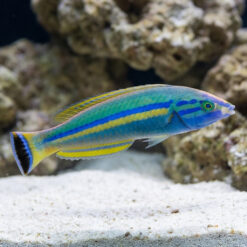
The Small Tail Pencil Wrasse (Pseudojuloides cerasinus) is a slender pencil wrasse with an overall green body in male coloration, accented by thin blue/yellow striping and a dark tail edge. It’s associated with Hawaiian reefs and is often seen hovering and cruising low over rubble and rockwork.
What You’ll Observe:
- Quick laps through open water, then sudden “stop-and-hover” inspection of rock and sand areas
- A consistent bedtime routine where it dives into the sand and reappears shortly after lights come on
- Noticeable color shifts during the day, especially during social “flashing” moments
- A strong association with feeding time, often joining other fish at the front glass once settled in
How to Succeed: Provide a mature reef with plenty of live rock and a fine sandbed so it can sleep buried each night. Offer small meaty foods multiple times daily and keep feeding consistent so it stays engaged at mealtime. A tight-fitting lid helps this active swimmer settle in confidently, especially during maintenance and acclimation.
Is it normal for this wrasse to disappear into the sand for a day or two after introduction?
Yes—many pencil wrasses will bury early on and then begin showing themselves more consistently as they learn the tank’s routine.
Can it live as a true pair, or does it usually act like a “harem” wrasse?
Both behaviors get reported; some keepers see a tight pair that stays close together rather than spreading out as a loose group.
What’s the clicking sound some people notice during fast strikes?
Some pencil wrasses make an audible click when they snap at food or lunge, especially during quick, competitive grabs.
Will it bother tiny ornamental shrimp even if it ignores corals?
It can show interest in small shrimp and similar bite-sized clean-up crew animals, so many keepers plan livestock choices around that possibility.
Why did mine act “different” after a jump or a close call with the lid?
After a startle event, some individuals become more reactive around sudden movement for a while, then relax again once the tank feels predictable.
Our selection process means you get robust, well-adjusted specimens that settle in quickly.
Recently viewed products