
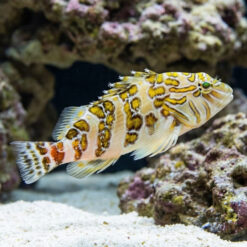
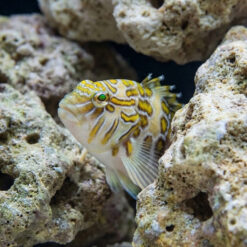
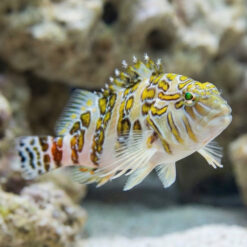
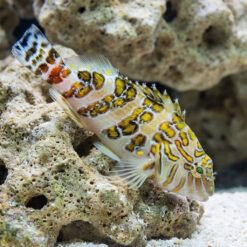
Giant Hawkfish
Cirrhitus rivulatus
| Stock | Variations | Price | Quantity |
|---|
Every order ships with our standard 3-hour live arrival guarantee. Need more time? Add our 5-Day Guarantee at checkout.
Full guarantee terms →Ships Monday – Thursday for next-day arrival at your nearest FedEx Hold location — typically ready by 9 AM. We monitor every delivery.
Shipping details →
Monday – Friday 8 AM – 9 PM
Saturday 12 PM – 4 PM
Sunday 12 PM – 9 PM
Healthy, stable animals from vetted suppliers — inspected before packing, shipped overnight. Decades of experience built this model so we can deliver premium livestock at 30%+ less than you'd pay elsewhere.
| Care Level | Moderate |
|---|---|
| Temperament | Aggressive |
| Reef Safe | With Caution |
| Functional Benefit | Ornamental Only |
| Diet Type | Carnivore |
| Mininum Tank Size | 180 gallons |
| Max Size | 24 inches |
| Temperature | 72–78°F |
| pH Range | 8.1–8.4 |
| Specific Gravity | 1.022–1.025 |
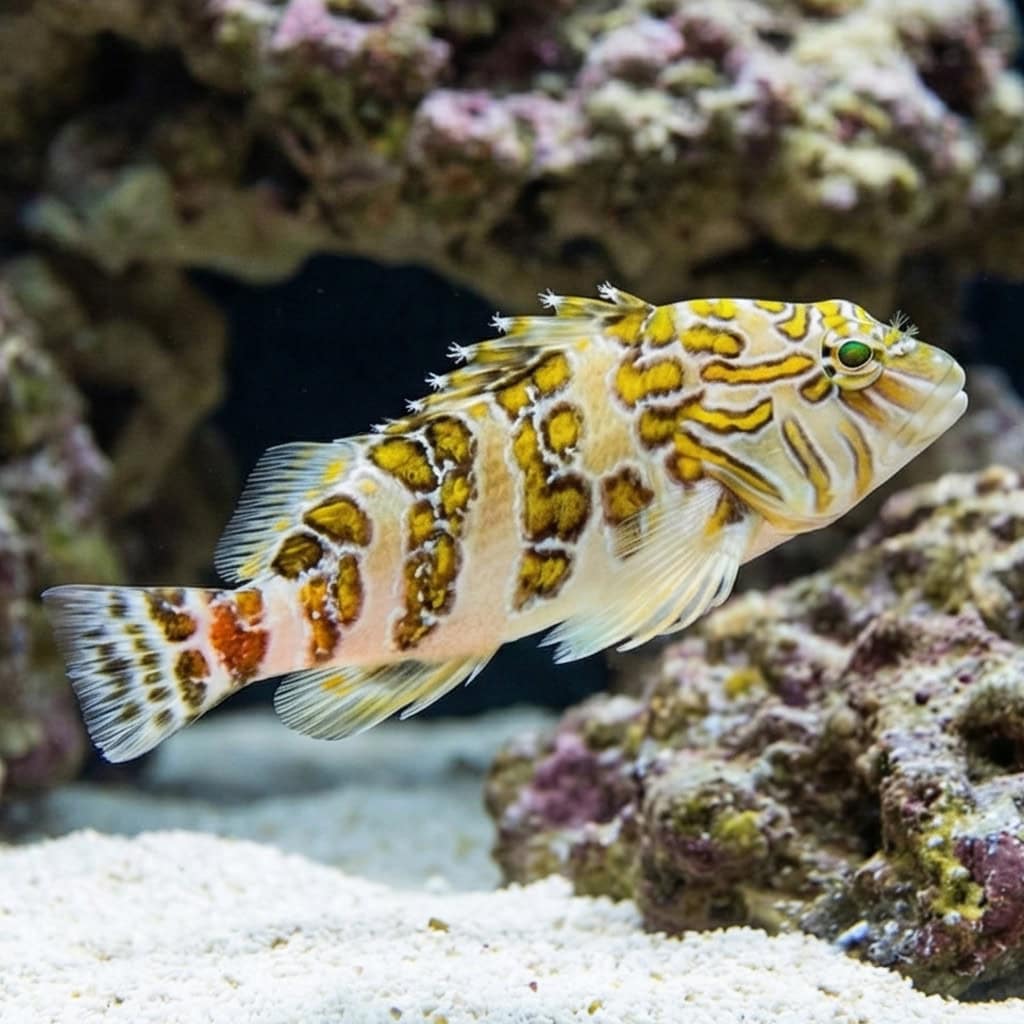
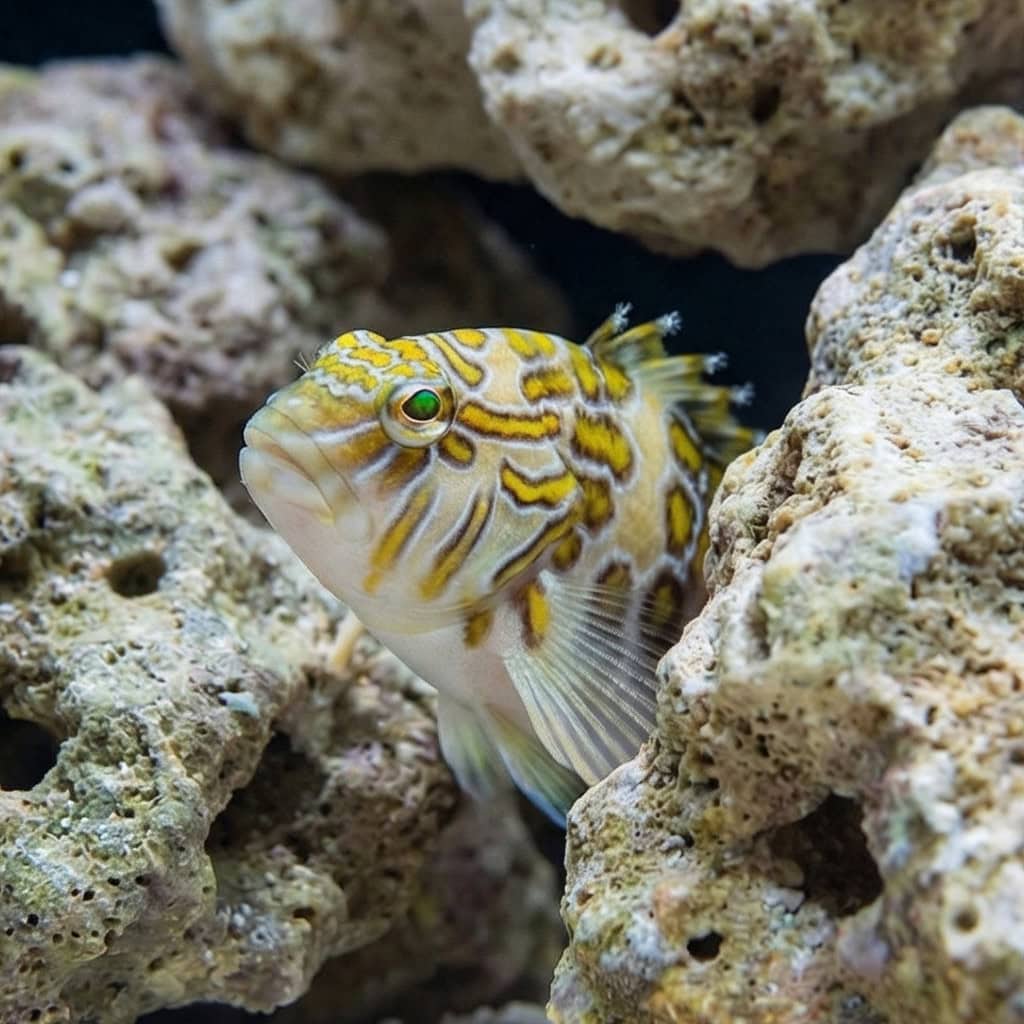
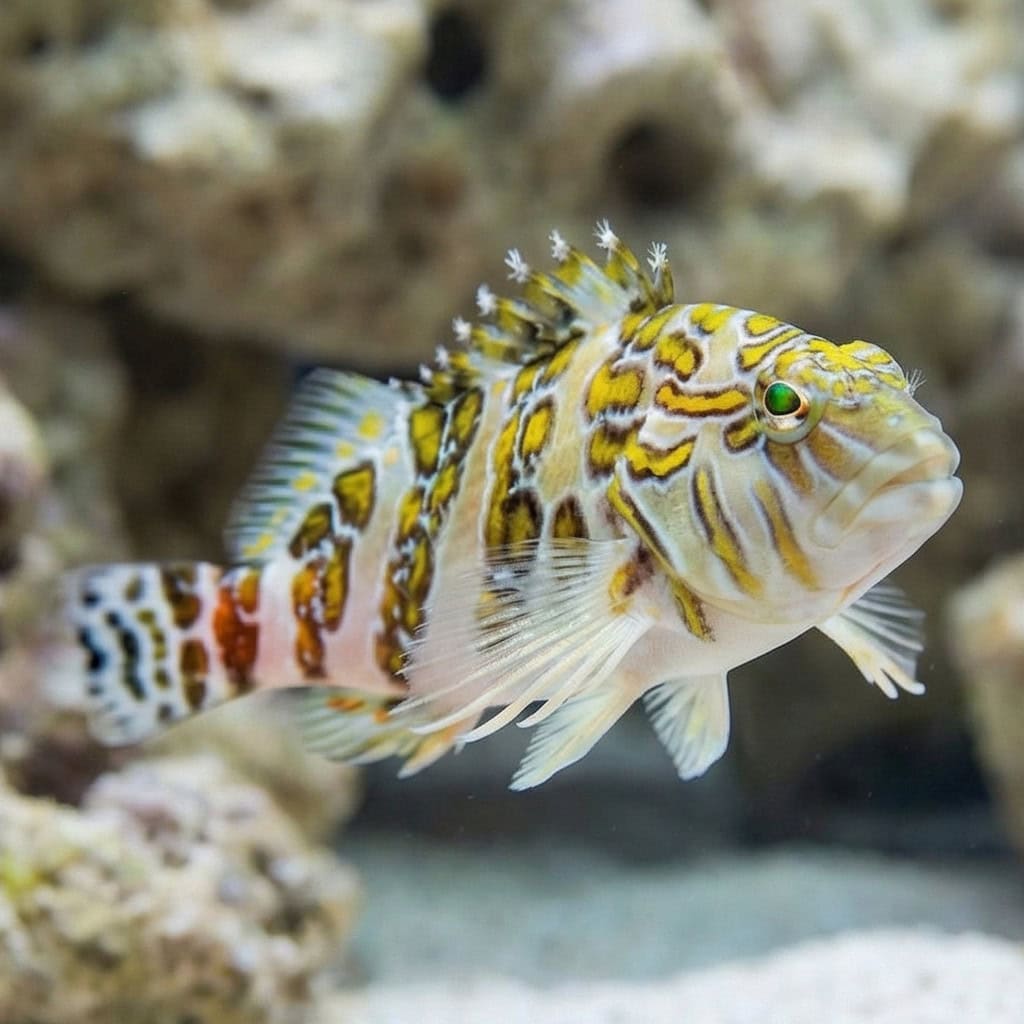
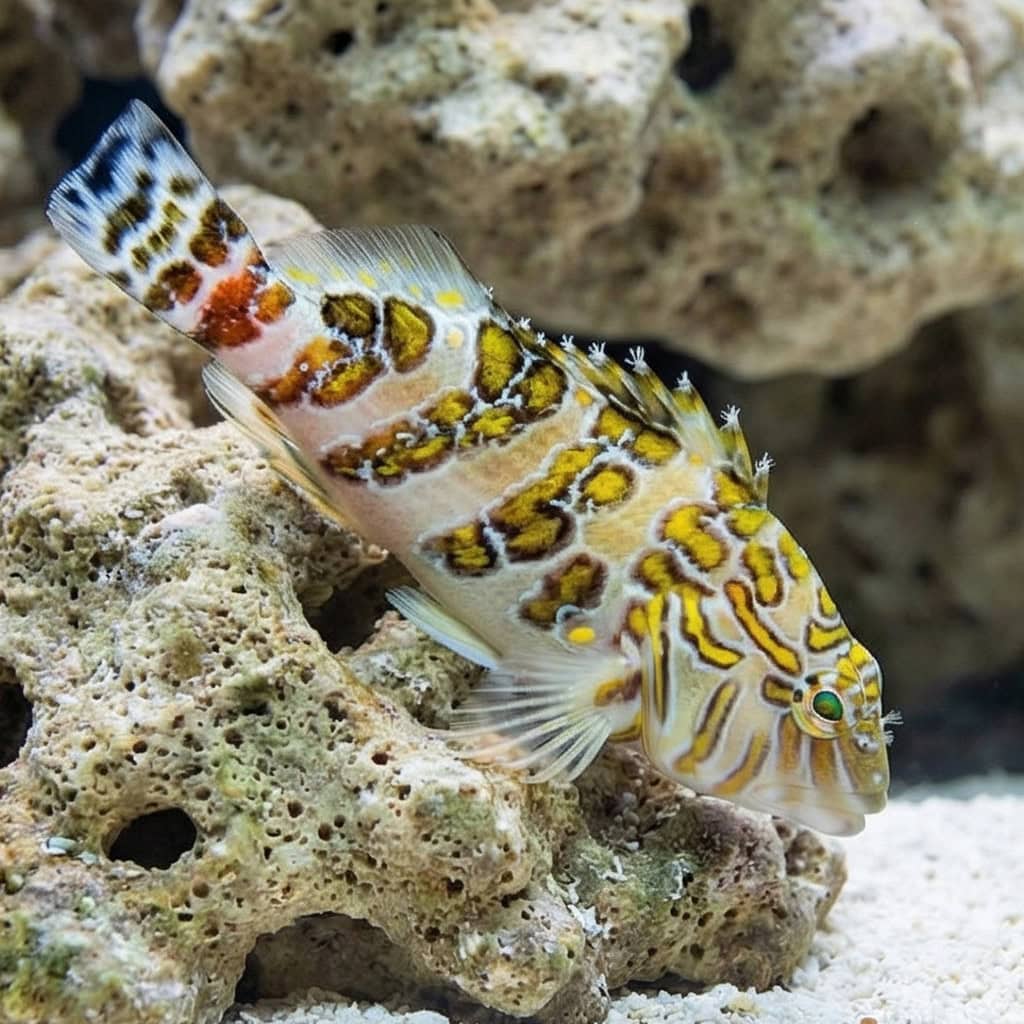
The Giant Hawkfish (Cirrhitus rivulatus), also called the Hieroglyphic Hawkfish, is a large perch-and-pounce predator with golden-brown markings edged in black and highlighted by thin blue lines. It lacks a swim bladder, so it often rests on rock ledges and then makes short, fast dashes to grab food.
What You’ll Observe:
- Perching in “lookout” spots for long stretches, then shifting to a new ledge a few minutes later
- Watching activity outside the glass and tracking movement in the room
- Quick, direct bursts toward food, followed by returning to a favored perch
- A consistent routine of patrolling the same rockwork paths each day
Provide a very large aquarium with sturdy rockwork, multiple ledges, and open lanes so it can claim a few reliable perches. Offer meaty frozen foods and high-quality pellets in several smaller feedings, and use feeding tongs to deliver food near its perch. Plan tankmates around its adult size and feeding speed, and keep a tight-fitting lid so sudden dashes stay inside the aquarium.
Why does it “sit” on rocks so much instead of swimming?
Perching is normal hawkfish behavior, especially for species that spend their time on ledges and launch short hunting runs rather than cruising continuously.
Will it perch on corals or knock frags over?
Many keepers see hawkfish use sturdy branches and rock edges as resting spots. Stable frag mounting and placing delicate frags away from easy landing zones helps keep the layout consistent.
Can it live with cleaner shrimp or other ornamental crustaceans?
Some hobbyists report success when larger cleaner shrimp are established first and there is lots of rockwork to break line-of-sight, while most will see the fish treat shrimp as prey over time. It’s best to plan your inverts with that variability in mind.
Is it normal for hawkfish to explore overflows or unusual perches?
Yes—hawkfish often treat equipment, weirs, and overflow edges like elevated “thrones.” Simple guards or covers on easy entry points can keep exploration focused on the rockwork.
How do you get it to take prepared foods reliably?
A consistent feeding spot (same corner or same perch) helps the fish “learn” the routine. Many keepers use tongs to start, then transition to pellets once the fish is feeding on schedule.
Shipped with pure oxygen and temperature control so it arrives stress-free and ready to eat.
Recently viewed products