
Mertensii Butterfly
Chaetodon mertensii
Price range: $46.99 through $108.99
| Stock | Variations | Price | Quantity | |
|---|---|---|---|---|
| Only 1 left | 3.5 - 4.75" - South Pacific | Original price was: $206.99.$108.99Current price is: $108.99. |
-
+
|
|
| Only 2 left | 3.5 - 4.75" - SSC Certified - Central Pacific | Original price was: $97.99.$51.99Current price is: $51.99. |
-
+
|
|
| Only 3 left | 2.25 - 3.5" - SSC Certified - Central Pacific | Original price was: $88.99.$46.99Current price is: $46.99. |
-
+
|
|
| Out of Stock | 2.25" or smaller - SSC Certified - Central Pacific | Original price was: $84.99.$44.99Current price is: $44.99. | Email me |
Every order ships with our standard 3-hour live arrival guarantee. Need more time? Add our 5-Day Guarantee at checkout.
Full guarantee terms →Ships Monday – Thursday for next-day arrival at your nearest FedEx Hold location — typically ready by 9 AM. We monitor every delivery.
Shipping details →
Monday – Friday 8 AM – 9 PM
Saturday 12 PM – 4 PM
Sunday 12 PM – 9 PM
Healthy, stable animals from vetted suppliers — inspected before packing, shipped overnight. Decades of experience built this model so we can deliver premium livestock at 30%+ less than you'd pay elsewhere.
| Care Level | Moderate |
|---|---|
| Temperament | Semi-Aggressive |
| Reef Safe | With Caution |
| Functional Benefit | Ornamental Only |
| Diet Type | Omnivore |
| Mininum Tank Size | 55 gallons |
| Max Size | 5 inches |
| Temperature | 72–78°F |
| pH Range | 8.1–8.4 |
| Specific Gravity | 1.022–1.025 |
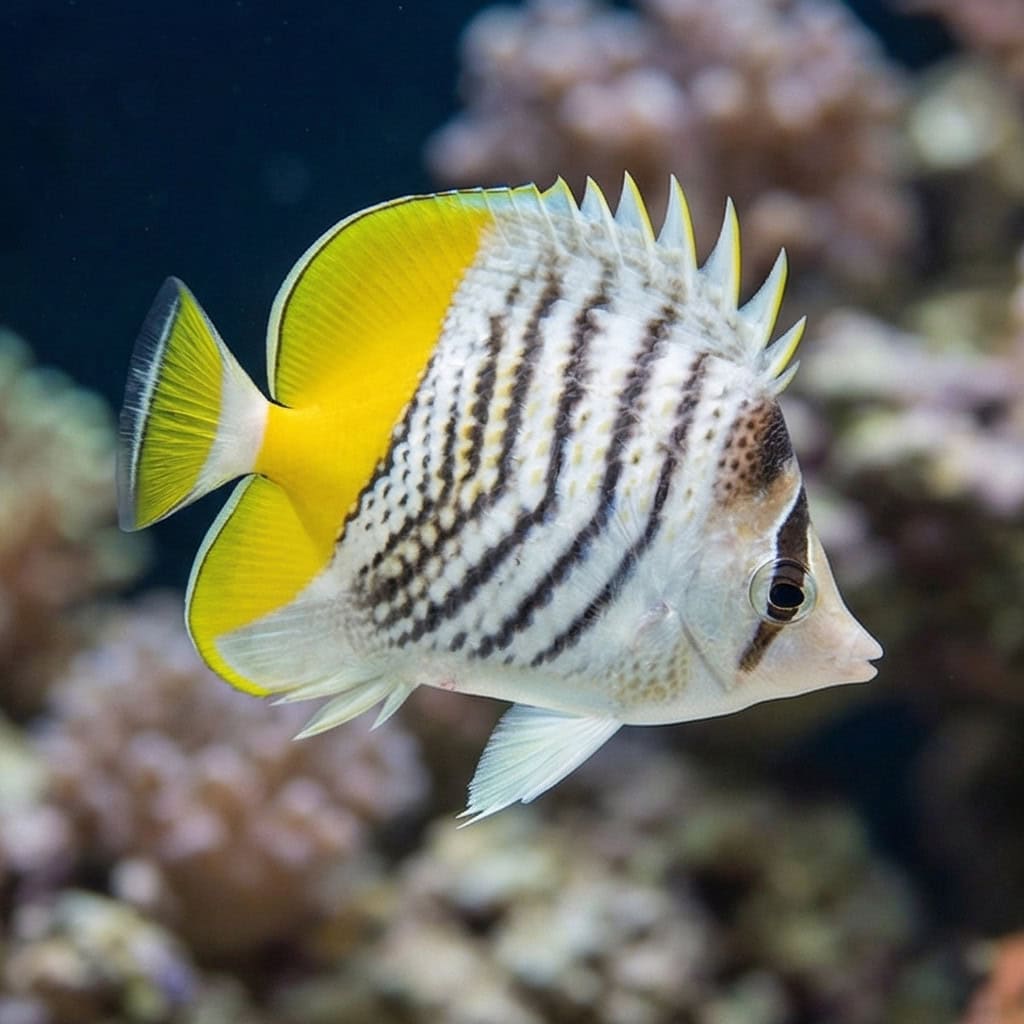
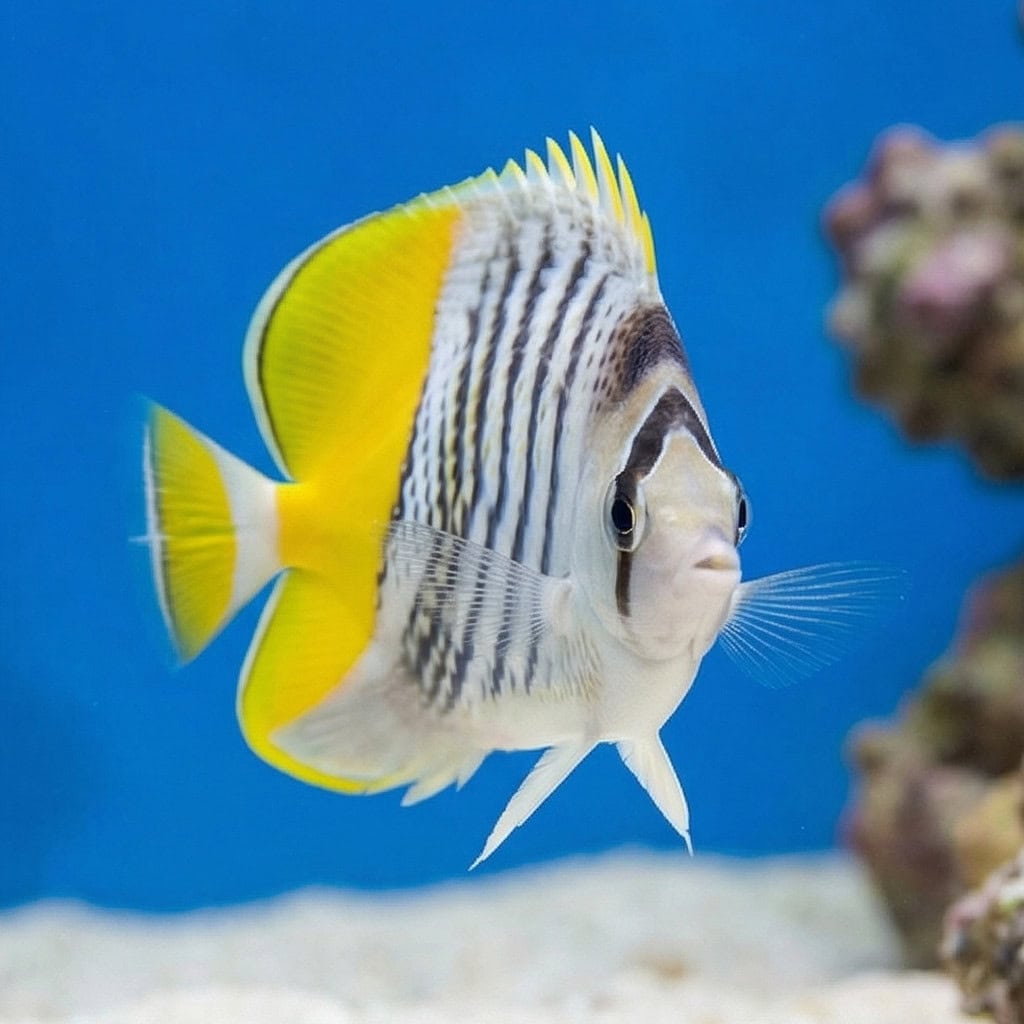
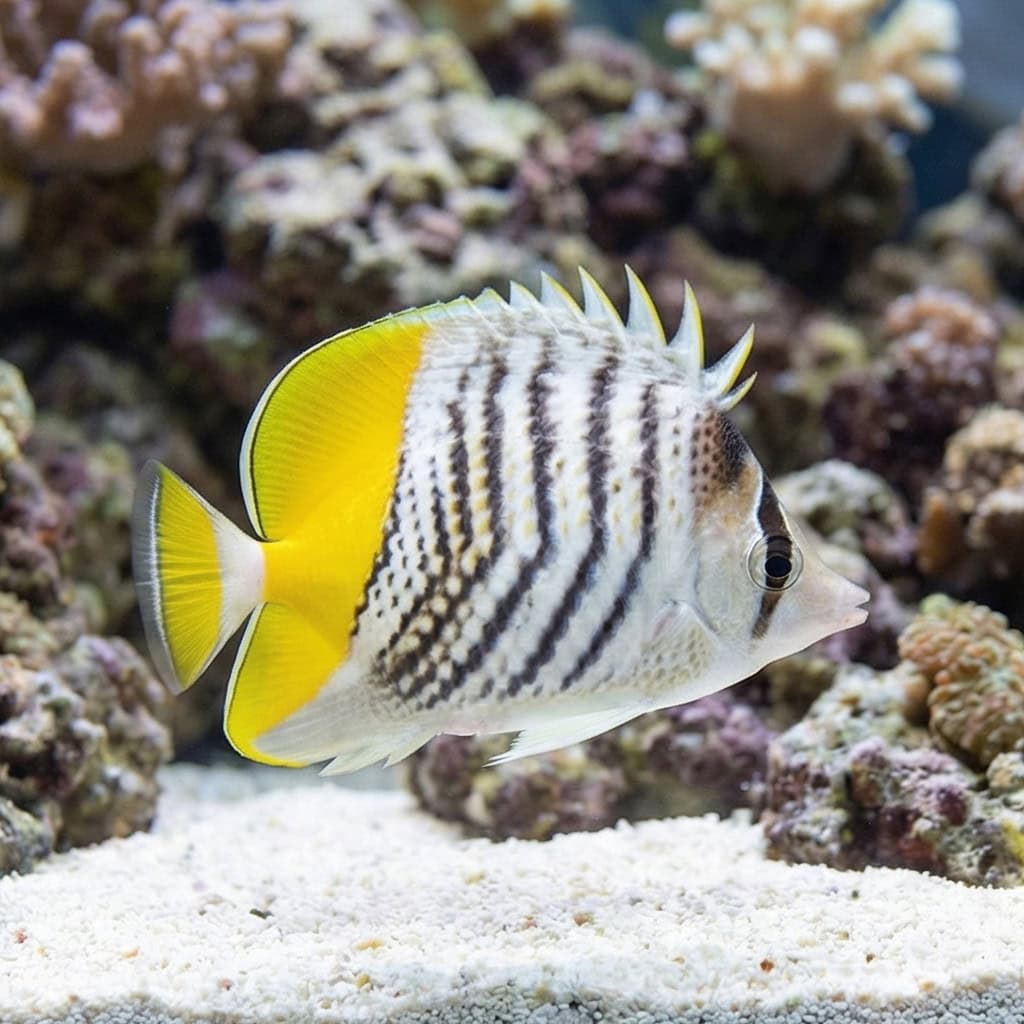
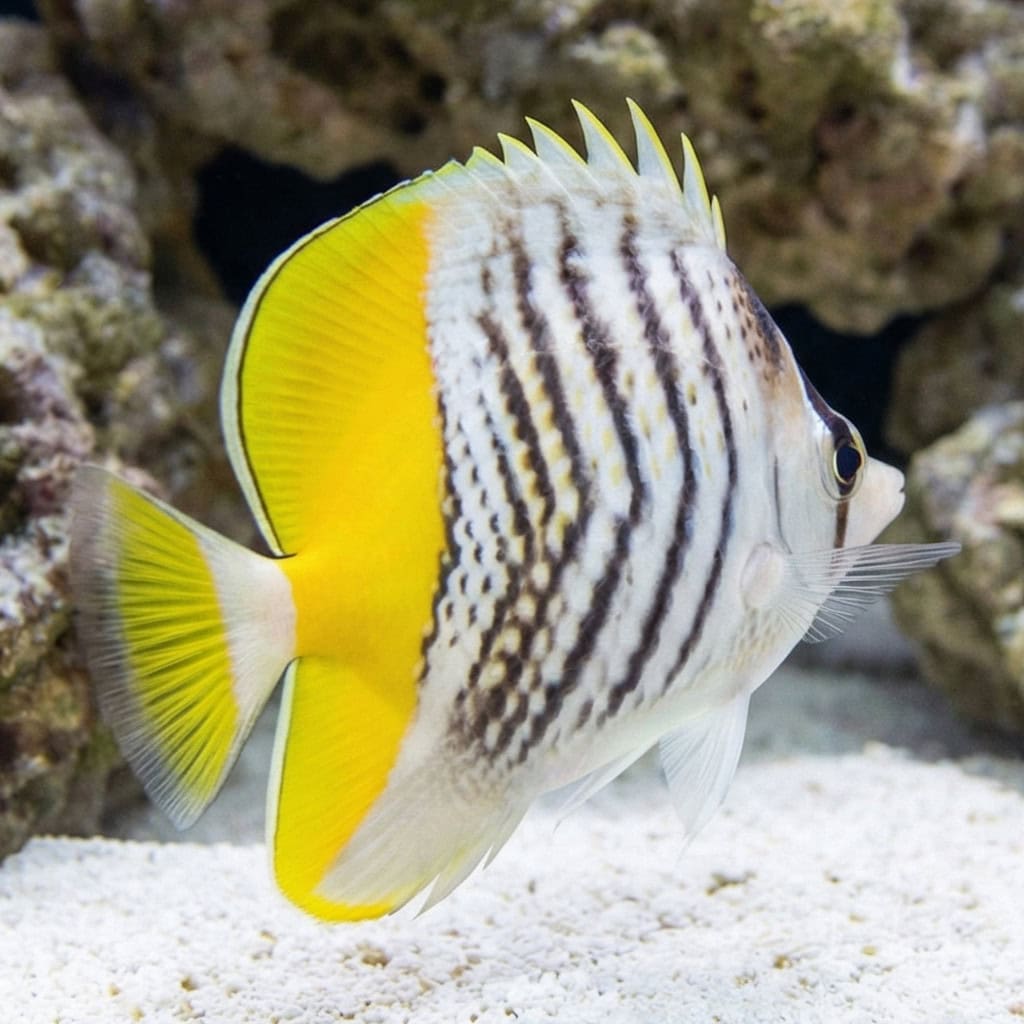
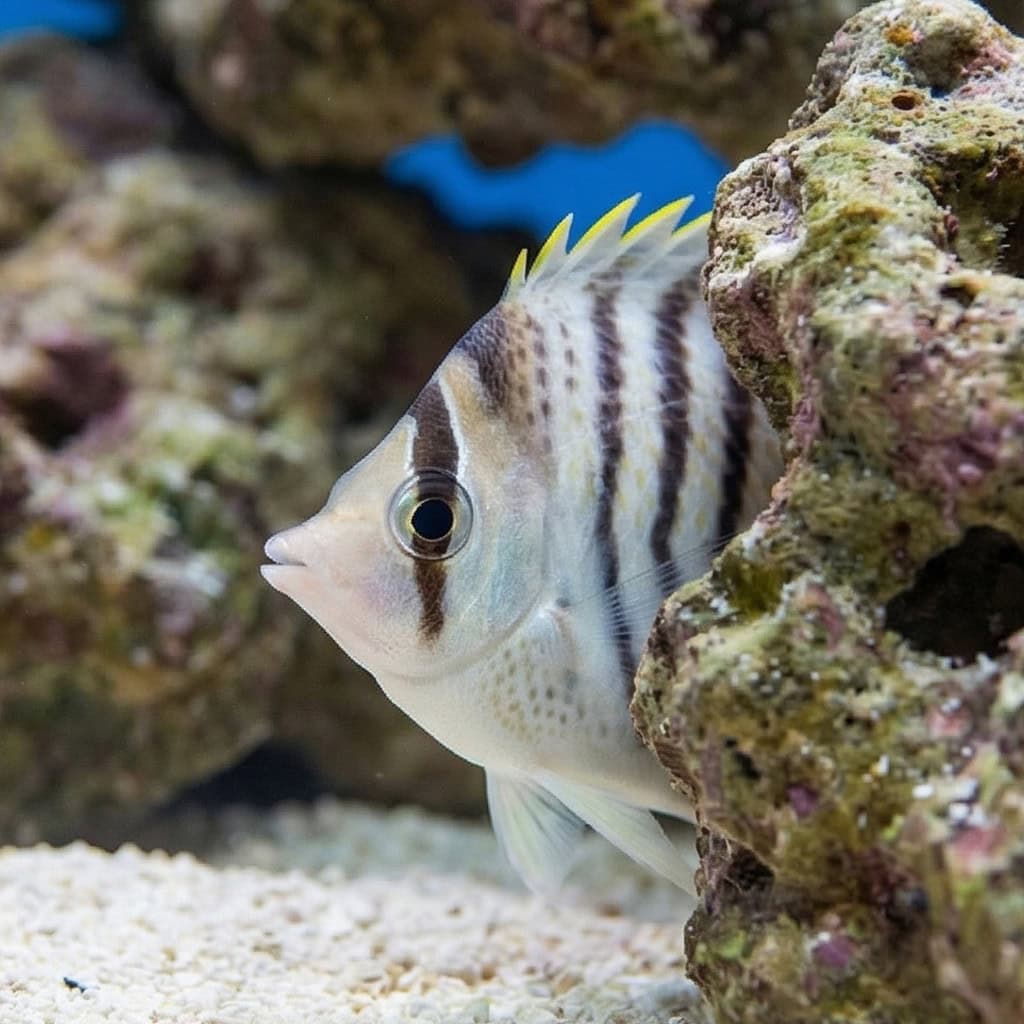
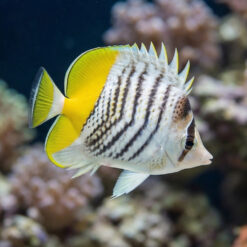
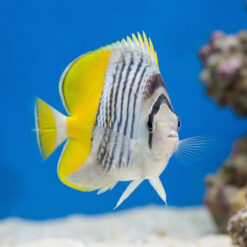
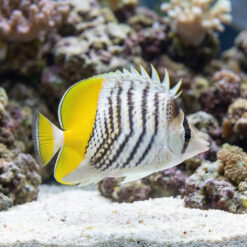
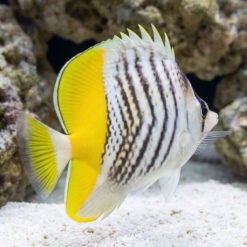
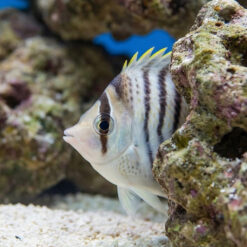
The Mertensii Butterfly (Chaetodon mertensii), also called the Atoll or Yellowback Butterflyfish, has a white body marked with dark chevron bands and a yellow-to-orange rear section. It’s a reef-associated butterflyfish from the western Pacific, often seen around deeper lagoons and outer reef areas.
What You’ll Observe:
- Cruises calmly through open water, then weaves back through rockwork in repeated laps
- Spends time “inspecting” surfaces and picking at tiny items on live rock
- Often settles into a consistent daily route, using the same swim lanes and hiding spots
- Becomes most interactive around feeding time and learns the tank’s routine
- May show extra interest in similarly shaped fish that use the same areas of the aquarium
To help it thrive, provide a mix of open swimming space and rock structure, and offer a varied menu that includes spirulina-based foods plus meaty frozen items like mysis and finely chopped seafood. Small, frequent feedings help keep its foraging behavior directed at prepared foods. Most aquarists keep this species singly for the smoothest long-term social balance.
Will it accept frozen foods quickly?
Many hobbyists look for individuals already taking frozen foods in holding or quarantine, and these often transition smoothly once settled into a display routine.
Why does it peck at rock and “taste test” things?
This is normal for butterflyfish-style foraging—slow, deliberate picking as it searches for small natural foods on surfaces.
Can it be kept with a typical clean-up crew (snails/hermits)?
Some keepers do keep them in systems that also contain snails and hermits, but outcomes vary by individual fish and how the tank is stocked and fed.
Can I keep a pair of Mertensii Butterflyfish together?
Most keepers plan on one per tank; pairing tends to work best when two are introduced at the same time and given room to establish a shared routine.
Does it stay out in the open or hide a lot?
In established aquariums, it commonly alternates between open-water cruising and close-in rockwork foraging, especially once it learns the layout and feeding schedule.
We work with trusted suppliers who keep our specimens healthy and well-fed before shipping.
Recently viewed products