
Pinnatus Batfish
Platax pinnatus
| Stock | Variations | Price | Quantity |
|---|
Every order ships with our standard 3-hour live arrival guarantee. Need more time? Add our 5-Day Guarantee at checkout.
Full guarantee terms →Ships Monday – Thursday for next-day arrival at your nearest FedEx Hold location — typically ready by 9 AM. We monitor every delivery.
Shipping details →
Monday – Friday 8 AM – 9 PM
Saturday 12 PM – 4 PM
Sunday 12 PM – 9 PM
Healthy, stable animals from vetted suppliers — inspected before packing, shipped overnight. Decades of experience built this model so we can deliver premium livestock at 30%+ less than you'd pay elsewhere.
| Care Level | Expert |
|---|---|
| Temperament | Peaceful |
| Reef Safe | No |
| Functional Benefit | Ornamental Only |
| Diet Type | Omnivore |
| Mininum Tank Size | 300 gallons+ |
| Max Size | 18 inches |
| Temperature | 72–78°F |
| pH Range | 8.1–8.4 |
| Specific Gravity | 1.022–1.025 |
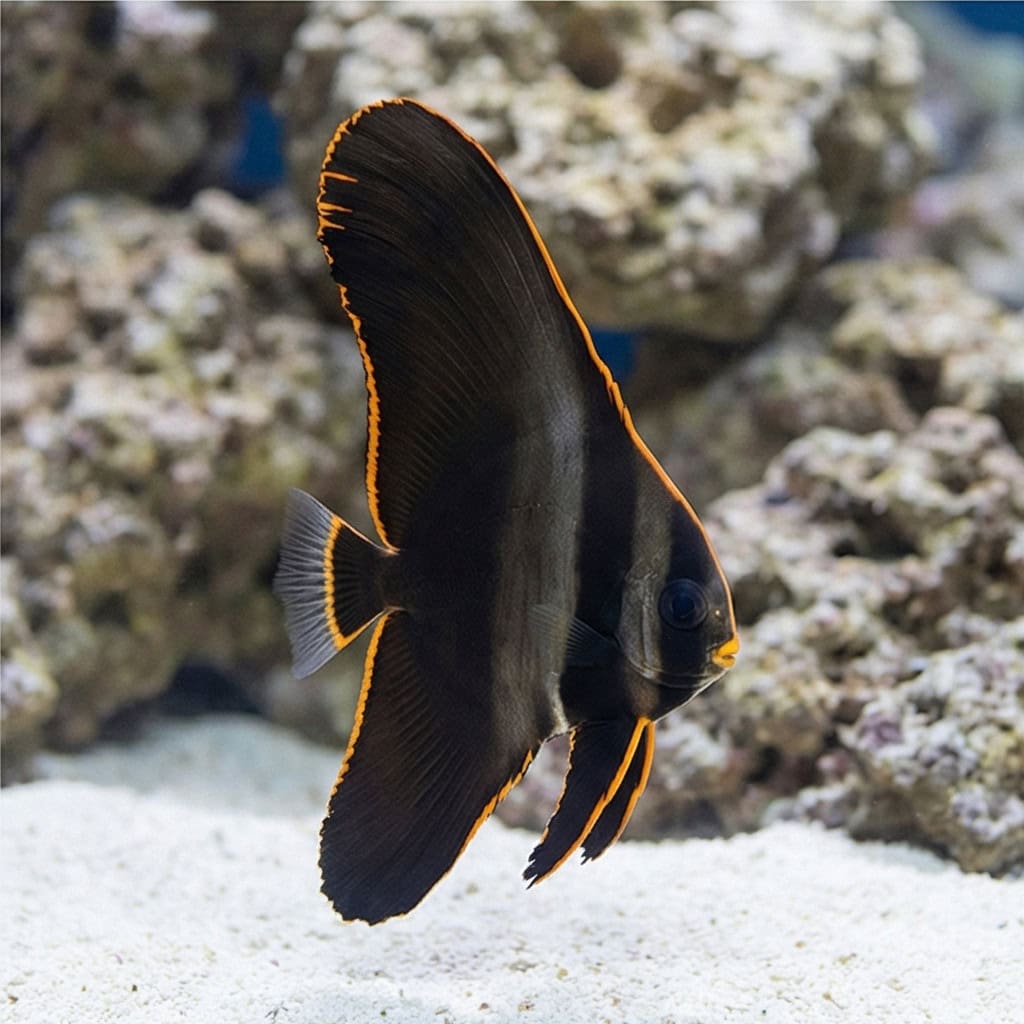
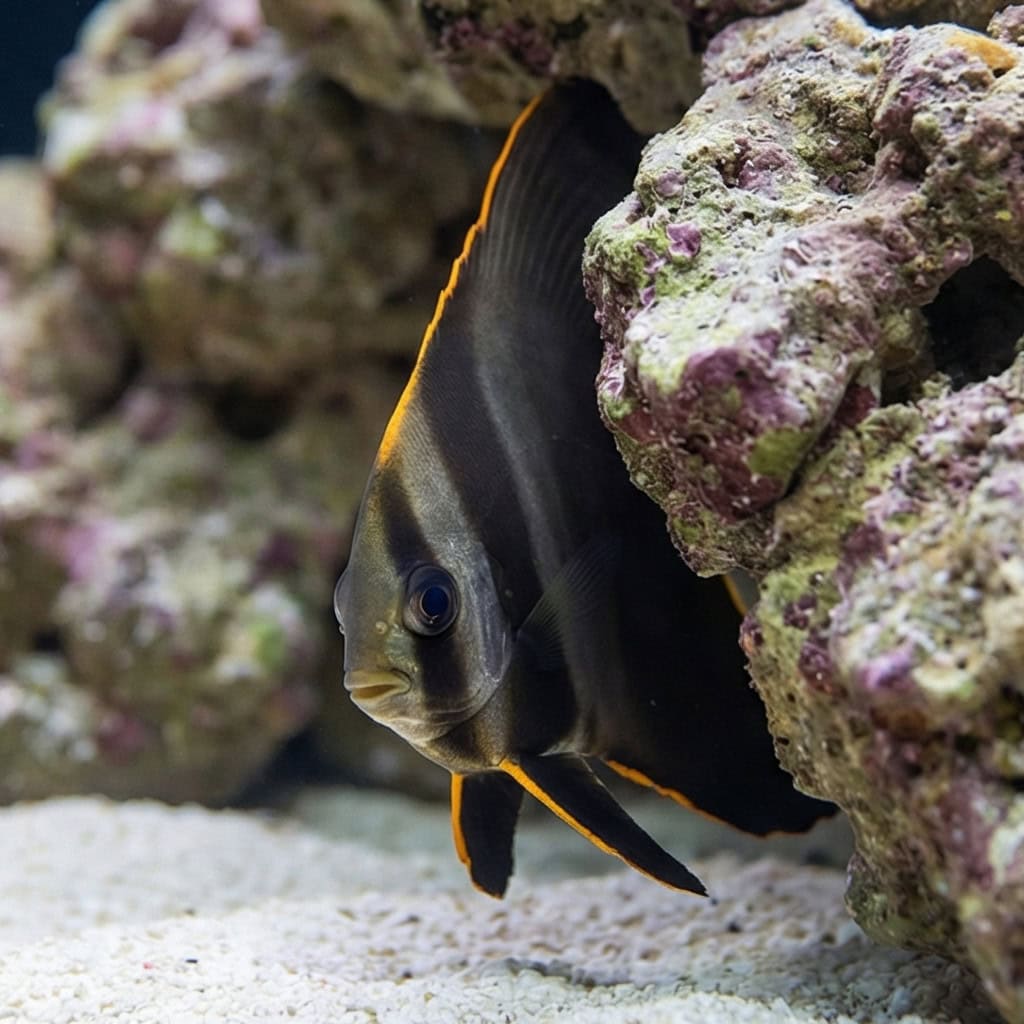
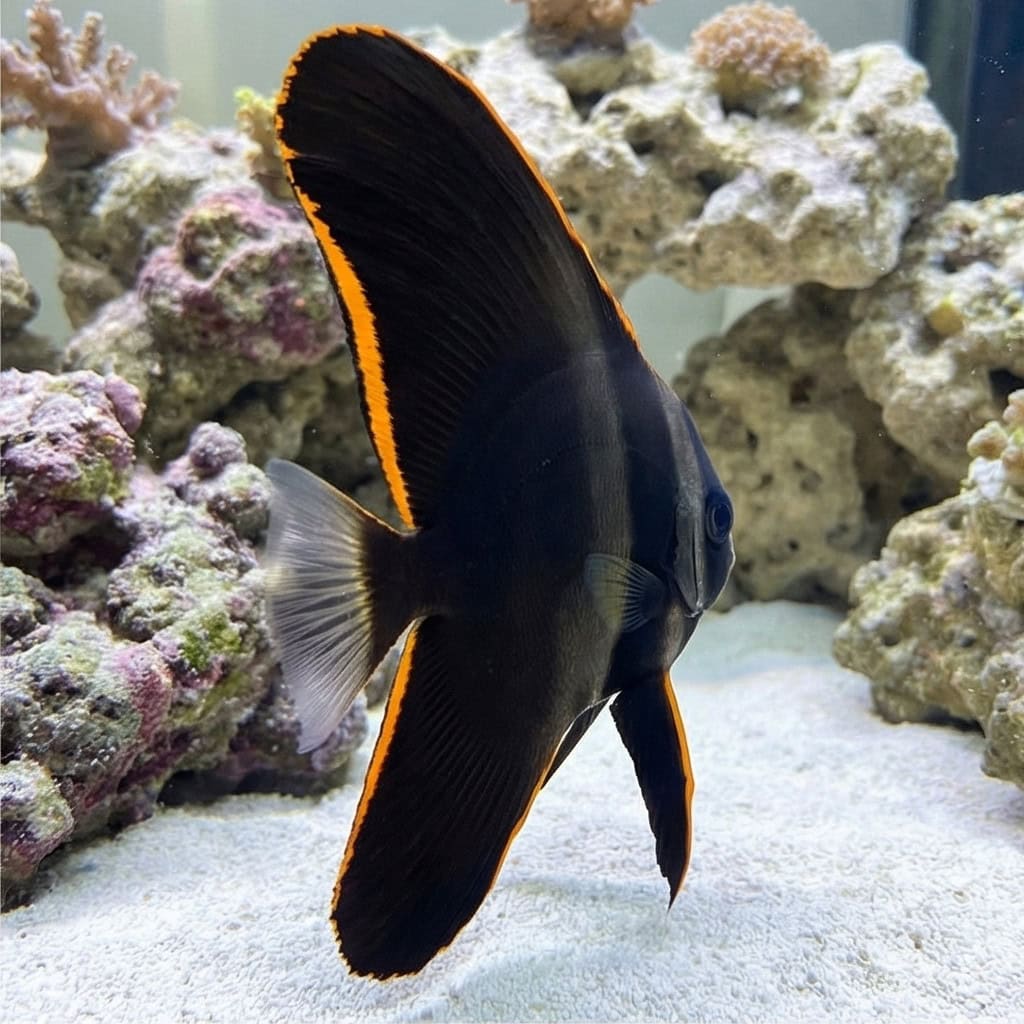
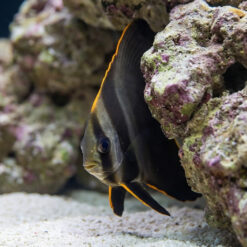
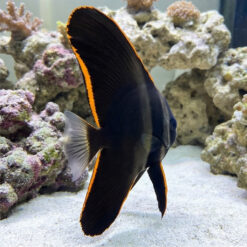
The Pinnatus Batfish (Platax pinnatus) is an Indo-Pacific batfish/spadefish with a tall, laterally compressed body and long dorsal and anal fins. Juveniles are typically deep black with a thin orange rim, while adults transition to a silvery-tan look with dusky bars and yellow-toned fins.
What You’ll Observe:
- Slow, gliding laps through open water, with frequent “hovering” turns using the tall fins as control surfaces
- Periods of holding close to rock faces/overhangs, then returning to the front glass to investigate activity in the room
- A noticeable “grow-and-change” progression where body shape and coloration shift as the fish matures
- Occasional resting behavior where the fish angles or lays against rockwork as part of its normal camouflage-style posture
Provide a tall aquarium with plenty of unobstructed swimming room and a few broad overhangs where it can settle between laps. Offer a varied omnivore menu (meaty frozen foods plus quality prepared foods) in multiple smaller feedings, and keep tankmates “fin-friendly” so the long fins stay pristine.
How long does the black-and-orange juvenile look usually last?
Most hobbyists report the strong juvenile contrast gradually fades as the fish grows, with adults shifting toward a much more subdued silvery/tan pattern.
What foods tend to “start” the feeding response fastest after acclimation?
Keepers commonly have early success with moving, bite-sized foods (for example enriched adult brine shrimp), then transition into small krill, mysis, and prepared items once the fish is actively hunting.
Why does it sometimes lie sideways or “drape” on rock?
Batfish can adopt a flattened, resting posture as a normal camouflage behavior, especially when newly introduced or when settling under ledges.
Is it normal to see a “take it, chew it, spit it out” pattern at first?
Some keepers describe an early phase of testing foods before fully committing; offering smaller pieces and repeating the same foods consistently often helps the fish lock in a routine.
Do they do better in brighter reef lighting or more subdued lighting early on?
Many aquarists start them in dimmer conditions during the first feeding period, then increase light intensity as the fish becomes established and consistently feeding.
Each fish is checked for strong appetite and activity before we approve it for your tank.
Recently viewed products