
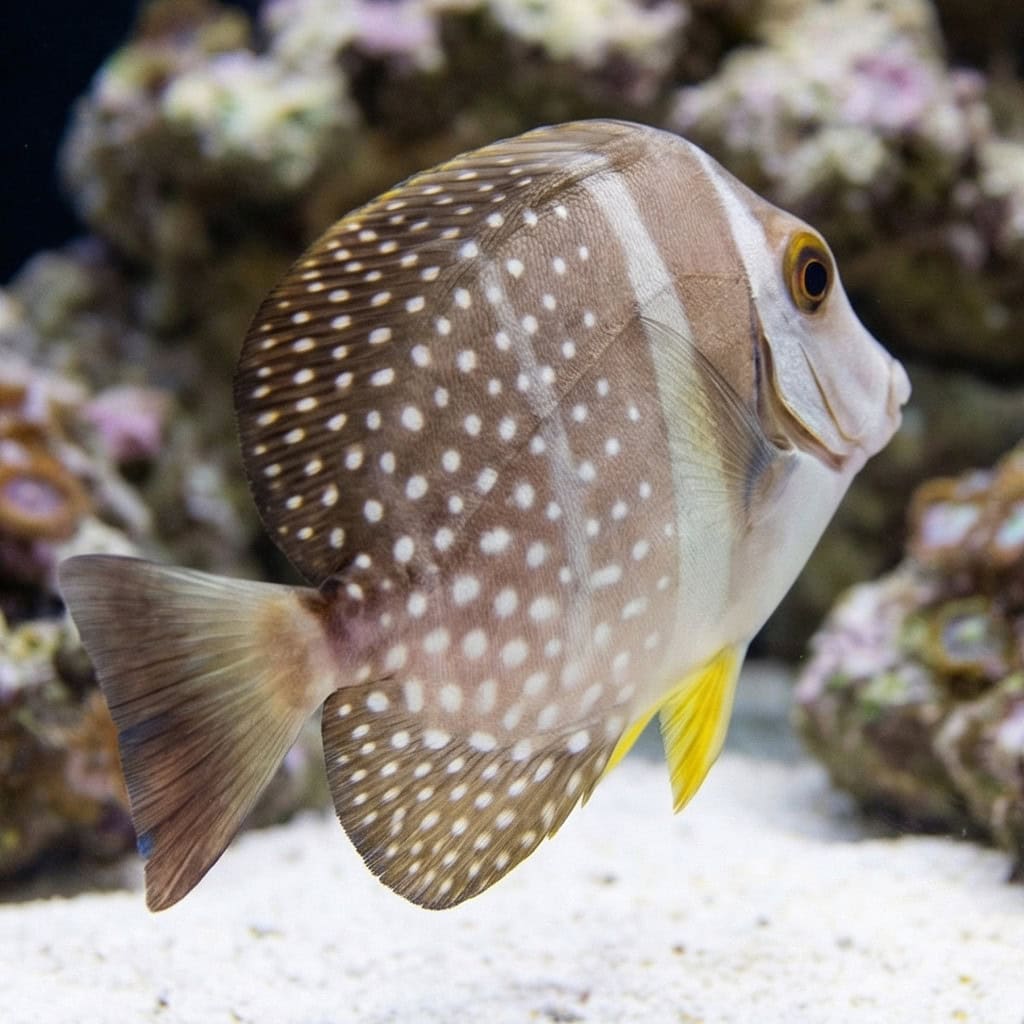
Mustard Tang
Acanthurus guttatus
| Stock | Variations | Price | Quantity | |
|---|---|---|---|---|
| Out of Stock | 1.75 - 2.75" - Indian Ocean | Original price was: $540.99.$283.99Current price is: $283.99. | Email me | |
| Out of Stock | 4.5 - 5.5" - Indo-Pacific | Original price was: $1,107.99.$581.99Current price is: $581.99. | Email me | |
| Out of Stock | 2.75 - 3.75" - Indo-Pacific | Original price was: $540.99.$283.99Current price is: $283.99. | Email me | |
| Out of Stock | 3.75 - 4.5" - Indo-Pacific | Original price was: $598.99.$314.99Current price is: $314.99. | Email me | |
| Out of Stock | 5.5 -7" - Indo-Pacific | Original price was: $1,196.99.$628.99Current price is: $628.99. | Email me |
Every order ships with our standard 3-hour live arrival guarantee. Need more time? Add our 5-Day Guarantee at checkout.
Full guarantee terms →Ships Monday – Thursday for next-day arrival at your nearest FedEx Hold location — typically ready by 9 AM. We monitor every delivery.
Shipping details →
Monday – Friday 8 AM – 9 PM
Saturday 12 PM – 4 PM
Sunday 12 PM – 9 PM
Healthy, stable animals from vetted suppliers — inspected before packing, shipped overnight. Decades of experience built this model so we can deliver premium livestock at 30%+ less than you'd pay elsewhere.
| Care Level | Moderate |
|---|---|
| Temperament | Semi-Aggressive |
| Reef Safe | Yes |
| Functional Benefit | Algae Control |
| Diet Type | Herbivore |
| Mininum Tank Size | 180 gallons |
| Max Size | 10 inches |
| Temperature | 72–78°F |
| pH Range | 8.1–8.4 |
| Specific Gravity | 1.022–1.025 |
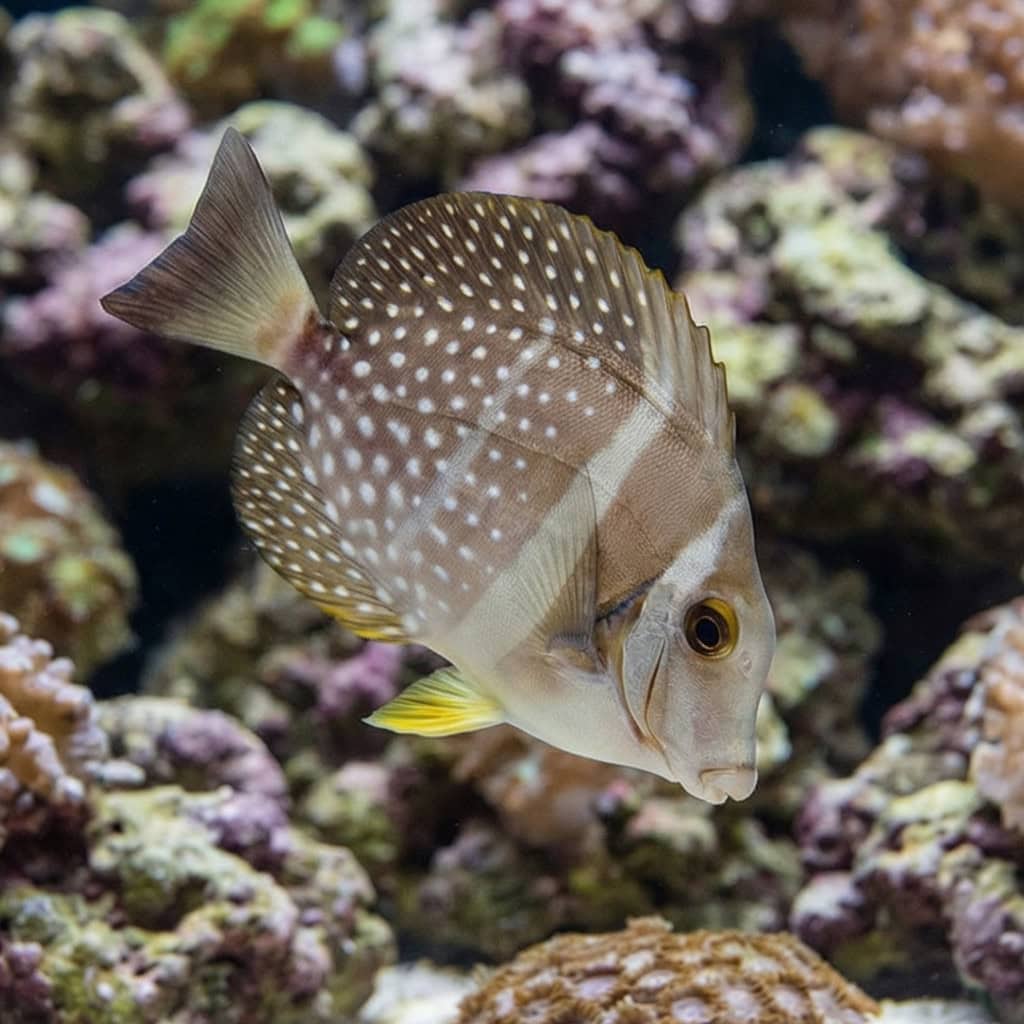
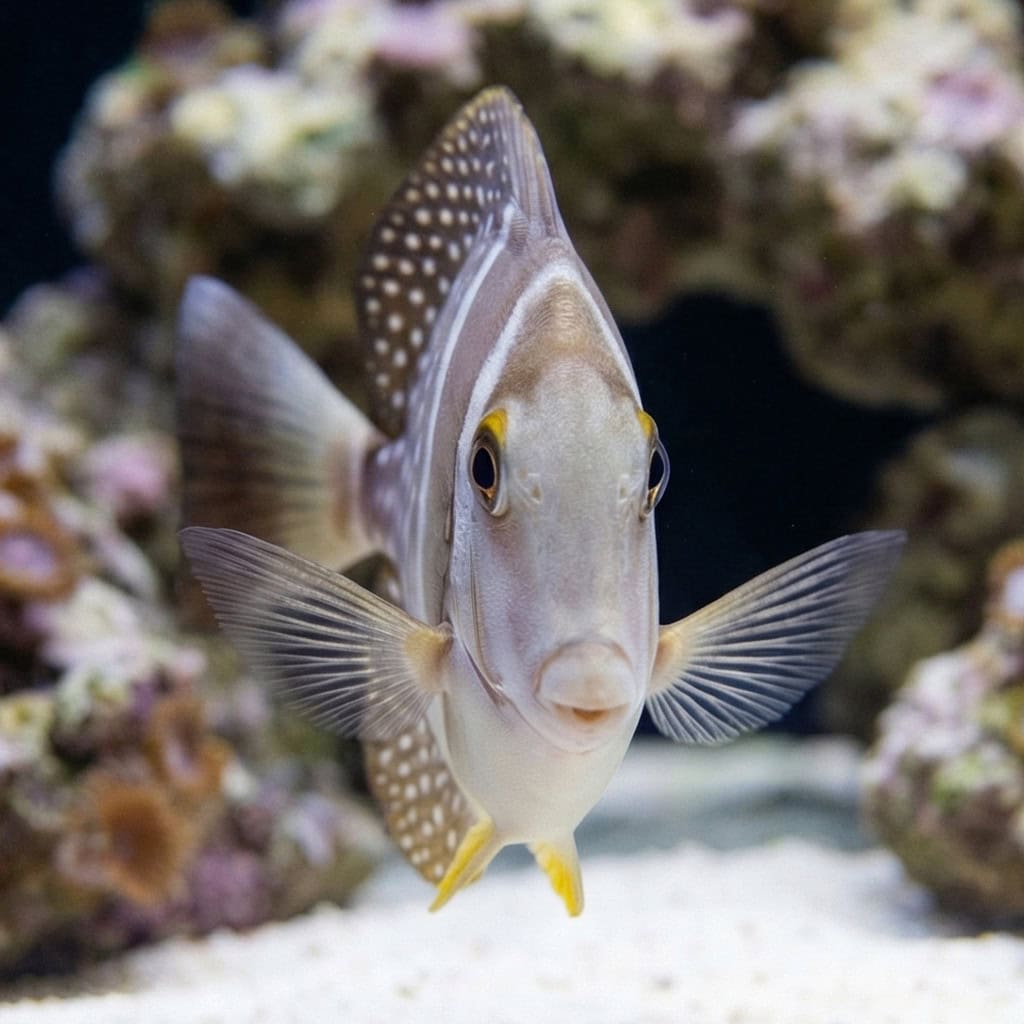
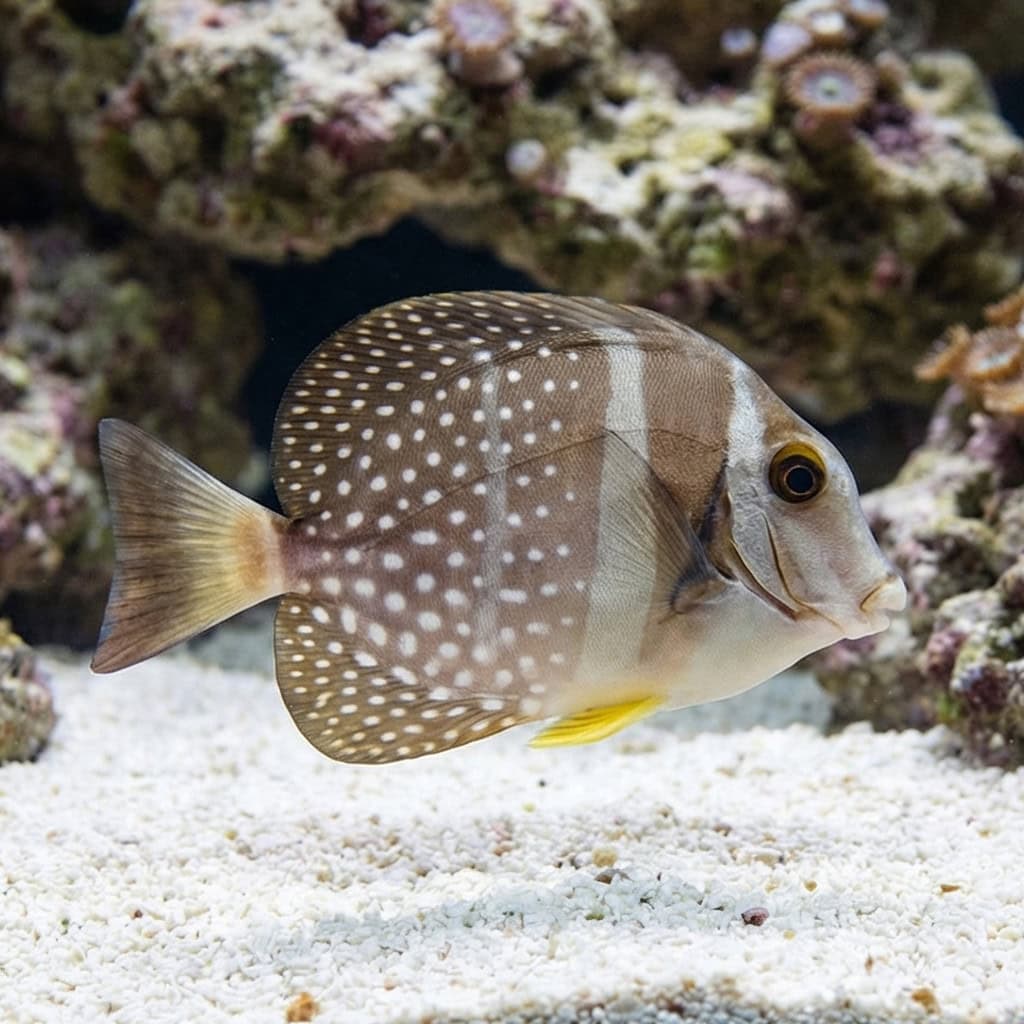
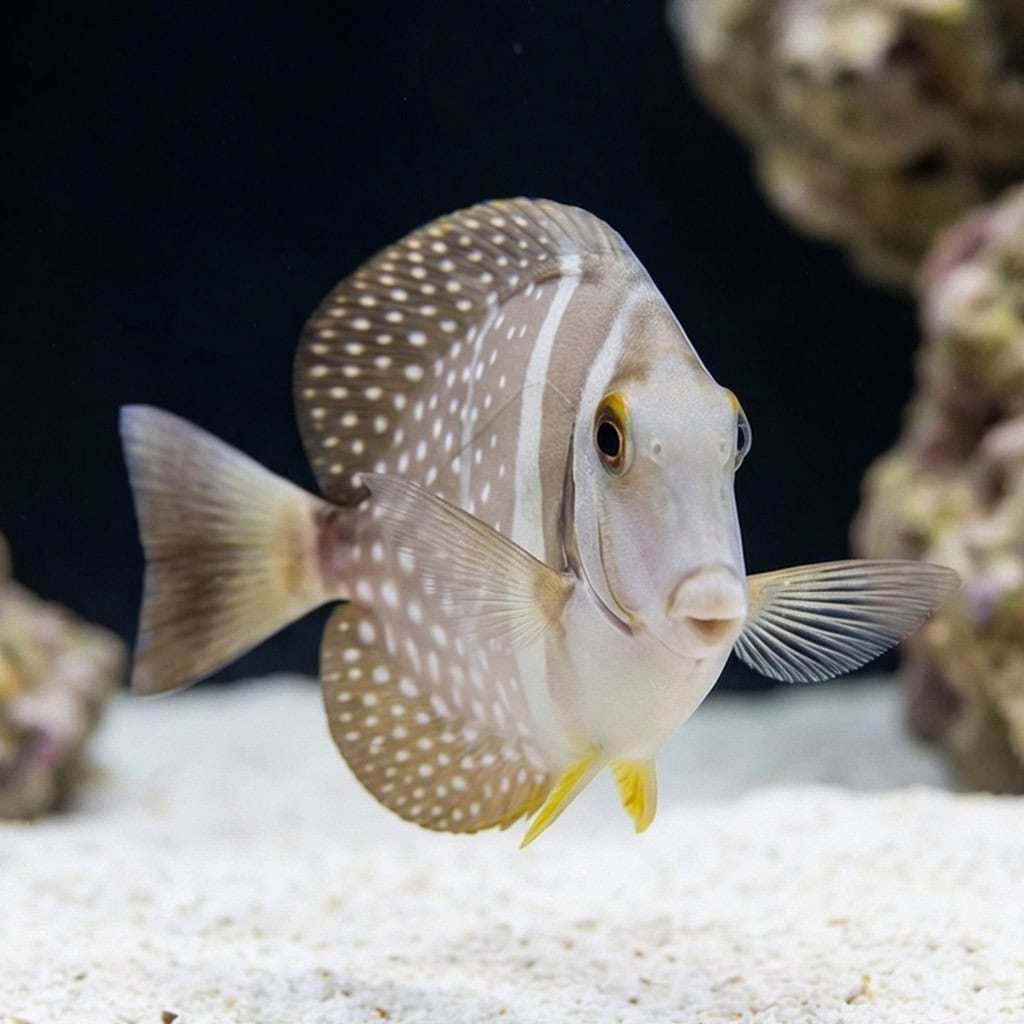
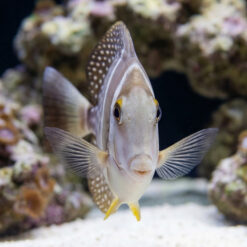
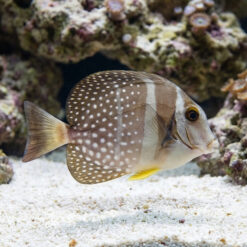
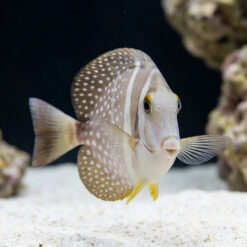
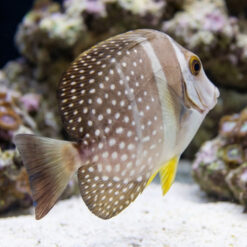
The Mustard Tang (Acanthurus guttatus), also called the Whitespotted Surgeonfish, is a fast-moving algae grazer that helps keep rockwork surfaces clean in large reef aquariums. Its gray-brown body is covered in fine white spotting with pale banding, and it often shows yellow accents on the pelvic fins under bright reef lighting. This species comes from shallow, high-energy reef zones, so it’s built for constant cruising in strong, chaotic flow.
What You’ll Observe:
- Active, open-water laps with frequent “pit stops” to graze along rock faces
- Confident swimming directly into high-flow areas from wavemakers
- A consistent daytime route that makes it one of the more visible tangs in the tank
- Quick, repeated grazing bites throughout the day between feedings
Provide strong oxygenation, open swimming lanes, and broad rock surfaces where natural microalgae can develop. Offer dried nori and herbivore-focused frozen/pellet foods daily so it can graze steadily and maintain a full, athletic body shape. In most home systems it’s kept as a single show tang so it can settle into a stable routine.
My Mustard Tang’s pattern looks darker some days—is that normal?
Yes—keepers commonly notice the spotting and bands deepen or look patchier depending on lighting and how settled the fish feels, then even out again over time.
What if it ignores nori on a clip?
Many tangs graze rock first; try rubber-banding a smaller strip to a rock, or offering a different sheet color/brand in the same spot for a few days so it learns the “feeding station.”
How do people add one to a tank with other tangs already in it?
A common approach is adding with lights dim and using a temporary mirror on the glass so established fish focus on their reflection while the new tang finds its rhythm.
Is a slightly ragged tail/fin edge after shipping a deal breaker?
Minor fraying is often reported after transport or small nips and typically smooths out with stable water conditions and consistent feeding.
Should I add it early or late in my stocking plan?
Many reefkeepers have better results adding tangs together (or earlier in the plan) so territories form once, instead of repeatedly resetting the pecking order with each new tang.
Our selection process means you get robust, well-adjusted specimens that settle in quickly.
Only logged in customers who have purchased this product may leave a review.
Recently viewed products
Reviews
There are no reviews yet.