
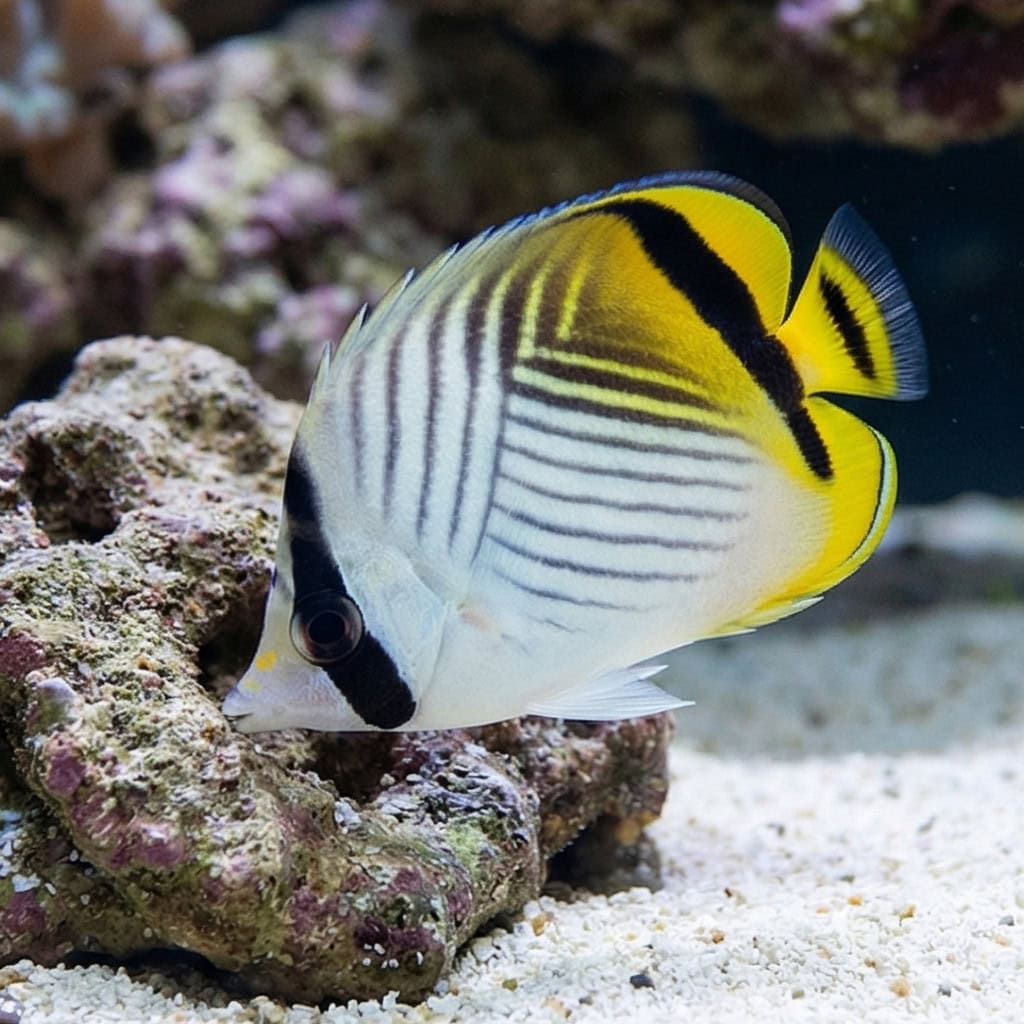
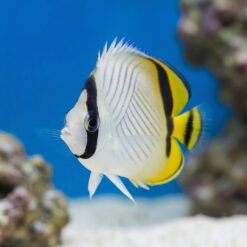
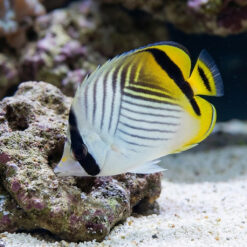
Vagabond Butterfly
Chaetodon vagabundus
Original price was: $70.99.$37.99Current price is: $37.99.
| Stock | Variations | Price | Quantity | |
|---|---|---|---|---|
| Only 1 left | 2.25" or smaller - SSC Certified - Central Pacific | Original price was: $70.99.$37.99Current price is: $37.99. |
-
+
|
|
| Out of Stock | 2.25 - 3.5" - SSC Certified - Central Pacific | Original price was: $75.99.$39.99Current price is: $39.99. | Email me |
Every order ships with our standard 3-hour live arrival guarantee. Need more time? Add our 5-Day Guarantee at checkout.
Full guarantee terms →Ships Monday – Thursday for next-day arrival at your nearest FedEx Hold location — typically ready by 9 AM. We monitor every delivery.
Shipping details →
Monday – Friday 8 AM – 9 PM
Saturday 12 PM – 4 PM
Sunday 12 PM – 9 PM
Healthy, stable animals from vetted suppliers — inspected before packing, shipped overnight. Decades of experience built this model so we can deliver premium livestock at 30%+ less than you'd pay elsewhere.
| Care Level | Moderate |
|---|---|
| Temperament | Semi-Aggressive |
| Reef Safe | No |
| Functional Benefit | Ornamental Only |
| Diet Type | Omnivore |
| Mininum Tank Size | 120 gallons |
| Max Size | 10 inches |
| Temperature | 72–78°F |
| pH Range | 8.1–8.4 |
| Specific Gravity | 1.022–1.025 |
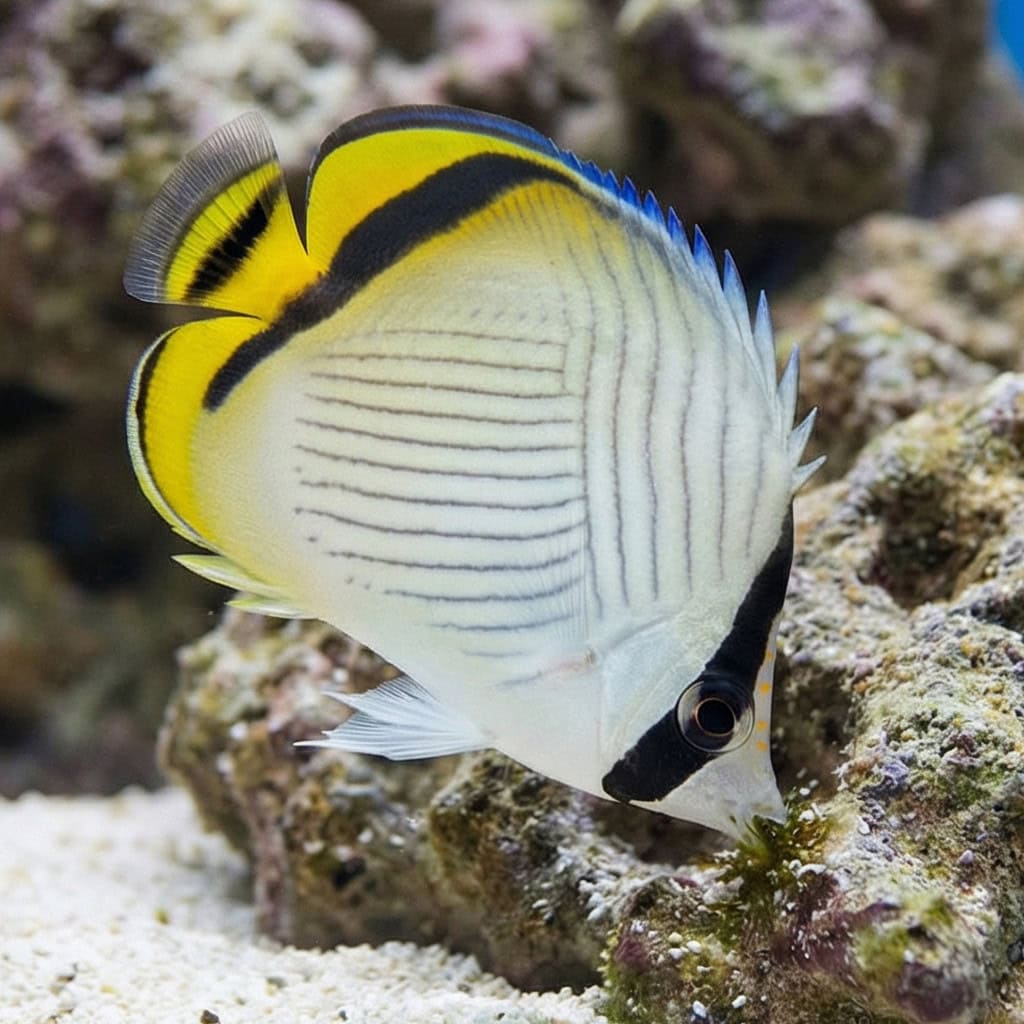
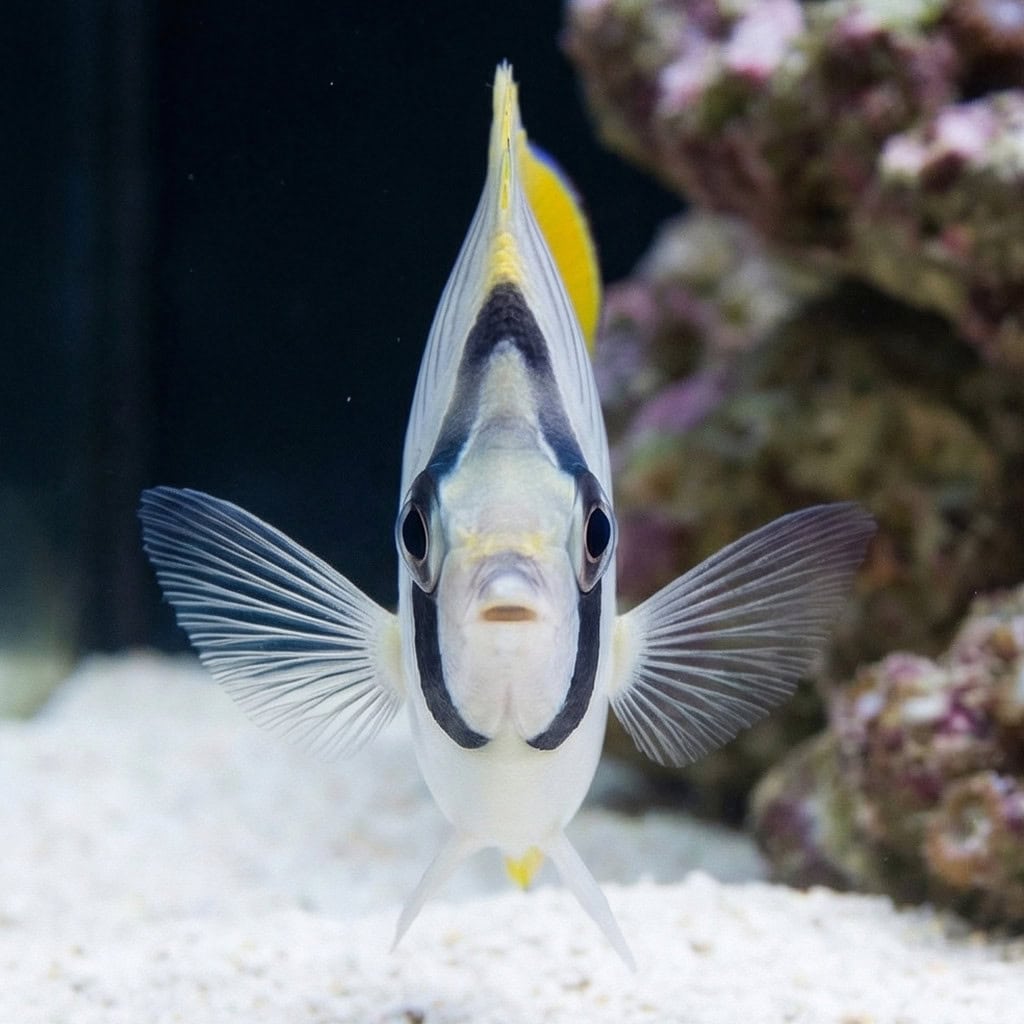
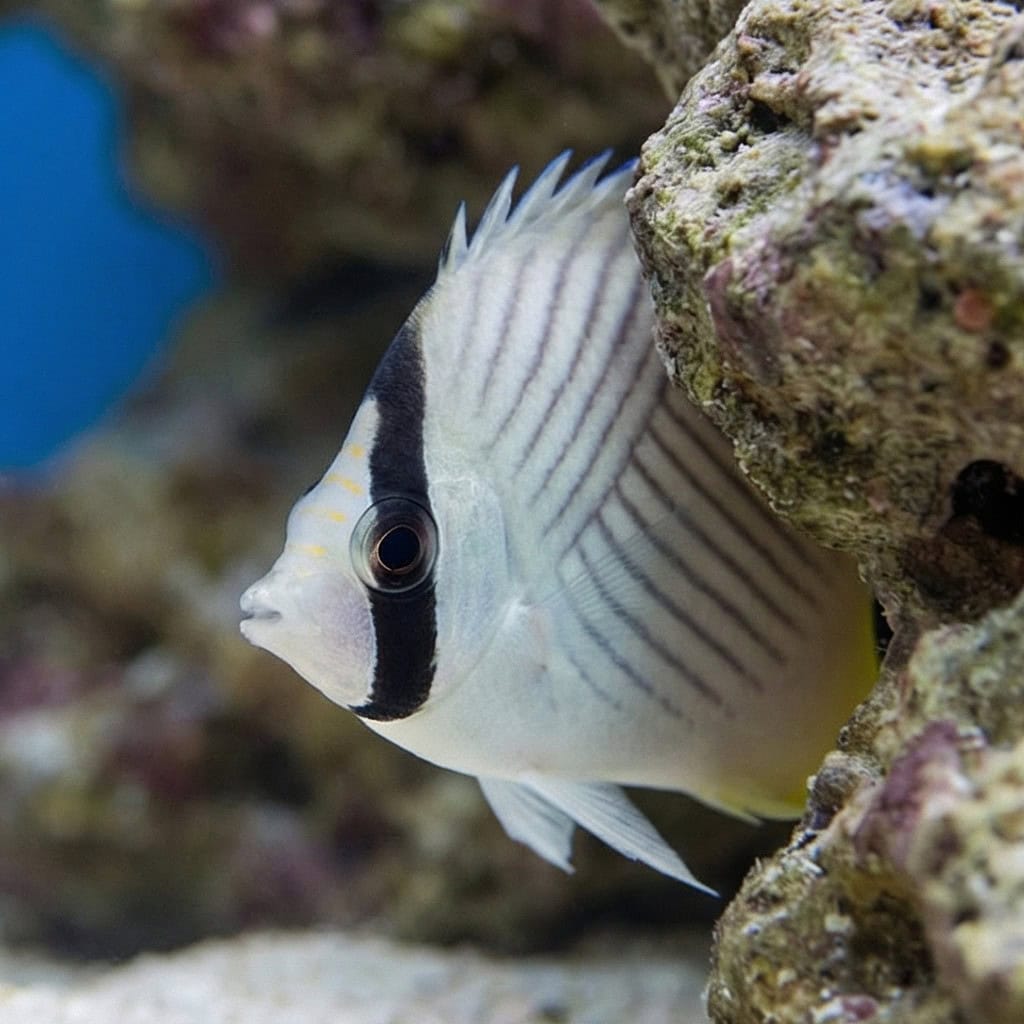
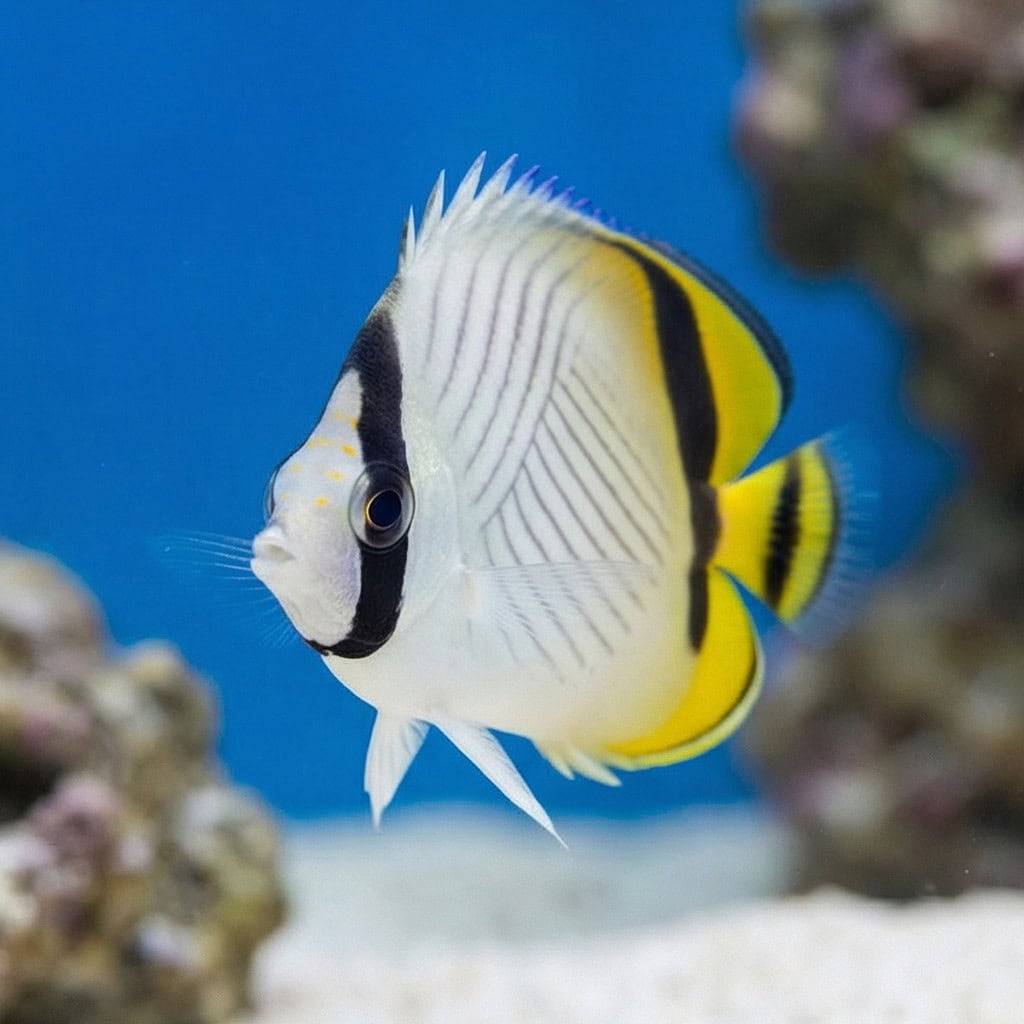
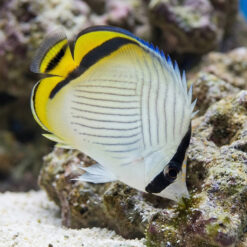
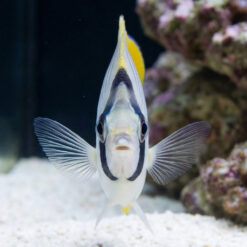
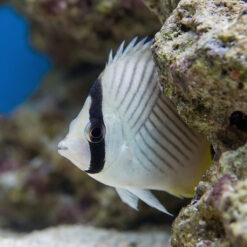
The Vagabond Butterfly (Chaetodon vagabundus), also called the crisscross butterflyfish, has a pale body covered in fine diagonal “chevron” lines, with bold black bands through the eye and near the tail and yellow toward the rear. It’s an Indo-Pacific reef-associated butterflyfish that can reach about 23 cm (around 9″) in the wild.
What You’ll Observe:
- Daytime cruising in open water with frequent stops to inspect rockwork
- Repeated “pecking” at surfaces as it searches for small foods
- Distinct interest in crevices and edges where food collects
- In larger systems, an individual may settle into a consistent route it follows through the tank
Provide open swimming room plus rockwork with plenty of edges and overhangs to explore. Offer a varied menu (meaty frozen foods plus some algae-based foods) in multiple small feedings each day, and present foods on a clam shell or pressed onto rock so it can graze naturally. This species is often seen in pairs in nature, and can be kept singly or introduced as a pair when the aquarium has the space.
Does it constantly pick at rocks even right after eating?
Yes—many individuals keep “inspecting” surfaces throughout the day, which is normal for a butterflyfish that feeds by pecking and grazing.
What foods usually get the quickest feeding response?
Many keepers report the best early results with finely chopped seafood, mysis, and foods offered on a shell/flat surface so the fish can peck at it.
Will it use the whole tank or stay in one area?
After a short settling-in period, it commonly establishes a repeatable loop between open-water swimming lanes and specific rockwork zones it likes to browse.
Can I keep one, or is a pair better?
Either can work; hobbyists most often recommend choosing one healthy, actively-feeding specimen, or adding two at the same time if you’re aiming for a pair.
Do they help with Aiptasia?
Some hobbyists see occasional pecking at pest anemones, but it’s not consistent enough to buy one specifically as an Aiptasia solution.
Each fish is checked for strong appetite and activity before we approve it for your tank.
Recently viewed products