
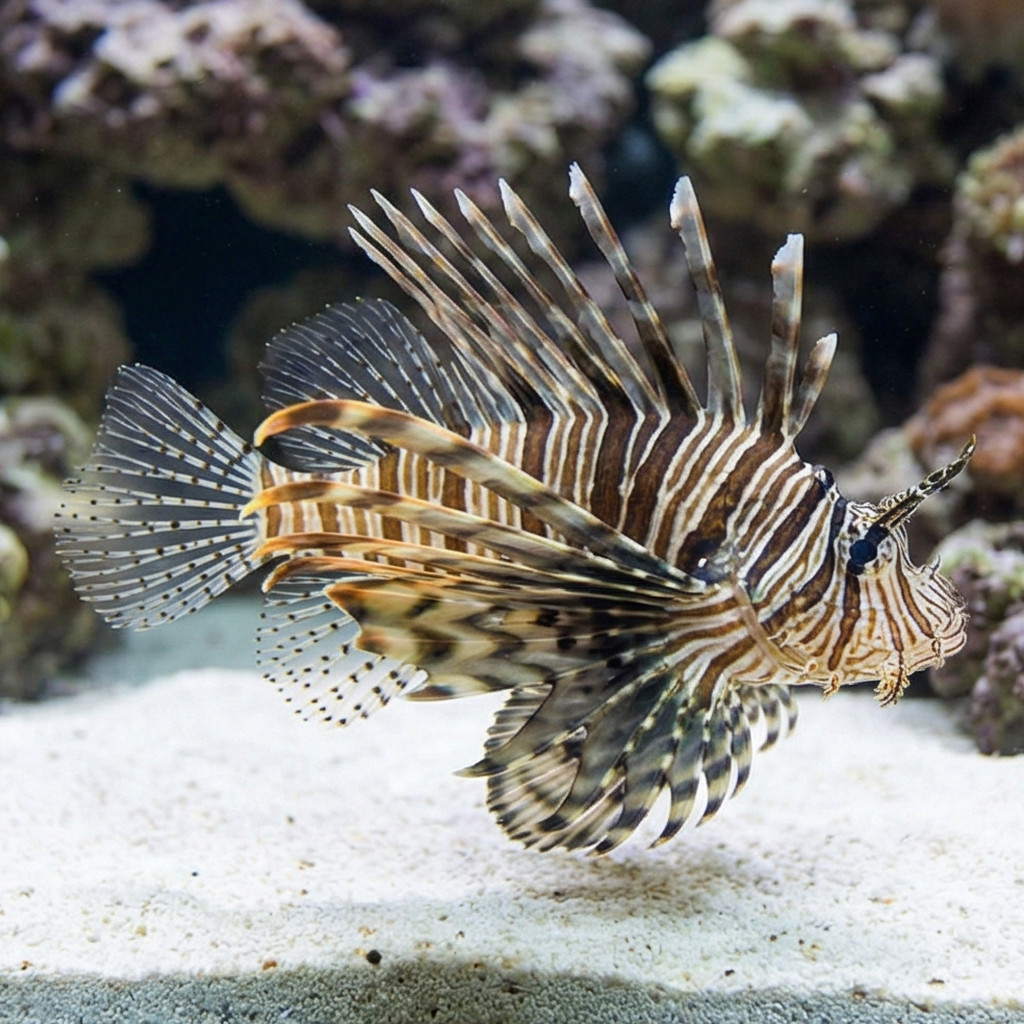
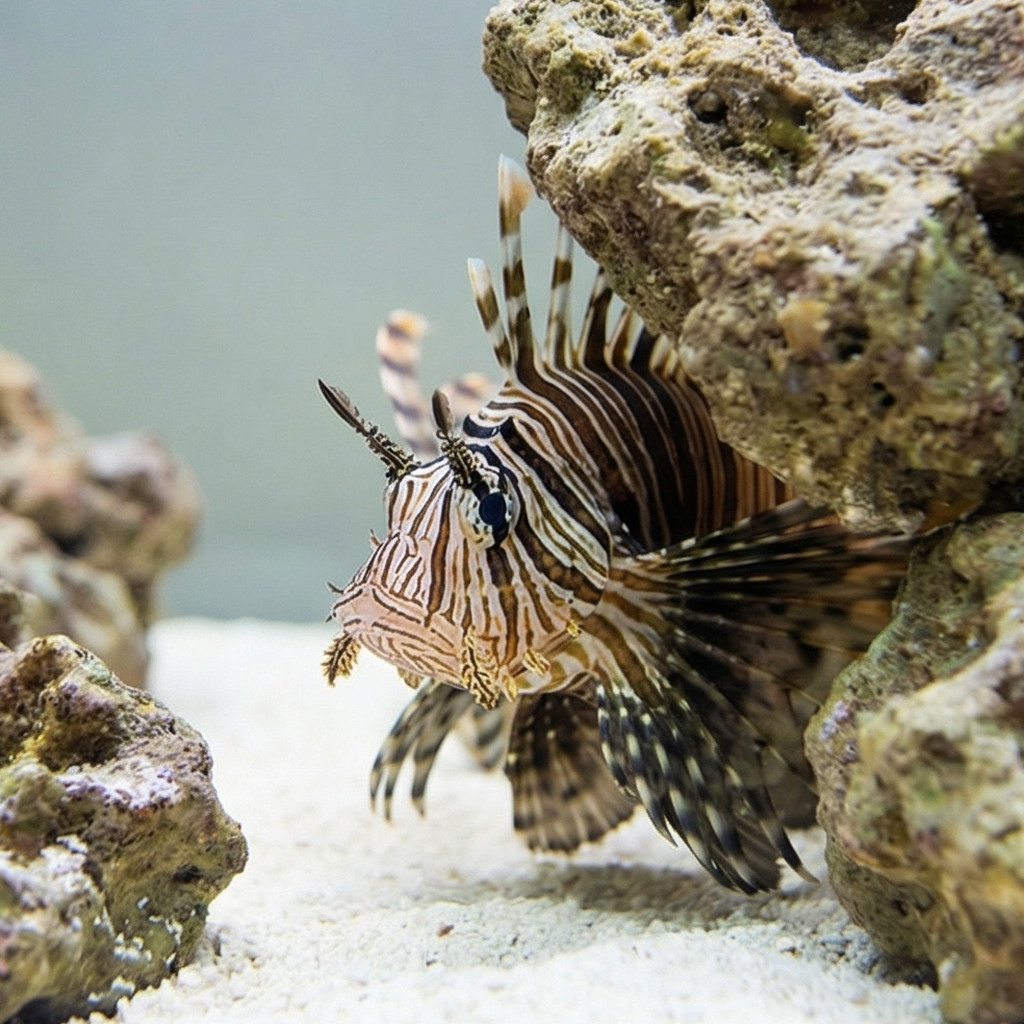
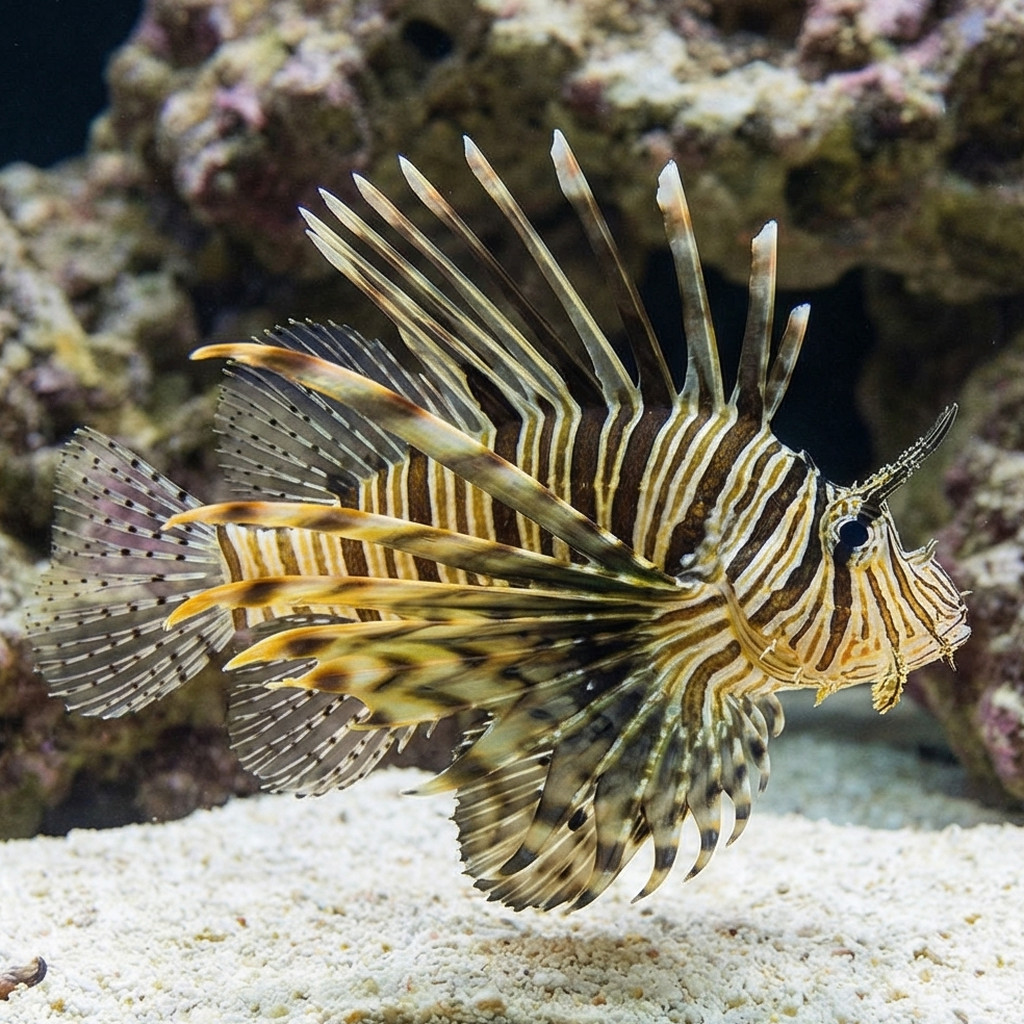
Volitan Lionfish Colored
Pterois volitans
Price range: $110.99 through $136.99
| Stock | Variations | Price | Quantity | |
|---|---|---|---|---|
| Only 3 left | 2.25 - 4.25" - Indo-Pacific | Original price was: $211.99.$110.99Current price is: $110.99. |
-
+
|
Every order ships with our standard 3-hour live arrival guarantee. Need more time? Add our 5-Day Guarantee at checkout.
Full guarantee terms →Ships Monday – Thursday for next-day arrival at your nearest FedEx Hold location — typically ready by 9 AM. We monitor every delivery.
Shipping details →
Monday – Friday 8 AM – 9 PM
Saturday 12 PM – 4 PM
Sunday 12 PM – 9 PM
Healthy, stable animals from vetted suppliers — inspected before packing, shipped overnight. Decades of experience built this model so we can deliver premium livestock at 30%+ less than you'd pay elsewhere.
| Care Level | Moderate |
|---|---|
| Temperament | Semi-Aggressive |
| Reef Safe | No |
| Functional Benefit | Ornamental Only |
| Diet Type | Carnivore |
| Mininum Tank Size | 120 gallons |
| Max Size | 18 inches |
| Temperature | 72–78°F |
| pH Range | 8.1–8.4 |
| Specific Gravity | 1.022–1.025 |
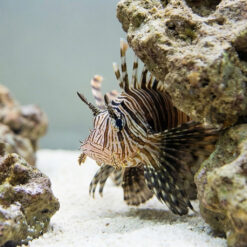
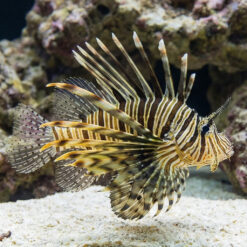
The Volitan Lionfish (Pterois volitans), also known as the Common/Red Lionfish or Turkeyfish, has red, white, and dark vertical banding with wide, fan-like pectoral fins and tall dorsal spines. In the aquarium it often alternates between hovering in the open and perching on rock ledges, giving a classic “lionfish” display form seen across the Indo-Pacific.
What You’ll Observe:
- Perching on rocks, glass, or under ledges at different angles, then repositioning to a new “resting spot”
- Short, deliberate swims between perches, with longer bursts of movement when food is offered
- A strong feeding response to moving food, often tracking it closely before striking
- More “out in the open” behavior after it settles in, especially around regular feeding times
To succeed with a Volitan Lionfish, provide stable rockwork with multiple ledges/caves plus open areas so it can choose perches and patrol lanes. Offer marine-based meaty foods (like shrimp, squid, and silversides) using a feeding stick so the food moves naturally in the water column, and keep a consistent feeding rhythm. Select tankmates that are too large to be swallowed, and use container-based transfers that keep hands clear of the dorsal spines.
Is it normal for a lionfish to sit sideways (or even upside down) while resting?
Yes—many lionfish “perch” in odd positions on rock, glass, and equipment, then change spots once they feel like moving again.
How do I transition one from live foods to frozen/prepared foods?
Start by offering thawed meaty items on a feeding stick and gently “wiggle” the food so it behaves like live prey, then repeat the same routine at each feeding until it responds reliably.
Why does it act interested in food but then ignore it?
Many lionfish cycle between bigger meals and lighter days; keeping a steady schedule and offering appropriately sized pieces helps maintain a consistent response.
Will it learn a feeding routine with the keeper?
Often yes—keepers commonly report their lionfish watching them closely and moving into position when the feeding stick or food hits the water.
Can I keep more than one Volitan lionfish together?
It can work when they’re introduced at similar sizes and the aquascape provides multiple perches so they can space out, especially during feeding time.
We source from vetted suppliers known for healthy, long-lived specimens.
Recently viewed products