
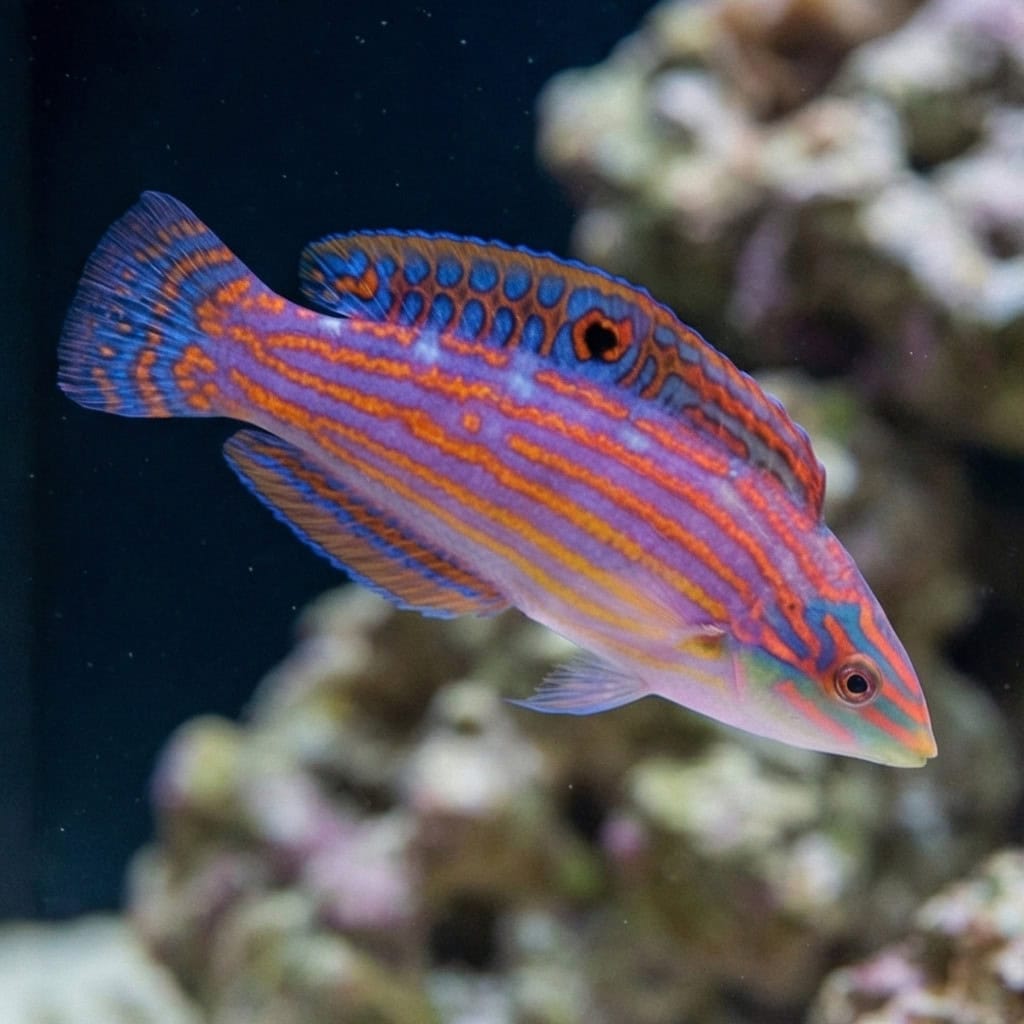
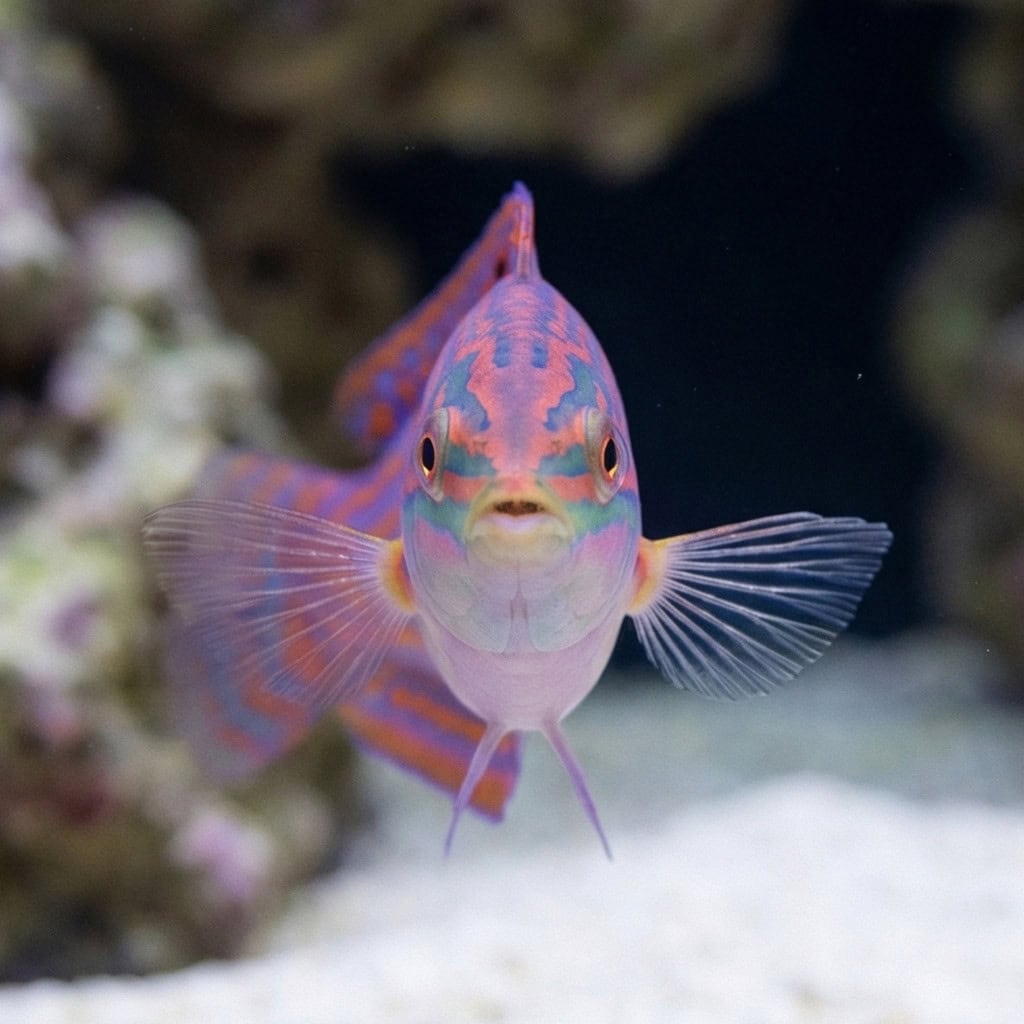
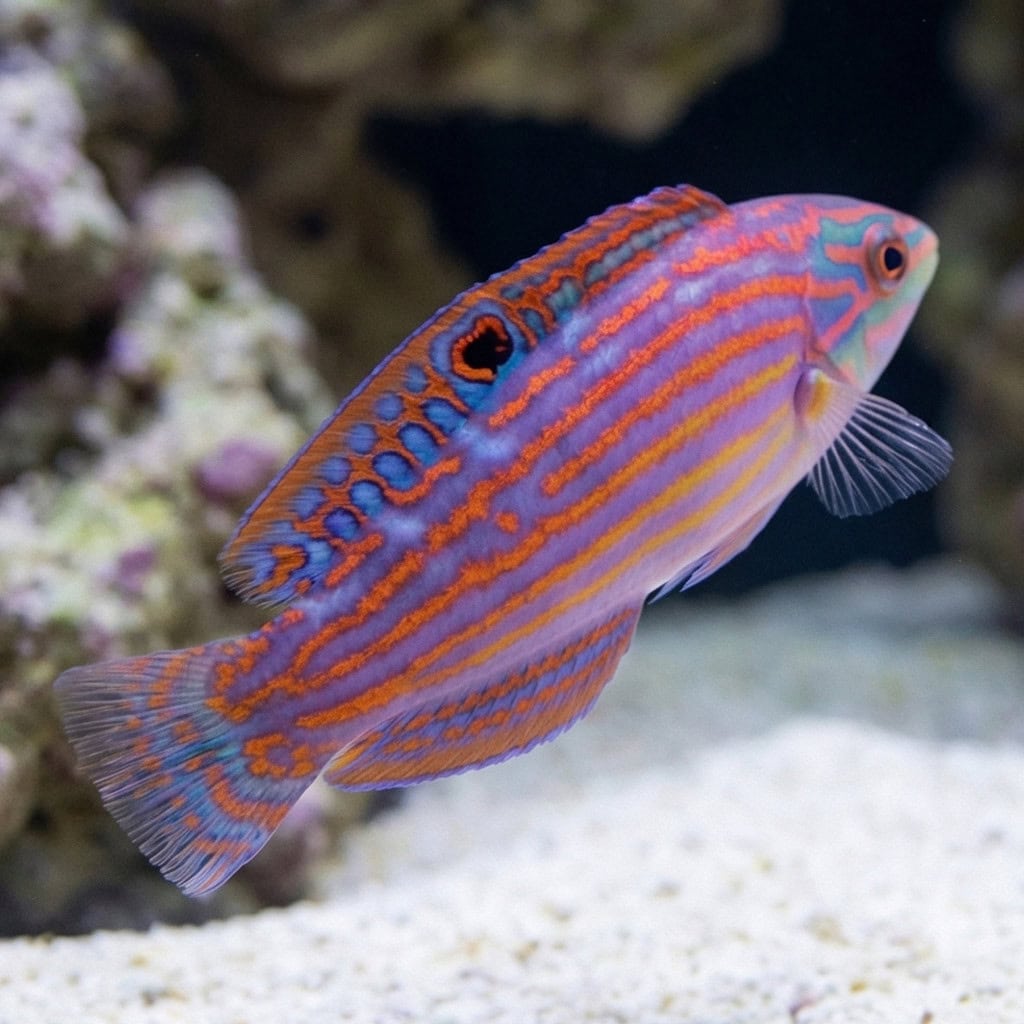
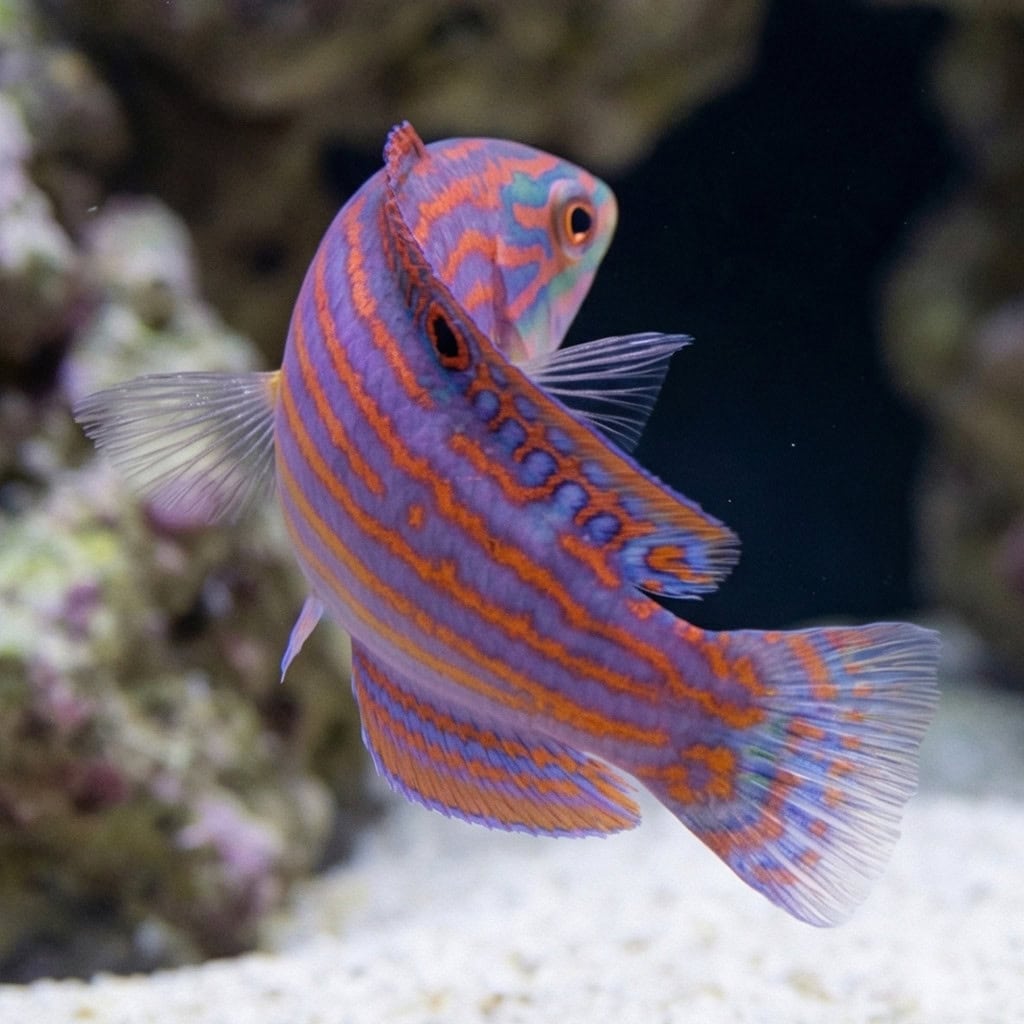
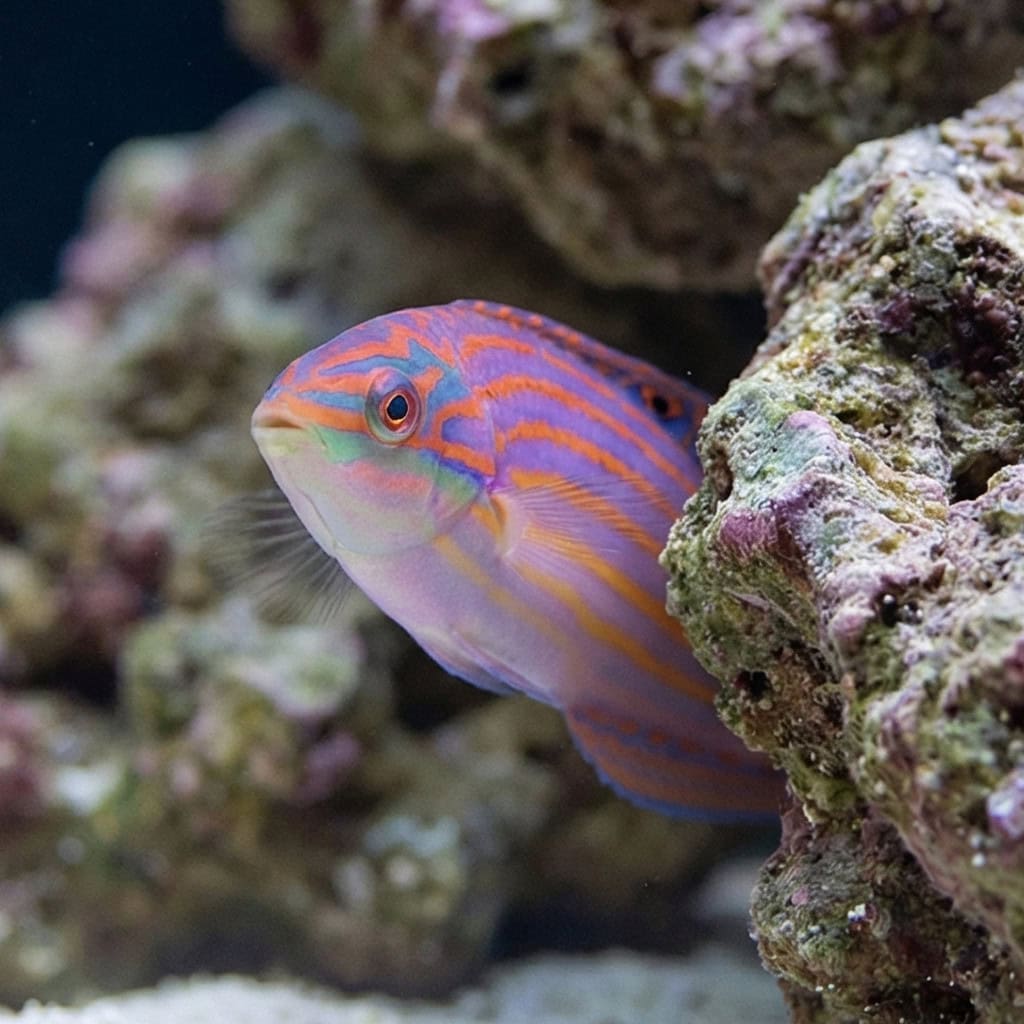
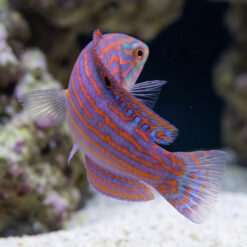
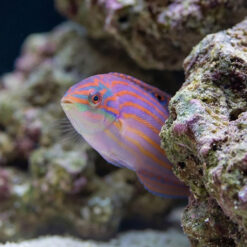
Adorned Wrasse
Halichoeres cosmetus
| Stock | Variations | Price | Quantity |
|---|
Every order ships with our standard 3-hour live arrival guarantee. Need more time? Add our 5-Day Guarantee at checkout.
Full guarantee terms →Ships Monday – Thursday for next-day arrival at your nearest FedEx Hold location — typically ready by 9 AM. We monitor every delivery.
Shipping details →
Monday – Friday 8 AM – 9 PM
Saturday 12 PM – 4 PM
Sunday 12 PM – 9 PM
Healthy, stable animals from vetted suppliers — inspected before packing, shipped overnight. Decades of experience built this model so we can deliver premium livestock at 30%+ less than you'd pay elsewhere.
| Care Level | Easy |
|---|---|
| Temperament | Peaceful |
| Reef Safe | With Caution |
| Functional Benefit | Pest Control |
| Diet Type | Carnivore |
| Mininum Tank Size | 55 gallons |
| Max Size | 5 inches |
| Temperature | 72–78°F |
| pH Range | 8.1–8.4 |
| Specific Gravity | 1.022–1.025 |
The Adorned Wrasse (Halichoeres cosmetus) is often chosen as a pest-control wrasse because it forages through rockwork and open sand for unwanted invertebrates. In established reef tanks it may help reduce fireworms and pyramidellid snails while staying compatible with most soft and stony corals. Adults show a bluish-green base color with orange striping and fine patterning commonly associated with Halichoeres wrasses.
What You’ll Observe:
- Cruising laps along the rockline, then dropping to the sand to inspect the bottom for food
- Quick, decisive “pecking” at the substrate and rock as it hunts for tiny invertebrates
- A steady daytime routine with frequent foraging between feedings
- Confident swimming in open areas, with short retreats into the rockwork to reset
Provide a mature tank with plenty of live-rock crevices plus a 2–3″ sandy area for natural bottom-foraging and nighttime shelter. Offer a mix of meaty frozen foods and quality pellets in smaller portions more than once daily. It does best in a community of peaceful fish where it can feed without being rushed.
FAQ:
Is it normal for an Adorned Wrasse to disappear right after introduction?
Yes—many sand-sleeping wrasses will stay out of sight at first, then begin showing longer daytime activity as they settle in.
Do they need a tight lid even if the tank has a rim?
A tight-fitting cover helps because wrasses can launch upward when startled, especially during the first few weeks.
Why does it “smack” the sand or flick its tail when I approach the glass?
Many individuals display quick, repetitive movements during acclimation and when they notice activity outside the tank; it often fades as your feeding routine becomes predictable.
Will it throw sand onto nearby corals when it dives into the substrate?
It can move small amounts of sand during quick dives, so leaving a clear sandy zone away from low-placed frags makes day-to-day placement easier.
Can it live with other wrasses long-term?
In larger tanks, many keepers have success by giving each wrasse its own “lane” of rockwork and adding new wrasses with a short separation period so everyone learns the new boundaries.
Each fish is checked for strong appetite and activity before we approve it for your tank.
Recently viewed products