
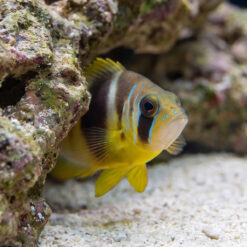
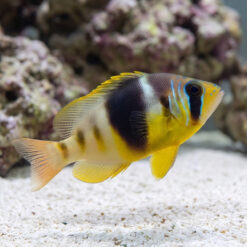
Barred Hamlet
Hypoplectrus puella
| Stock | Variations | Price | Quantity |
|---|
Every order ships with our standard 3-hour live arrival guarantee. Need more time? Add our 5-Day Guarantee at checkout.
Full guarantee terms →Ships Monday – Thursday for next-day arrival at your nearest FedEx Hold location — typically ready by 9 AM. We monitor every delivery.
Shipping details →
Monday – Friday 8 AM – 9 PM
Saturday 12 PM – 4 PM
Sunday 12 PM – 9 PM
Healthy, stable animals from vetted suppliers — inspected before packing, shipped overnight. Decades of experience built this model so we can deliver premium livestock at 30%+ less than you'd pay elsewhere.
| Care Level | Moderate |
|---|---|
| Temperament | Semi-Aggressive |
| Reef Safe | With Caution |
| Functional Benefit | Ornamental Only |
| Diet Type | Carnivore |
| Mininum Tank Size | 55 gallons |
| Max Size | 6 inches |
| Temperature | 72–78°F |
| pH Range | 8.1–8.4 |
| Specific Gravity | 1.022–1.025 |
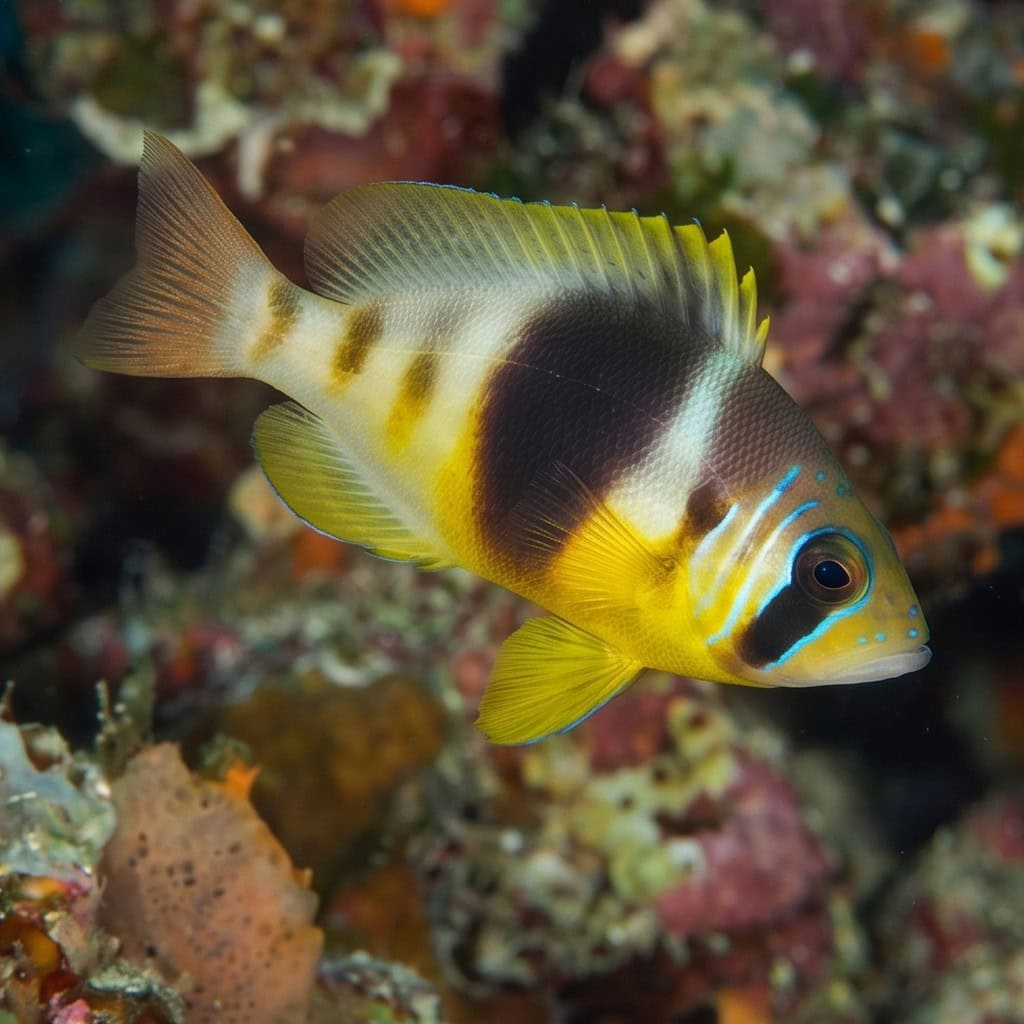
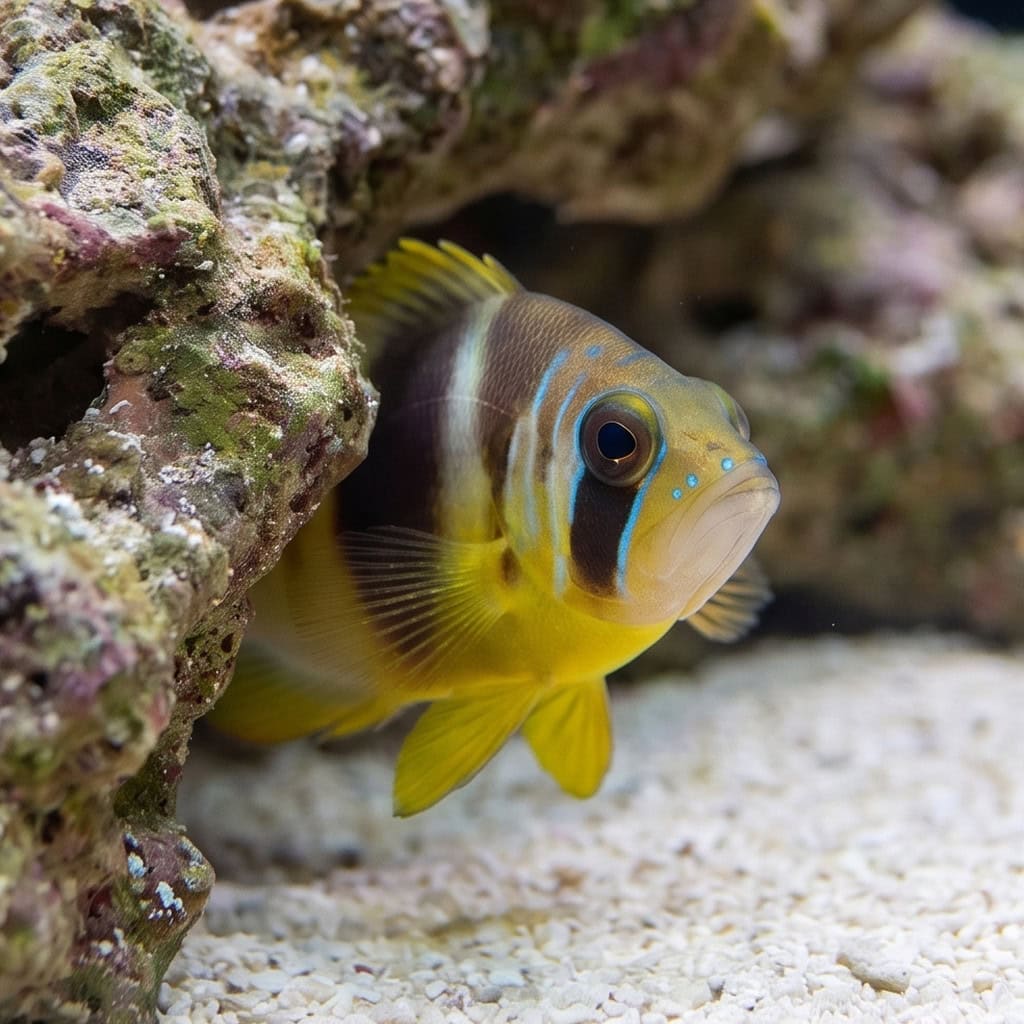
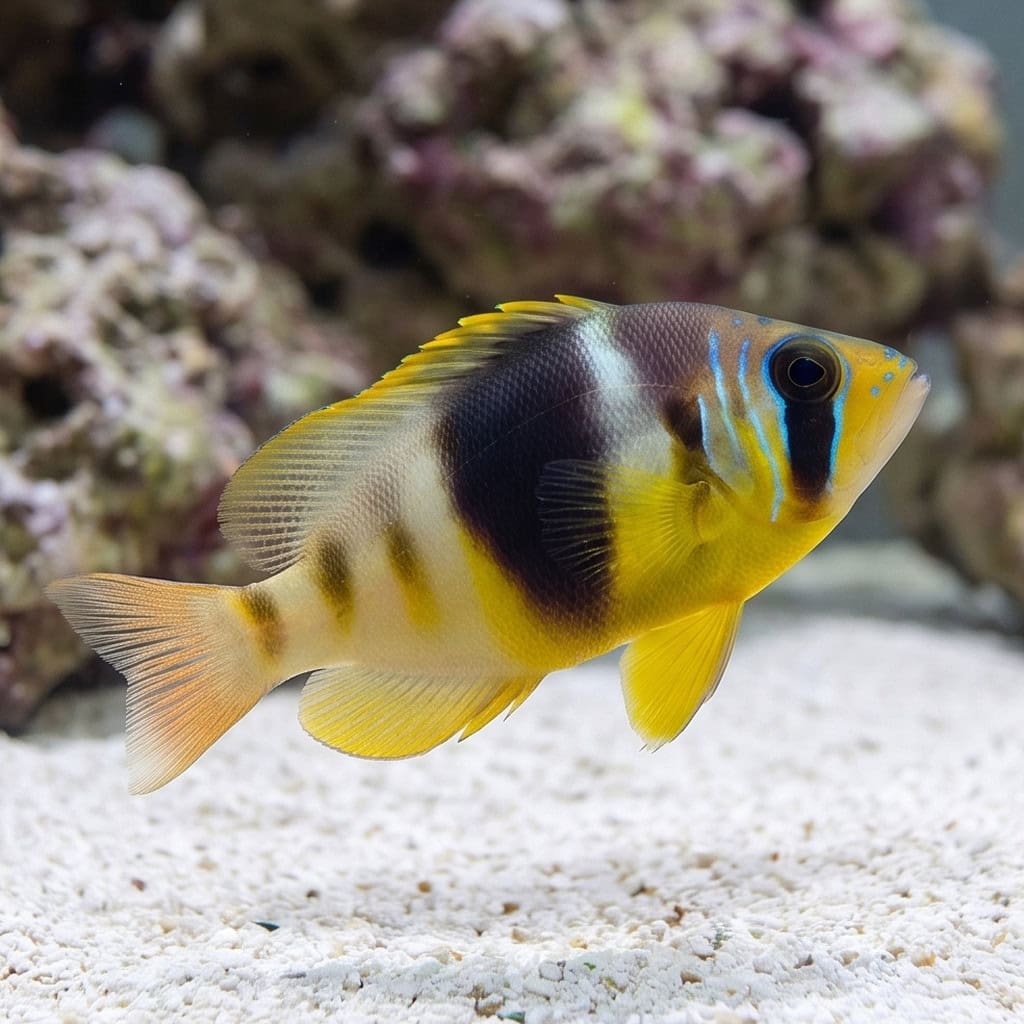
The Barred Hamlet (Hypoplectrus puella) is a Caribbean hamlet bass with a pale tan to yellow base color and bold, vertical dark bars. It stays a manageable size while still offering the thicker-bodied “mini grouper” look and a pronounced, predatory mouth profile.
What You’ll Observe:
- Hovering and slowly cruising around rockwork, then pausing to “post up” near a favorite cave or overhang
- A consistent routine of staying tucked in structure when the tank is bright, then becoming more active toward evening
- Quick, direct dashes from cover when food hits the water
- Short patrol loops around a chosen section of the aquascape, especially once it’s settled in
For best results, provide a rockscape with multiple caves and shaded ledges so it can pick a home base and move between cover points. Offer meaty, bite-sized foods (like mysis, chopped shrimp, or similar frozen blends) and feed in a consistent spot so it learns the routine. It does best with tankmates that won’t be viewed as bite-sized and that are comfortable around an assertive, cave-oriented fish.
Will a Barred Hamlet eat smaller fish once it’s settled in?
Hobbyists commonly report that a hamlet’s “safe size” is based on what it can fit in its mouth, and that smaller, slender fish are the most likely to be targeted over time. Choosing tankmates with more body depth (and not introducing tiny additions later) tends to work better.
Are cleaner shrimp, peppermint shrimp, or small crabs compatible?
Some keepers report hamlets ignoring shrimp for long periods, while others report shrimp disappearing as the hamlet grows or becomes more confident. If ornamental shrimp are a priority, plan livestock so the shrimp are clearly not bite-sized relative to the hamlet.
Why does it “vanish” into the rockwork for stretches of the day?
Many owners describe hamlets as cave-first fish that pick a specific hiding spot and watch the tank from there, especially under brighter lighting. As they learn your feeding schedule, they’re often seen out more predictably.
What if it ignores frozen foods at first?
Keepers often have the best luck by offering small, meaty items near the fish’s preferred cave and repeating the same feeding routine daily so it connects your approach with food. Once it’s taking food confidently, most transition to a varied frozen diet without needing live food long-term.
Is it a good match for slow or unusual-shaped fish (like seahorses)?
Reefers generally advise against pairing hamlets with slow, deliberate feeders or fish that spend a lot of time stationary, since the hamlet’s hunting style and mouth size can create unwanted pressure in that type of setup.
We work with trusted suppliers who keep our specimens healthy and well-fed before shipping.
Recently viewed products