
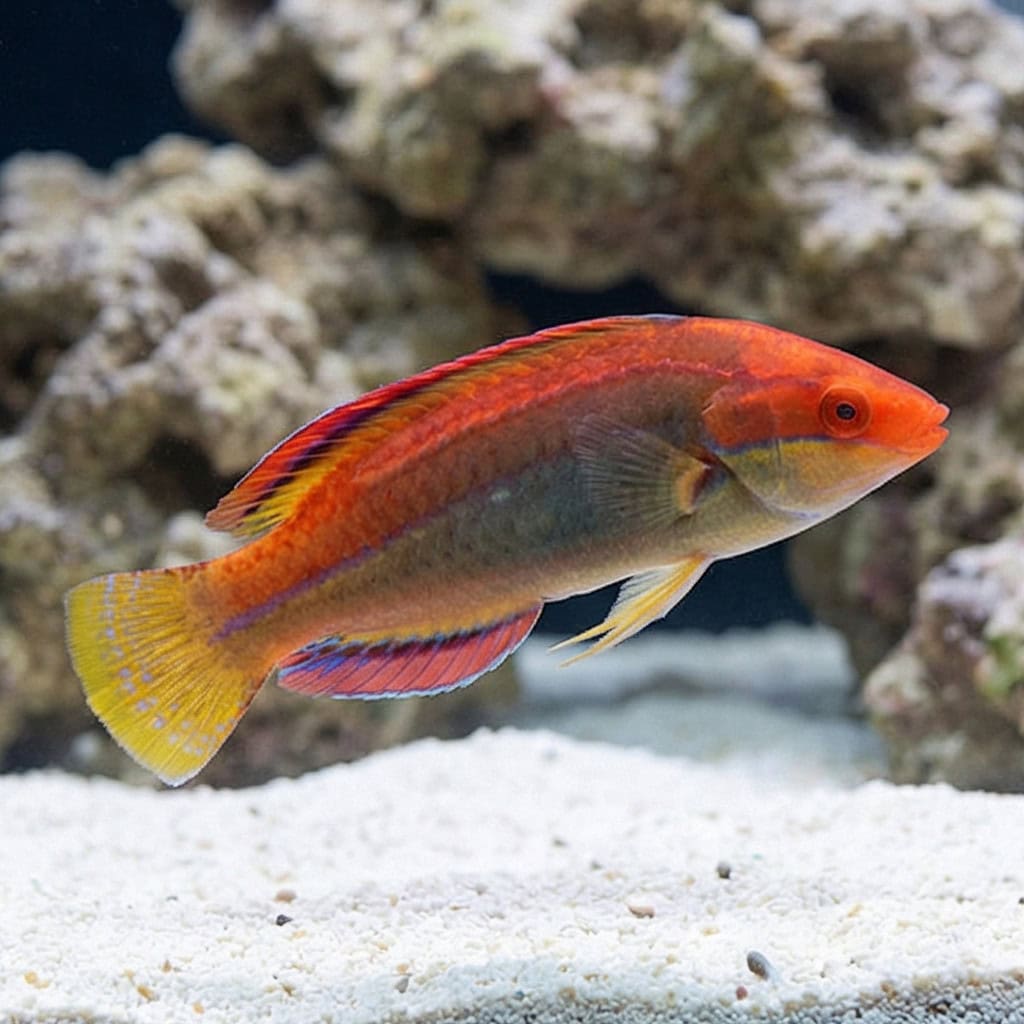
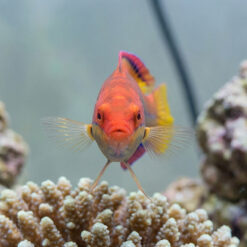
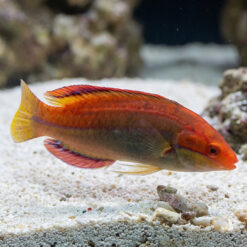
Temmincki Fairy Wrasse
Cirrhilabrus temmincki
| Stock | Variations | Price | Quantity |
|---|
Every order ships with our standard 3-hour live arrival guarantee. Need more time? Add our 5-Day Guarantee at checkout.
Full guarantee terms →Ships Monday – Thursday for next-day arrival at your nearest FedEx Hold location — typically ready by 9 AM. We monitor every delivery.
Shipping details →
Monday – Friday 8 AM – 9 PM
Saturday 12 PM – 4 PM
Sunday 12 PM – 9 PM
Healthy, stable animals from vetted suppliers — inspected before packing, shipped overnight. Decades of experience built this model so we can deliver premium livestock at 30%+ less than you'd pay elsewhere.
| Care Level | Moderate |
|---|---|
| Temperament | Peaceful |
| Reef Safe | Yes |
| Functional Benefit | Ornamental Only |
| Diet Type | Carnivore |
| Mininum Tank Size | 90 gallons |
| Max Size | 4 inches |
| Temperature | 72–78°F |
| pH Range | 8.1–8.4 |
| Specific Gravity | 1.022–1.025 |
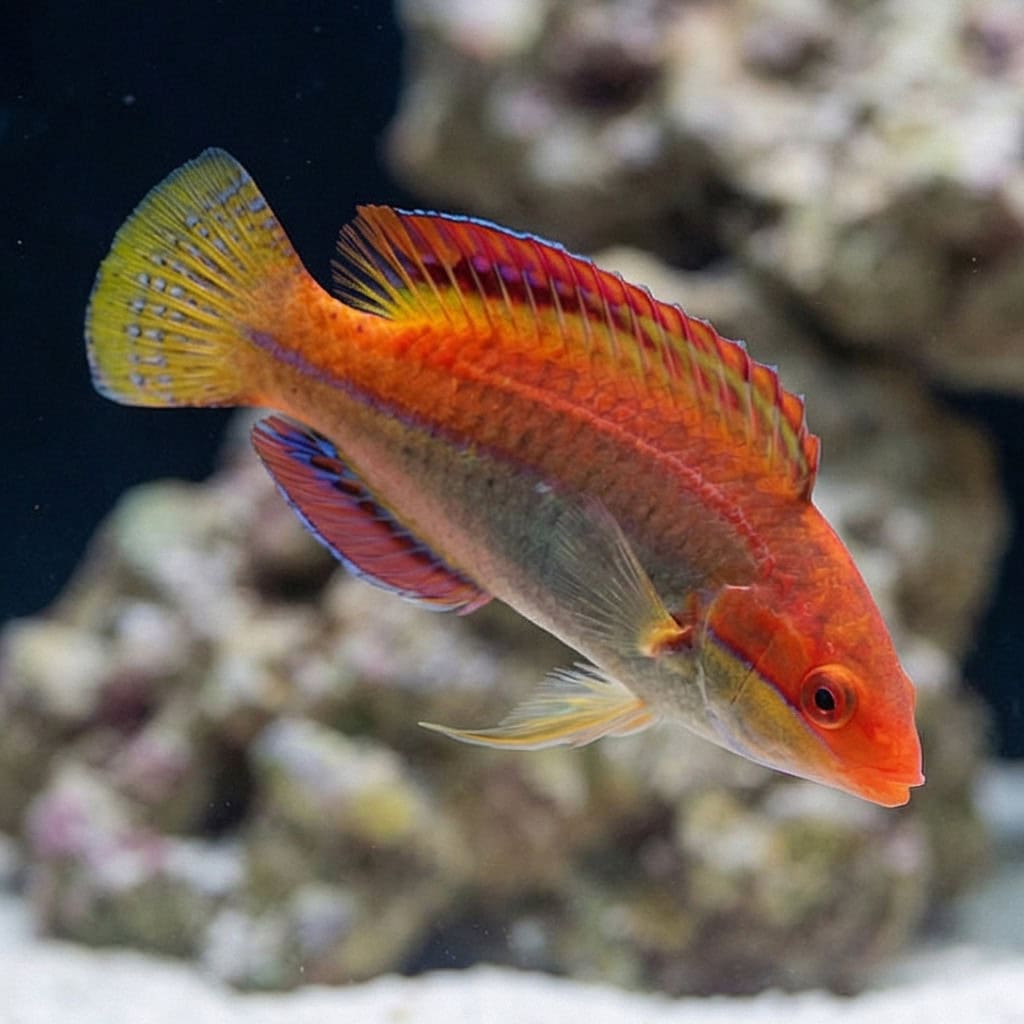
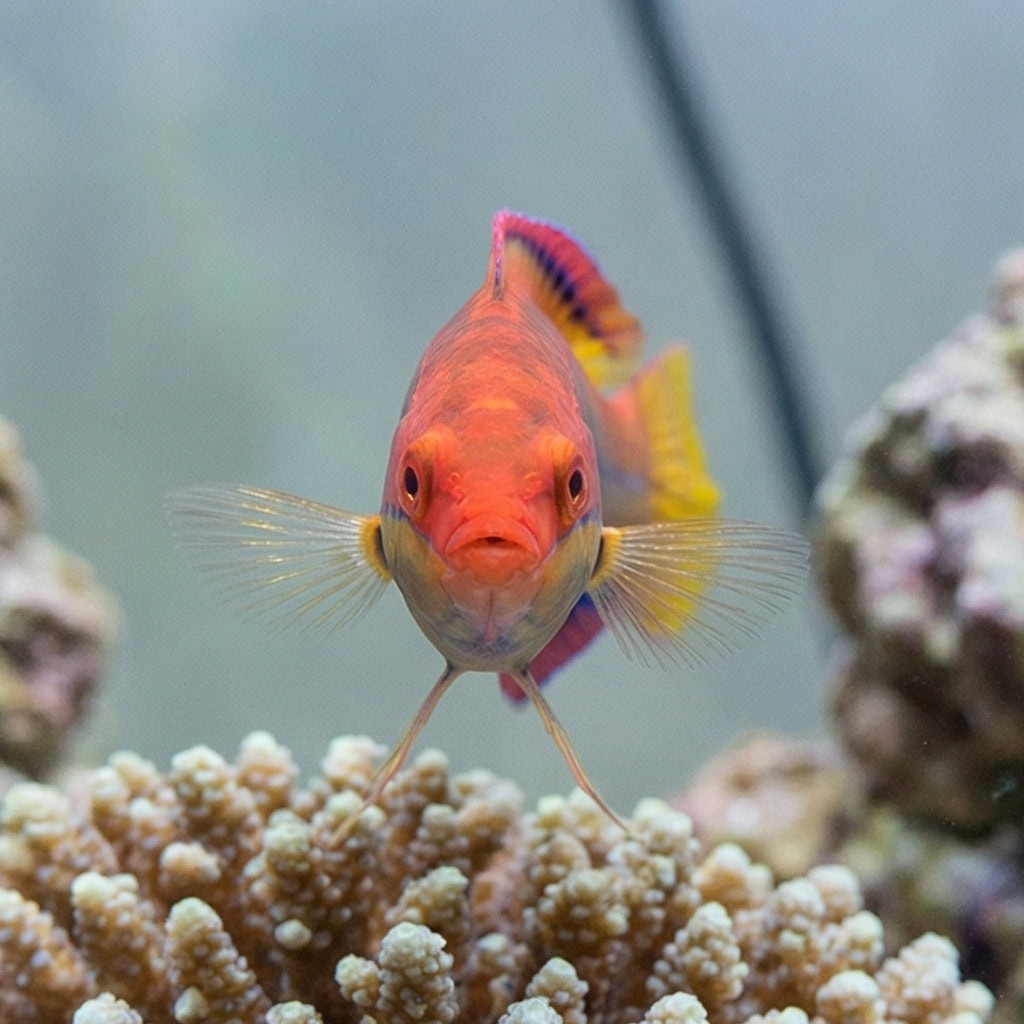
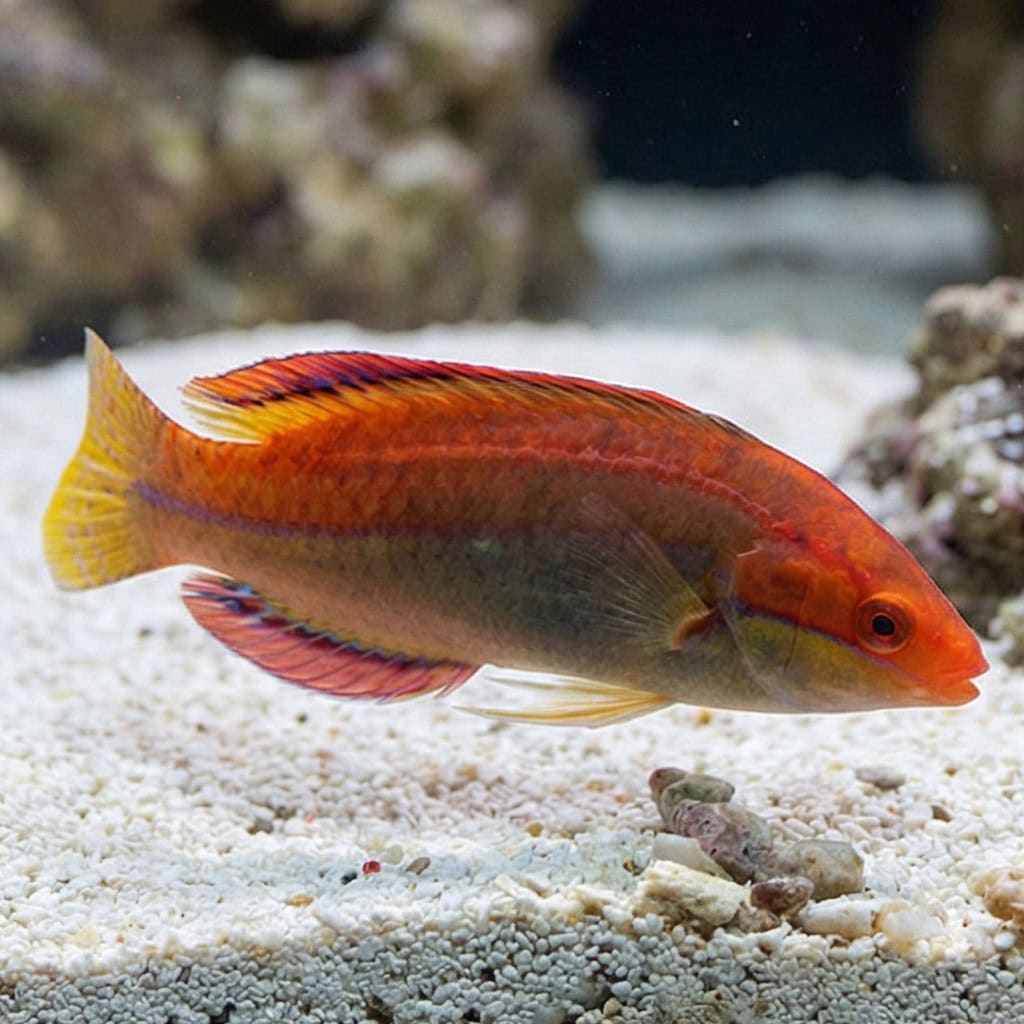
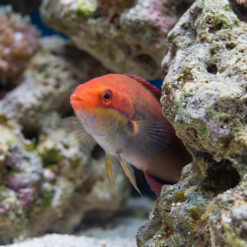
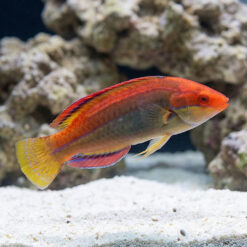
The Temmincki Fairy Wrasse (Cirrhilabrus temminckii) is a reef safe fairy wrasse that stays sleek and active in the water column while weaving through rockwork. Adult coloration can shift with mood and social displays, and males often show elongated pelvic fin filaments.
What You’ll Observe:
- Cruises the middle and upper areas of the tank, then quickly darts back to the rocks between laps
- “Flashing” behavior where colors intensify briefly during social moments, especially around dusk
- Picks small foods out of the water column and joins the feeding response quickly
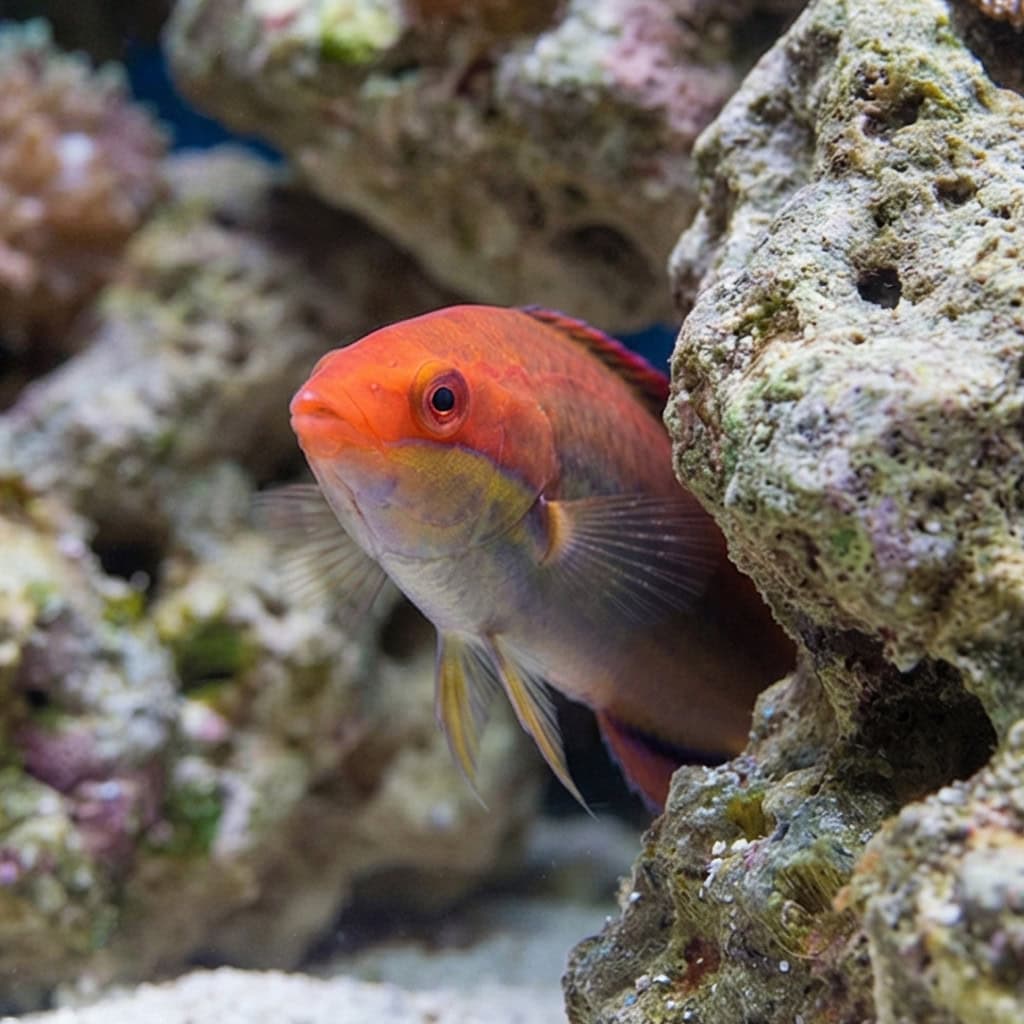
- Uses the rockwork as a regular rest spot at night, often returning to the same area
To help this wrasse settle in, provide open swimming lanes with plenty of rockwork caves and shaded breaks, plus a tightly covered top. Offer a mix of small meaty foods (like mysis and other fine frozen blends) multiple times per day. In mixed-wrasse communities, introducing it later (or using an acclimation box) helps keep interactions smooth.
Will this wrasse sleep in the sand like some other wrasses?
Most fairy wrasses choose a rock crevice or sheltered nook to rest at night, so you’ll usually see it “bed down” in the rockwork instead of burying.
Why does it look pale right after shipping or after the lights change?
Temporary paling is common during acclimation, when lights ramp up/down, or during social displays; stronger coloration usually returns as it settles into a routine.
Is it normal for it to disappear for a while after being added?
Yes—new wrasses often spend stretches exploring and then retreating to rockwork, especially during the first few days as they learn safe routes and sleeping spots.
Can I keep it with other fairy wrasses without constant fighting?
Many hobbyists have success by mixing different body shapes/colors, adding the most assertive fish last, and giving multiple “breaks” in the aquascape to reduce face-to-face laps.
Do females turn into males over time?
Like many fairy wrasses, groups can shift socially; the dominant individual may develop stronger display behavior and more pronounced fin features over time.
We work with trusted suppliers who keep our specimens healthy and well-fed before shipping.
Recently viewed products