Blue Spot Stingray
Taeniura lymma
| Stock | Variations | Price | Quantity |
|---|
Every order ships with our standard 3-hour live arrival guarantee. Need more time? Add our 5-Day Guarantee at checkout.
Full guarantee terms →Ships Monday – Thursday for next-day arrival at your nearest FedEx Hold location — typically ready by 9 AM. We monitor every delivery.
Shipping details →
Monday – Friday 8 AM – 9 PM
Saturday 12 PM – 4 PM
Sunday 12 PM – 9 PM
Healthy, stable animals from vetted suppliers — inspected before packing, shipped overnight. Decades of experience built this model so we can deliver premium livestock at 30%+ less than you'd pay elsewhere.
| Care Level | Expert |
|---|---|
| Temperament | Peaceful |
| Reef Safe | With Caution |
| Functional Benefit | Ornamental Only |
| Diet Type | Carnivore |
| Mininum Tank Size | 300 gallons+ |
| Max Size | 18 inches |
| Temperature | 72–78°F |
| pH Range | 8.1–8.4 |
| Specific Gravity | 1.022–1.025 |
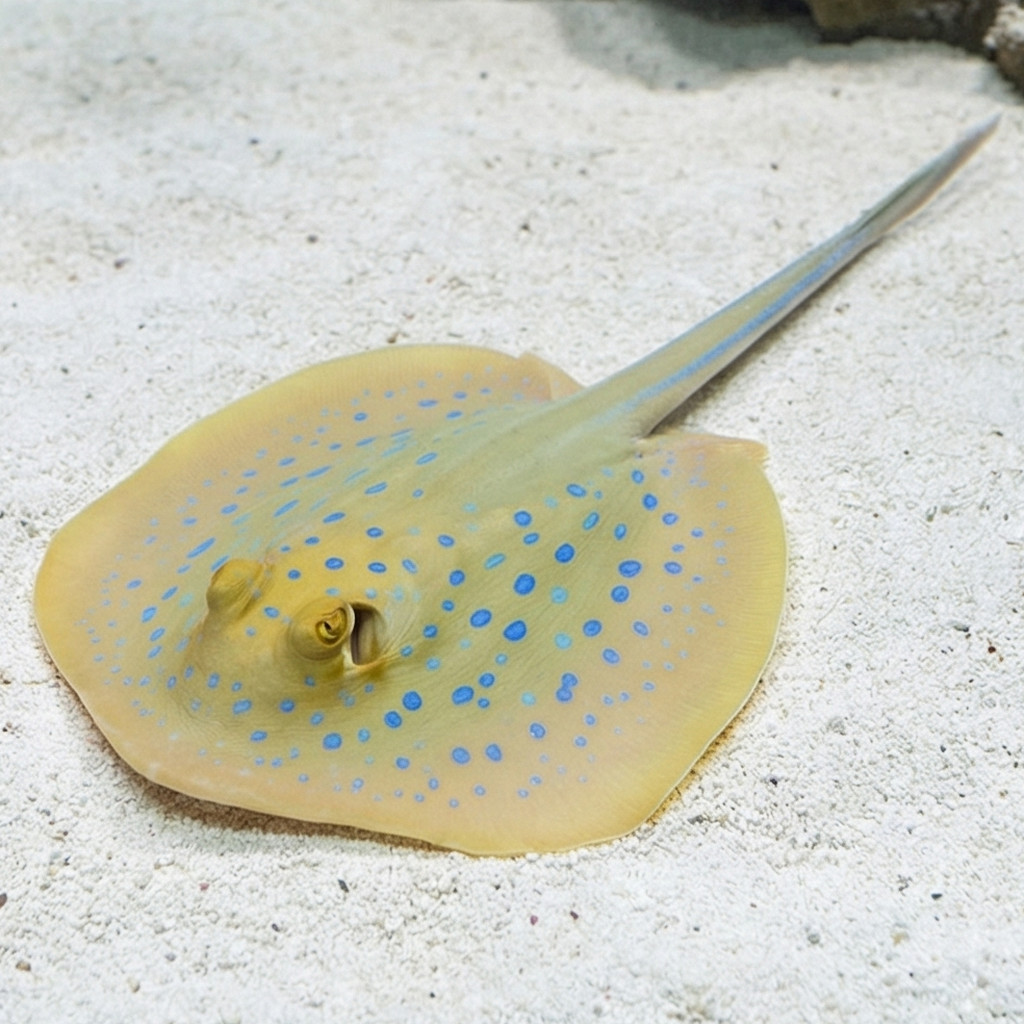
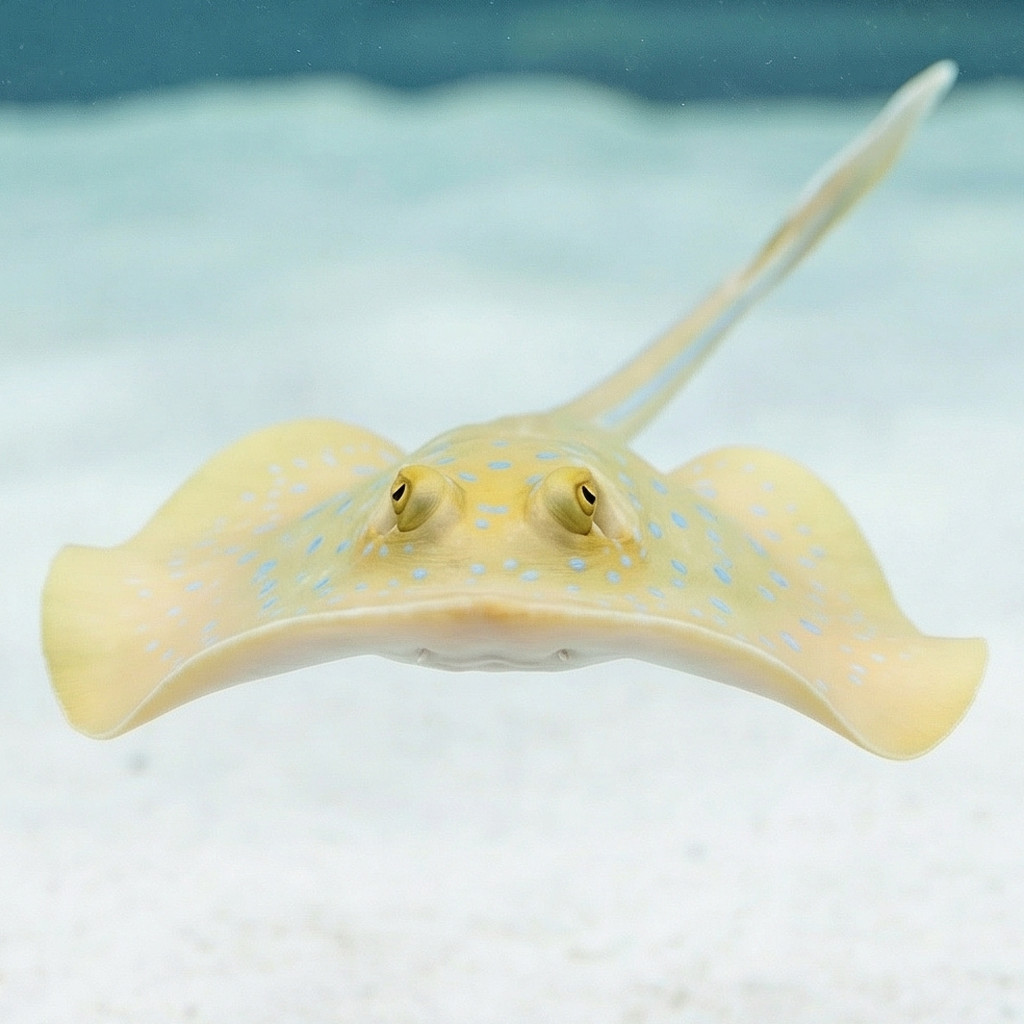
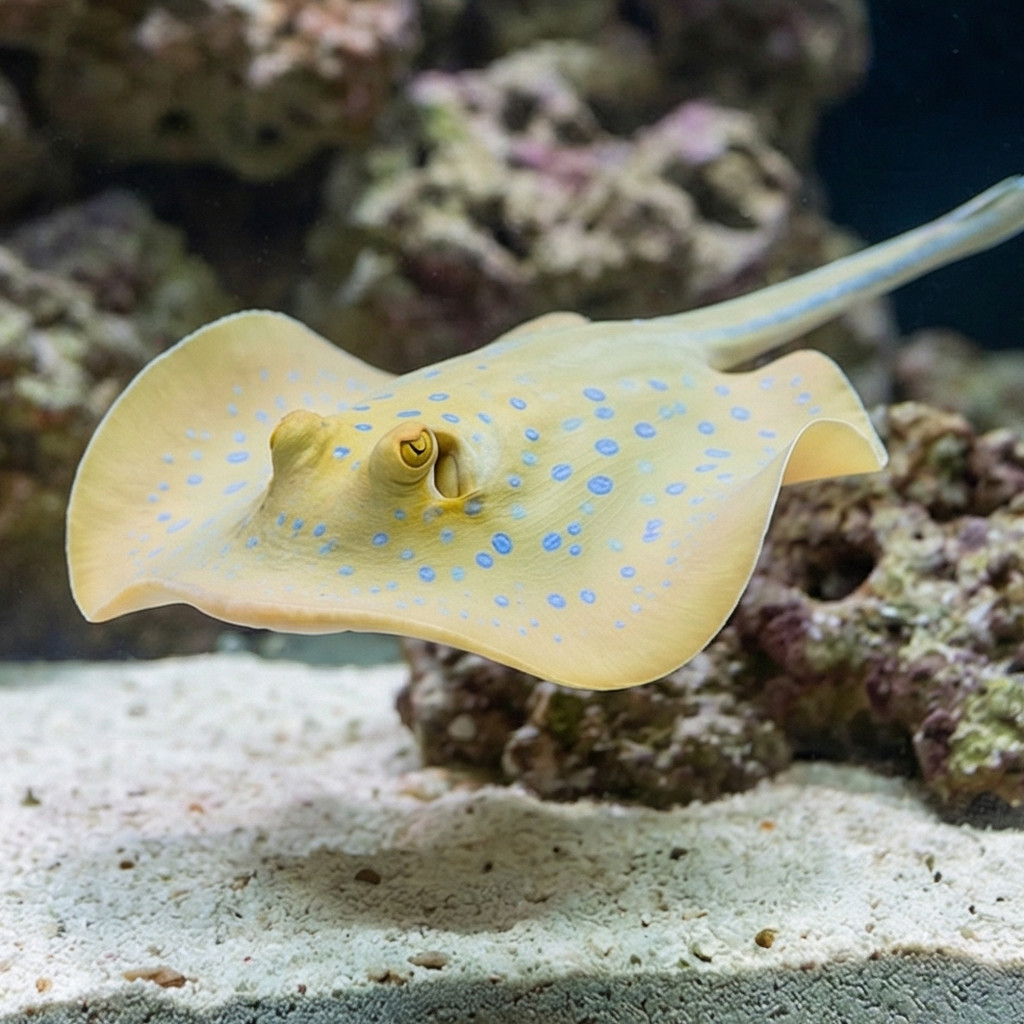
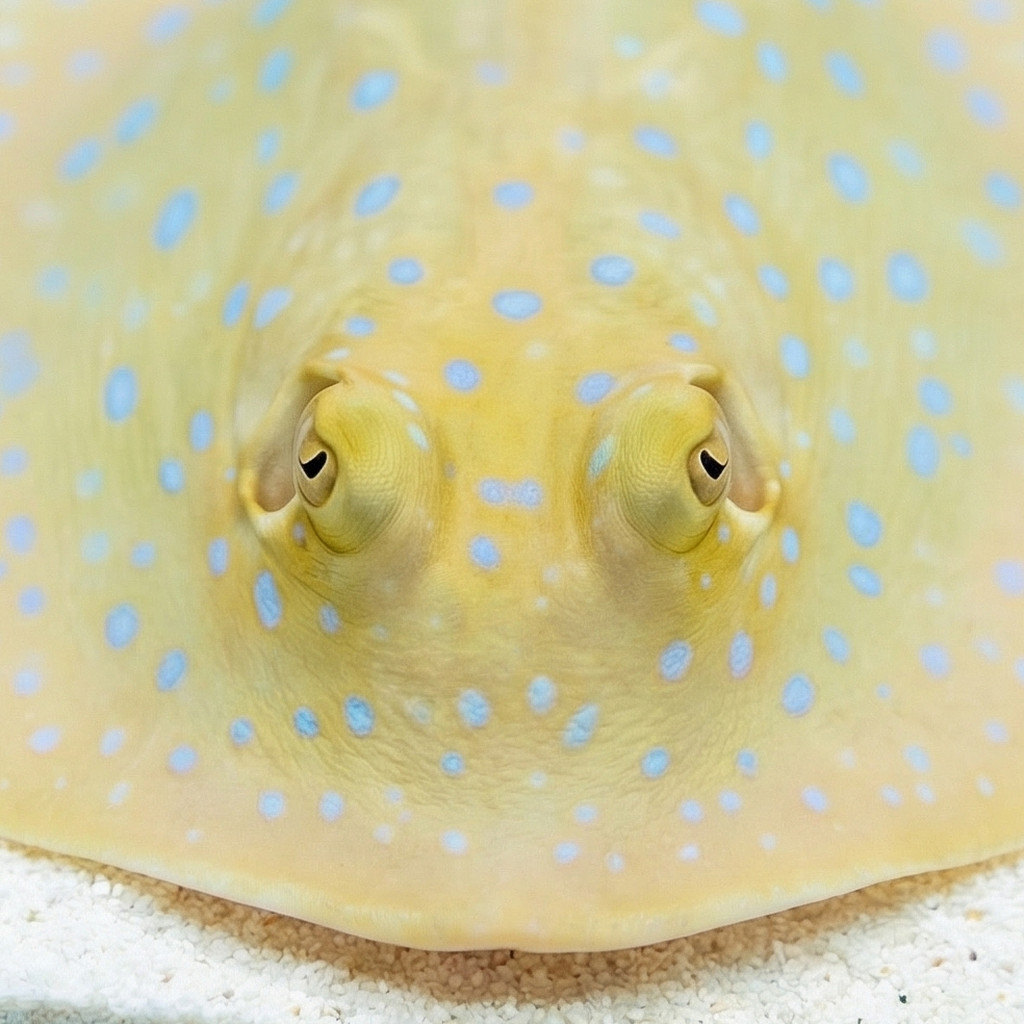
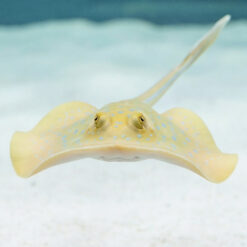
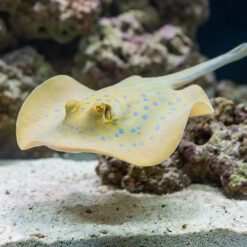
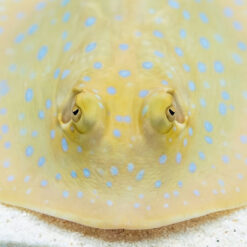
The Blue Spot Stingray (Taeniura lymma), also sold as the Blue Dot Stingray or Bluespotted Ribbon Tail Ray, has a tan disc covered in bright blue spots and a ribbon-striped tail. It’s a bottom-dwelling ray that spends most of its time cruising over open sand and using the substrate as cover.
What You’ll Observe:
- Long, smooth “gliding” laps along the front and open areas of the tank
- Regular resting periods under ledges and along sheltered edges of the aquascape
- Sand “dusting” behavior where it settles in and partially covers its disc
- Strong food recognition once it associates a spot (or feeding tongs) with meaty offerings
To succeed, provide a wide, open sandbed with stable rockwork so the ray can move without tight squeezes, and keep water quality consistent with reef parameters. Offer meaty foods on the sand (like squid, shrimp, scallop, and marine fish pieces) and build a repeatable feeding routine so it learns where food will land.
How long does it usually take a new Blue Spot Stingray to learn prepared foods?
Many keepers report a “training” period where the ray starts with live foods and then transitions to thawed seafood once it recognizes the feeding method.
Why does it keep covering itself with sand?
It’s a normal settling behavior—many rays use sand both for camouflage and for comfortable resting.
Will it rearrange frags or knock over loose corals?
It can shift sand and bump unsecured items while cruising; most keepers solve this by placing frags on stable racks or mounting corals firmly.
Is it normal to only see it more active at certain times of day?
Yes—owners often describe a pattern of daytime resting and increased movement when the tank quiets down.
Do Blue Spot Stingrays do better alone or with another ray present?
Some hobbyists discuss using an established, feeding ray as a “teacher,” but success depends heavily on having enough space and a calm feeding environment.
Shipped with pure oxygen and temperature control so it arrives stress-free and ready to eat.
Recently viewed products