
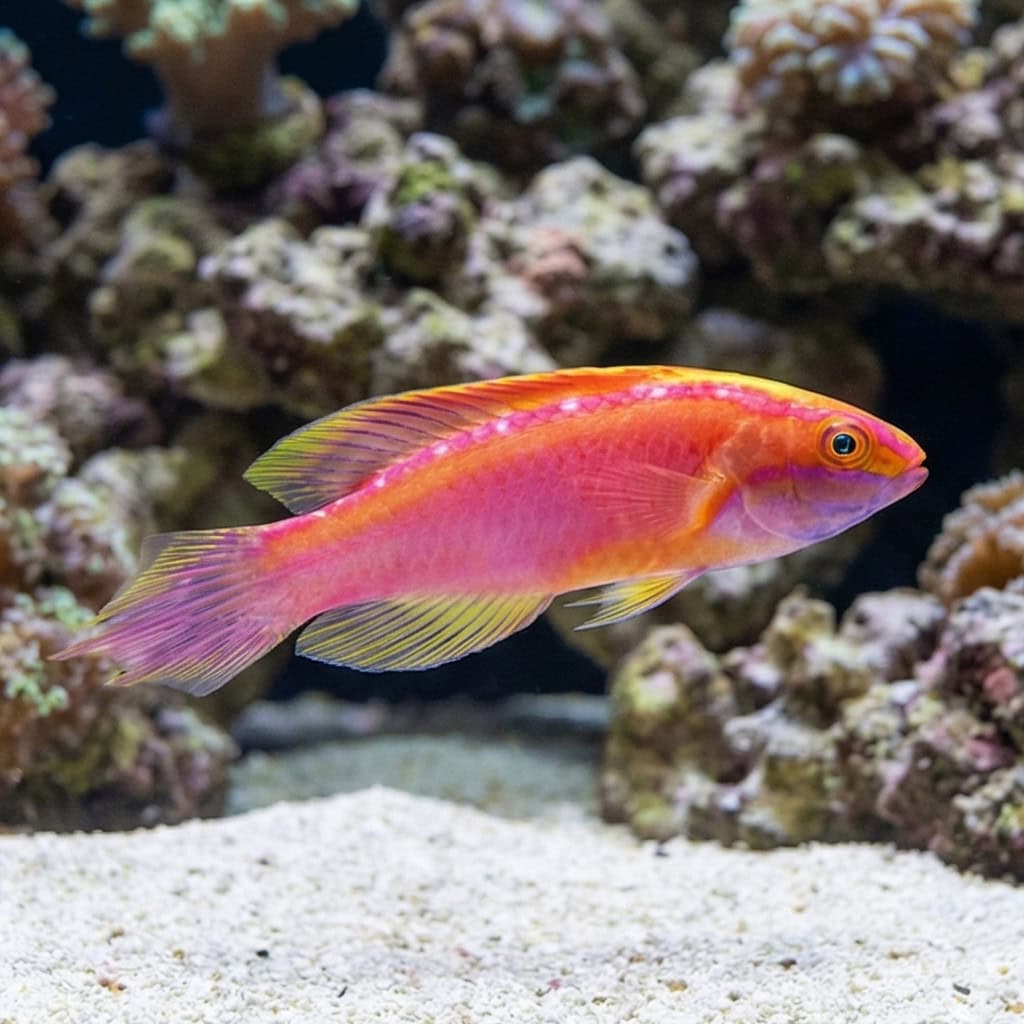
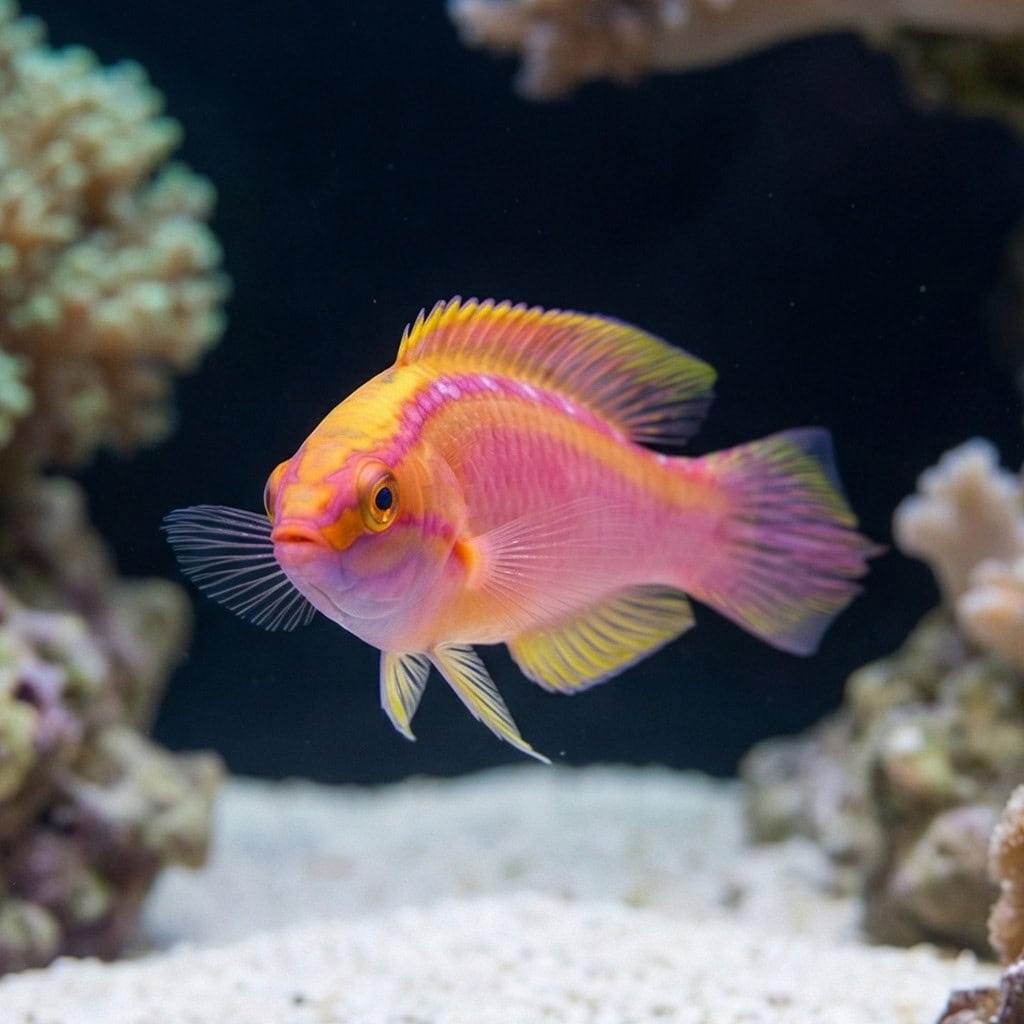
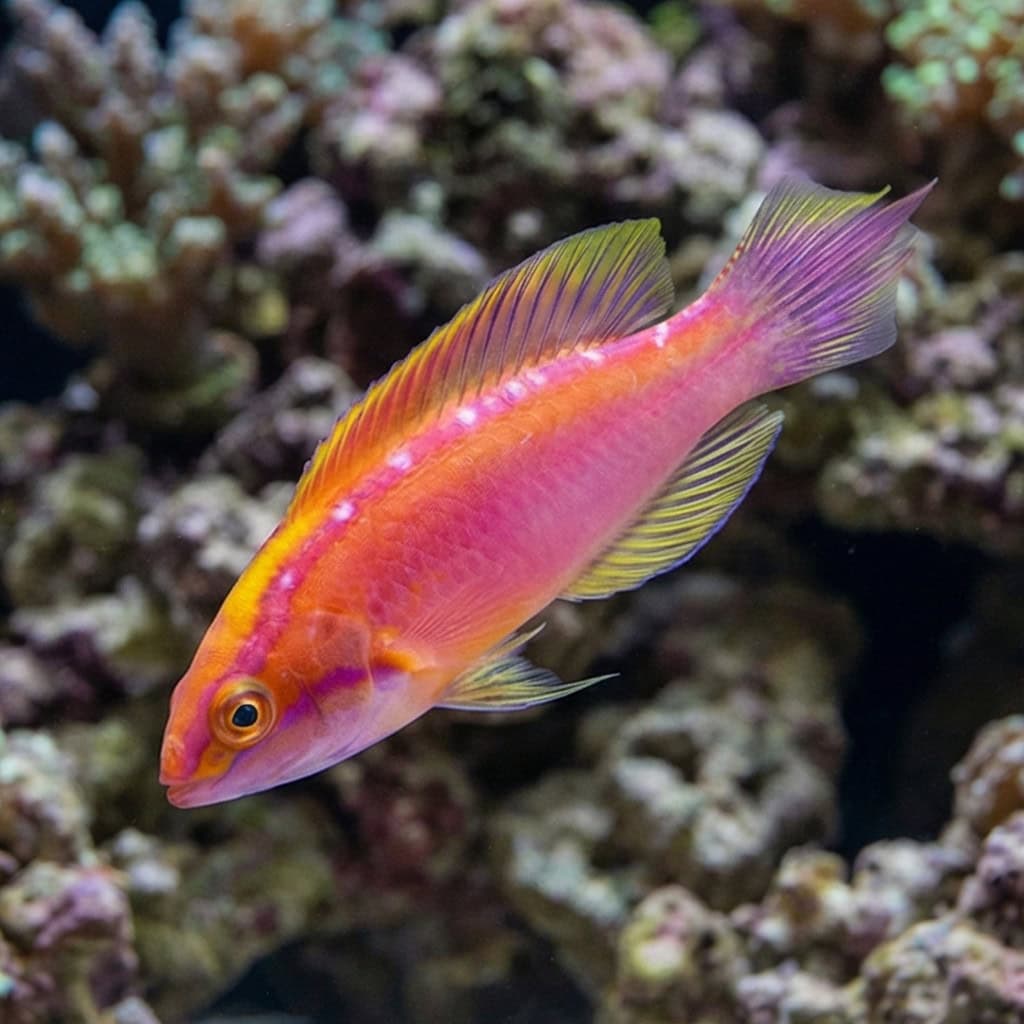
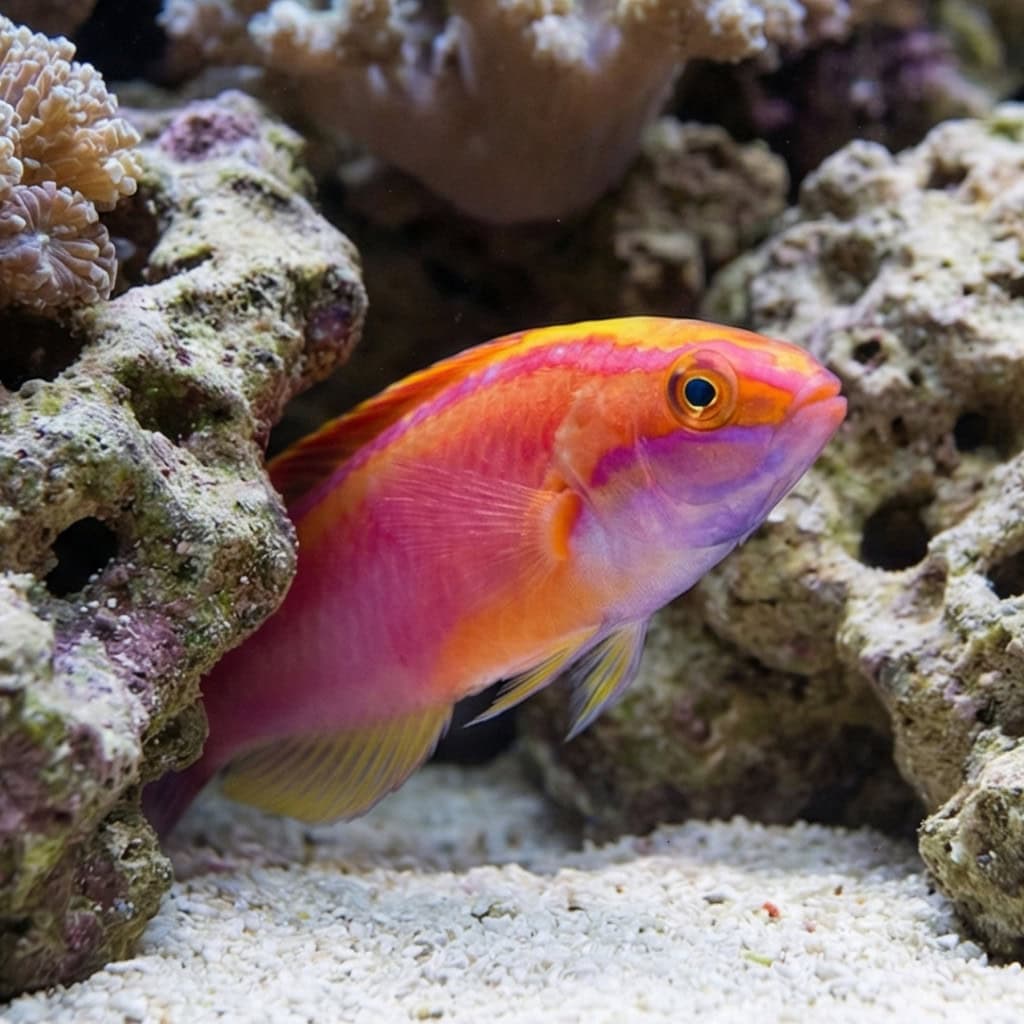
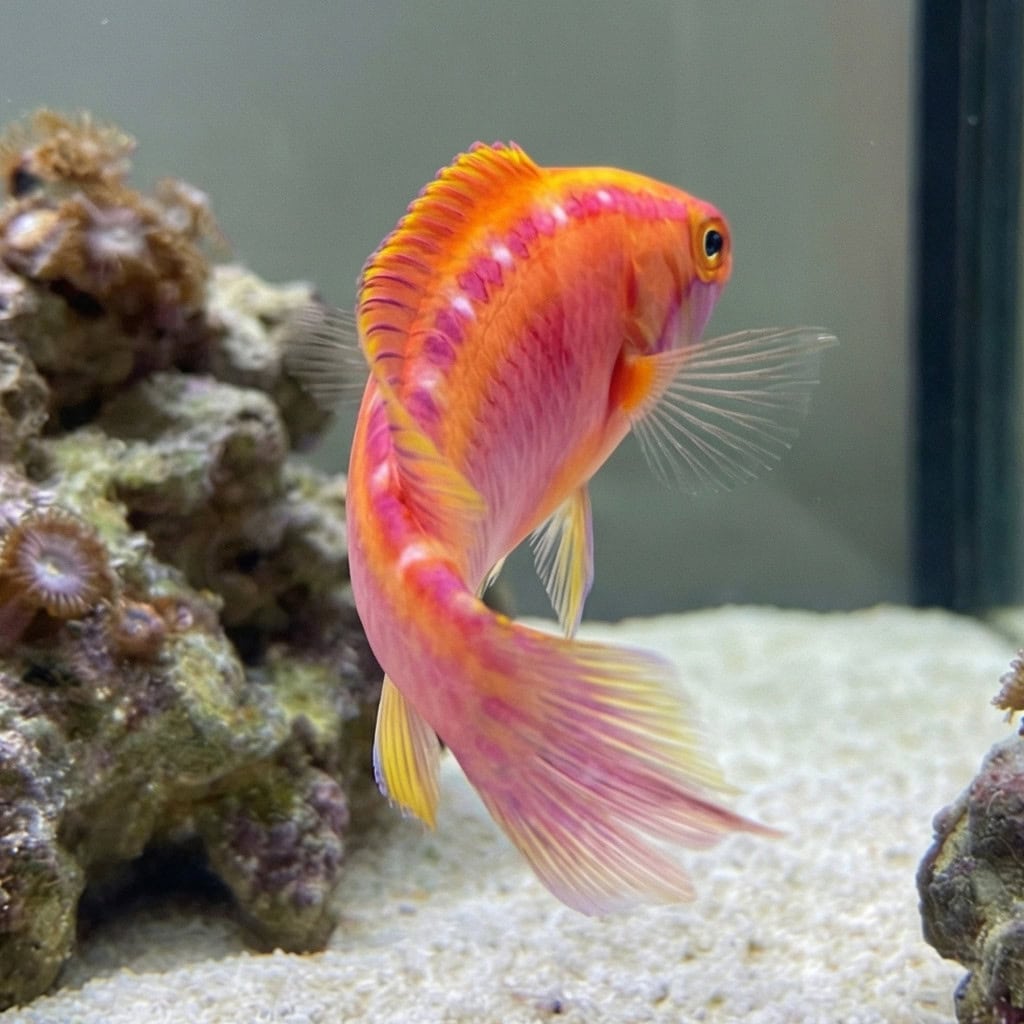
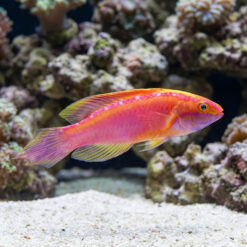
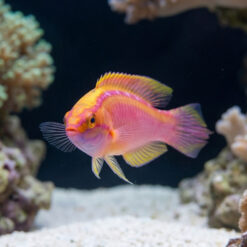
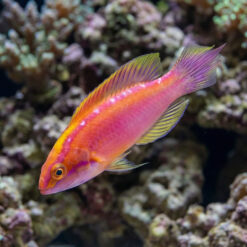
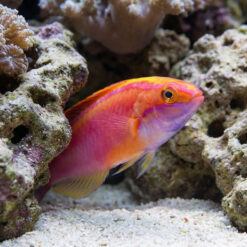
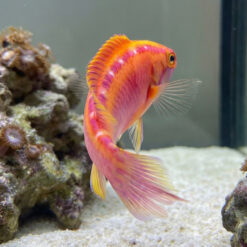
Rose Band Fairy Wrasse
Cirrhilabrus roseafascia
| Stock | Variations | Price | Quantity | |
|---|---|---|---|---|
| Out of Stock | 2" or smaller - Indo-Pacific | Original price was: $775.99.$407.99Current price is: $407.99. | Email me |
Every order ships with our standard 3-hour live arrival guarantee. Need more time? Add our 5-Day Guarantee at checkout.
Full guarantee terms →Ships Monday – Thursday for next-day arrival at your nearest FedEx Hold location — typically ready by 9 AM. We monitor every delivery.
Shipping details →
Monday – Friday 8 AM – 9 PM
Saturday 12 PM – 4 PM
Sunday 12 PM – 9 PM
Healthy, stable animals from vetted suppliers — inspected before packing, shipped overnight. Decades of experience built this model so we can deliver premium livestock at 30%+ less than you'd pay elsewhere.
| Care Level | Moderate |
|---|---|
| Temperament | Peaceful |
| Reef Safe | Yes |
| Functional Benefit | Ornamental Only |
| Diet Type | Carnivore |
| Mininum Tank Size | 90 gallons |
| Max Size | 4 inches |
| Temperature | 72–78°F |
| pH Range | 8.1–8.4 |
| Specific Gravity | 1.022–1.025 |
The Rose Band Fairy Wrasse (also commonly seen as the Pink-Banded Fairy Wrasse) is a Cirrhilabrus fairy wrasse with a distinct “rose-band” dorsal stripe and translucent fins, with males developing a longer, tapering tail as they mature. It’s a deep-reef species from the Western Pacific and is typically encountered at greater depths than many commonly kept fairy wrasses.
What You’ll Observe:
- Steady, cruising swims in the open water column with frequent passes over the rockwork
- Short bursts of speed and quick “turns” through arches and gaps, especially during active periods
- Color intensity shifting through the day, with the strongest display behavior often occurring around other wrasses
- A consistent bedtime routine where it settles into the rockwork to rest rather than burying in the sand
How to succeed: Provide an established reef with plenty of rockwork caves and a few shaded areas so it can move between open water and cover. Offer a mix of small meaty frozen foods plus a high-quality pellet 2–3 times daily to match its constant activity level. A tight-fitting lid helps this active swimmer settle in confidently and stay on a predictable routine.
Does the tail shape stay the same as it grows?
Terminal males develop a longer, more tapering “pintail” look over time, while juveniles and females keep a shorter, rounder tail profile.
Can you keep more than one Rose Band Fairy Wrasse together?
Many keepers plan groups as one male with multiple females, introduced with enough space and separate retreat areas so the fish can spread out and display naturally.
Will it sleep in the sand like some other wrasses?
Fairy wrasses are commonly reported to wedge into rock crevices at night and may form a light mucus “sleep cocoon,” so rockwork with calm, protected spots matters more than a deep sand bed.
Is it normal for it to “disappear” early on and then become more visible later?
Yes—many fairy wrasses start by using the rockwork heavily, then shift to longer, more confident open-water laps once they recognize the tank’s daily rhythm and feeding cues.
Will it accept pellets right away?
Some specimens take pellets immediately while others respond faster to small frozen foods first; once it associates you with feeding time, it often begins taking pellets in the water column.
Shipped with pure oxygen and temperature control so it arrives stress-free and ready to eat.
Recently viewed products