
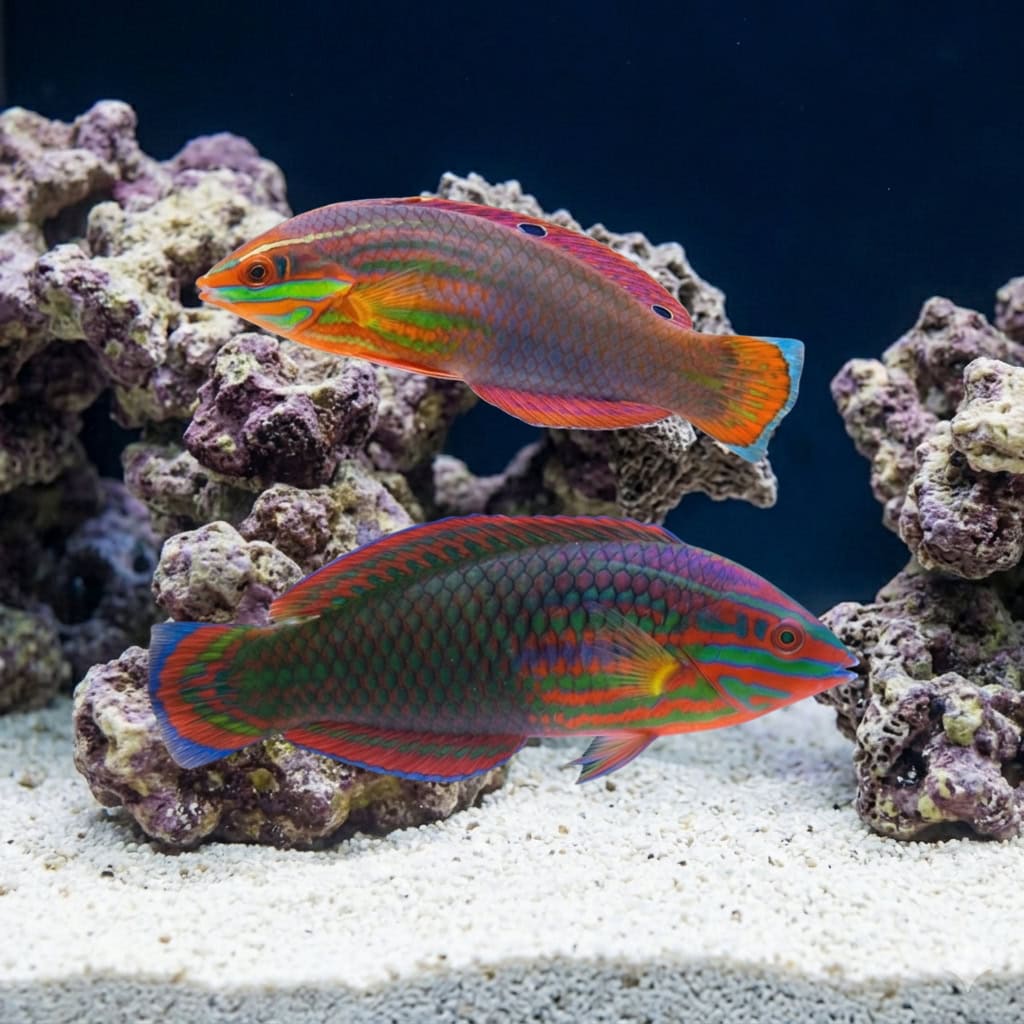
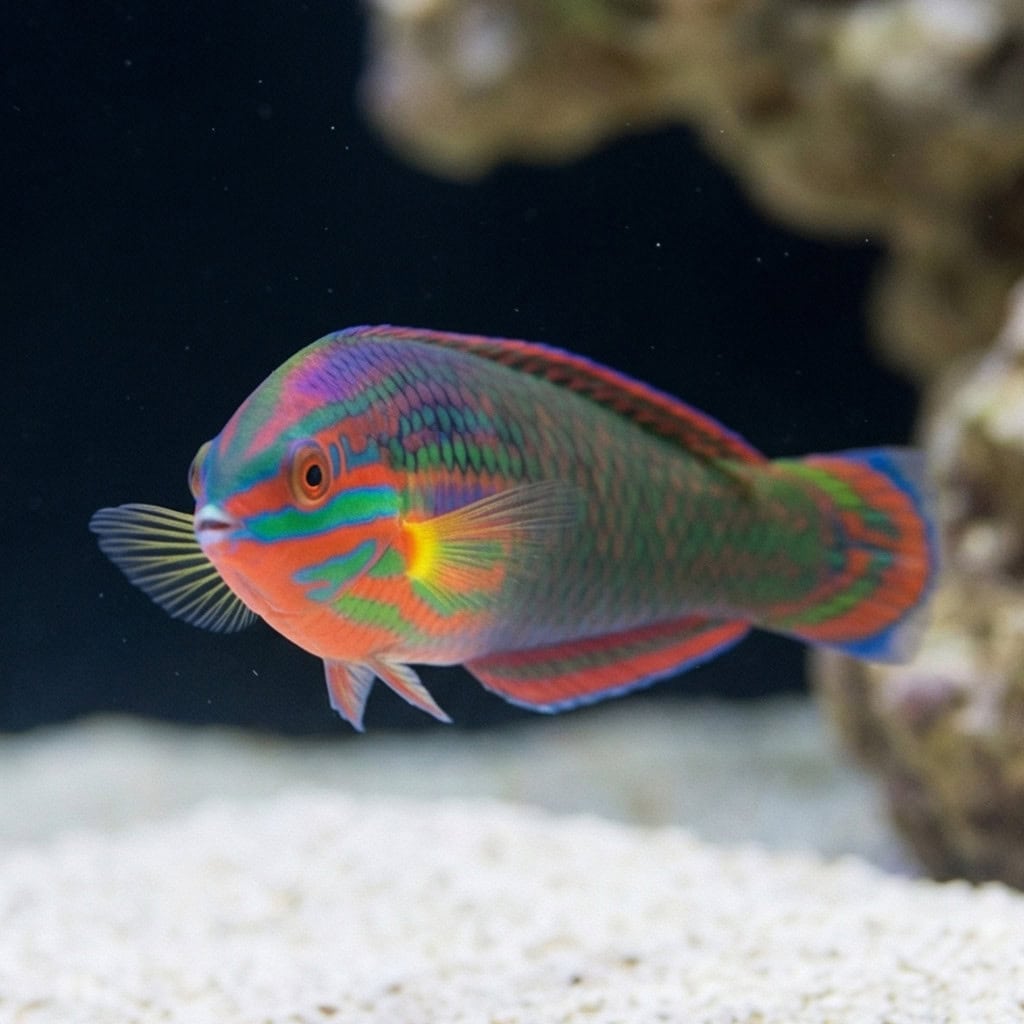
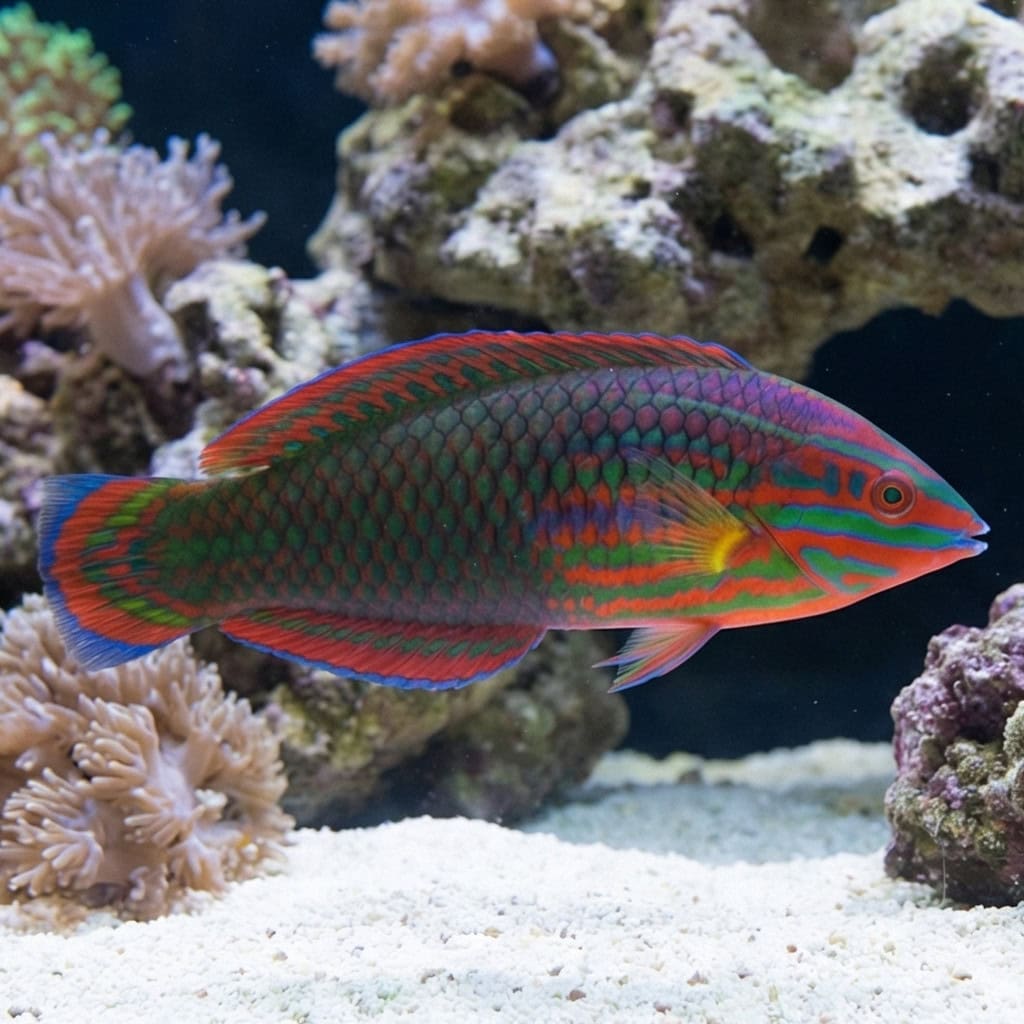
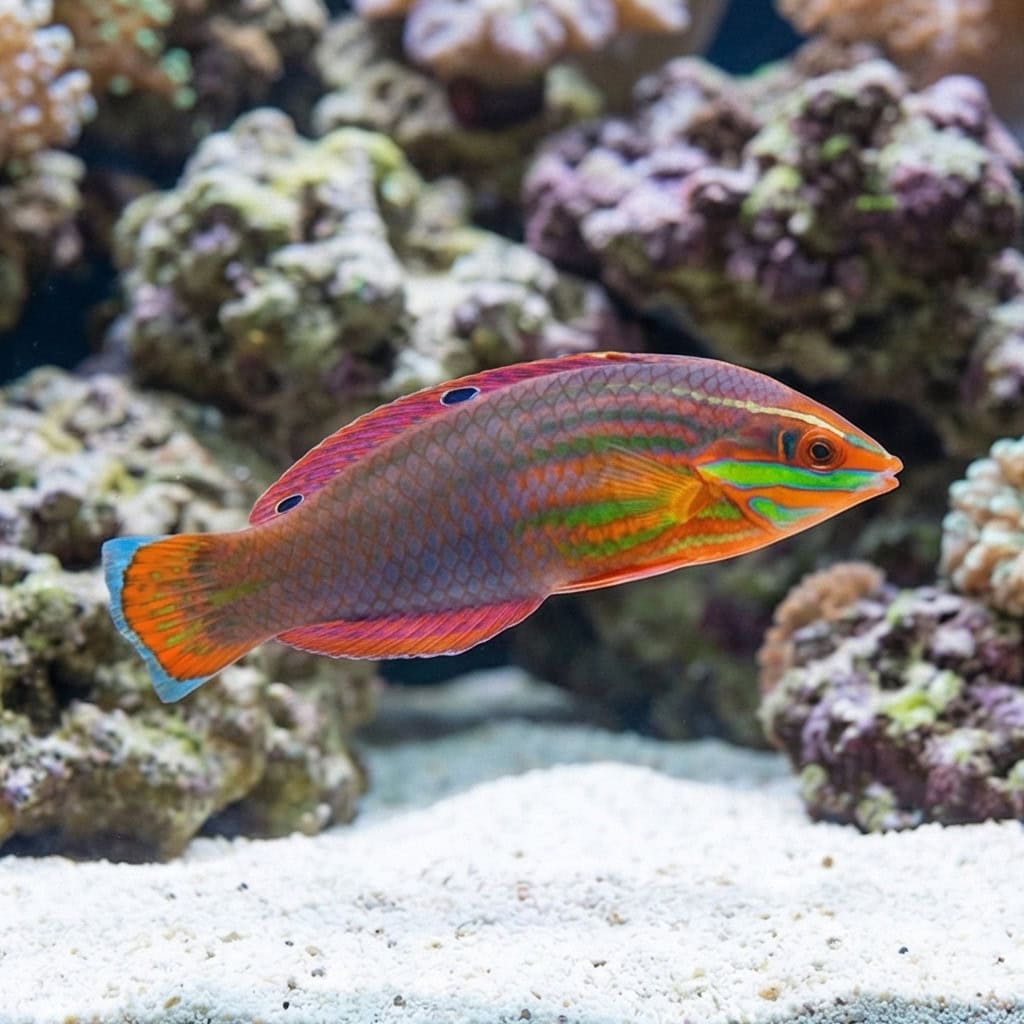
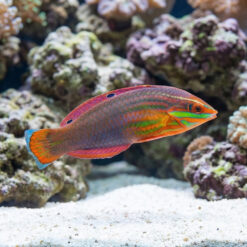
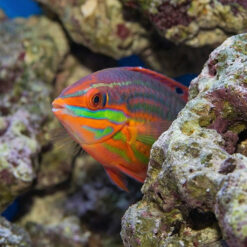
Red-Lined Wrasse
Halichoeres biocellatus
Original price was: $106.99.$55.99Current price is: $55.99.
| Stock | Variations | Price | Quantity |
|---|
Every order ships with our standard 3-hour live arrival guarantee. Need more time? Add our 5-Day Guarantee at checkout.
Full guarantee terms →Ships Monday – Thursday for next-day arrival at your nearest FedEx Hold location — typically ready by 9 AM. We monitor every delivery.
Shipping details →
Monday – Friday 8 AM – 9 PM
Saturday 12 PM – 4 PM
Sunday 12 PM – 9 PM
Healthy, stable animals from vetted suppliers — inspected before packing, shipped overnight. Decades of experience built this model so we can deliver premium livestock at 30%+ less than you'd pay elsewhere.
| Care Level | Easy |
|---|---|
| Temperament | Peaceful |
| Reef Safe | With Caution |
| Functional Benefit | Pest Control |
| Diet Type | Carnivore |
| Mininum Tank Size | 55 gallons |
| Max Size | 5 inches |
| Temperature | 72–78°F |
| pH Range | 8.1–8.4 |
| Specific Gravity | 1.022–1.025 |
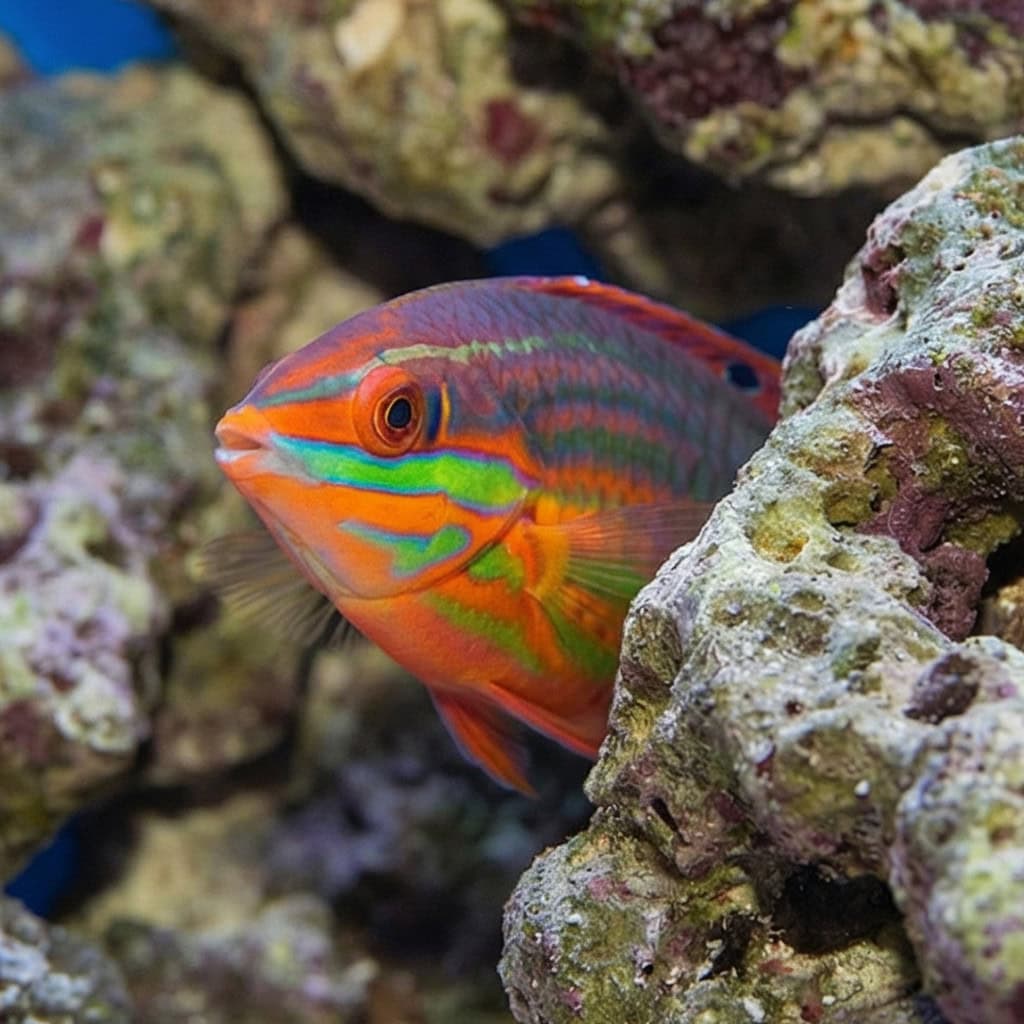
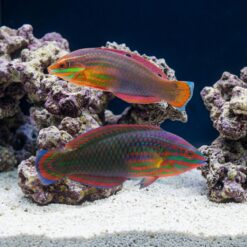
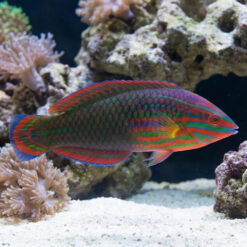
The Red-Lined Wrasse (Halichoeres biocellatus) is an active Halichoeres wrasse from the tropical western Pacific that spends the day cruising rockwork and sand while picking at small nuisance pests. Color and pattern vary by life stage, with many individuals showing fine red/orange striping and (in juveniles/females) two distinct “eye spots” on the dorsal fin.
What You’ll Observe:
- Constant daytime patrols, with quick stops to peck at the rock and sand surface
- A fast dive into the sand at lights-out, and a similar “sand sleep” response when startled
- An adjustment period where it may stay buried for the first few days, then begin a steady daily routine
- Regular exploration of open areas and around the base of reef rock
How to succeed: Provide a fine sandbed deep enough for nightly burying, plus open swimming lanes around stable rockwork. Offer a mix of frozen and prepared meaty foods in small portions, and use a well-covered top to support confident, consistent daily activity.
Why did my Red-Lined Wrasse “vanish” right after I added it?
It’s common for Halichoeres wrasses to bury into the sand and stay out of sight during their first days while they settle into a routine.
Is it normal for this wrasse to lie on its side in quarantine?
In a bare-bottom setup, many sand-sleeping wrasses try to wedge under objects at rest; a small container of sand can give it a more natural “sleep spot.”
Do Red-Lined Wrasses jump?
Many wrasses can launch when startled, so a tight-fitting lid or mesh top helps keep their daily patrols inside the aquarium.
Will it toss sand onto nearby corals when it dives into the bed?
Some sand-sleeping wrasses can kick up sand as they dive in and out; keeping a little open sand “landing zone” reduces sand landing on low frags.
How do I introduce it if I already keep other wrasses?
Add it when the aquascape has multiple sleeping zones and plenty of swim room, and introduce wrasses in an order that avoids crowding one fish into a single preferred sand area.
Each fish is checked for strong appetite and activity before we approve it for your tank.
Recently viewed products