
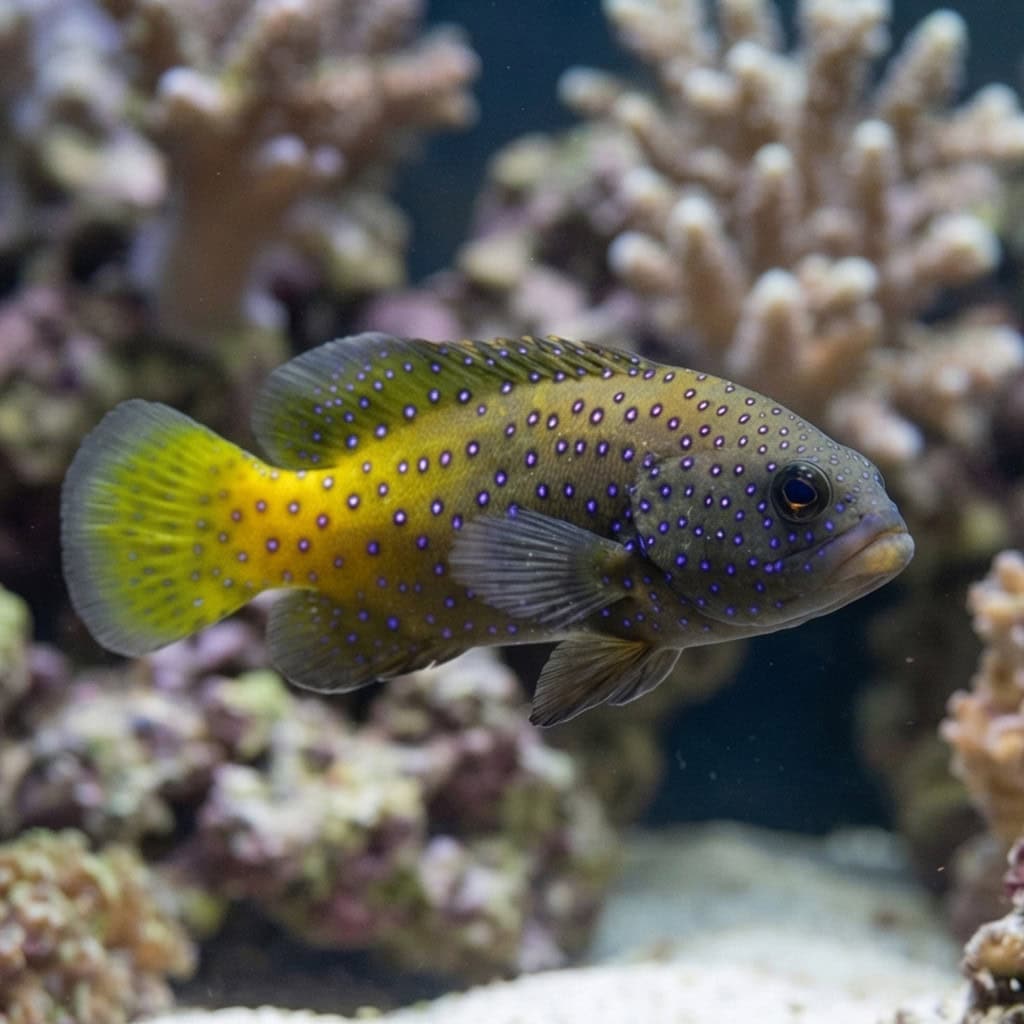
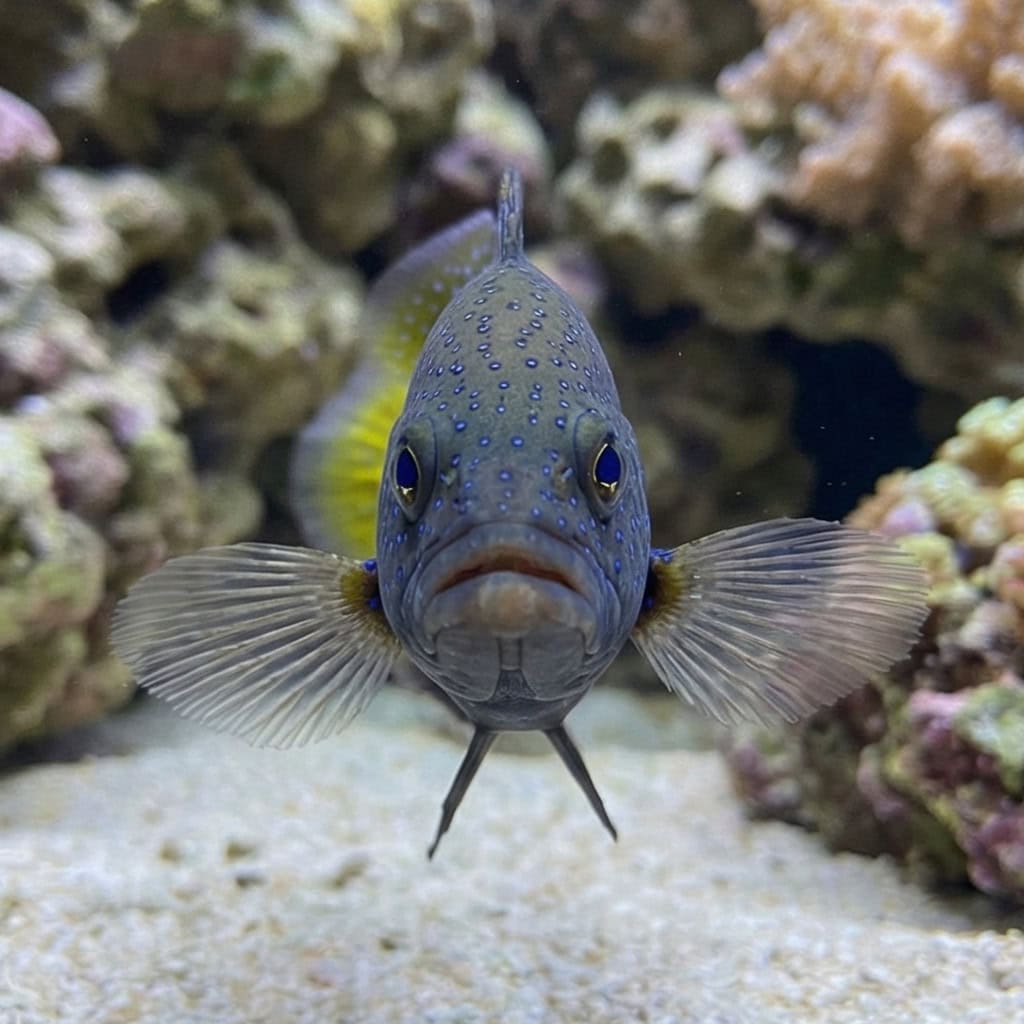
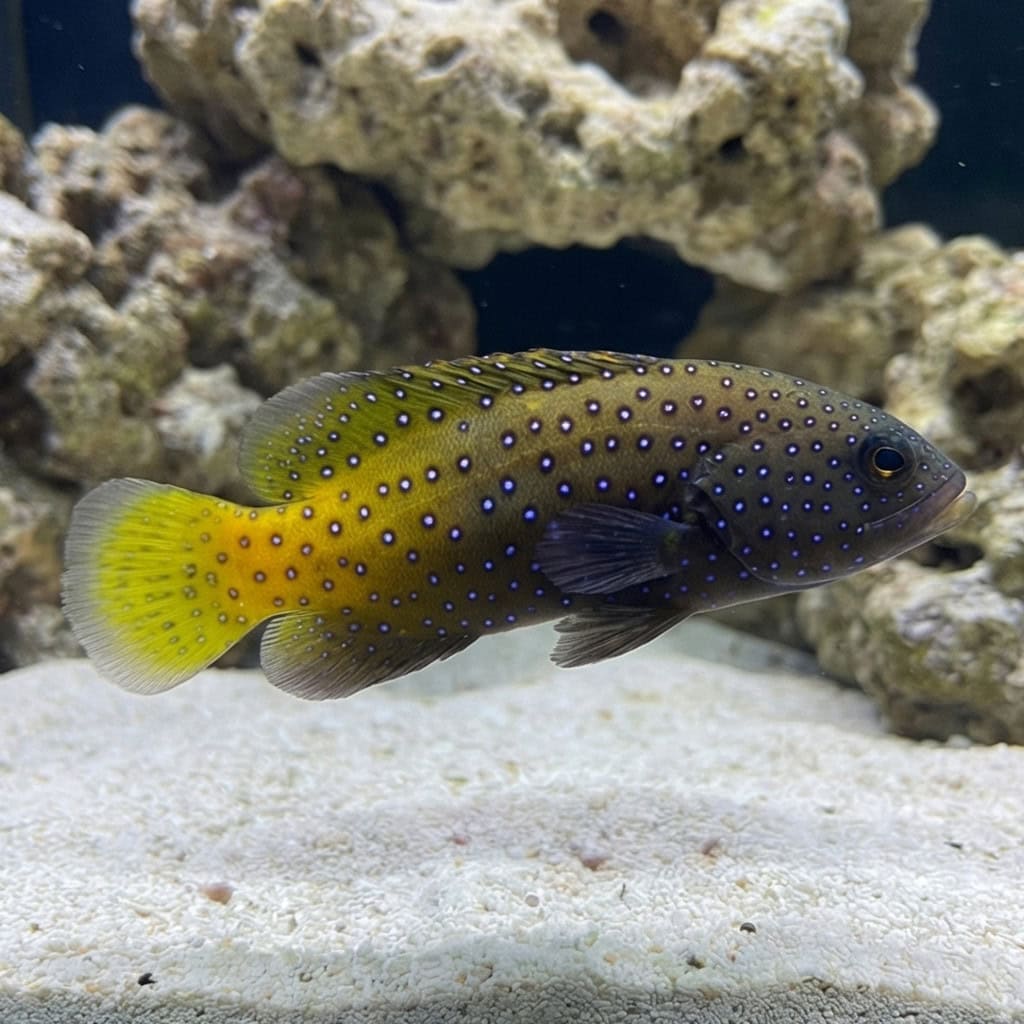
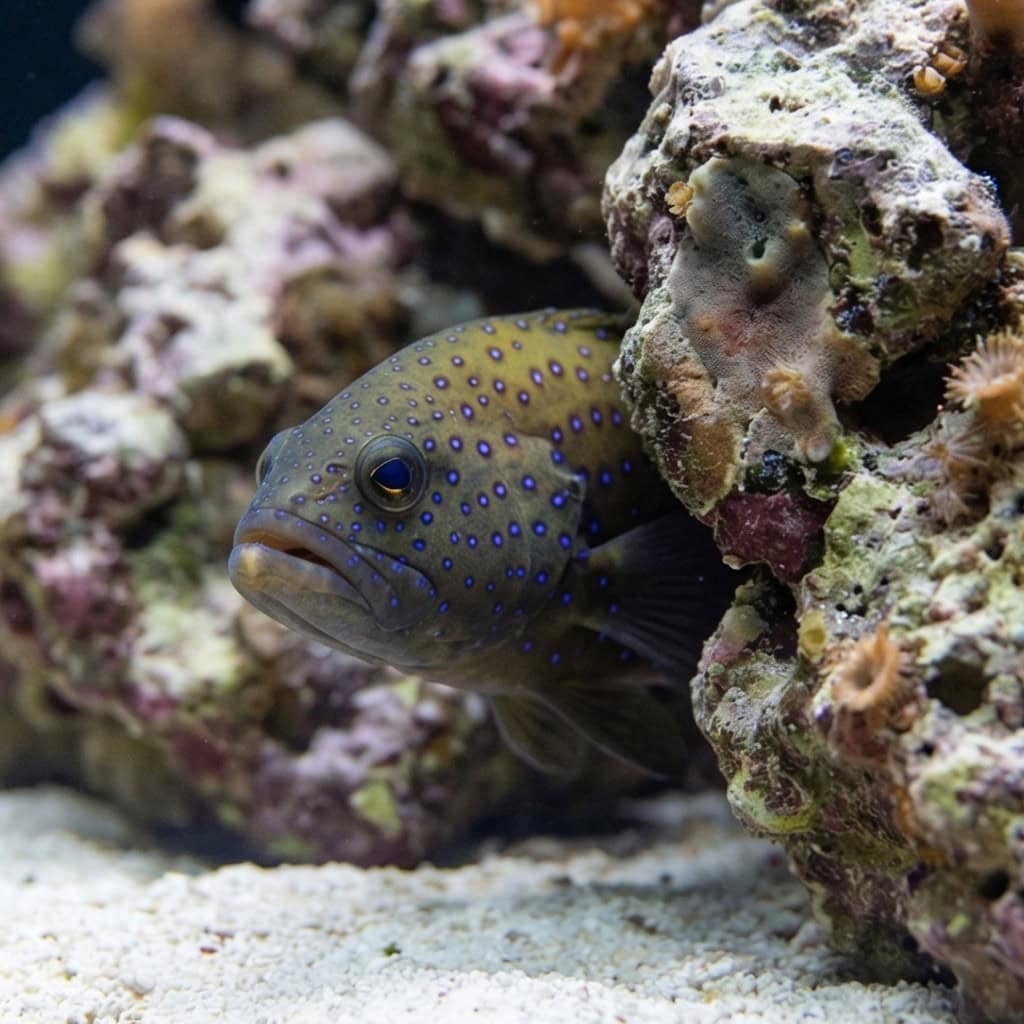
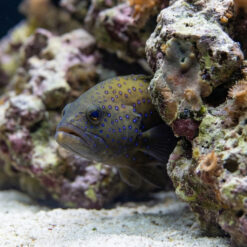
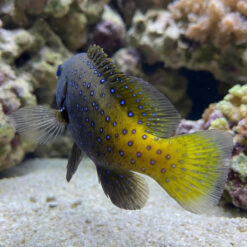
Blue Spot Grouper
Cephalopholis argus
| Stock | Variations | Price | Quantity |
|---|
Every order ships with our standard 3-hour live arrival guarantee. Need more time? Add our 5-Day Guarantee at checkout.
Full guarantee terms →Ships Monday – Thursday for next-day arrival at your nearest FedEx Hold location — typically ready by 9 AM. We monitor every delivery.
Shipping details →
Monday – Friday 8 AM – 9 PM
Saturday 12 PM – 4 PM
Sunday 12 PM – 9 PM
Healthy, stable animals from vetted suppliers — inspected before packing, shipped overnight. Decades of experience built this model so we can deliver premium livestock at 30%+ less than you'd pay elsewhere.
| Care Level | Expert |
|---|---|
| Temperament | Aggressive |
| Reef Safe | No |
| Functional Benefit | Ornamental Only |
| Diet Type | Carnivore |
| Mininum Tank Size | 180 gallons |
| Max Size | 18 inches |
| Temperature | 72–78°F |
| pH Range | 8.1–8.4 |
| Specific Gravity | 1.022–1.025 |
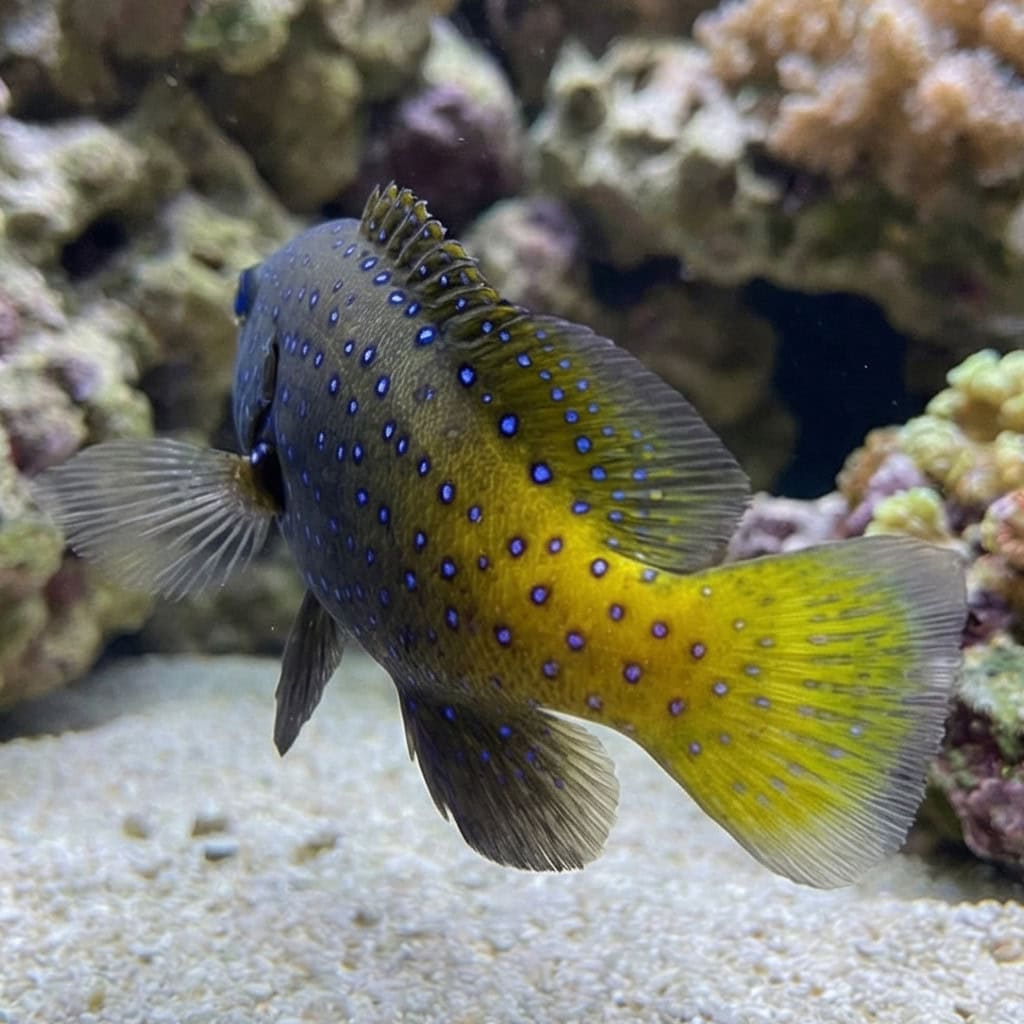
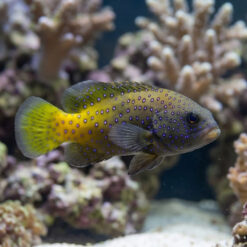
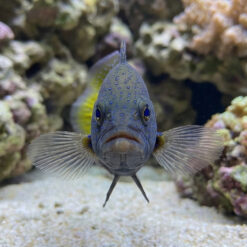
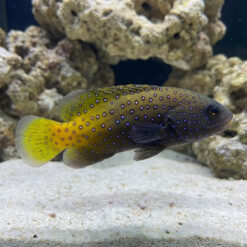
Blue Spot Grouper (Cephalopholis argus), also known as the Peacock Hind, is a deep-bodied Indo-Pacific grouper with a dark base color covered in small blue spots that show clearly under reef lighting.
What You’ll Observe:
- Perching on rock ledges and staying close to a favorite cave, then moving out to patrol the tank
- Short, fast bursts of movement when it decides to strike at food
- A routine of coming out more during feeding time and learning where food enters the tank
- A bold “watch-and-wait” hunting posture, often hovering or sitting still before a quick lunge
How to succeed with this species starts with a large, stable aquarium with sturdy rockwork, open lanes for cruising, and multiple cave options it can claim as shelter. Offer meaty marine foods (like chopped seafood) on a consistent schedule, and keep filtration strong to match a predator’s feeding style.
Does the Blue Spot Grouper’s pattern change as it grows?
Many keepers notice stronger bars or a different contrast as the fish matures; lighting and mood can also shift how “bright” the spots look.
Is it normal for it to sit in one spot for long periods?
Yes—this is a common “perch and wait” behavior, especially when it has found a preferred ledge or cave it likes to use.
Can I keep one with a moray eel or lionfish in the same display?
They’re often grouped in large, predator-style community tanks where all residents are chosen for similar size and confidence at feeding time.
Will it learn to take food from tongs or a feeding stick?
Many do, and it can make feeding more consistent by placing food right where the fish is waiting.
How do owners keep feeding cleaner with a messy, meaty diet?
Portioning food, thawing/rinsing frozen items, and removing leftovers quickly helps keep the water clear and the system stable.
Shipped with pure oxygen and temperature control so it arrives stress-free and ready to eat.
Recently viewed products