
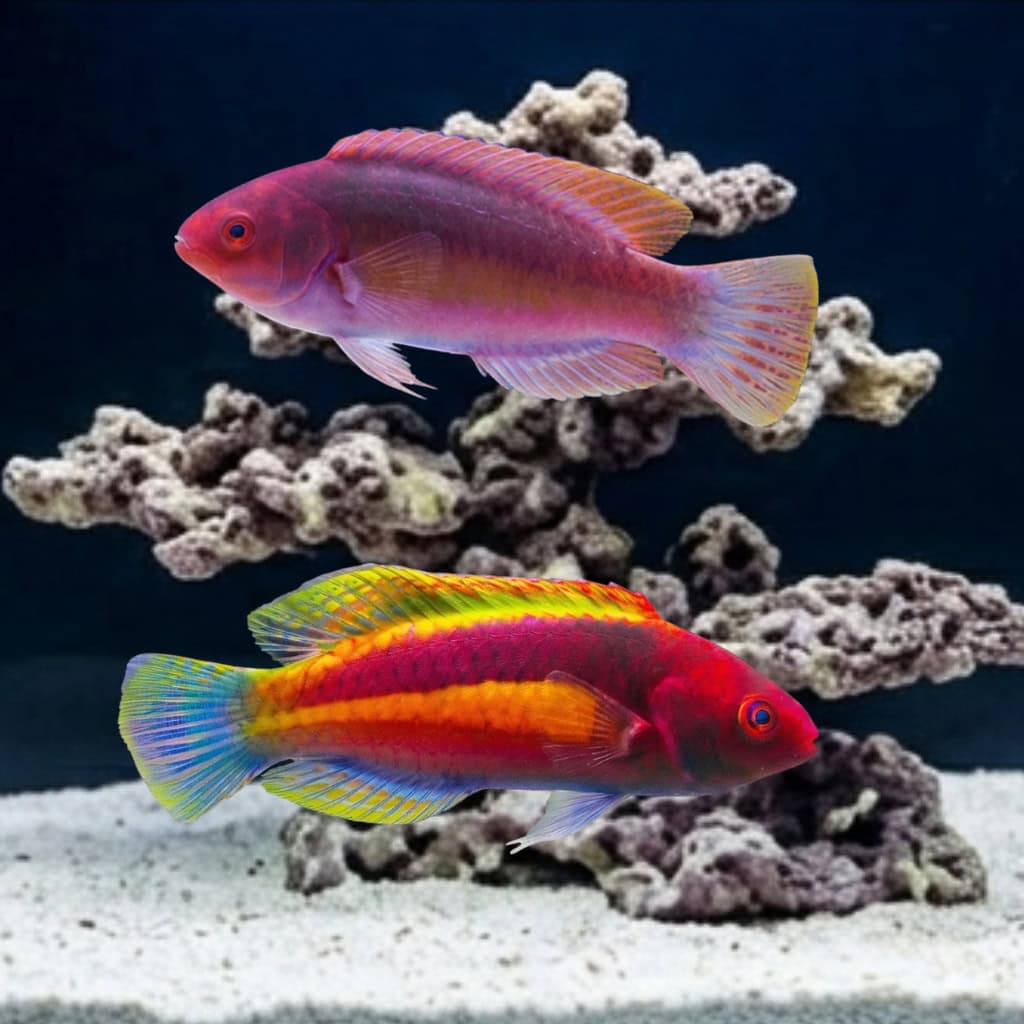
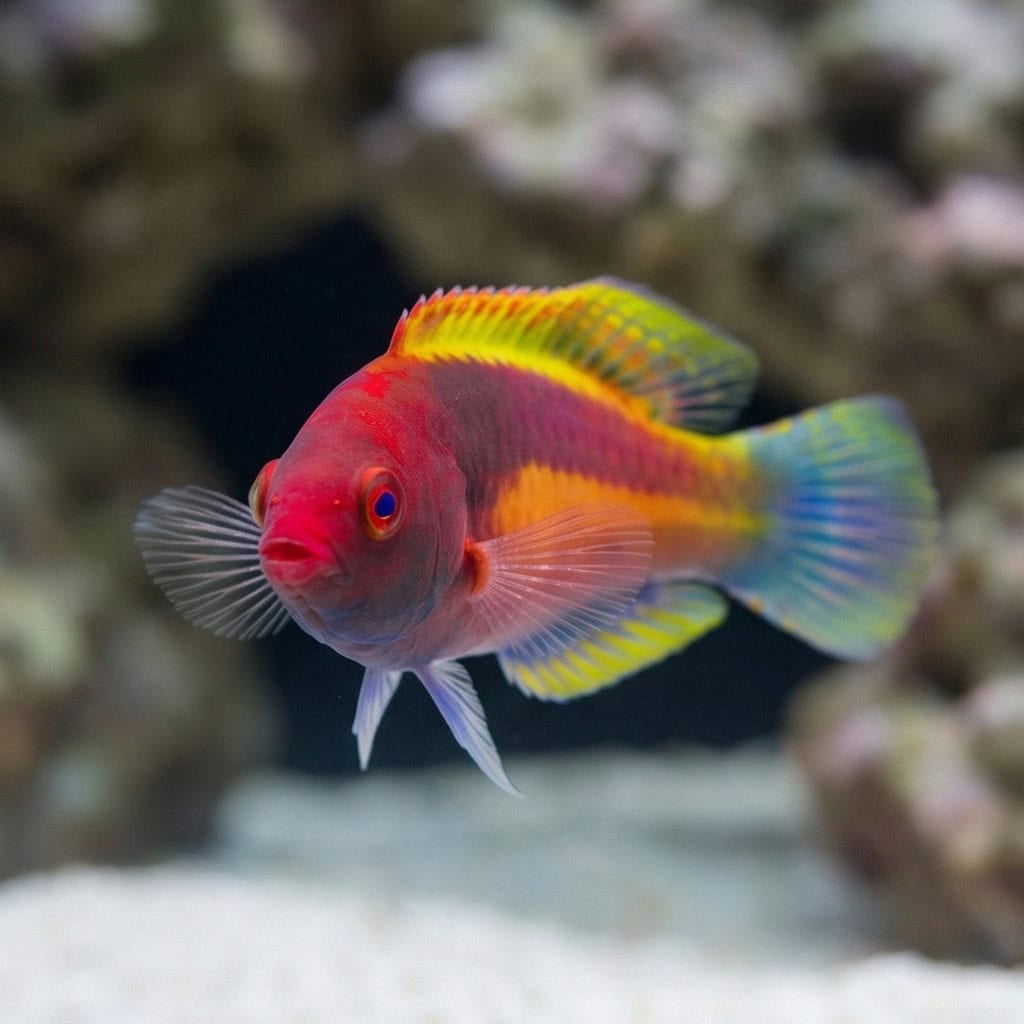
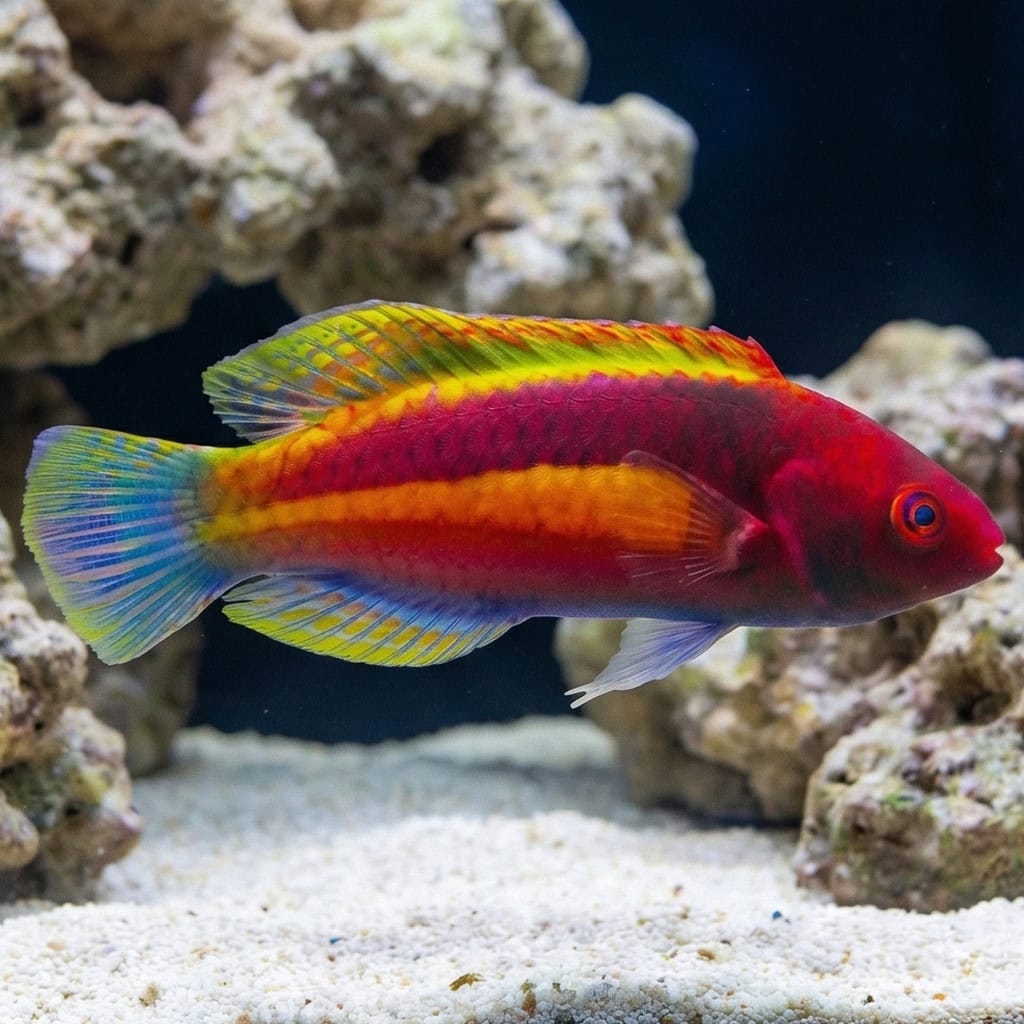
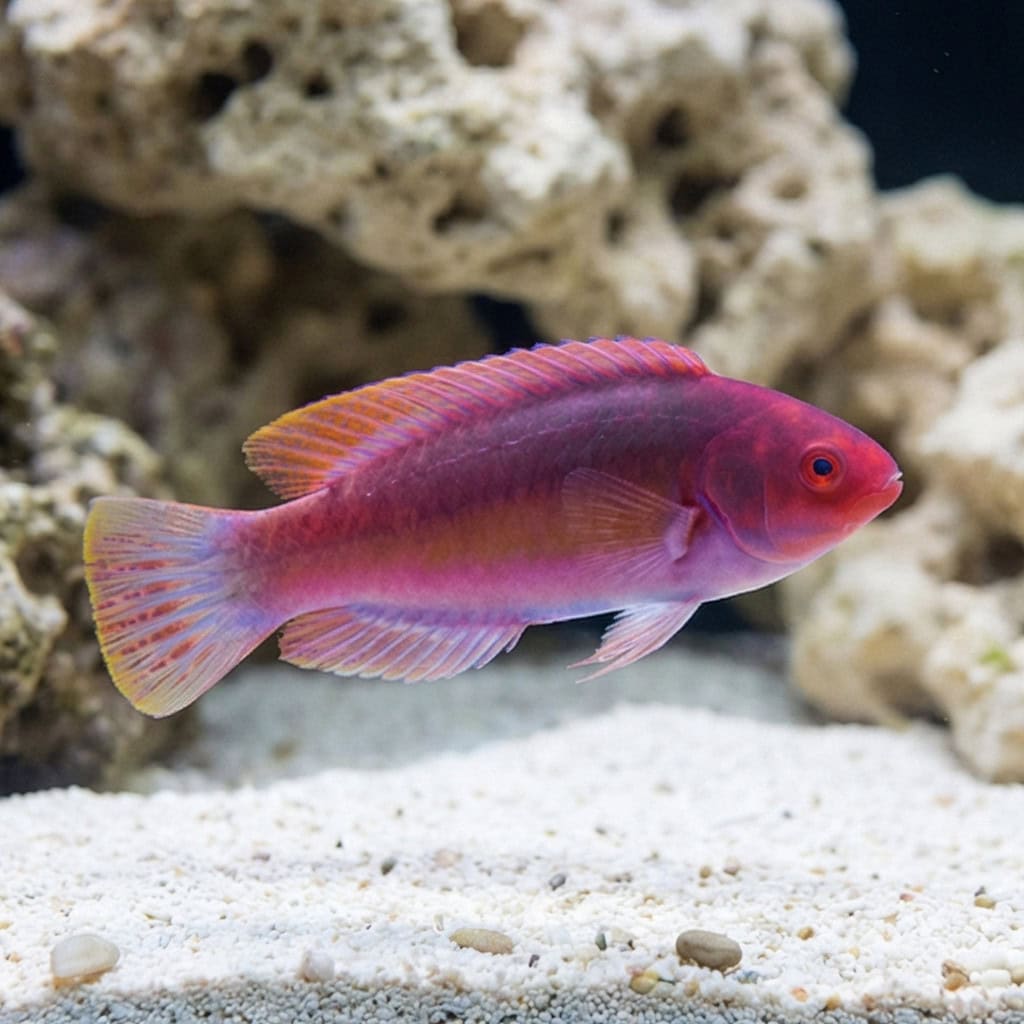
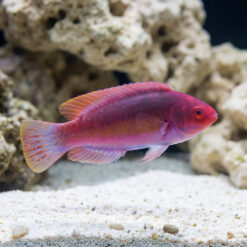
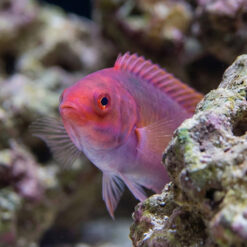
Velvet Fairy Wrasse
Cirrhilabrus luteovittatus
| Stock | Variations | Price | Quantity |
|---|
Every order ships with our standard 3-hour live arrival guarantee. Need more time? Add our 5-Day Guarantee at checkout.
Full guarantee terms →Ships Monday – Thursday for next-day arrival at your nearest FedEx Hold location — typically ready by 9 AM. We monitor every delivery.
Shipping details →
Monday – Friday 8 AM – 9 PM
Saturday 12 PM – 4 PM
Sunday 12 PM – 9 PM
Healthy, stable animals from vetted suppliers — inspected before packing, shipped overnight. Decades of experience built this model so we can deliver premium livestock at 30%+ less than you'd pay elsewhere.
| Care Level | Moderate |
|---|---|
| Temperament | Semi-Aggressive |
| Reef Safe | Yes |
| Functional Benefit | Ornamental Only |
| Diet Type | Planktivore |
| Mininum Tank Size | 90 gallons |
| Max Size | 6 inches |
| Temperature | 72–78°F |
| pH Range | 8.1–8.4 |
| Specific Gravity | 1.022–1.025 |
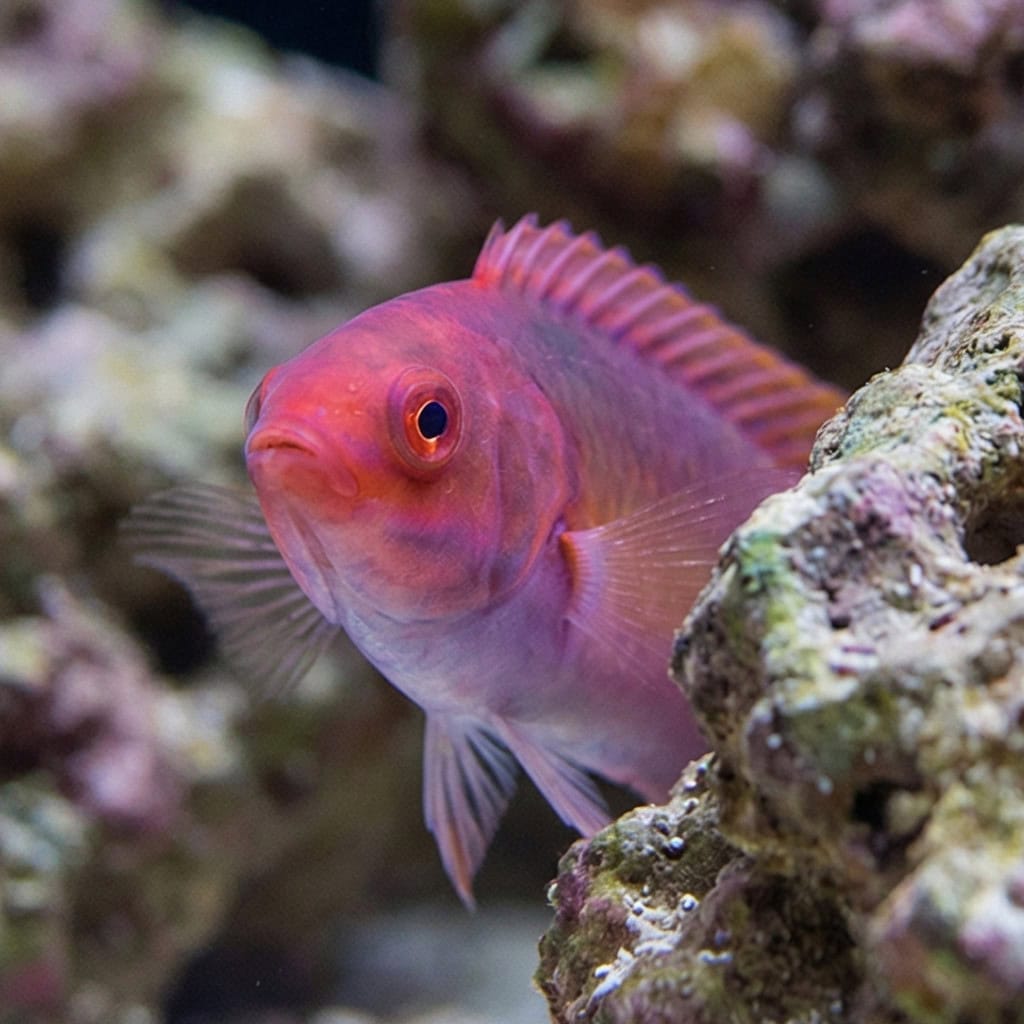
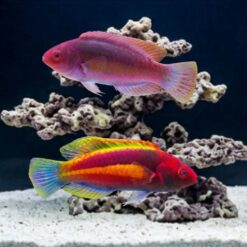
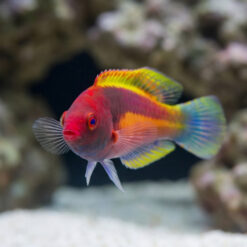
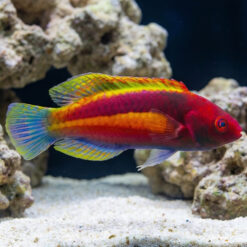
The Velvet Fairy Wrasse (Cirrhilabrus luteovittatus) is a reef-safe Cirrhilabrus known for a distinct yellow band along the flank on adult males. It comes from Pacific reef habitats around Micronesia/Marshall Islands, where it’s typically found along reef slopes and patch-reef zones.
What You’ll Observe:
- Active midwater cruising with frequent “looping” passes around the rockwork
- Short, fast display bursts (especially around other wrasses or at feeding time)
- Regularly using the same swim lanes and “check-in” spots throughout the day
- At dusk, settling into the rock structure to rest, then resuming patrols after lights-on
How to succeed: Provide open swimming room with rockwork for quick retreats and a tight-fitting cover to keep this species safely in the aquarium. Offer small, meaty foods in multiple small feedings so it can feed like a natural zooplankton picker, and introduce it thoughtfully if you plan to keep multiple fairy wrasses.
Will it change colors over time?
Yes—many keepers notice stronger contrast and brighter patterning as the fish settles in and matures, especially during short display “flashes.”
Is it normal for a fairy wrasse to disappear into the rockwork for a day or two?
Yes—many hobbyists report a brief “off-stage” period after introduction or after a tank change, followed by a return to normal swimming and feeding.
How do I tell male vs. female on Velvet Fairy Wrasses?
Males typically show bolder overall coloration and a more obvious flank band; females are usually more subdued and uniform in tone.
Can multiple fairy wrasses be kept without constant fighting?
Often yes, when chosen carefully—keepers commonly focus on mixing different-looking species and managing introductions so the group can establish a stable hierarchy.
Do fairy wrasses sleep in the sand like some other wrasses?
Fairy wrasses generally rest in the rockwork/mucus cocoon areas rather than burying in sand (sand-sleeping is more typical of some Halichoeres and leopard wrasses).
We work with trusted suppliers who keep our specimens healthy and well-fed before shipping.
Recently viewed products