
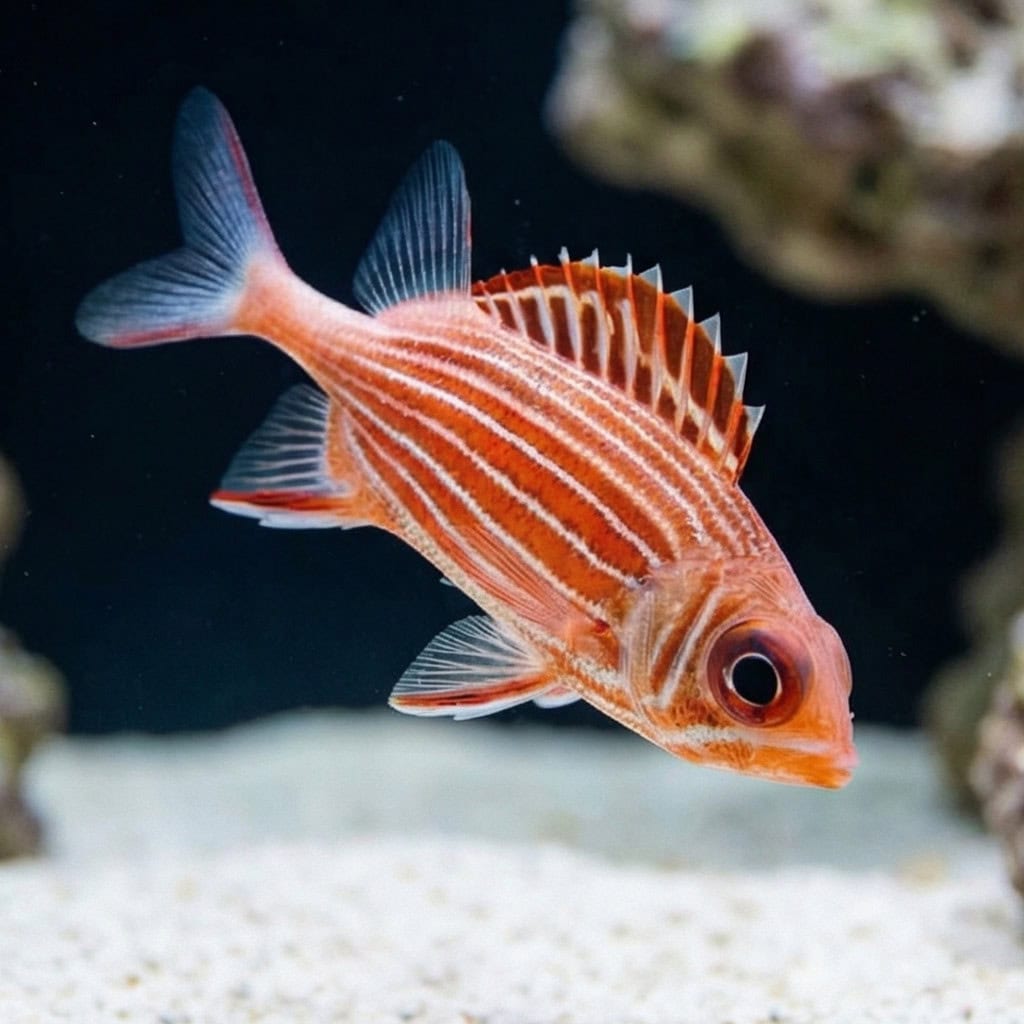
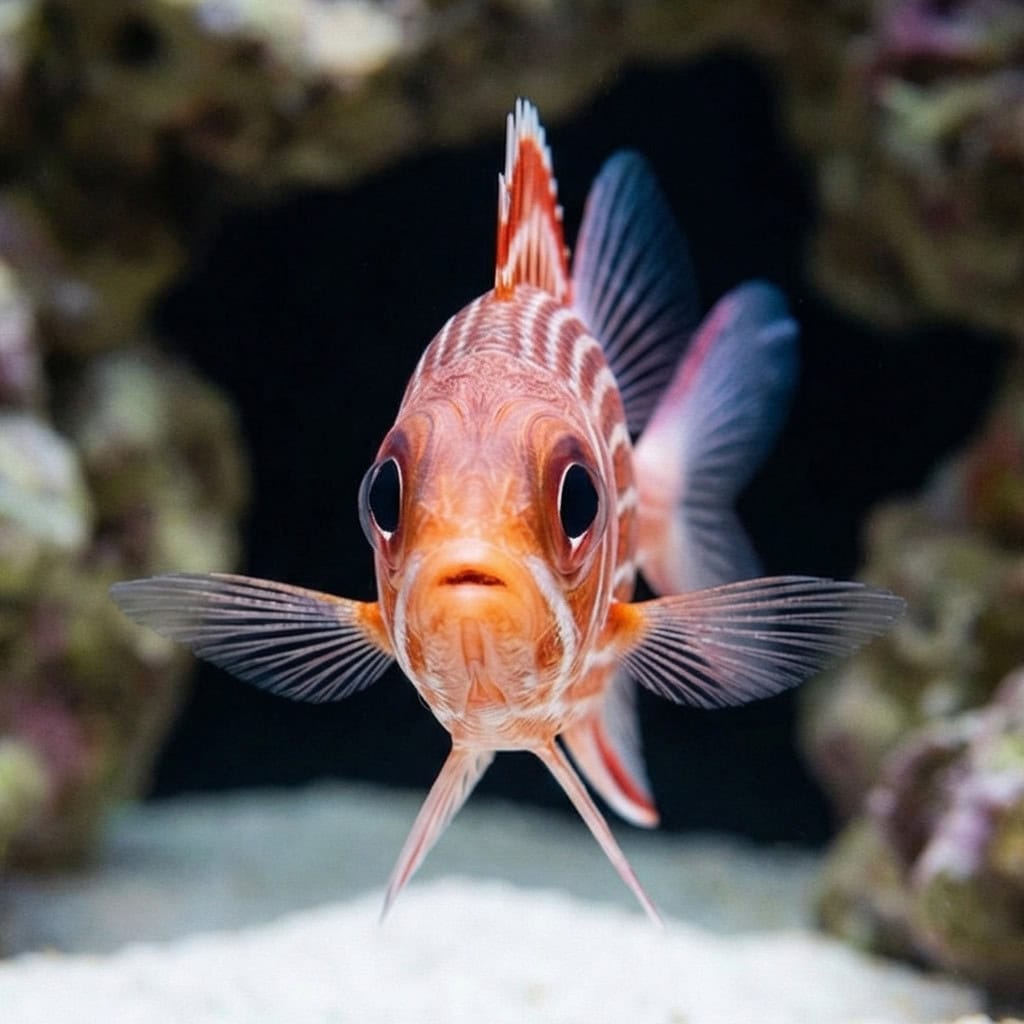
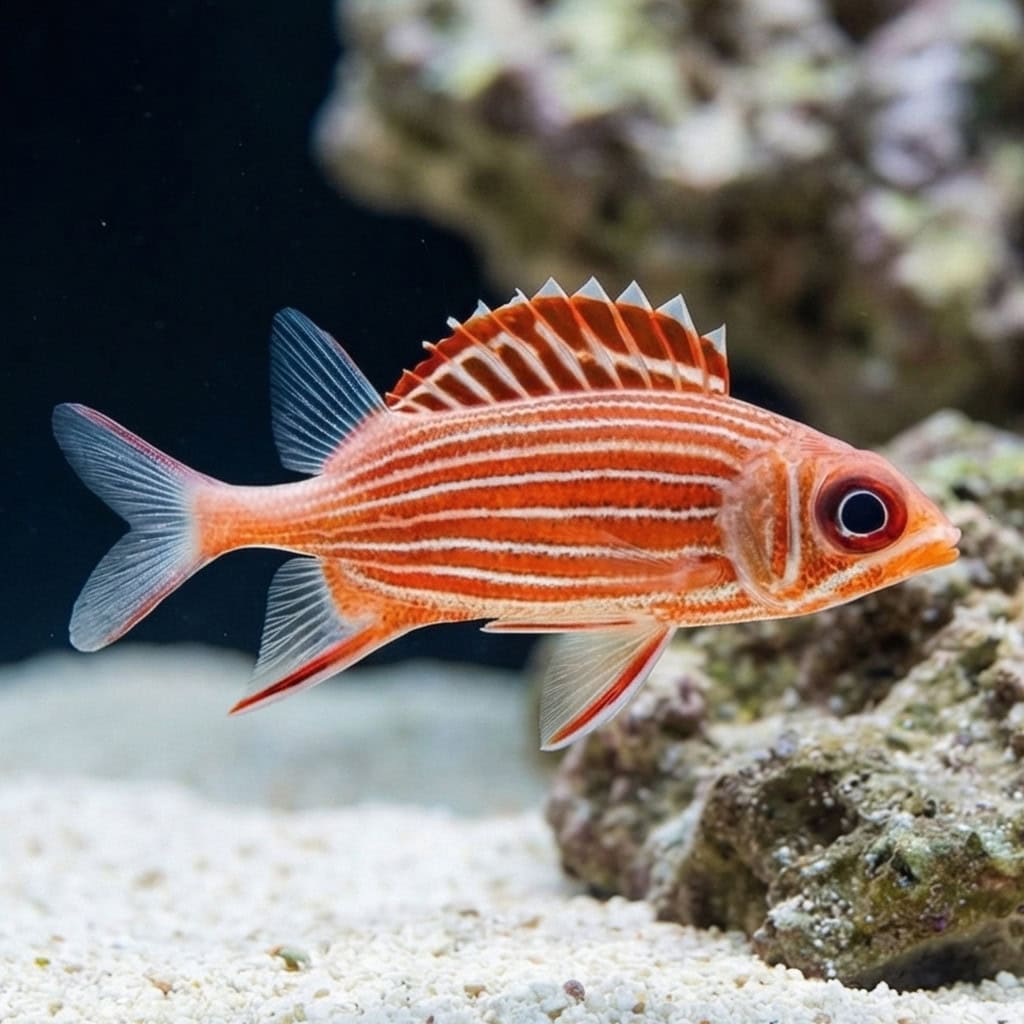
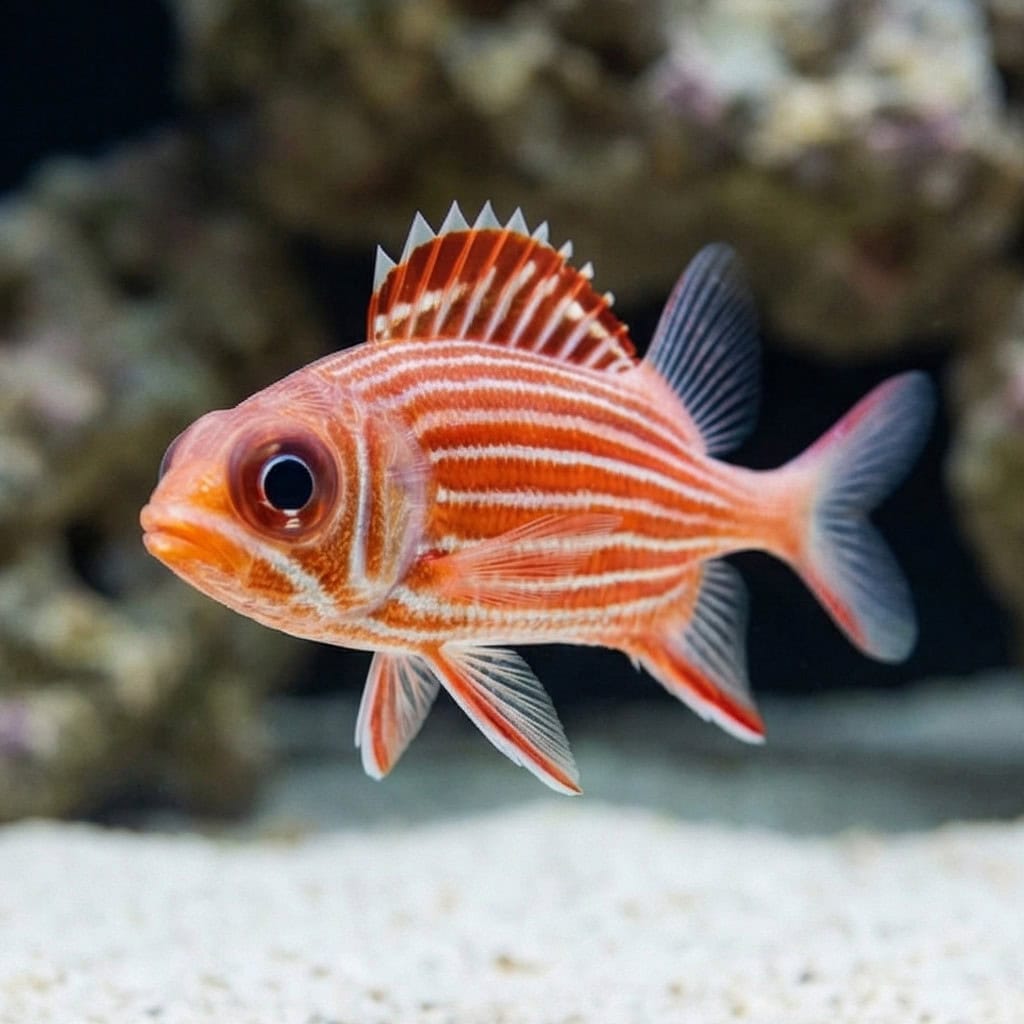
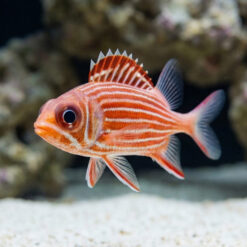
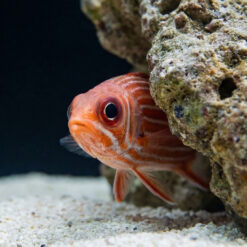
Striped Squirrelfish
Sargocentron sp.
| Stock | Variations | Price | Quantity |
|---|
Every order ships with our standard 3-hour live arrival guarantee. Need more time? Add our 5-Day Guarantee at checkout.
Full guarantee terms →Ships Monday – Thursday for next-day arrival at your nearest FedEx Hold location — typically ready by 9 AM. We monitor every delivery.
Shipping details →
Monday – Friday 8 AM – 9 PM
Saturday 12 PM – 4 PM
Sunday 12 PM – 9 PM
Healthy, stable animals from vetted suppliers — inspected before packing, shipped overnight. Decades of experience built this model so we can deliver premium livestock at 30%+ less than you'd pay elsewhere.
| Care Level | Moderate |
|---|---|
| Temperament | Peaceful |
| Reef Safe | With Caution |
| Functional Benefit | Ornamental Only |
| Diet Type | Carnivore |
| Mininum Tank Size | 70 gallons |
| Max Size | 6 inches |
| Temperature | 72–78°F |
| pH Range | 8.1–8.4 |
| Specific Gravity | 1.022–1.025 |
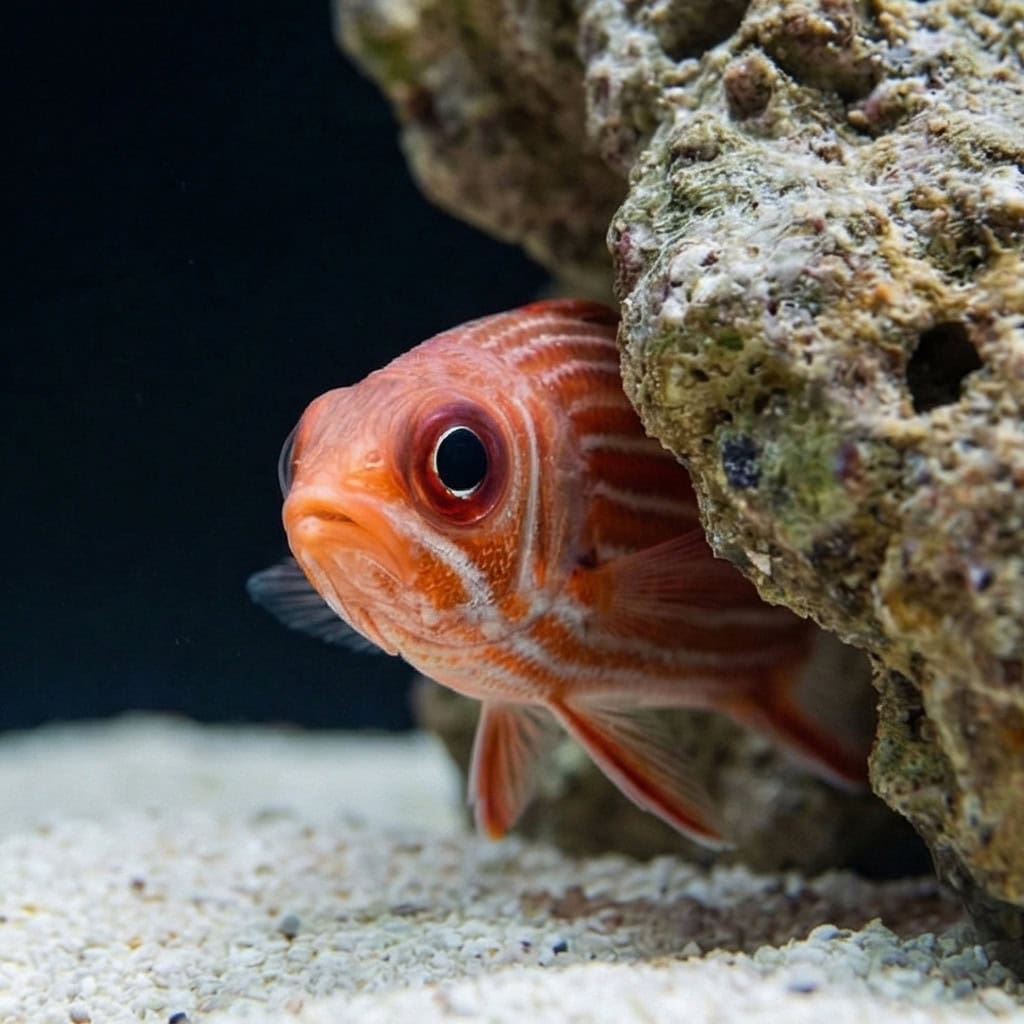
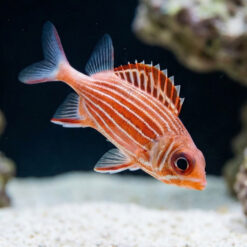
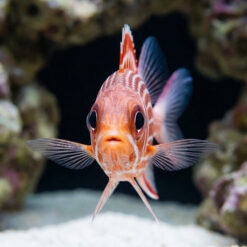
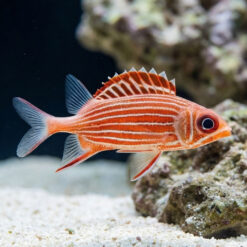
Striped Squirrelfish (Sargocentron sp.) are red, horizontally striped reef fish known for their large eyes and “under-ledge” lifestyle in rockwork. In home aquariums they’re commonly most active in lower light periods, making them a good fit for tanks with caves, arches, and shaded swim lanes.
What You’ll Observe:
- Spending daylight hours tucked into a favorite cave, then shifting into open water as the lights dim
- Short “dashes” out from the rockwork, often returning to the same overhang repeatedly
- Hovering under ledges with steady fin movement, then snapping forward when food passes by
- More consistent visibility after it learns the daily feeding routine in your tank
To help yours settle in, provide layered live rock with multiple caves and shaded overhangs, plus open water in front of the structure. Offer small meaty foods on a predictable schedule (many keepers feed during dusk or after lights have dimmed) so it learns where food shows up.
How do you get a new squirrelfish to start eating in captivity?
Many hobbyists start with live foods to trigger a feeding response, then transition to frozen meaty foods once it’s consistently coming out at feeding time.
Does it need the food moving, or will it pick food off the sand?
Keepers often report better feeding when the food is kept in the water column (for example, gently “blown” past the fish) rather than left sitting still.
Will it be out during the day once it settles in?
It’s commonly described as a low-light fish, but many owners still see regular “in-and-out” appearances during the day, especially around feeding time.
Can you keep more than one squirrelfish together?
Some keepers report success, but hobbyist notes often mention that tension between similar fish increases as available space and hiding spots decrease.
Is it normal for it to claim one “main” cave and return to it repeatedly?
Yes—owners frequently describe a consistent home-base behavior, where the fish uses one primary overhang and makes short forays from that spot.
Shipped with pure oxygen and temperature control so it arrives stress-free and ready to eat.
Recently viewed products