
Multi-Banded Pipefish
Dunckerocampus multiannulatus
| Stock | Variations | Price | Quantity |
|---|
Every order ships with our standard 3-hour live arrival guarantee. Need more time? Add our 5-Day Guarantee at checkout.
Full guarantee terms →Ships Monday – Thursday for next-day arrival at your nearest FedEx Hold location — typically ready by 9 AM. We monitor every delivery.
Shipping details →
Monday – Friday 8 AM – 9 PM
Saturday 12 PM – 4 PM
Sunday 12 PM – 9 PM
Healthy, stable animals from vetted suppliers — inspected before packing, shipped overnight. Decades of experience built this model so we can deliver premium livestock at 30%+ less than you'd pay elsewhere.
| Care Level | Expert |
|---|---|
| Temperament | Peaceful |
| Reef Safe | Yes |
| Functional Benefit | Parasite Control |
| Diet Type | Carnivore |
| Mininum Tank Size | 30 gallons |
| Max Size | 8 inches |
| Temperature | 72–78°F |
| pH Range | 8.1–8.4 |
| Specific Gravity | 1.022–1.025 |
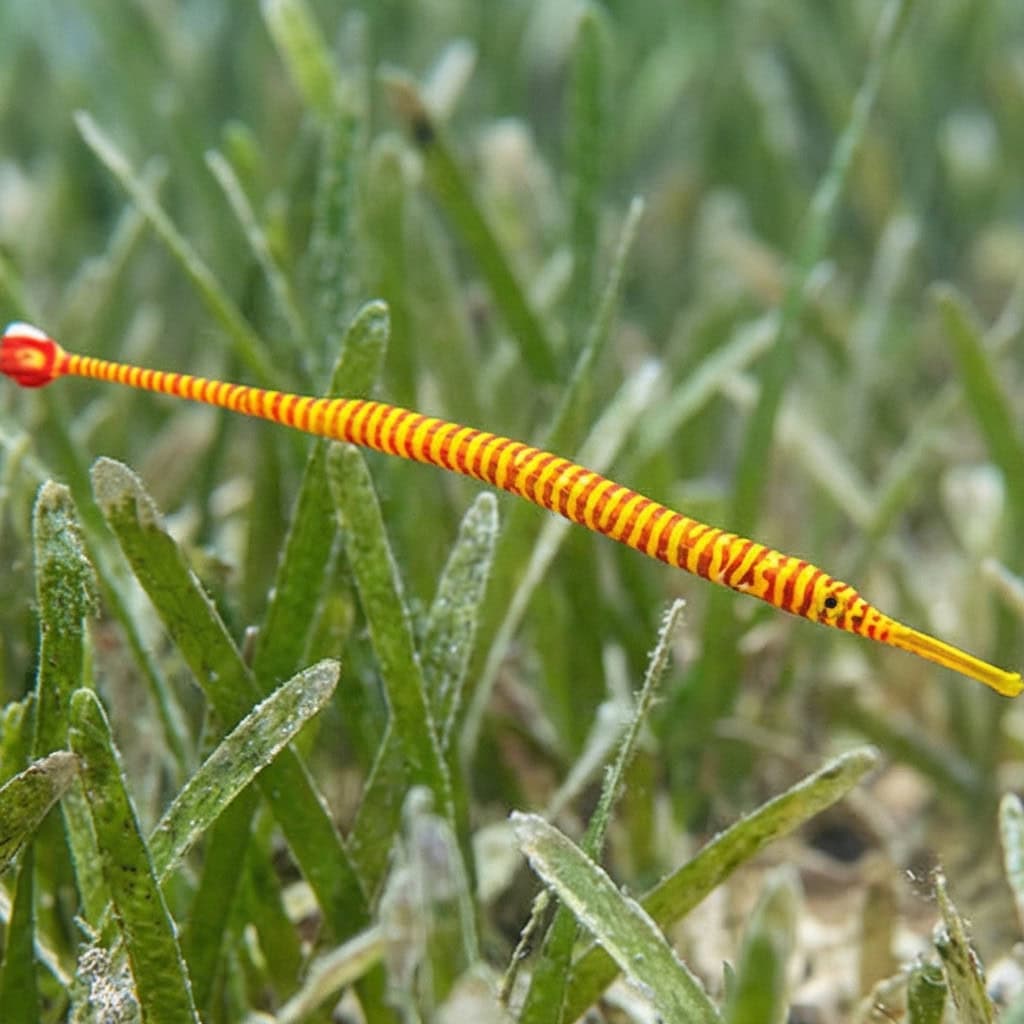
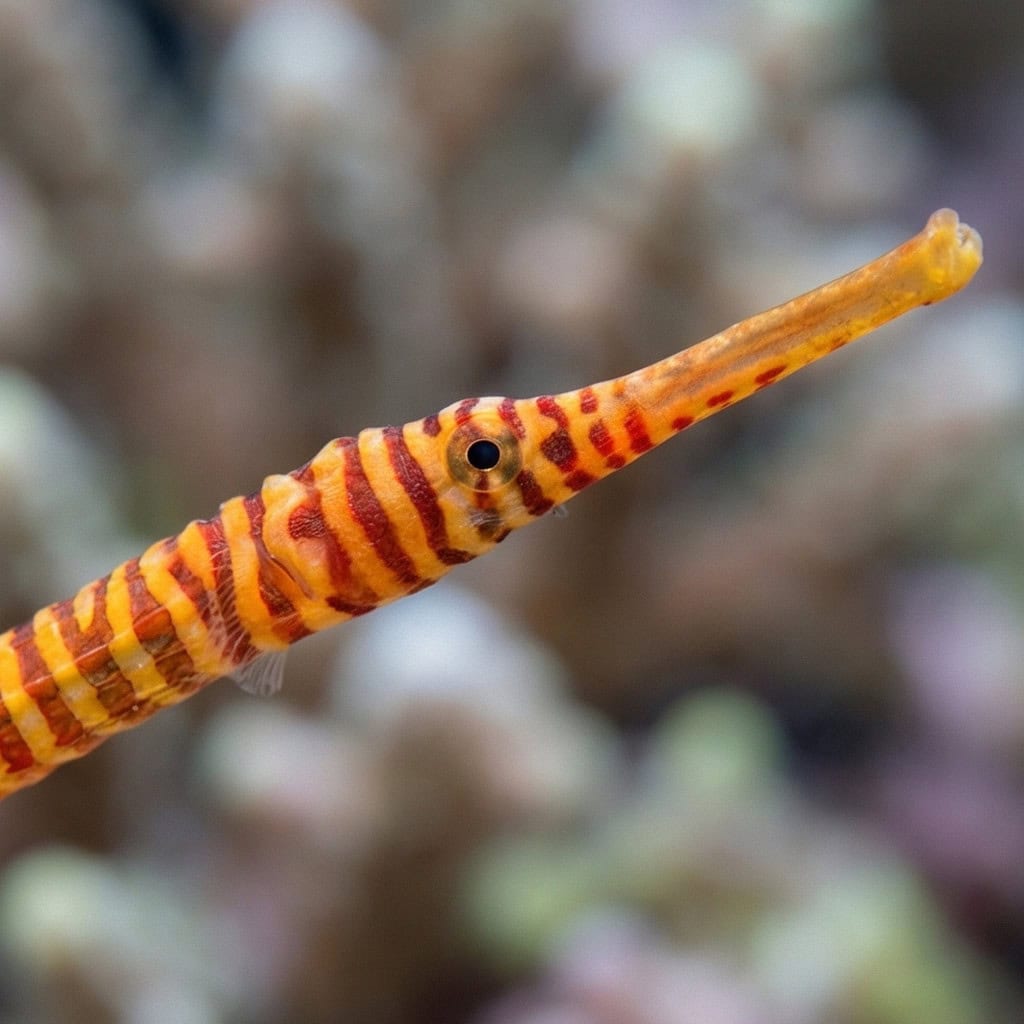
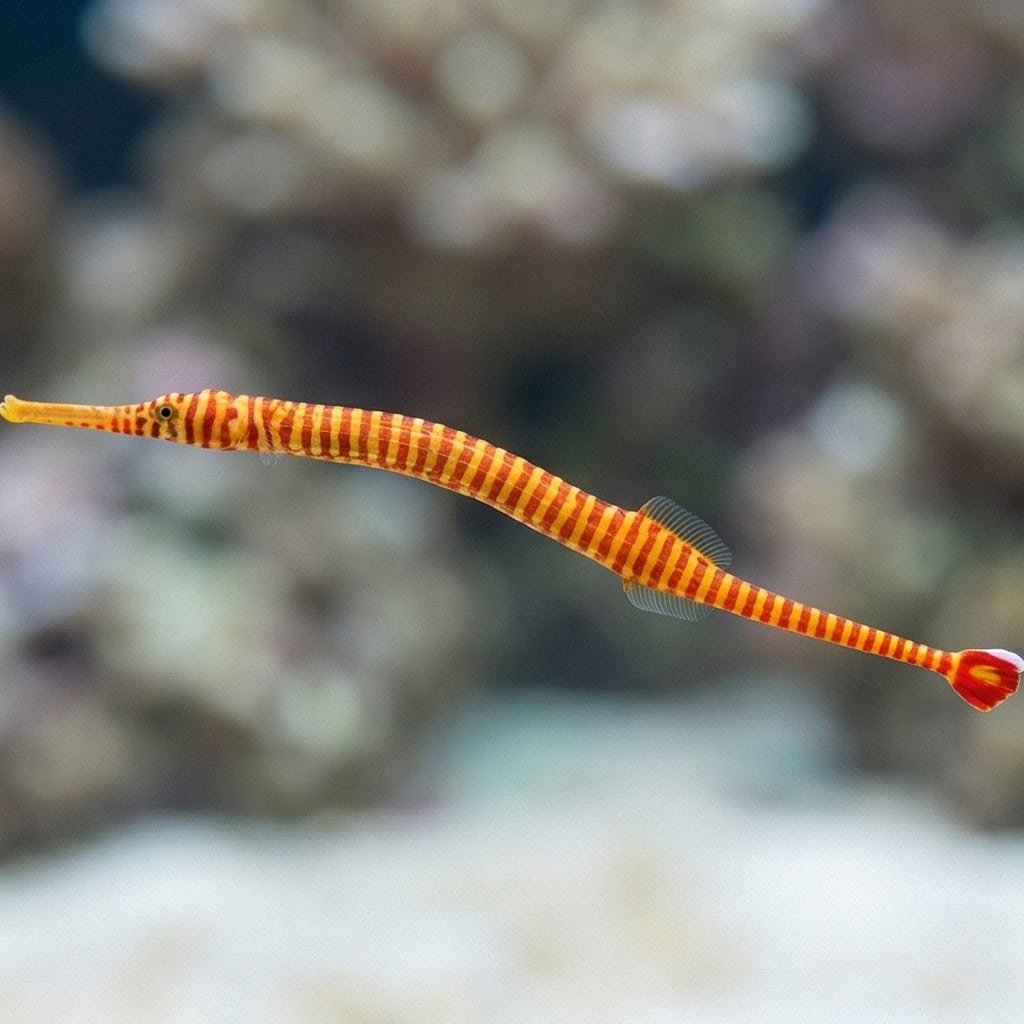
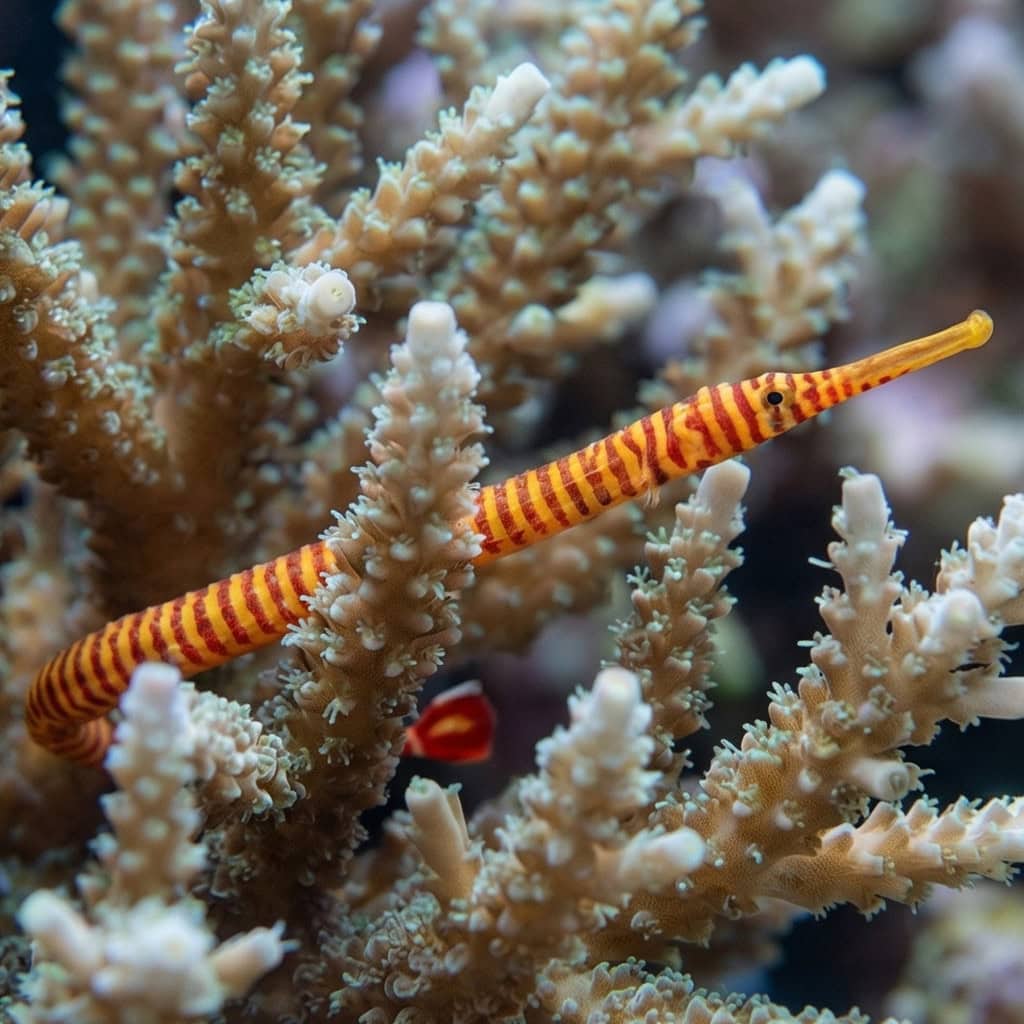
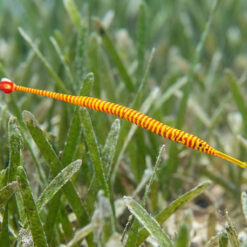
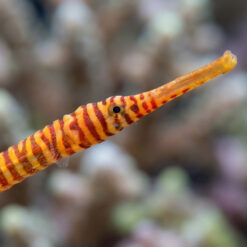
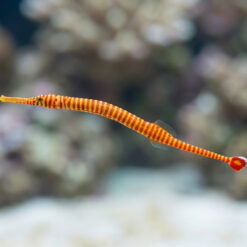
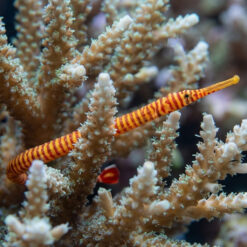
The Multi-Banded Pipefish is a reef-associated cleaner pipefish that spends its day inspecting rockwork and tankmates for tiny crustaceans. Its pale body with evenly spaced dark bands and its red “flag” tail make it easy to spot as it moves along ledges and overhangs. In nature it occurs across the Indian Ocean on coral and rocky reefs.
What You’ll Observe:
- Hovering and “bobbing” in place near caves, vertical surfaces, and shaded overhangs
- Short, precise pecks with its tube-shaped snout as it searches for small foods
- Pair-style cruising, where two individuals track the same route through the rockwork
- A strong “feed-time” response, learning where food enters the tank and meeting it in the water column
Provide an established aquarium with plenty of live rock structure, calm perching areas, and a consistent feeding routine. Offer small meaty foods multiple times per day (finely chopped items and small frozen offerings) and use a pipette/target zone so it can feed at its natural pace. A refugium or pod-friendly setup helps keep natural microfauna available between meals.
Will it take frozen food, or does it need live foods only?
Many hobbyists start with small frozen options delivered by pipette and repeat feedings in the same spot so the fish learns the routine. Once it associates that area with food, it often begins snapping at frozen pieces more consistently.
Do I need a “pod factory” to keep one long-term?
A steady supply of microfauna helps support natural hunting behavior between feedings, especially in mixed reefs. Many keepers still rely on scheduled frozen feedings as the main nutrition source.
Is it better to keep one, or a pair?
They’re frequently observed and kept in pairs, and a bonded-looking pair often travels together through the same rockwork routes. Introducing them with plenty of perching zones helps them settle into a shared pattern.
Will I actually see “cleaner” behavior?
Some individuals do make short cleaning passes on calm tankmates, but most of what you’ll notice day-to-day is micro-hunting along rock faces and in the water column. Either way, the foraging behavior is a big part of the appeal.
Will it bother shrimp or other invertebrates?
In most reef tanks it focuses on tiny prey items and suspended foods rather than larger ornamental shrimp. If you maintain pods for other fish, expect it to participate in that pod consumption and plan replenishment accordingly.
Each fish is checked for strong appetite and activity before we approve it for your tank.
Recently viewed products