Clown Grouper
Pogonoperca punctata
| Stock | Variations | Price | Quantity |
|---|
Every order ships with our standard 3-hour live arrival guarantee. Need more time? Add our 5-Day Guarantee at checkout.
Full guarantee terms →Ships Monday – Thursday for next-day arrival at your nearest FedEx Hold location — typically ready by 9 AM. We monitor every delivery.
Shipping details →
Monday – Friday 8 AM – 9 PM
Saturday 12 PM – 4 PM
Sunday 12 PM – 9 PM
Healthy, stable animals from vetted suppliers — inspected before packing, shipped overnight. Decades of experience built this model so we can deliver premium livestock at 30%+ less than you'd pay elsewhere.
| Care Level | Expert |
|---|---|
| Temperament | Aggressive |
| Reef Safe | With Caution |
| Functional Benefit | Ornamental Only |
| Diet Type | Carnivore |
| Mininum Tank Size | 120 gallons |
| Max Size | 18 inches |
| Temperature | 72–78°F |
| pH Range | 8.1–8.4 |
| Specific Gravity | 1.022–1.025 |
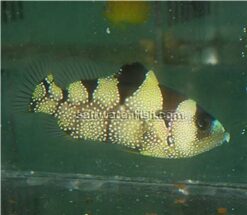
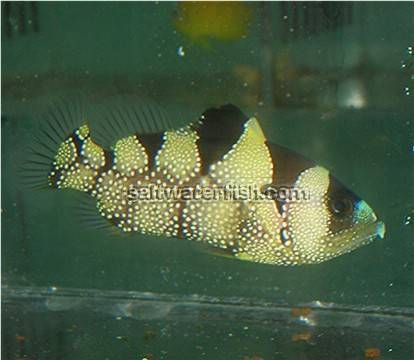
The Clown Grouper (Pogonoperca punctata), also sold as the Leaflip Grouper or Spotted Soapfish, is a silver-brown fish covered in white spotting with darker saddle-like markings along the back. It has a distinctive “leaflip” look around the jaw and a bold, high-contrast pattern that reads clearly even under lower tank lighting.
What You’ll Observe:
- Spending much of the day stationed in rockwork, then becoming more active toward dusk as it starts cruising the tank
- Short, deliberate bursts of movement when food hits the water
- Reusing the same preferred ledge or cave and making repeat “patrol loops” from that home base
- Learning your routine and showing up quickly at the front during feeding time
To help your Clown Grouper settle in, provide a roomy aquascape with multiple caves and overhangs so it always has a secure resting spot. Offer meaty foods (like krill, shrimp, and other marine-based items) in a consistent routine, and keep tankmates robust and appropriately sized for a predator-style community. Maintain strong filtration to support heavier feeding and steady day-to-day water quality.
Why do some listings call it a “soapfish” instead of a true grouper?
“Soapfish” is commonly used for fishes that can produce a slippery, foamy-looking mucus, and this species is often grouped with soapfish in aquarium contexts even though it’s closely related to groupers.
Is it normal for this fish to stay hidden a lot at first?
Yes—many keepers see them pick a favorite cave early on, then gradually spend more time out in the open once the tank’s daily rhythm feels predictable.
What’s the practical reason it’s often labeled “Expert Only”?
The main reason discussed is its ability to release toxins via its skin mucus when severely stressed (or if it dies), so calm handling and stable husbandry matter more than with many other predators.
Will it usually take frozen foods, or does it need live feeders?
Most keepers focus on getting a strong response to marine meaty items; once it recognizes a feeding routine, it typically becomes very consistent about showing up to eat.
Can it be kept with shrimp and crabs long-term?
In many setups it treats crustaceans as food, so it’s generally planned around fish-focused stocking rather than ornamental shrimp/crab compatibility.
Shipped with pure oxygen and temperature control so it arrives stress-free and ready to eat.
Recently viewed products