
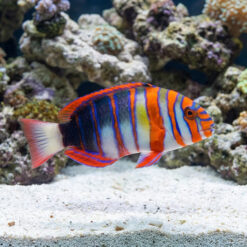
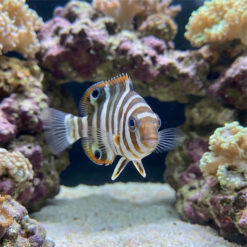
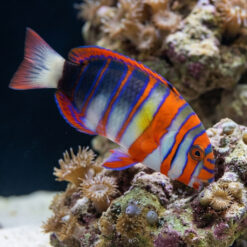
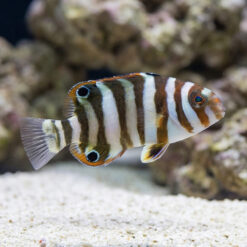
Harlequin Tusk Wrasse
Choerodon fasciatus
| Stock | Variations | Price | Quantity |
|---|
Every order ships with our standard 3-hour live arrival guarantee. Need more time? Add our 5-Day Guarantee at checkout.
Full guarantee terms →Ships Monday – Thursday for next-day arrival at your nearest FedEx Hold location — typically ready by 9 AM. We monitor every delivery.
Shipping details →
Monday – Friday 8 AM – 9 PM
Saturday 12 PM – 4 PM
Sunday 12 PM – 9 PM
Healthy, stable animals from vetted suppliers — inspected before packing, shipped overnight. Decades of experience built this model so we can deliver premium livestock at 30%+ less than you'd pay elsewhere.
| Care Level | Moderate |
|---|---|
| Temperament | Semi-Aggressive |
| Reef Safe | With Caution |
| Functional Benefit | Ornamental Only |
| Diet Type | Carnivore |
| Mininum Tank Size | 180 gallons |
| Max Size | 10 inches |
| Temperature | 72–78°F |
| pH Range | 8.1–8.4 |
| Specific Gravity | 1.022–1.025 |
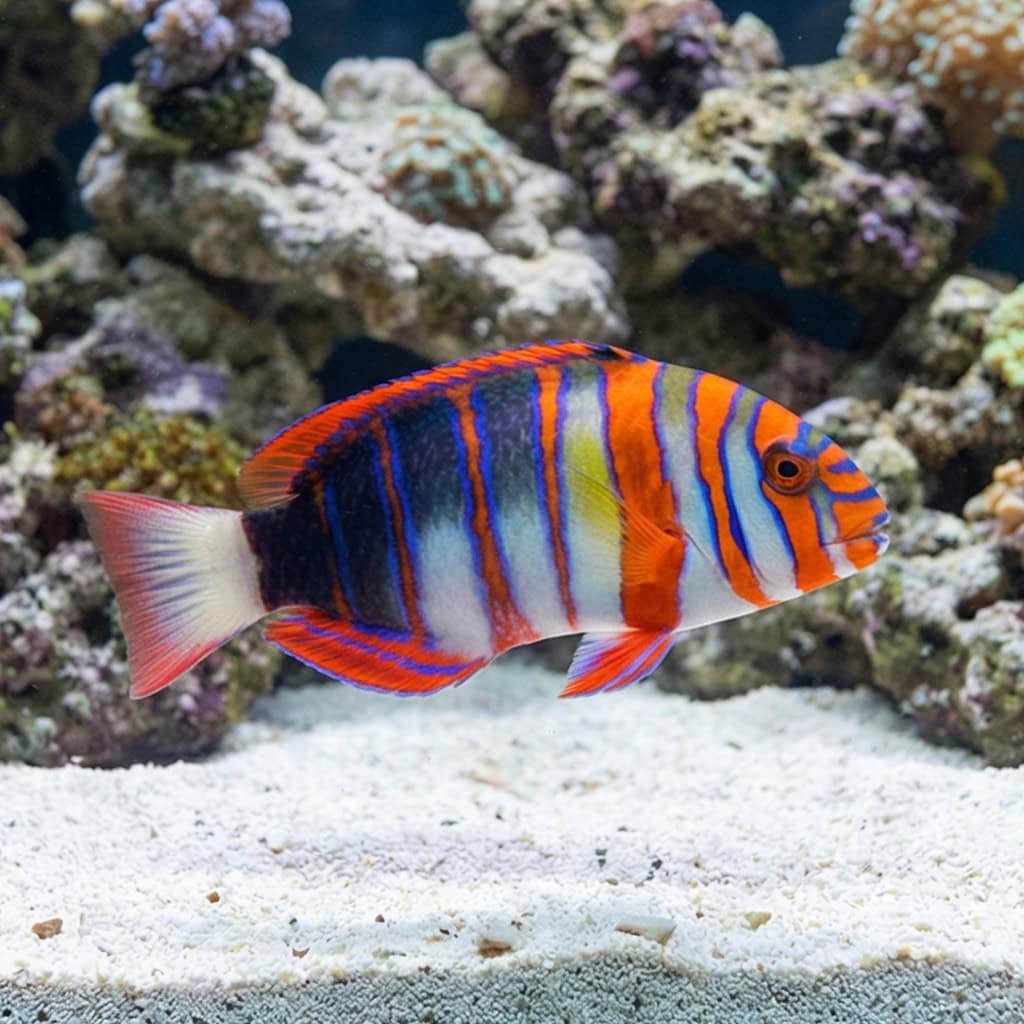
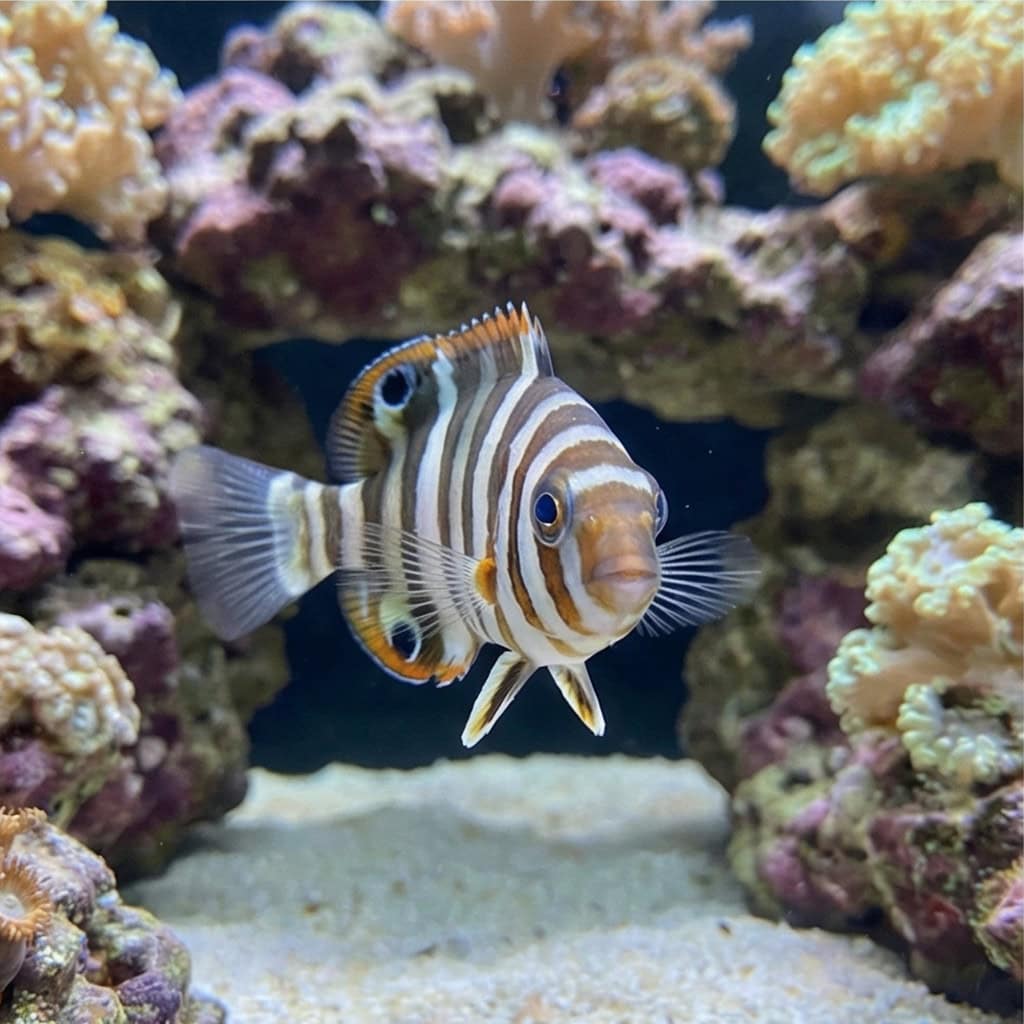
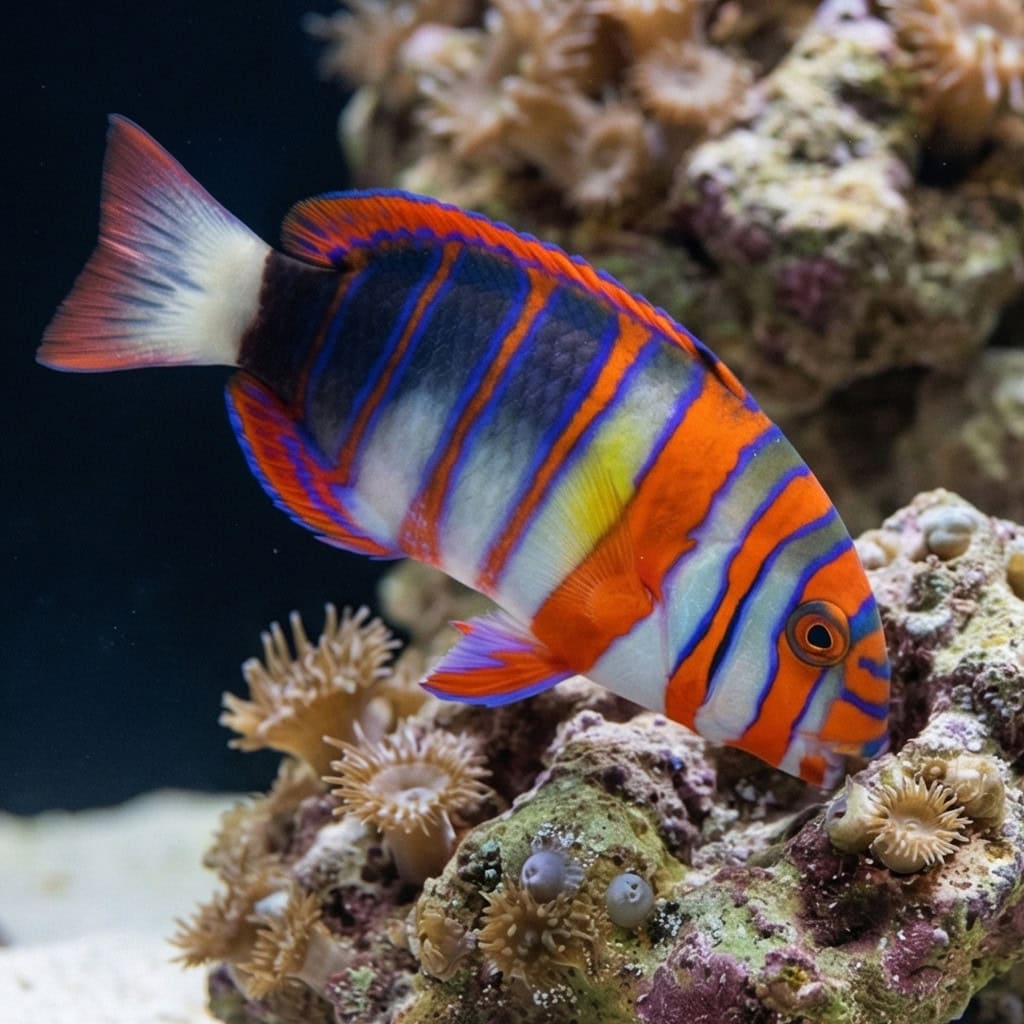
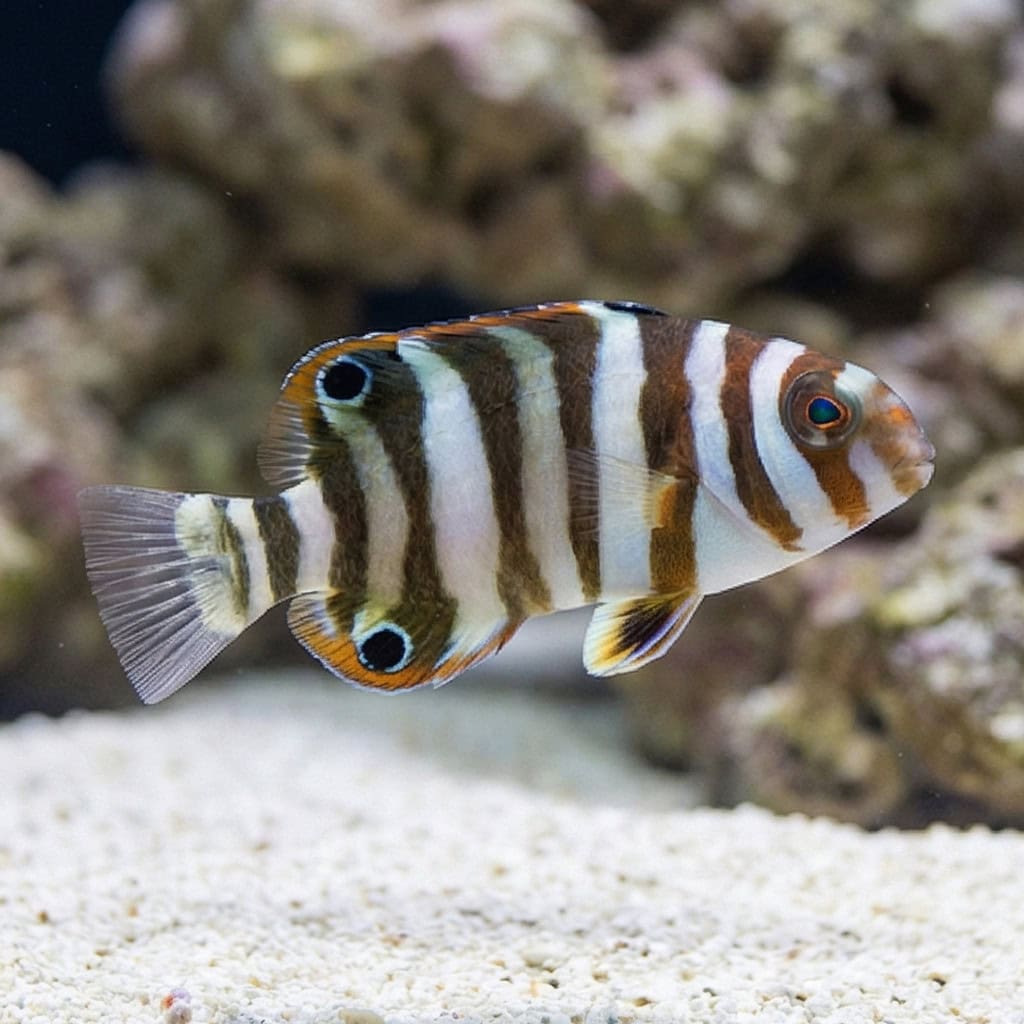
The Harlequin Tusk Wrasse (Choerodon fasciatus) is a Western Pacific wrasse with alternating orange-red and white bands and four blue, tusk-like front teeth used for crushing hard-shelled prey. It spends its day cruising between open water and rockwork, and it’s commonly kept in larger reef tanks and FOWLR systems where its size and activity can be fully enjoyed.
What You’ll Observe:
- Patrol-style swimming along the length of the tank, with frequent “inspection passes” through caves and overhangs
- A strong feeding response at the front glass, especially once it learns your routine
- Regular use of a favorite cave or shadowed area as a “home base” between laps
- Noticeable attention to new objects in the tank (feeding tools, shells, rockwork changes)
To succeed with this wrasse, provide substantial rockwork with roomy caves plus open lanes for cruising, and keep the aquascape stable so it can establish a consistent route. Offer a rotation of meaty frozen foods and quality prepared foods so it stays engaged at feeding time. Choose tankmates that are similarly sized and comfortable in semi-boisterous community setups.
Does it need a sand bed to sleep like many wrasses?
Most keepers do not treat a deep sand bed as a requirement for this species; it typically uses rockwork and caves for resting instead of burying.
Will it eat pellets, or is it “frozen-only”?
Many specimens learn pellets over time once they associate the surface and feeding area with food; mixing pellets with frozen during the same feeding session often helps.
Should I use a lid with a Harlequin Tusk?
A tight-fitting lid or screen top is commonly recommended, since hobbyists do report occasional jumping—especially if there are openings around plumbing or corners.
Can I keep two Harlequin Tusks together?
In typical home aquariums, most hobbyists plan on one per tank; if you want more than one, it usually requires a very large system and a careful introduction strategy.
What’s the practical difference between Australian and other locales?
Keepers often focus on origin because it can correlate with coloration and how well the fish ships and settles; Australian sources are frequently described as more consistently hardy and richly colored.
We source from vetted suppliers known for healthy, long-lived specimens.
Recently viewed products