
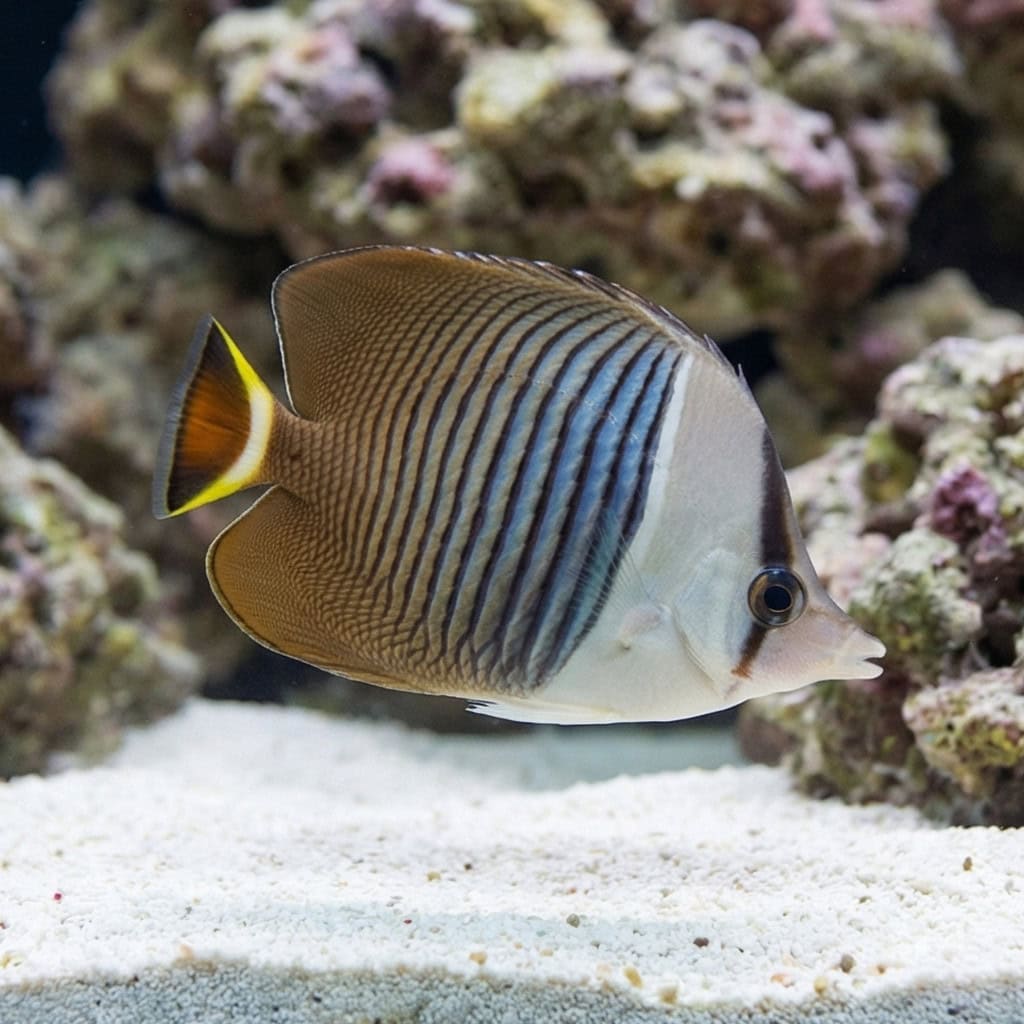
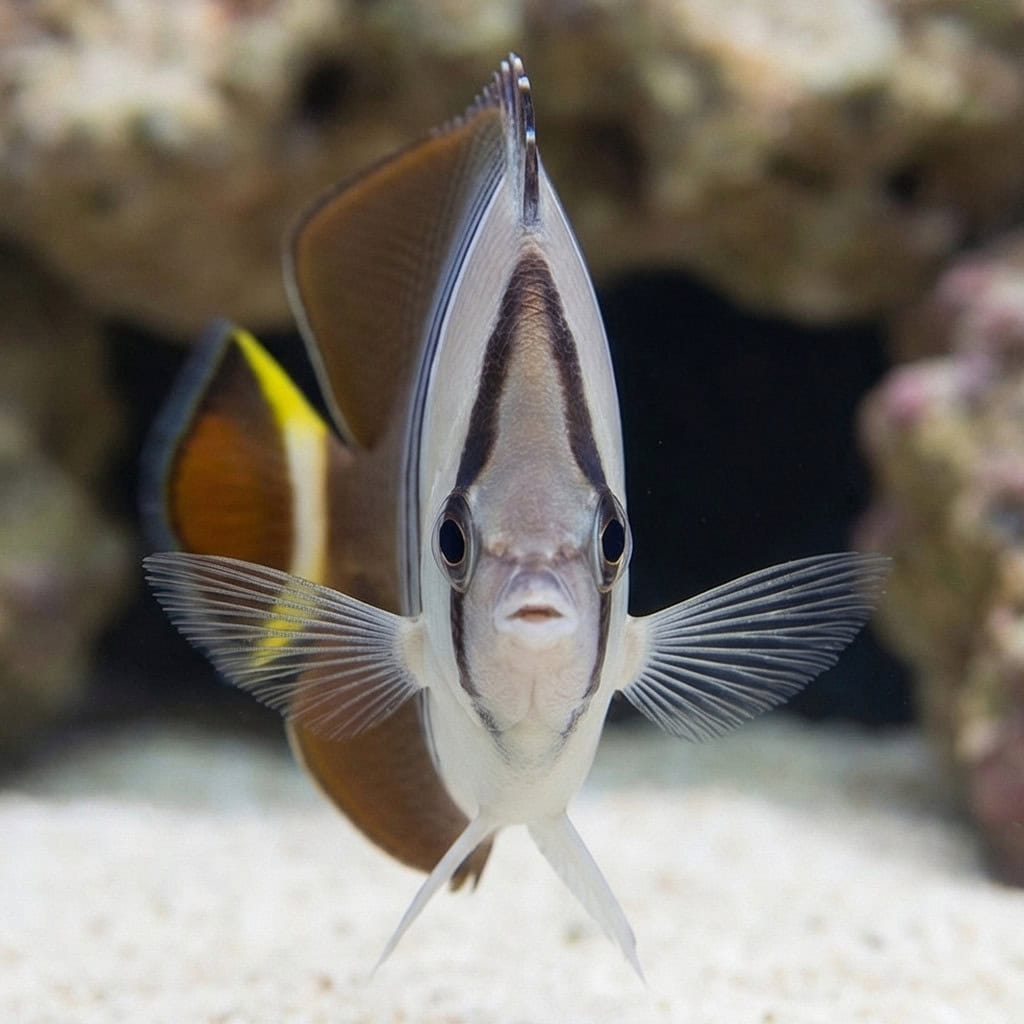
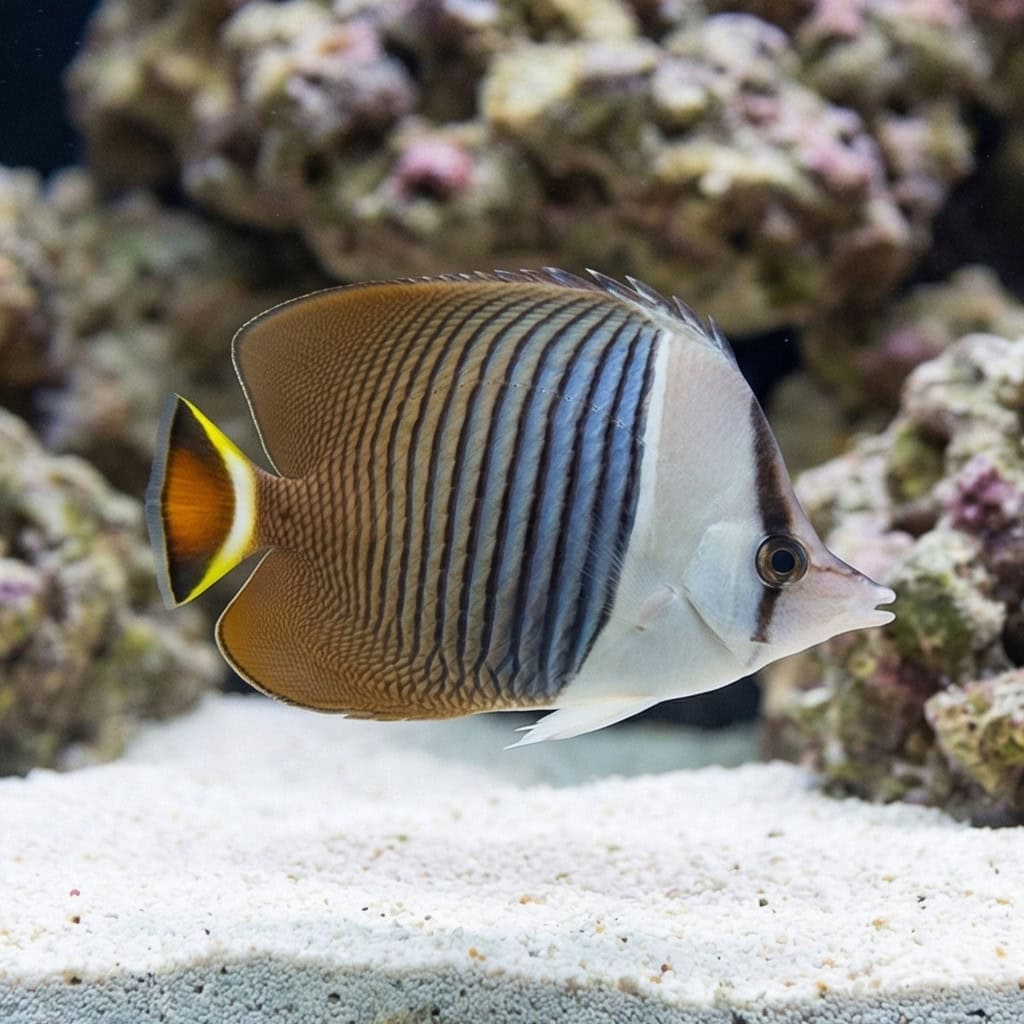
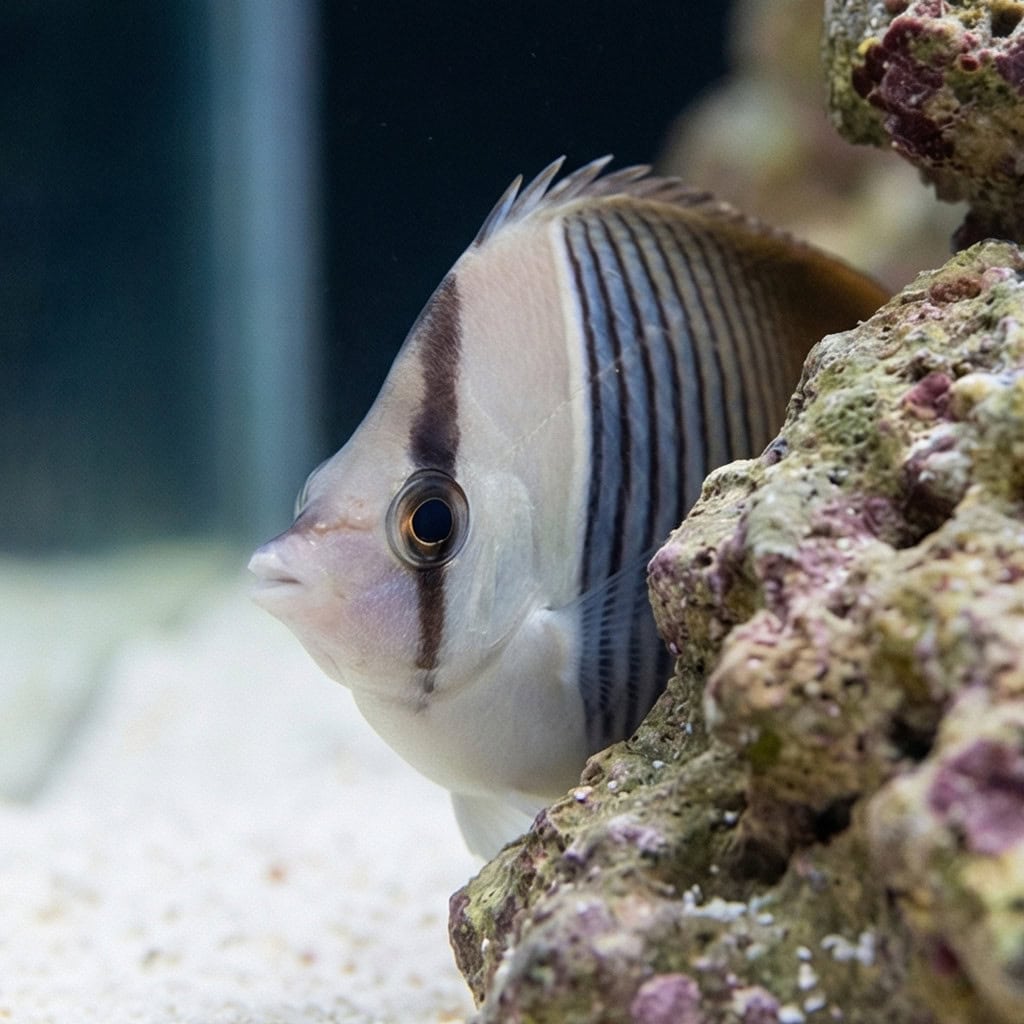
White Face Butterflyfish
Chaetodon mesoleucos
| Stock | Variations | Price | Quantity |
|---|
Every order ships with our standard 3-hour live arrival guarantee. Need more time? Add our 5-Day Guarantee at checkout.
Full guarantee terms →Ships Monday – Thursday for next-day arrival at your nearest FedEx Hold location — typically ready by 9 AM. We monitor every delivery.
Shipping details →
Monday – Friday 8 AM – 9 PM
Saturday 12 PM – 4 PM
Sunday 12 PM – 9 PM
Healthy, stable animals from vetted suppliers — inspected before packing, shipped overnight. Decades of experience built this model so we can deliver premium livestock at 30%+ less than you'd pay elsewhere.
| Care Level | Expert |
|---|---|
| Temperament | Peaceful |
| Reef Safe | No |
| Functional Benefit | Ornamental Only |
| Diet Type | Omnivore |
| Mininum Tank Size | 120 gallons |
| Max Size | 6 inches |
| Temperature | 72–78°F |
| pH Range | 8.1–8.4 |
| Specific Gravity | 1.022–1.025 |
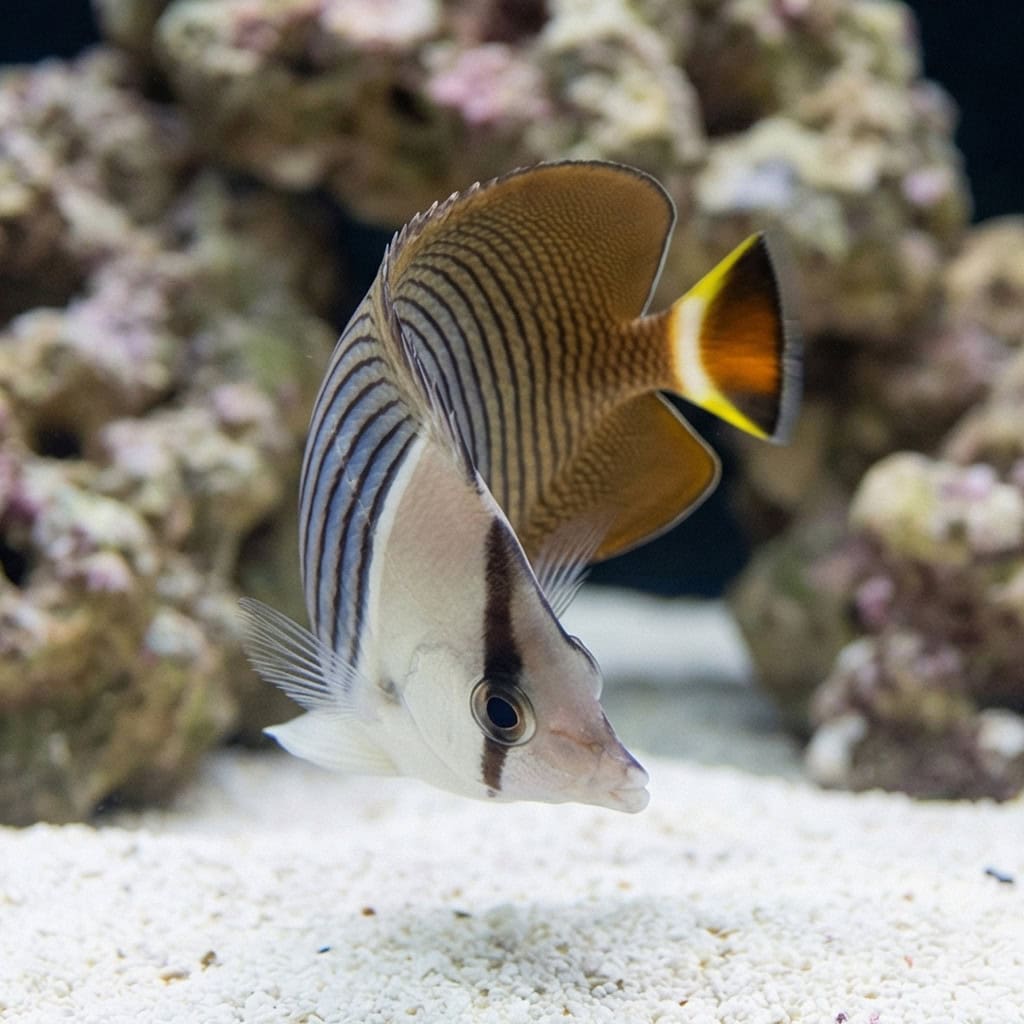
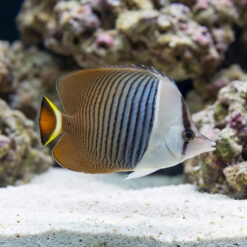
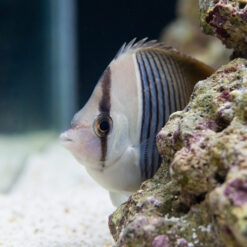
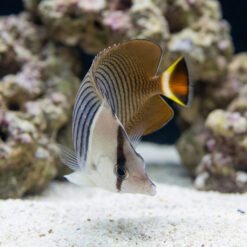
The White Face Butterflyfish (Chaetodon mesoleucos) is a Red Sea butterflyfish with a pale white face, a dark eye band, and a gray body lined with fine vertical striping. It spends much of the day cruising reef structure and open water edges, giving a steady, always-moving “patrol” look in a fish-only with live rock setup.
What You’ll Observe:
- Picks and pecks along live rock between longer, unhurried swimming passes
- Learns the feeding routine and commonly meets food in the water column
- Uses caves and overhangs as quick checkpoints, then returns to its regular route
- Shows the most interest in areas with natural grazing surfaces (rock faces, ledges, and crevices)
Provide a layout with open swimming room plus several rock arches and hideouts so it can move confidently between cover points. Offer a mixed menu that includes spirulina-based foods and dried seaweed along with mysis, brine, and finely chopped meaty items, split into multiple smaller feedings. It does best in a calm community where tankmates don’t constantly crowd it at mealtime.
How hard are they to find in the hobby?
They tend to show up in waves rather than being consistently stocked, so many hobbyists have better luck using in-stock alerts or waitlists.
What foods do hobbyists report working best once it’s settled?
Many keepers rotate between meaty frozen foods (like mysis) and algae/spirulina-based options, and note that variety helps keep feeding response consistent.
Will it stay out in the open, or spend most of its time in the rockwork?
Most owners describe a “route” behavior—swimming laps that repeatedly pass the same ledges and caves rather than staying parked in one spot.
Can it be kept with other butterflyfish if you want a butterfly-focused display?
Keepers commonly report better results when it’s the only butterflyfish, or when butterflies are introduced carefully together in larger systems with plenty of defined swim lanes.
What’s a practical way to evaluate a specimen before purchase?
Hobbyists often prioritize individuals that actively track food, make repeated pecks at offered items, and maintain a steady, upright cruising posture around the tank.
Each fish is checked for strong appetite and activity before we approve it for your tank.
Recently viewed products