
Star Puffer
Arothron stellatus
| Stock | Variations | Price | Quantity |
|---|
Every order ships with our standard 3-hour live arrival guarantee. Need more time? Add our 5-Day Guarantee at checkout.
Full guarantee terms →Ships Monday – Thursday for next-day arrival at your nearest FedEx Hold location — typically ready by 9 AM. We monitor every delivery.
Shipping details →
Monday – Friday 8 AM – 9 PM
Saturday 12 PM – 4 PM
Sunday 12 PM – 9 PM
Healthy, stable animals from vetted suppliers — inspected before packing, shipped overnight. Decades of experience built this model so we can deliver premium livestock at 30%+ less than you'd pay elsewhere.
| Care Level | Moderate |
|---|---|
| Temperament | Semi-Aggressive |
| Reef Safe | No |
| Functional Benefit | Ornamental Only |
| Diet Type | Carnivore |
| Mininum Tank Size | 300 gallons+ |
| Max Size | 24 inches |
| Temperature | 72–78°F |
| pH Range | 8.1–8.4 |
| Specific Gravity | 1.022–1.025 |
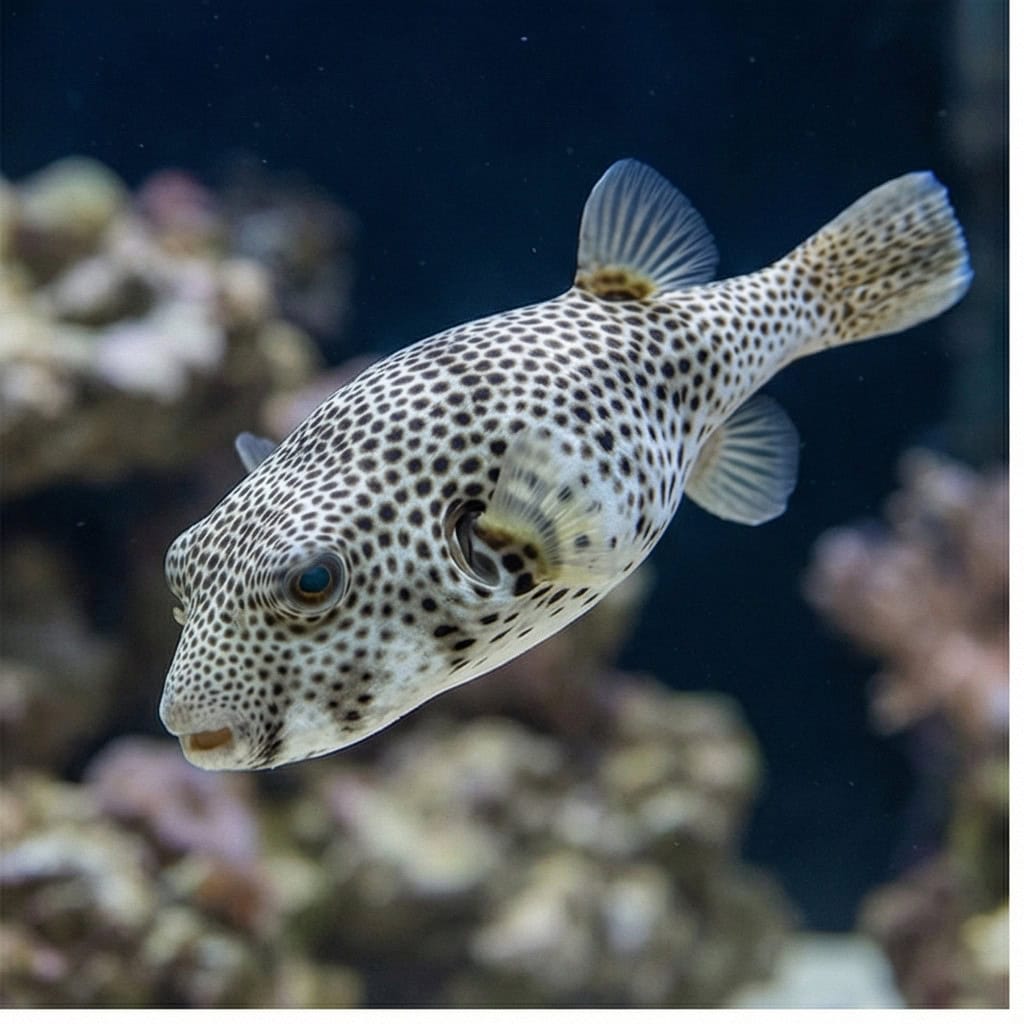
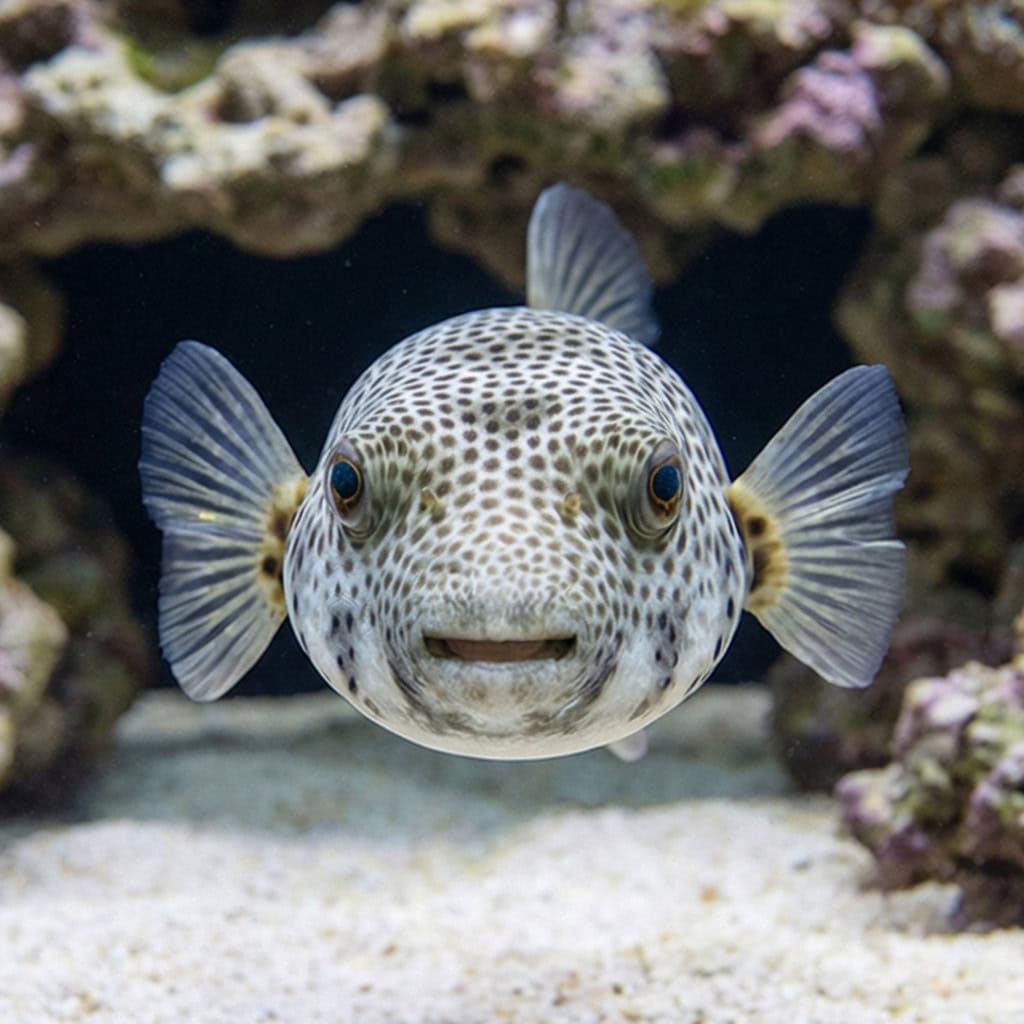
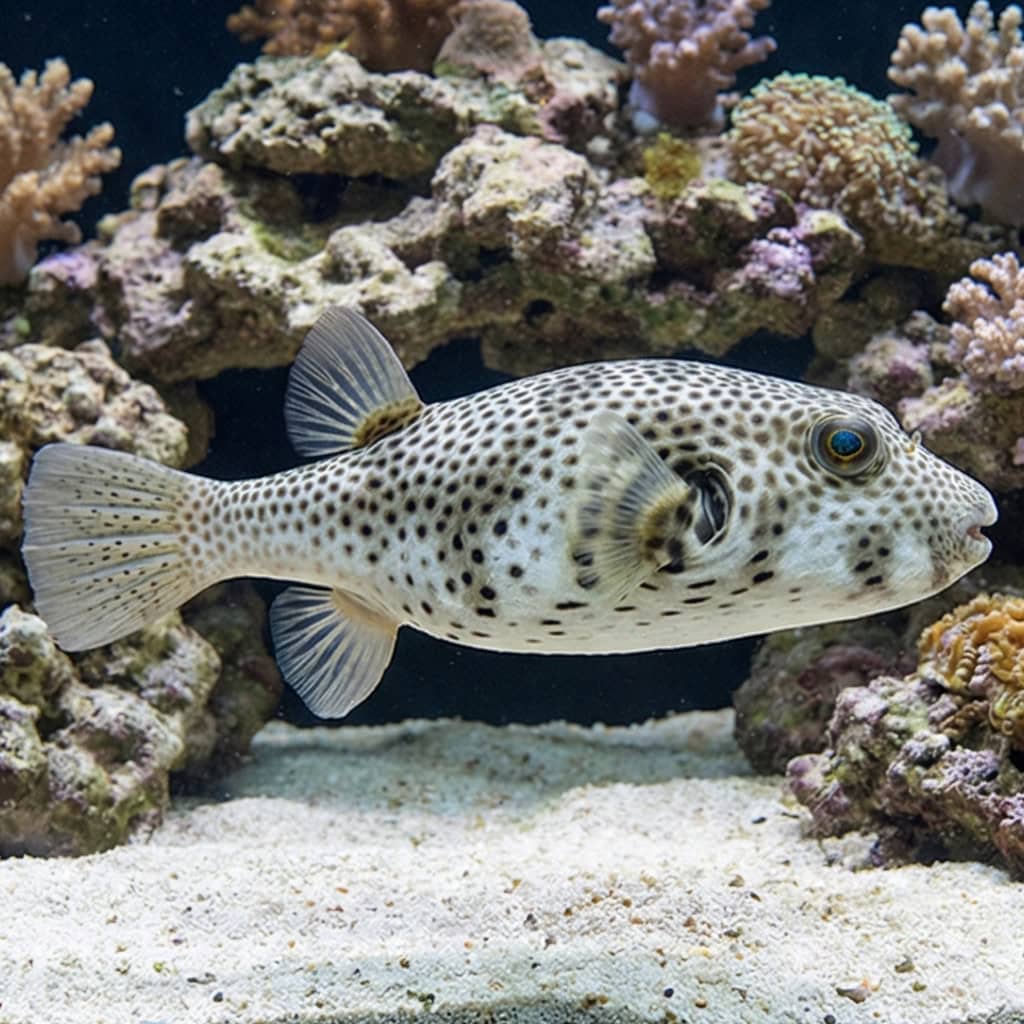
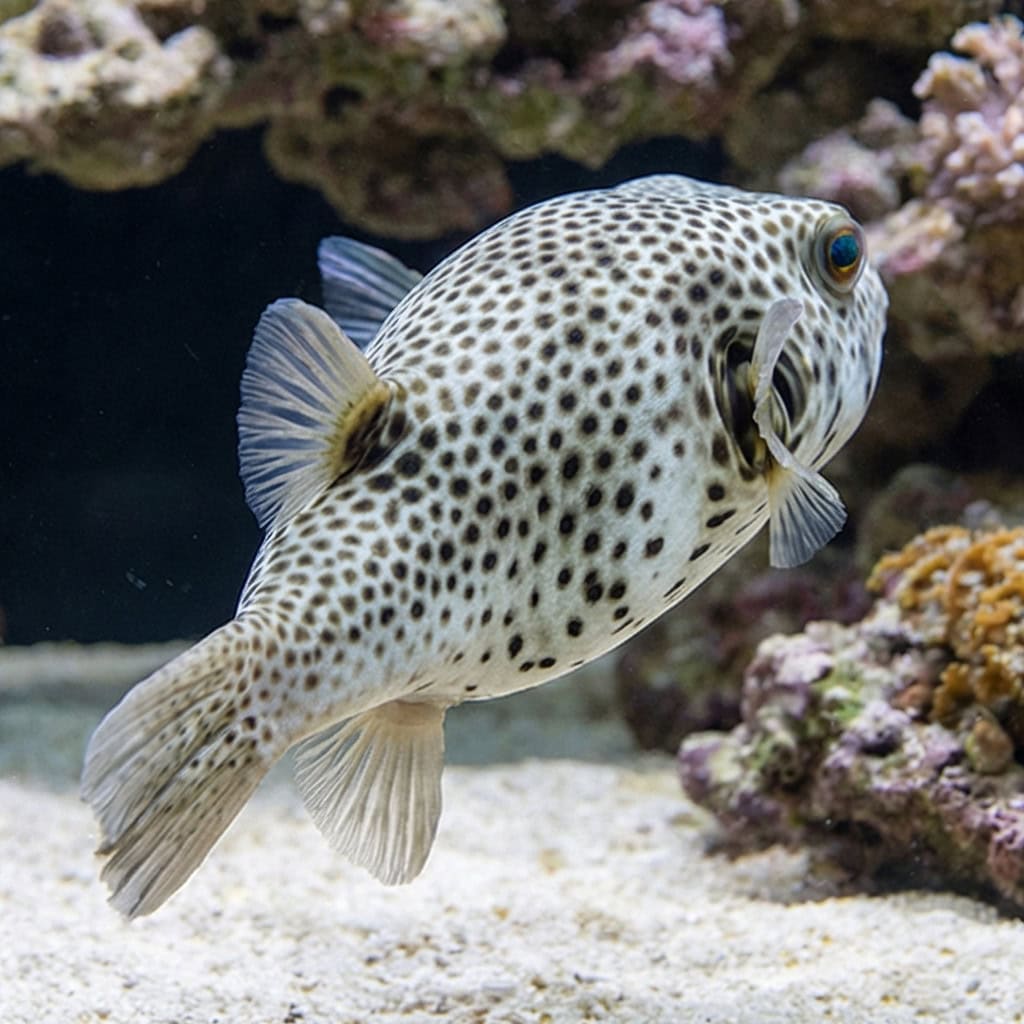
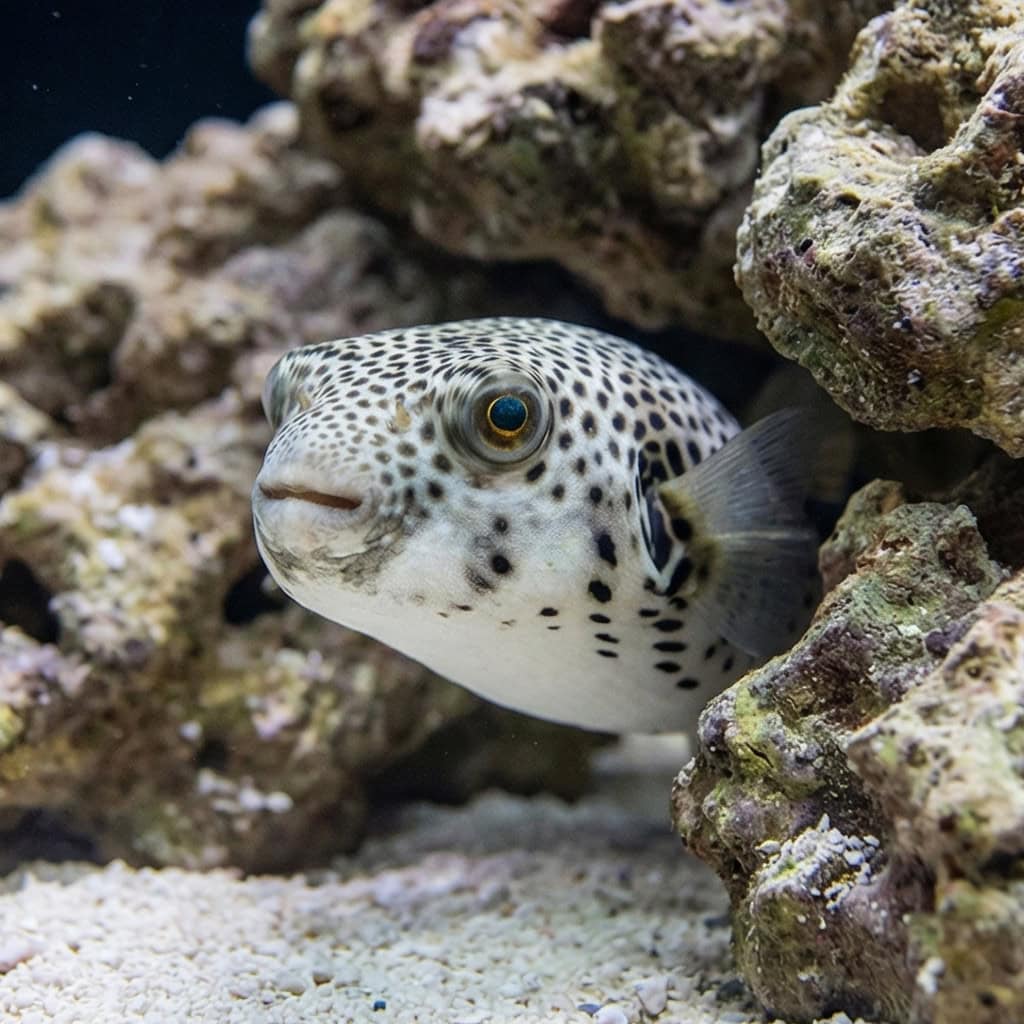
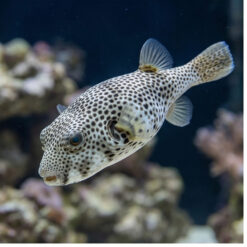
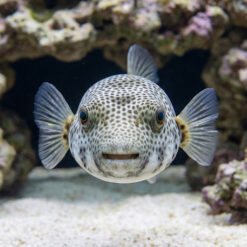
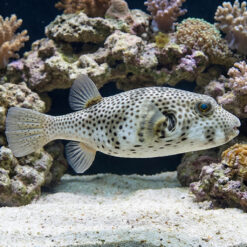
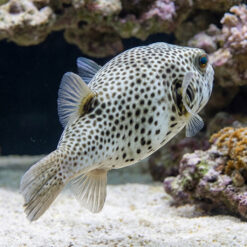
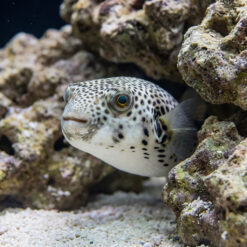
The Star Puffer (Arothron stellatus) is a large Indo-Pacific pufferfish recognized by its rounded profile and beak-like mouth. As it matures, its pattern commonly shifts from bold juvenile markings into a lighter body covered in small, star-like dark spots, giving it a distinctive “starry” look in large fish-only displays.
What You’ll Observe:
- Slow, deliberate cruising around rockwork and along sandy edges, with frequent pauses to hover and inspect its surroundings
- A consistent “pet fish” routine—often approaching the front glass when you enter the room
- Confident feeding behavior, including taking food from tongs and returning to favorite ledges between bites
- Regular use of a preferred cave or overhang as a home base, with repeated laps around the tank during the day
For best results, provide a very large aquarium with open swimming space and sturdy rockwork that won’t shift as the fish explores. Offer a varied menu of marine meaty foods in multiple smaller feedings, and include hard-shelled items to help keep the beak naturally worn down. Strong filtration and steady, reef-range saltwater parameters support long-term stability with this heavy feeder.
Is it normal for the Star Puffer’s markings to change as it grows?
Yes—keepers often see a “transition phase” where juvenile striping or larger patches gradually break up into a finer spotted pattern over time.
How can I tell if the beak is getting too long?
A common sign is difficulty grabbing or breaking food the way it used to, or the mouth looking uneven/extended at the tip compared to earlier photos.
Can beak trimming be avoided, and what’s the usual plan if it’s needed?
Many keepers avoid trimming by regularly offering crunchy, shell-on foods; if trimming becomes necessary, it’s typically treated as a careful, planned procedure rather than an emergency fix.
What’s the safest way to move a puffer between tanks?
Hobbyists often use a clear container/pitcher underwater instead of a net, keeping the fish fully submerged for the transfer.
My puffer begs for food all day—how do I tell hunger from boredom?
Puffers are interactive and often “ask” for food out of routine; adding enrichment (target/tong feeding, moving feeding spots, and varied textures) can keep the behavior constructive without simply increasing portions.
Shipped with pure oxygen and temperature control so it arrives stress-free and ready to eat.
Recently viewed products