
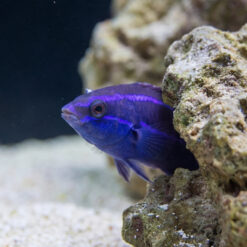
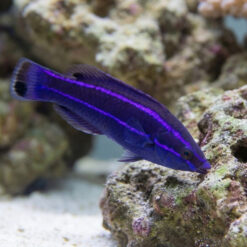
Four-Line Cleaner Wrasse
Larabicus quadrilineatus
| Stock | Variations | Price | Quantity |
|---|
Every order ships with our standard 3-hour live arrival guarantee. Need more time? Add our 5-Day Guarantee at checkout.
Full guarantee terms →Ships Monday – Thursday for next-day arrival at your nearest FedEx Hold location — typically ready by 9 AM. We monitor every delivery.
Shipping details →
Monday – Friday 8 AM – 9 PM
Saturday 12 PM – 4 PM
Sunday 12 PM – 9 PM
Healthy, stable animals from vetted suppliers — inspected before packing, shipped overnight. Decades of experience built this model so we can deliver premium livestock at 30%+ less than you'd pay elsewhere.
| Care Level | Expert |
|---|---|
| Temperament | Peaceful |
| Reef Safe | No |
| Functional Benefit | Ornamental Only |
| Diet Type | Carnivore |
| Mininum Tank Size | 70 gallons |
| Max Size | 5 inches |
| Temperature | 72–78°F |
| pH Range | 8.1–8.4 |
| Specific Gravity | 1.022–1.025 |
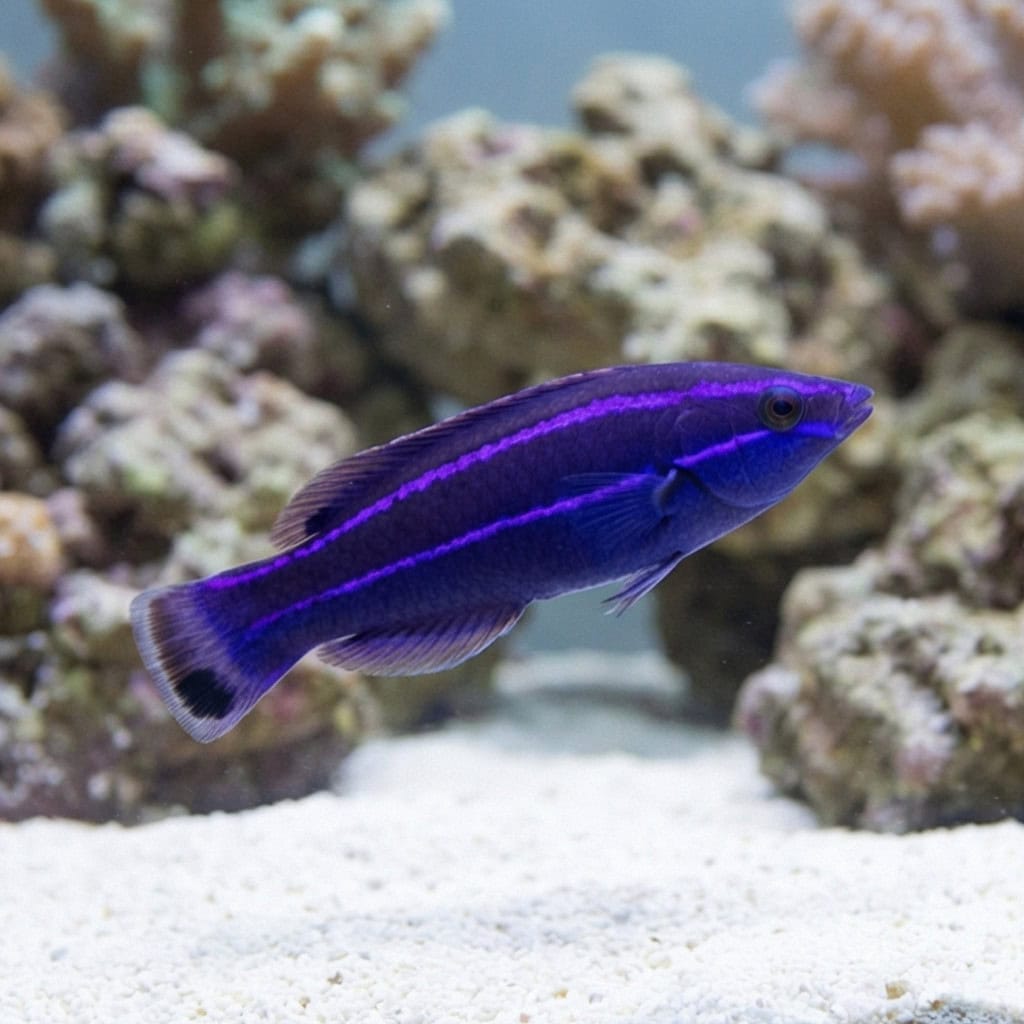
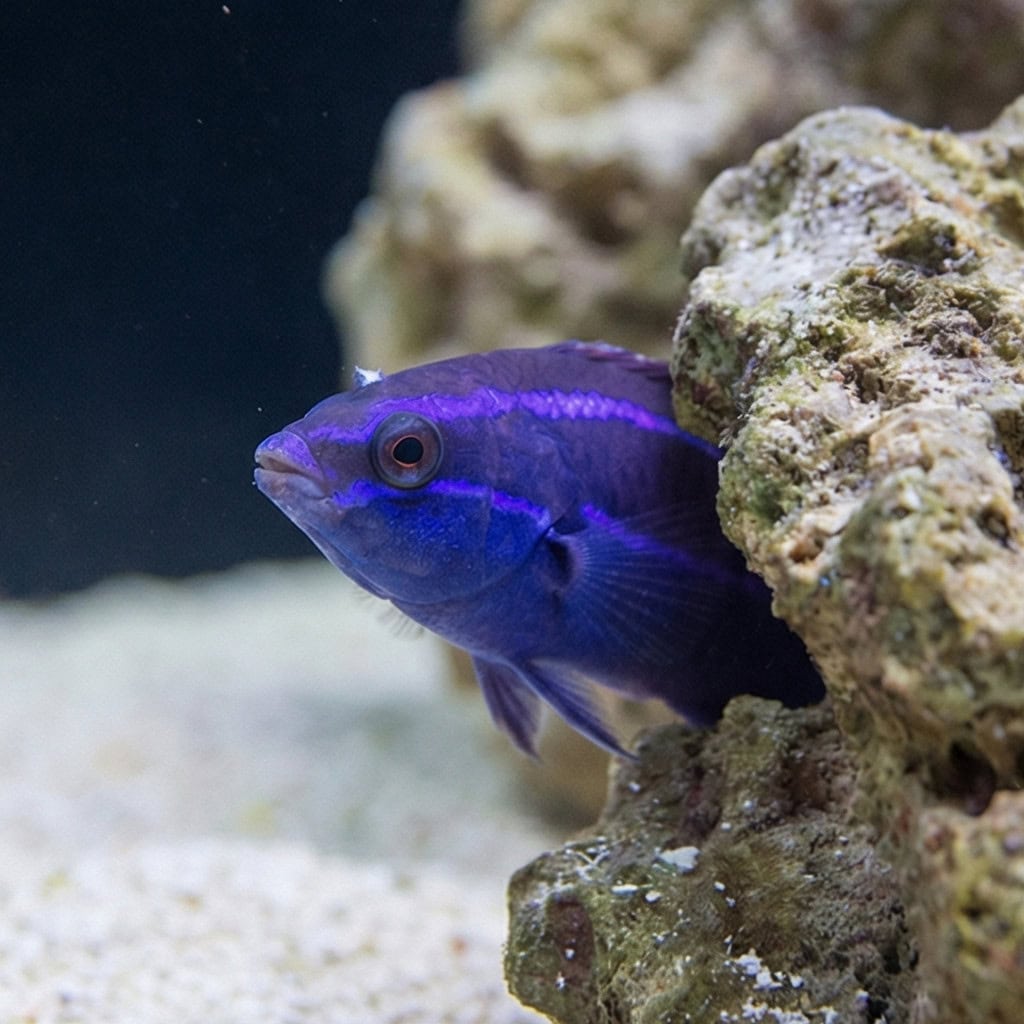
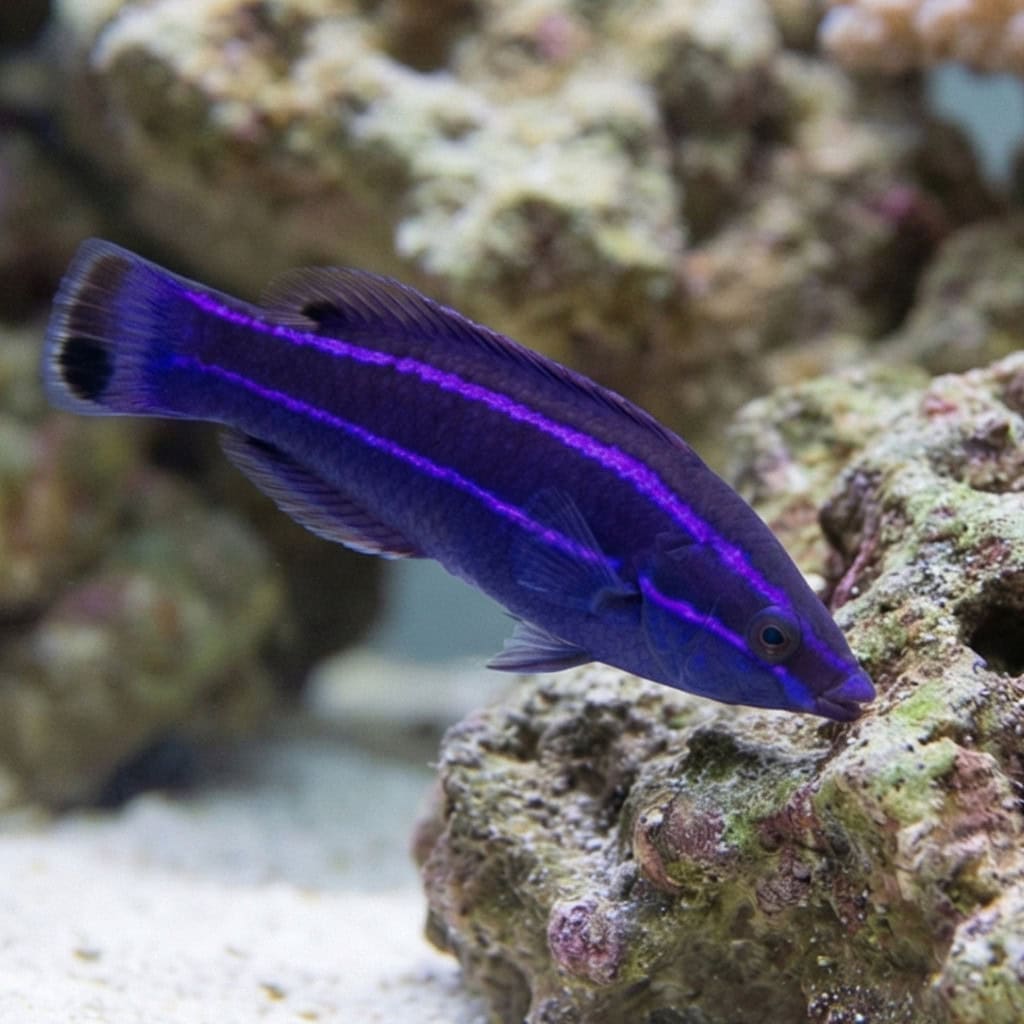
The Four-Line Cleaner Wrasse (Larabicus quadrilineatus), also called the Red Sea Four Line Cleaner Wrasse or Arabian Cleaner Wrasse, is a slim wrasse with electric-blue striping over a deep blue-black body. It’s native to the Red Sea region and is often recognized for “cleaner wrasse” behavior when young, with mature individuals shifting toward coral-feeding behavior.
What You’ll Observe:
- Patrols live rock and reef structure in short passes, then pauses to hover and watch activity
- Regularly investigates tankmates and surfaces throughout the day as it makes a consistent route
- Uses caves and tight rock crevices as “check-in” points between swims
- Becomes most visible during full lighting, with quick, controlled bursts of movement
Provide a mature, stable aquarium with abundant live rock, multiple shelter options, and open lanes for cruising. Offer small meaty foods in frequent feedings to keep it engaged at mealtimes, and vary food size/texture to encourage consistent acceptance. A calm community helps it settle into a predictable daily routine.
Will it keep cleaning other fish as it grows?
Many hobbyists report the strongest cleaning behavior early on, with behavior changing as the fish matures and becomes more focused on foraging.
If it’s eating frozen and flake, why does it still pick at corals and clams?
Keepers commonly report that prepared foods don’t always replace its natural grazing behavior, so “sampling” can continue even in well-fed systems.
What foods do hobbyists have the best long-term success with?
Reports commonly mention starting with small meaty frozen foods and then mixing in other options (including fine pellets/flake) once the fish is confidently feeding.
Does it need a tight-fitting lid like other wrasses?
Hobbyists frequently recommend a covered top or gap-free mesh because wrasses are known to launch during sudden movement, lighting changes, or chasing.
Why do some listings/forums call it “reef safe” while others say the opposite?
Much of the debate centers on juvenile vs. adult behavior—people may be describing very different outcomes depending on the fish’s age and what “reef safe” means in their tank.
Each fish is checked for strong appetite and activity before we approve it for your tank.
Recently viewed products