
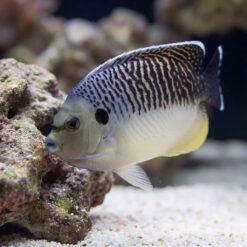
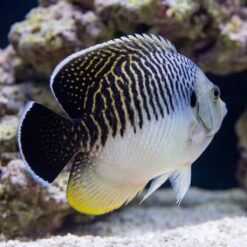
Tiger Angelfish
Apolemichthys kingi
| Stock | Variations | Price | Quantity |
|---|
Every order ships with our standard 3-hour live arrival guarantee. Need more time? Add our 5-Day Guarantee at checkout.
Full guarantee terms →Ships Monday – Thursday for next-day arrival at your nearest FedEx Hold location — typically ready by 9 AM. We monitor every delivery.
Shipping details →
Monday – Friday 8 AM – 9 PM
Saturday 12 PM – 4 PM
Sunday 12 PM – 9 PM
Healthy, stable animals from vetted suppliers — inspected before packing, shipped overnight. Decades of experience built this model so we can deliver premium livestock at 30%+ less than you'd pay elsewhere.
| Care Level | Moderate |
|---|---|
| Temperament | Semi-Aggressive |
| Reef Safe | No |
| Functional Benefit | Ornamental Only |
| Diet Type | Omnivore |
| Mininum Tank Size | 120 gallons |
| Max Size | 10 inches |
| Temperature | 72–78°F |
| pH Range | 8.1–8.4 |
| Specific Gravity | 1.022–1.025 |
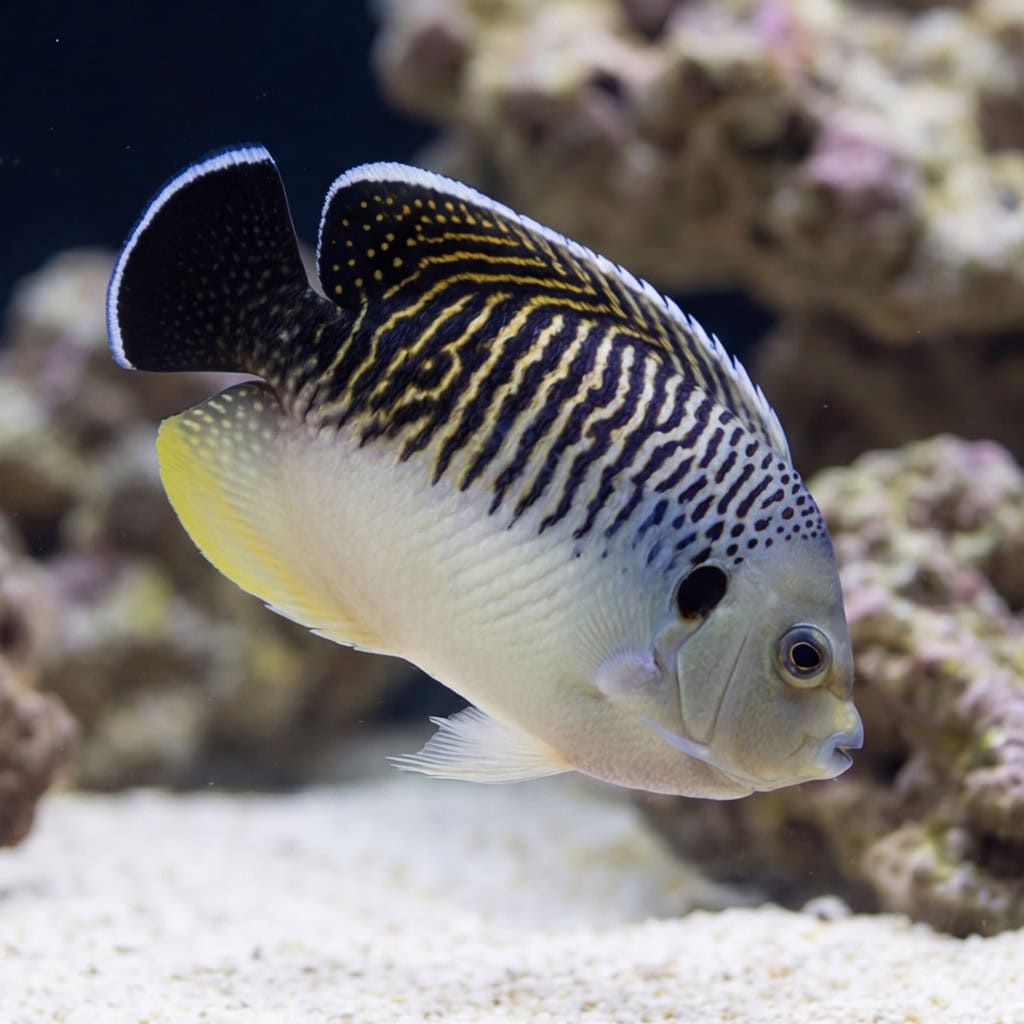
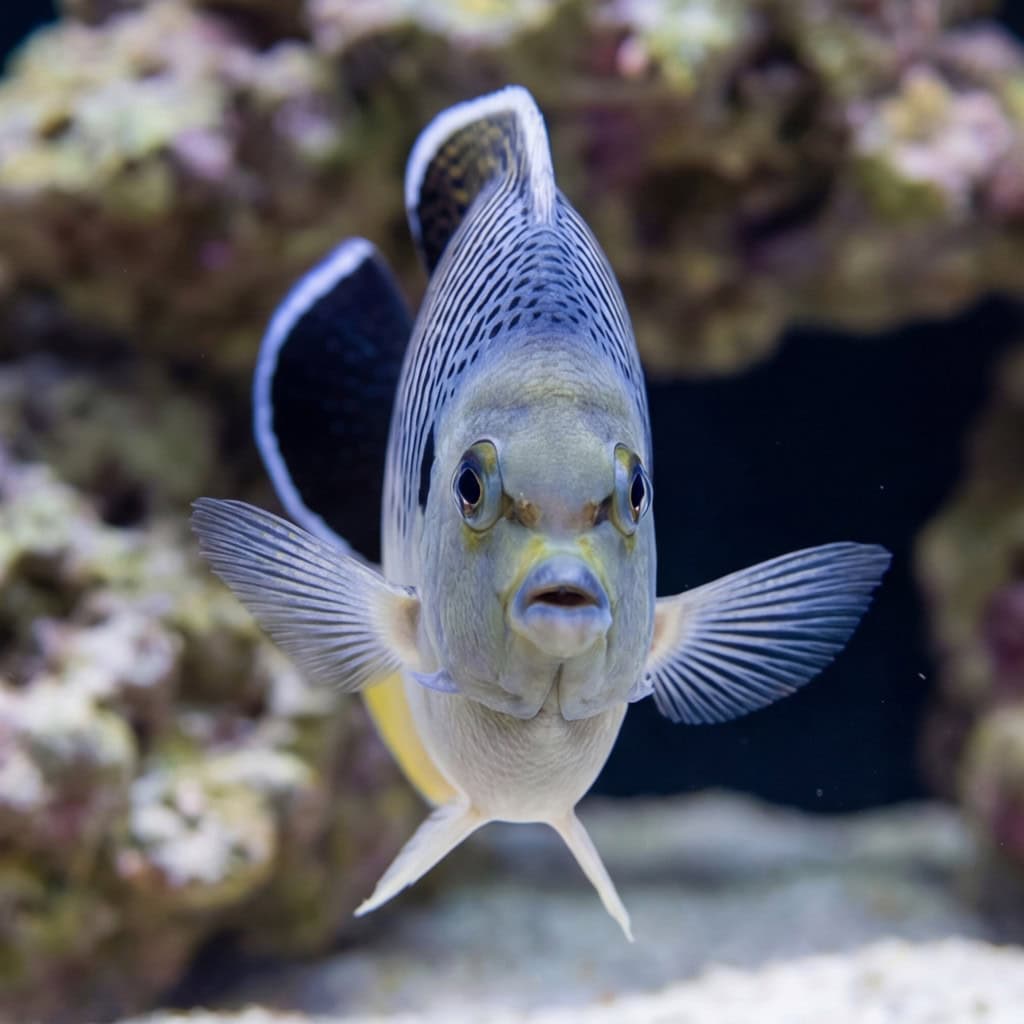
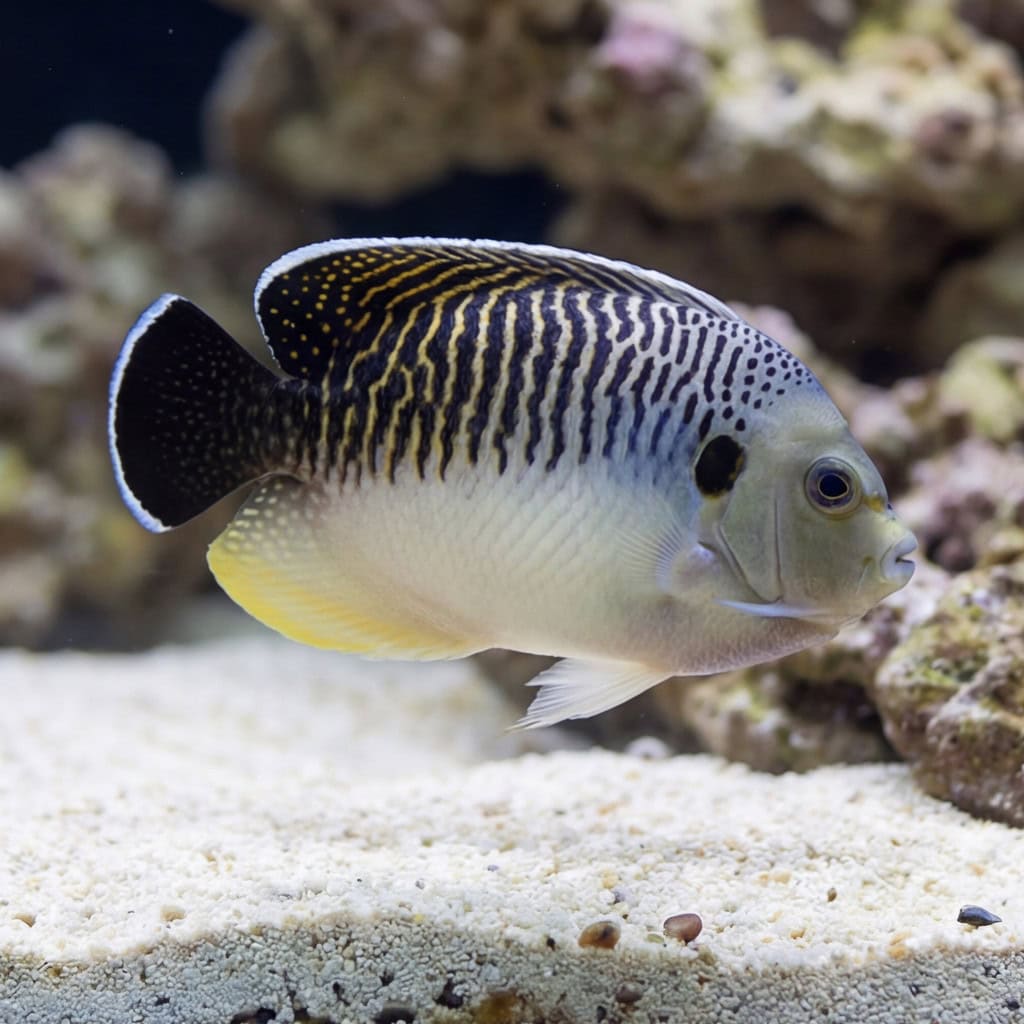
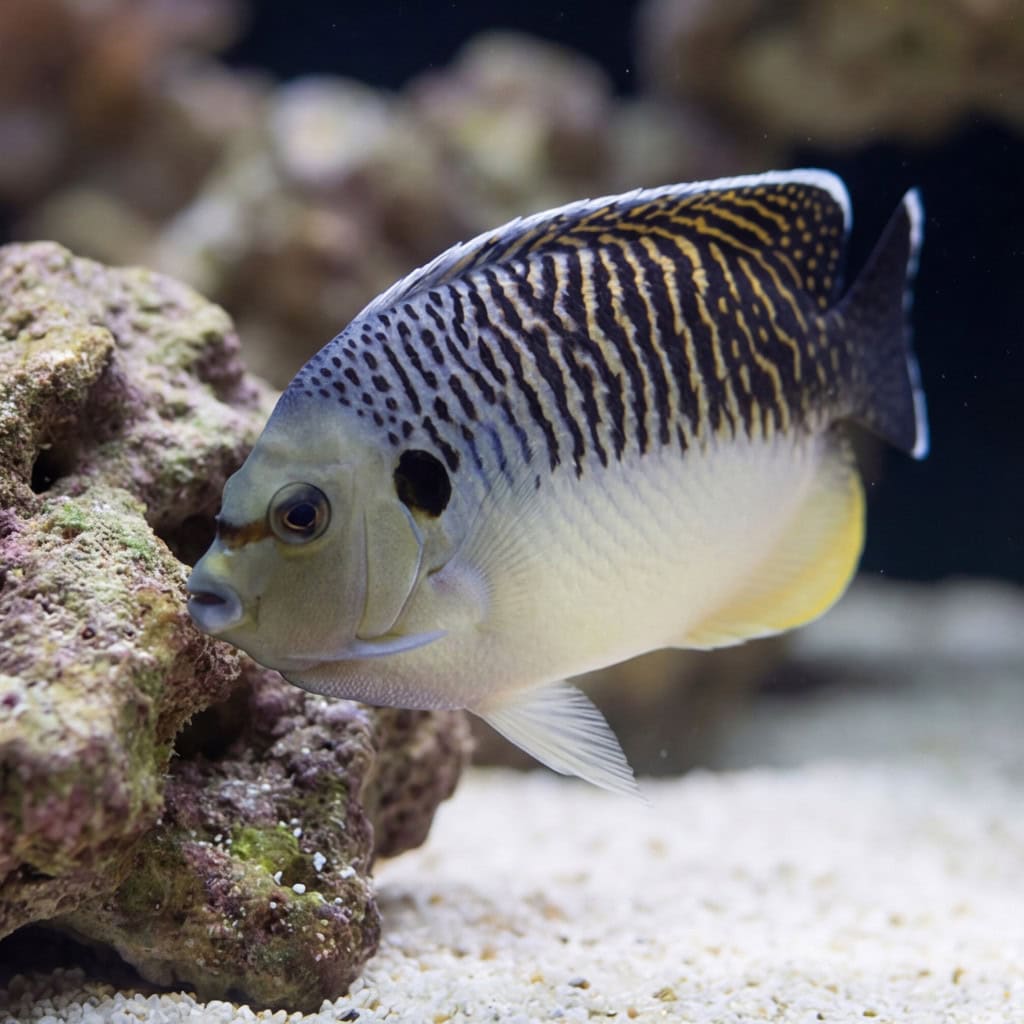
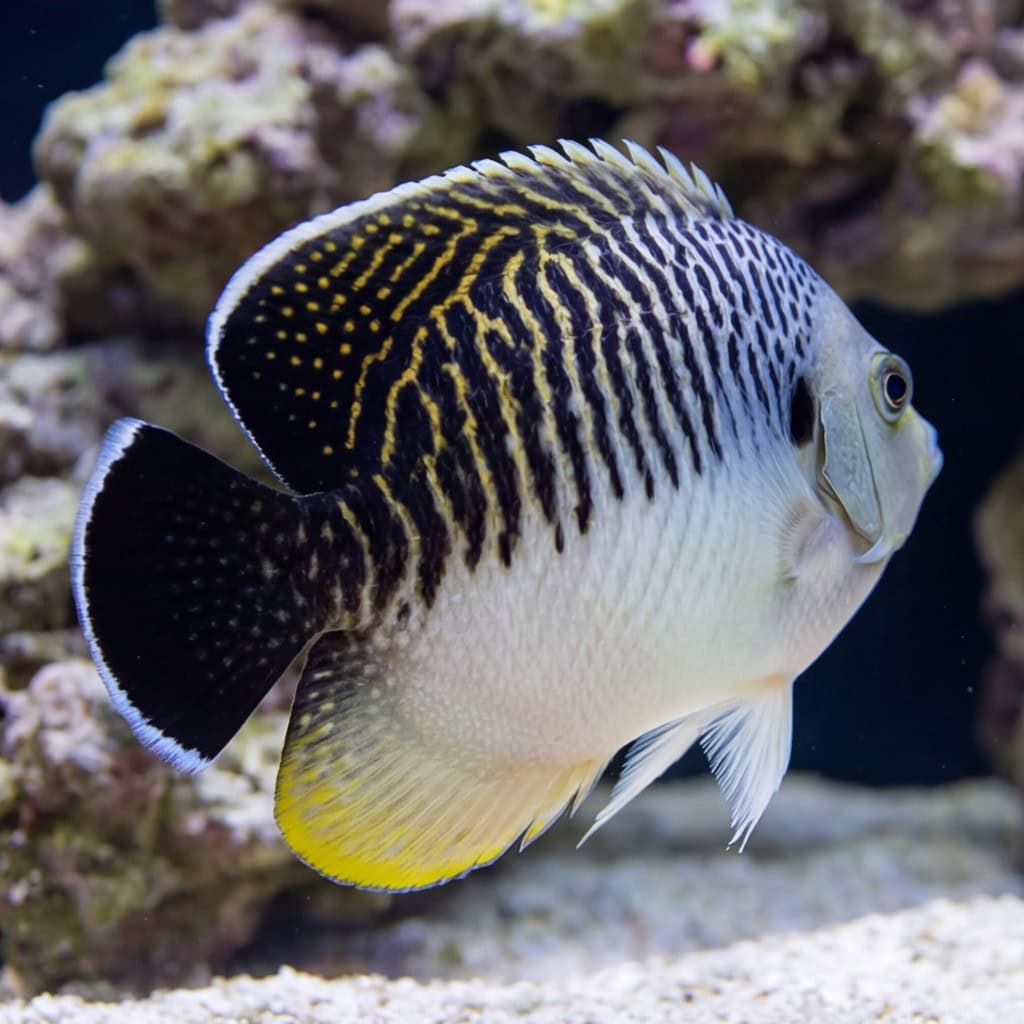
The Tiger Angelfish (Apolemichthys kingi), sometimes listed as the Kingi Angelfish, is a large Apolemichthys angelfish with a silver-gray body covered in dark, tiger-like markings and a darker tail. As it matures, many specimens show stronger yellow-to-orange accents near the gill area and face, adding contrast to the fine patterning. It comes from the western Indian Ocean and is typically associated with seaward reef zones.
What You’ll Observe:
- A steady “patrolling” swim pattern, moving between open water and rockwork throughout the day
- Frequent grazing behavior—stopping often to pick at surfaces and investigate new areas
- A noticeably stronger feeding response once it learns your tank’s routine and feeding spots
- Color and pattern contrast that becomes more defined as the fish grows and settles in
How to succeed: Provide an established aquarium with plenty of mature live rock, caves, and clear swim lanes so it can graze and retreat as needed. Offer a varied menu that includes angelfish preparations with sponge content, plus meaty frozen foods and algae-based options, delivered in consistent, smaller feedings. With stable water conditions and a predictable routine, it tends to become a visible, active part of the display.
How long does it take for the adult orange/yellow accents to show strongly?
Many juveniles and subadults look more muted; the brighter accents typically build with size and maturity over time rather than appearing all at once.
Is it normal if it spends the first few days mostly in rockwork?
Yes—many keepers report an initial “lay low” phase; it often becomes more visible after it maps the tank and associates you with feeding.
Do Tiger Angelfish usually accept pellets, or should I plan on frozen foods long-term?
Some individuals become pellet-trained, but most do best when pellets are just one part of a mixed diet offered in smaller, regular feedings.
What’s a good introduction method if the tank already has established fish?
A common approach is a short acclimation-box period (or a brief territory reset by rearranging a few rocks) so existing fish can adjust before direct contact.
Are there “safer” coral types people report success with, or is nipping unpredictable?
Reports vary by individual—some owners see minimal interest in certain corals while others see sampling behavior; planning coral choices with flexibility tends to work best for long-term harmony.
Each fish is checked for strong appetite and activity before we approve it for your tank.
Recently viewed products