
Dwarf Seahorse
Hippocampus zosterae
| Stock | Variations | Price | Quantity |
|---|
Every order ships with our standard 3-hour live arrival guarantee. Need more time? Add our 5-Day Guarantee at checkout.
Full guarantee terms →Ships Monday – Thursday for next-day arrival at your nearest FedEx Hold location — typically ready by 9 AM. We monitor every delivery.
Shipping details →
Monday – Friday 8 AM – 9 PM
Saturday 12 PM – 4 PM
Sunday 12 PM – 9 PM
Healthy, stable animals from vetted suppliers — inspected before packing, shipped overnight. Decades of experience built this model so we can deliver premium livestock at 30%+ less than you'd pay elsewhere.
| Care Level | Expert |
|---|---|
| Temperament | Peaceful |
| Reef Safe | Yes |
| Functional Benefit | Ornamental Only |
| Diet Type | Carnivore |
| Mininum Tank Size | 10 gallons |
| Max Size | 2 inches |
| Temperature | 72–78°F |
| pH Range | 8.1–8.4 |
| Specific Gravity | 1.022–1.025 |
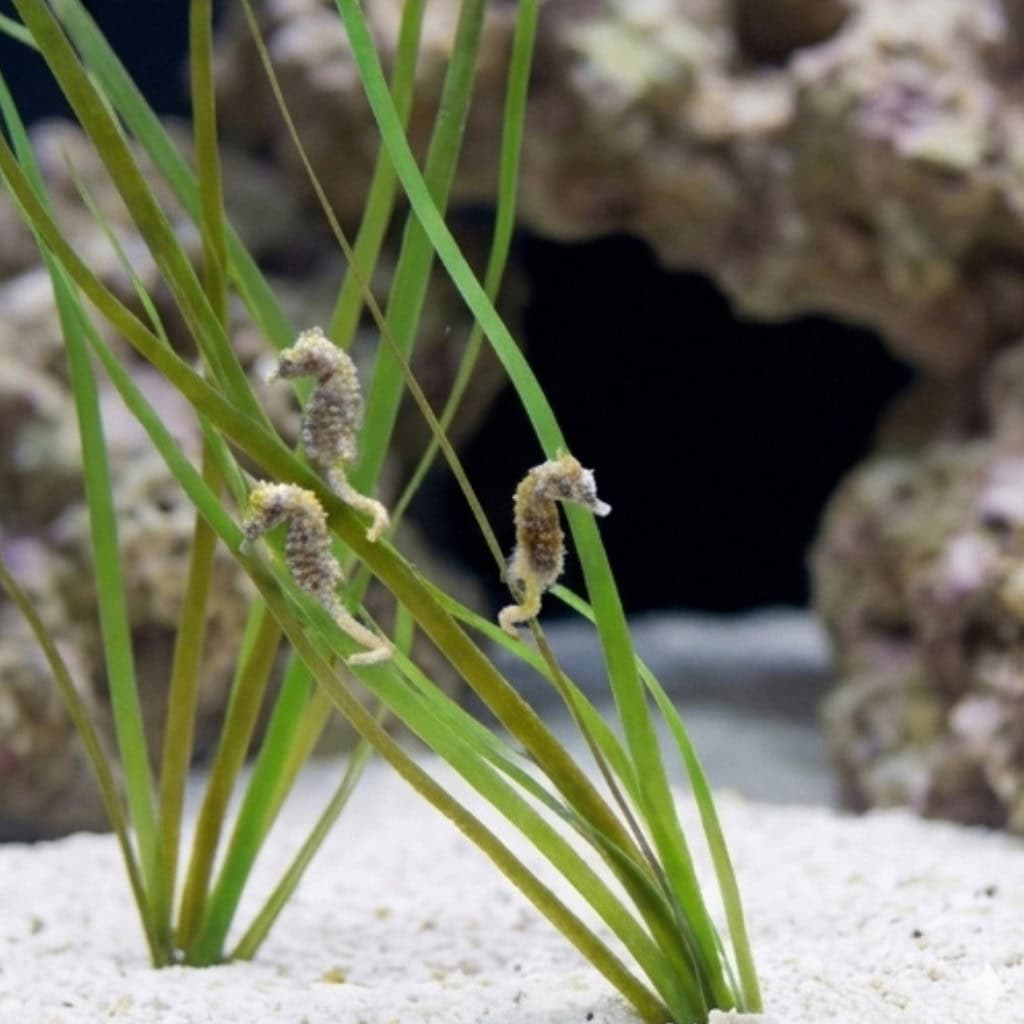
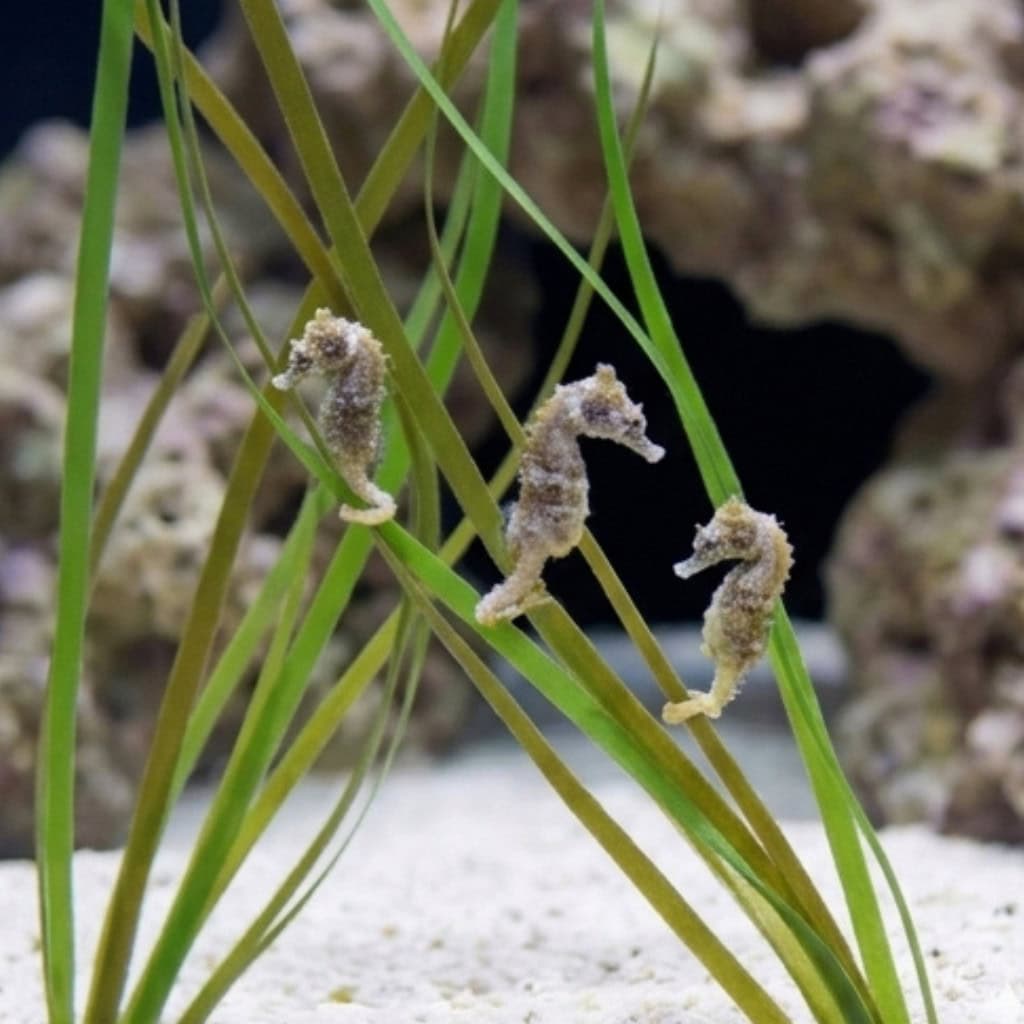
The Dwarf Seahorse (Hippocampus zosterae) is a tiny, upright-swimming seahorse that typically shows tan, yellow, white, or darker patterning and uses its prehensile tail to hitch onto macroalgae and other holdfasts. It’s naturally associated with shallow seagrass habitats in the Western Atlantic region, which is why many keepers build macroalgae- or seagrass-themed nano systems around it.
What You’ll Observe:
- Short bursts of fin fluttering followed by long “perching” periods on macroalgae, décor, or tank walls
- Ambush-style feeding: they wait for tiny prey to drift close, then snick it in
- Frequent tail-hitching and repositioning from holdfast to holdfast, especially when food is added
- Pairing and group courtship behaviors that can show up as they settle into a routine
Provide a calm, species-focused aquarium with gentle filtration (sponge filters are commonly used) and plenty of safe hitching posts like macroalgae. Feed freshly-hatched baby brine shrimp and other appropriately-sized live zooplankton multiple times per day so food stays available in their “perch and hunt” style. Keeping them in a small group often helps them settle into consistent, observable daily behavior.
Do dwarf seahorses reliably switch to frozen foods?
Some hobbyists report limited success, but most long-term keepers plan around live, newly-hatched foods as the dependable staple.
Is live rock “required,” or can it complicate a dwarf seahorse setup?
Many keepers run simple, easy-to-clean setups and focus on macroalgae/holdfasts; LiveAquaria also notes that live rock/live sand can introduce stinging animals that may not mix well with dwarfs.
How do keepers keep baby brine shrimp feeding from turning into a constant mess?
A common approach is using a bare-bottom or easily-siphoned bottom area and doing quick spot-cleaning after feedings to keep the system tidy.
Can they be housed with pipefish or “peaceful nano fish” if the tank is big enough?
They’re often outcompeted at mealtime, so most keepers treat them as a species tank project first, then add only very carefully chosen companions if at all.
Do dwarf seahorses breed in home aquariums, and what does that look like?
Breeding behavior is commonly reported in established tanks, including visible courtship and egg transfer, especially once the group has a steady feeding routine.
Each fish is checked for strong appetite and activity before we approve it for your tank.
Recently viewed products