
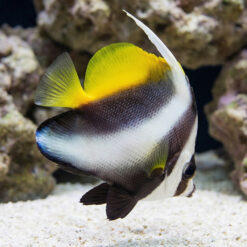
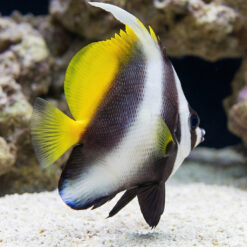
Masked Heniochus
Heniochus monoceros
| Stock | Variations | Price | Quantity |
|---|
Every order ships with our standard 3-hour live arrival guarantee. Need more time? Add our 5-Day Guarantee at checkout.
Full guarantee terms →Ships Monday – Thursday for next-day arrival at your nearest FedEx Hold location — typically ready by 9 AM. We monitor every delivery.
Shipping details →
Monday – Friday 8 AM – 9 PM
Saturday 12 PM – 4 PM
Sunday 12 PM – 9 PM
Healthy, stable animals from vetted suppliers — inspected before packing, shipped overnight. Decades of experience built this model so we can deliver premium livestock at 30%+ less than you'd pay elsewhere.
| Care Level | Moderate |
|---|---|
| Temperament | Peaceful |
| Reef Safe | With Caution |
| Functional Benefit | Ornamental Only |
| Diet Type | Omnivore |
| Mininum Tank Size | 120 gallons |
| Max Size | 10 inches |
| Temperature | 72–78°F |
| pH Range | 8.1–8.4 |
| Specific Gravity | 1.022–1.025 |
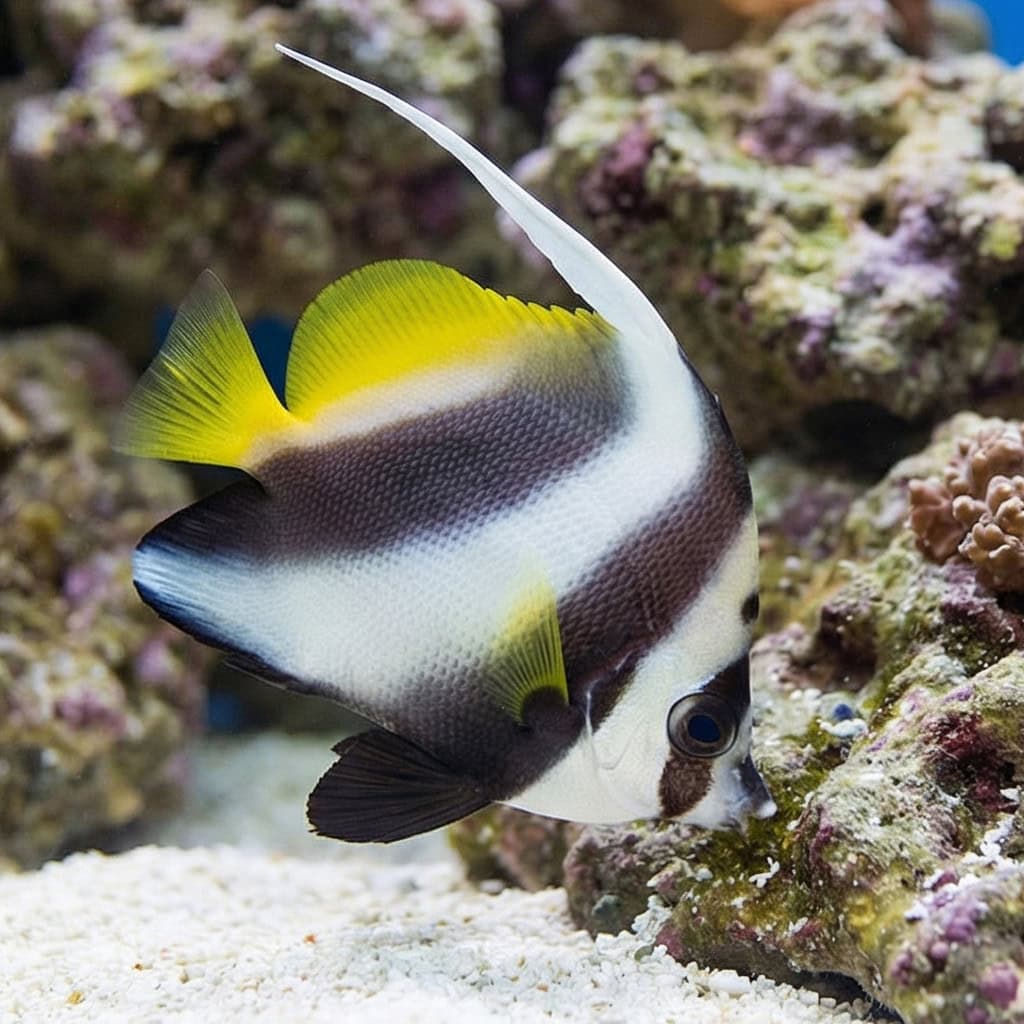
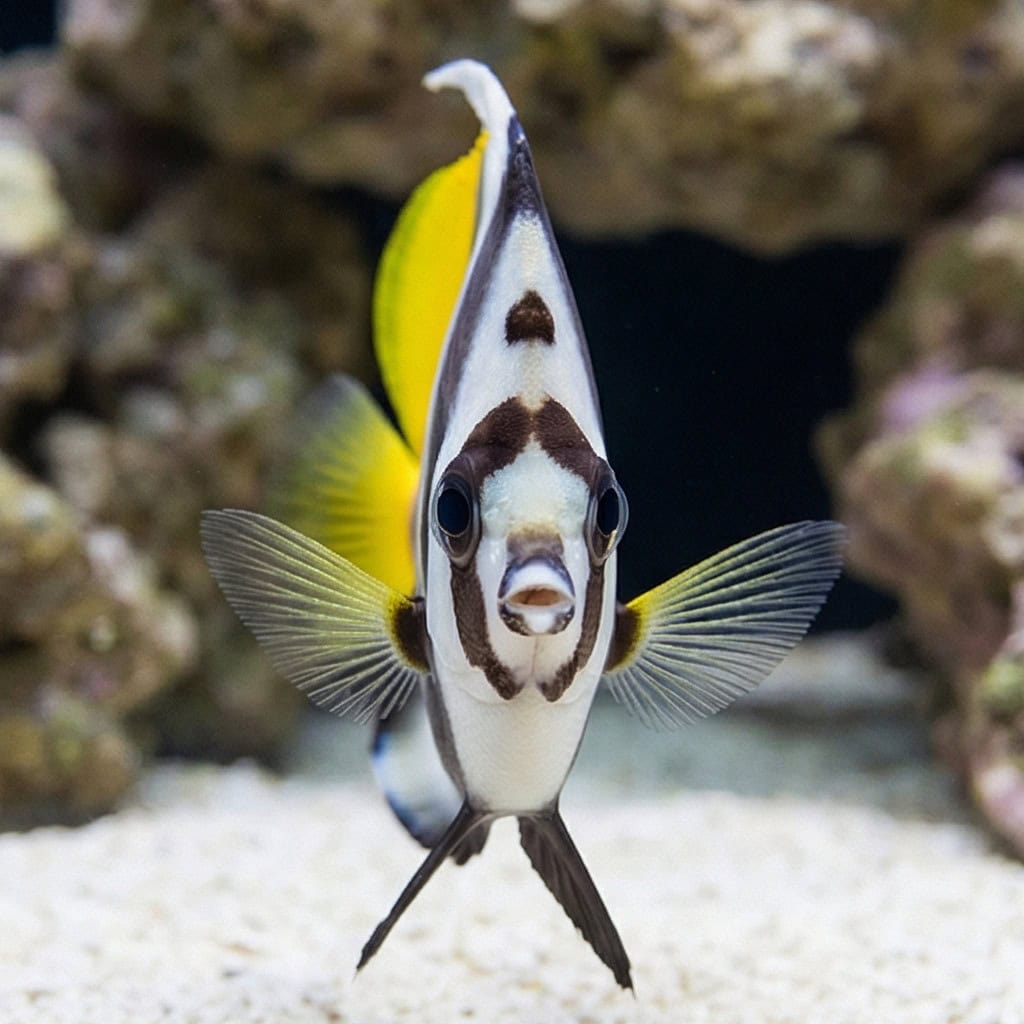
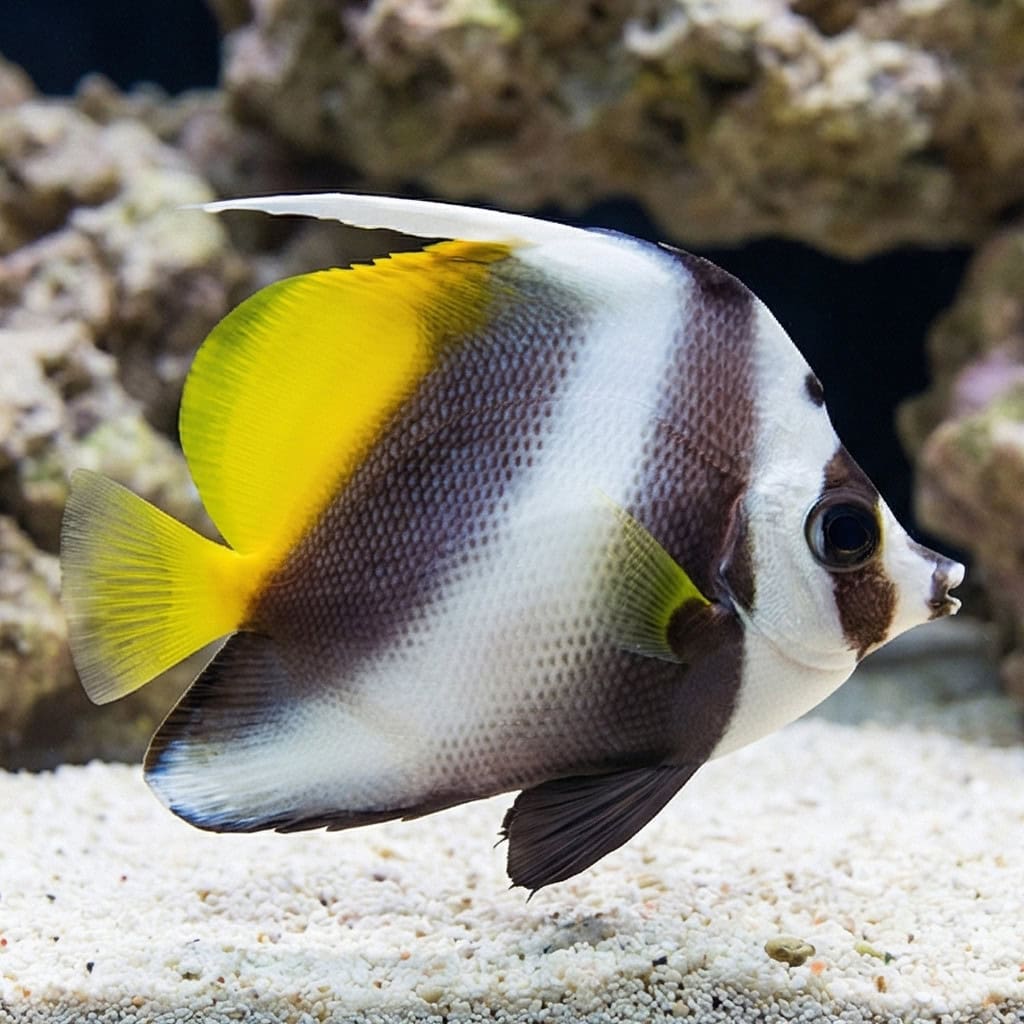
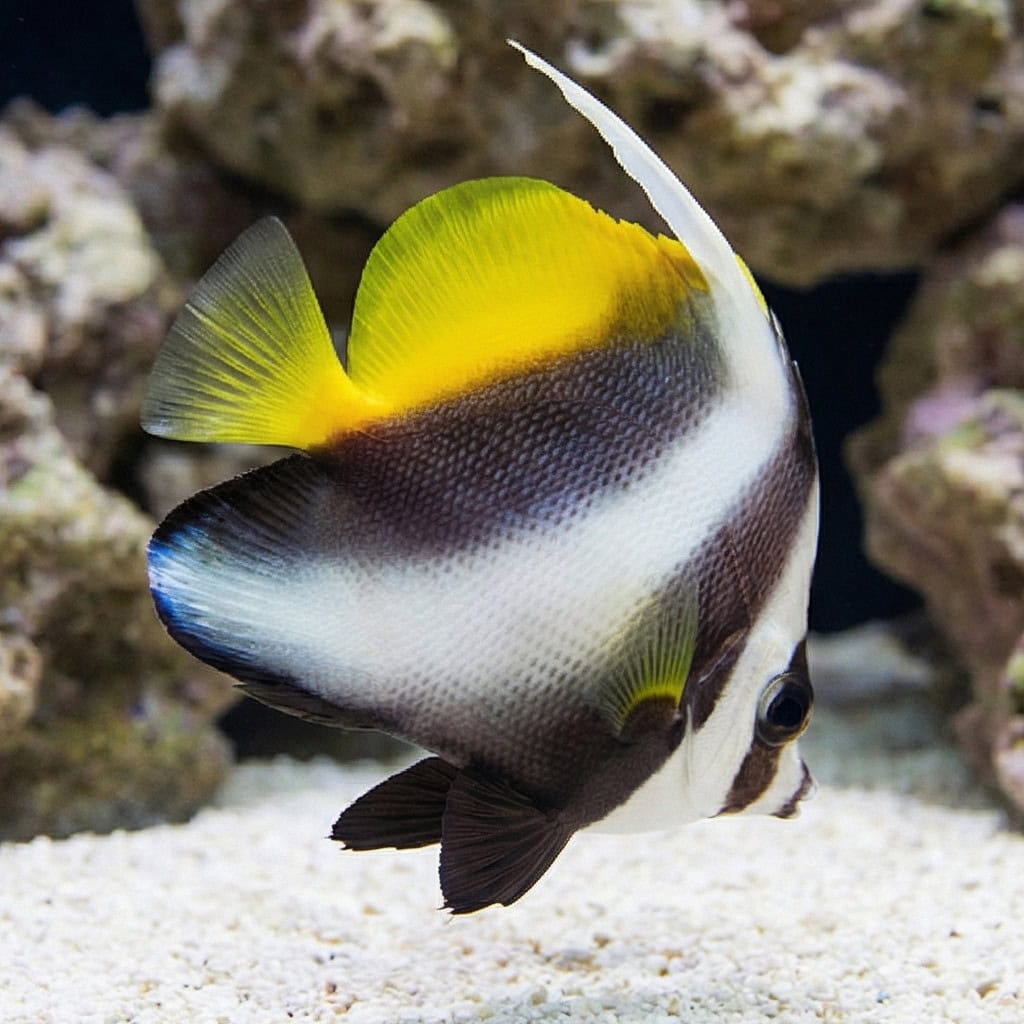
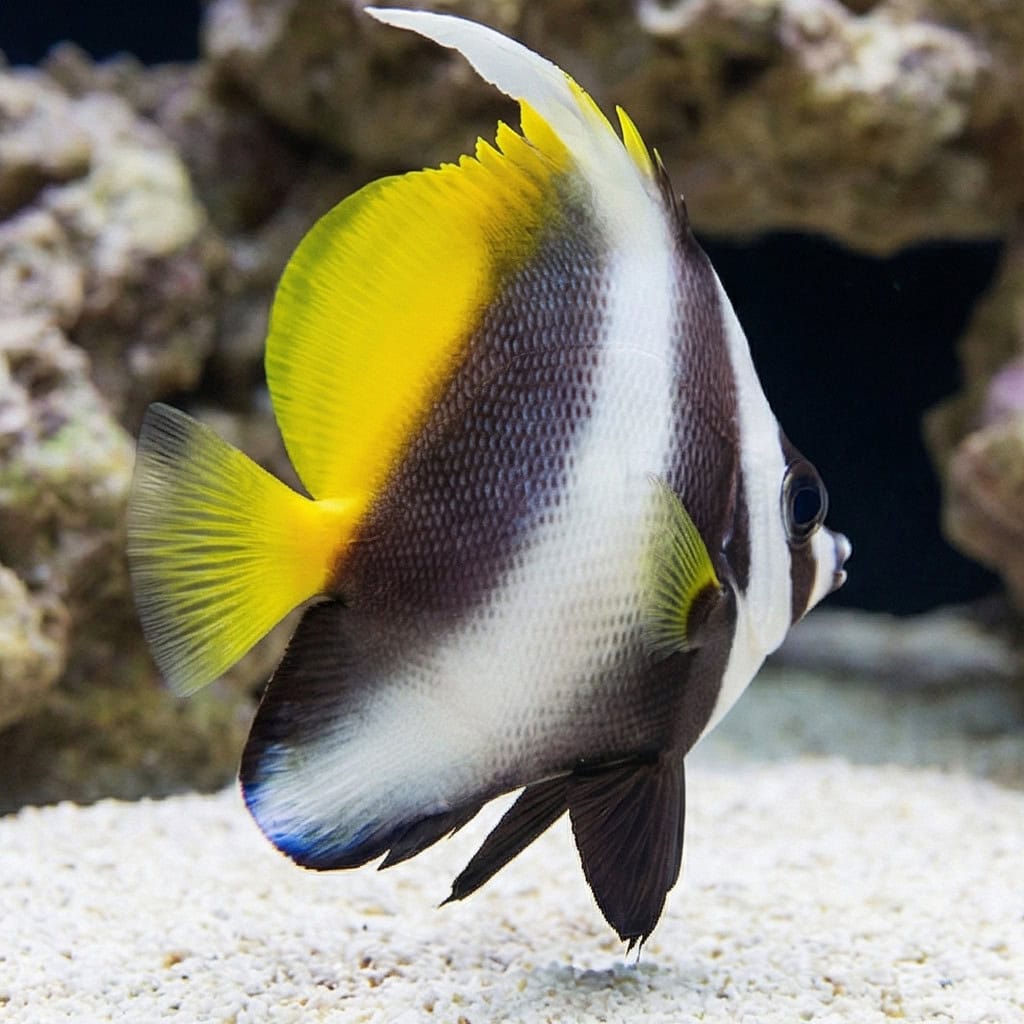
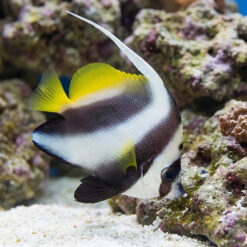
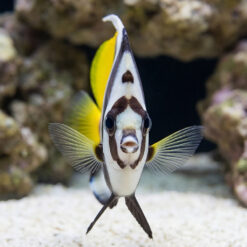
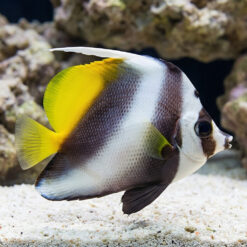
The Masked Heniochus (Heniochus monoceros) is a bannerfish with a white body, bold black bands (including the masked face), yellow accents, and a trailing dorsal filament. It’s an Indo-Pacific species that typically stays close to reef structure while still spending plenty of time in the open water column.
What You’ll Observe:
- Cruises steadily in midwater, then turns to work along rock faces and ledges
- Uses its long dorsal banner as it pivots and glides through open swimming lanes
- Becomes noticeably more active at feeding time and learns the tank’s routine
- Often settles into a favorite side of the aquascape and returns there between laps
To do well with this species, provide open swimming room plus rockwork with multiple pass-throughs and caves so it can reset and circle back. Offer a mix of small meaty foods and quality prepared foods in multiple small feedings for best consistency, especially during the first several weeks of acclimation.
Will it pick at corals or anemones once it’s settled in?
Many keepers report occasional sampling behavior, especially on fleshy polyps, so it’s best viewed as a watch and adjust fish in mixed reefs rather than a set-and-forget choice.
Is it better kept solo or as a pair?
They’re commonly kept singly, but established pairs can work well when introduced together and given enough space to stay side-by-side without crowding.
How fast should it be eating after introduction?
A lot of specimens start taking food quickly, but it’s normal for appetite and confidence to ramp up over the first couple of weeks as it learns where food enters the tank.
Why does it keep doing laps along the front glass?
This is often a patrol loop once it maps the tank; adding a few swim-throughs and breaking up long sight lines can encourage more natural, reef-to-reef cruising.
What’s the easiest way to offer food so it actually gets its share?
Broadcast small portions across the tank (not one spot) so it can intercept food in the water column while also picking items that settle near the rockwork.
Each fish is checked for strong appetite and activity before we approve it for your tank.
Recently viewed products