
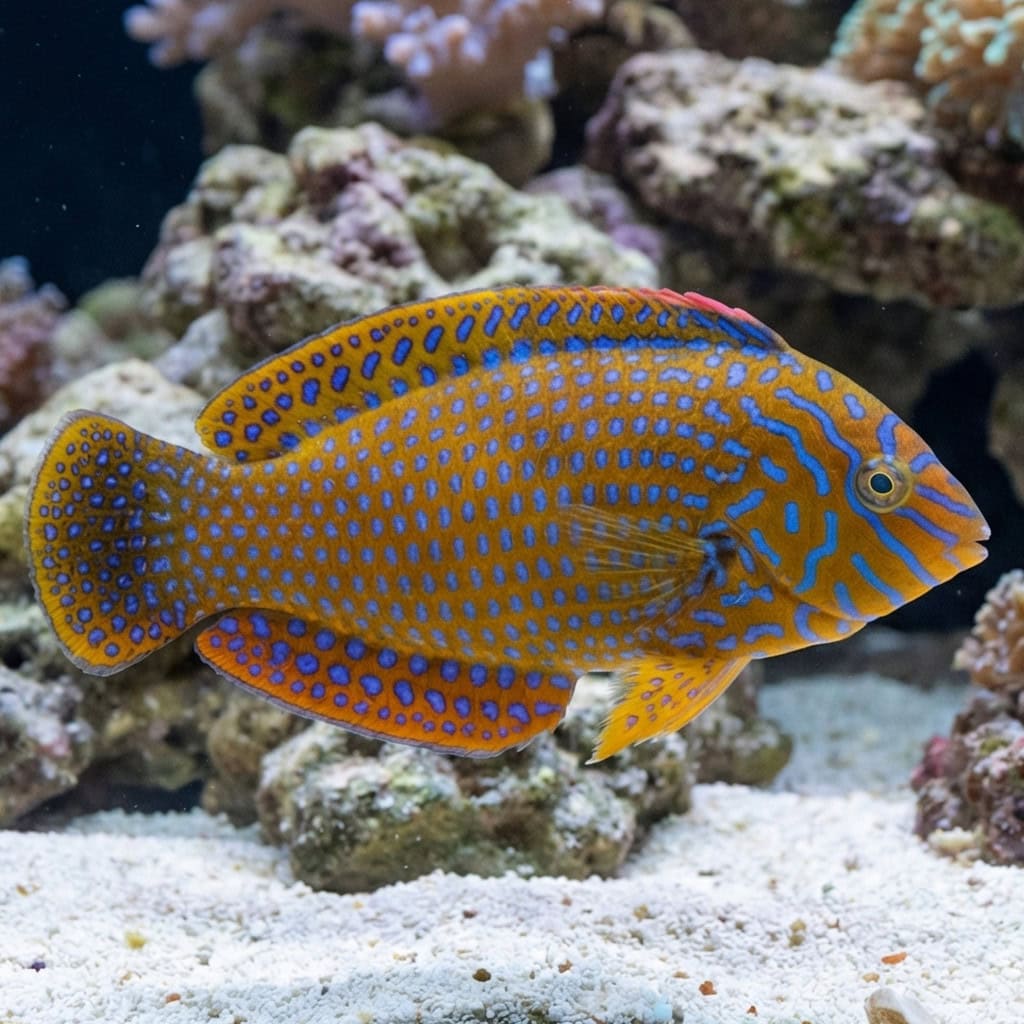
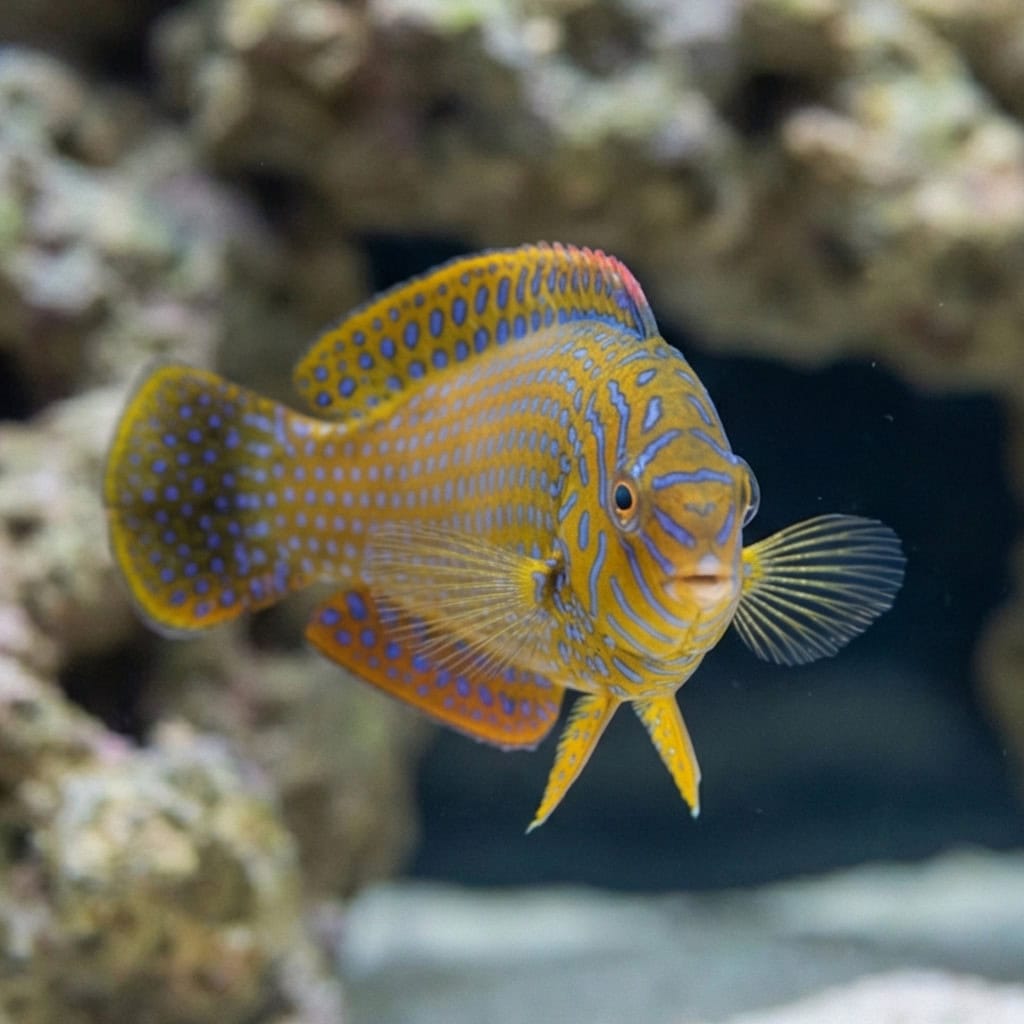
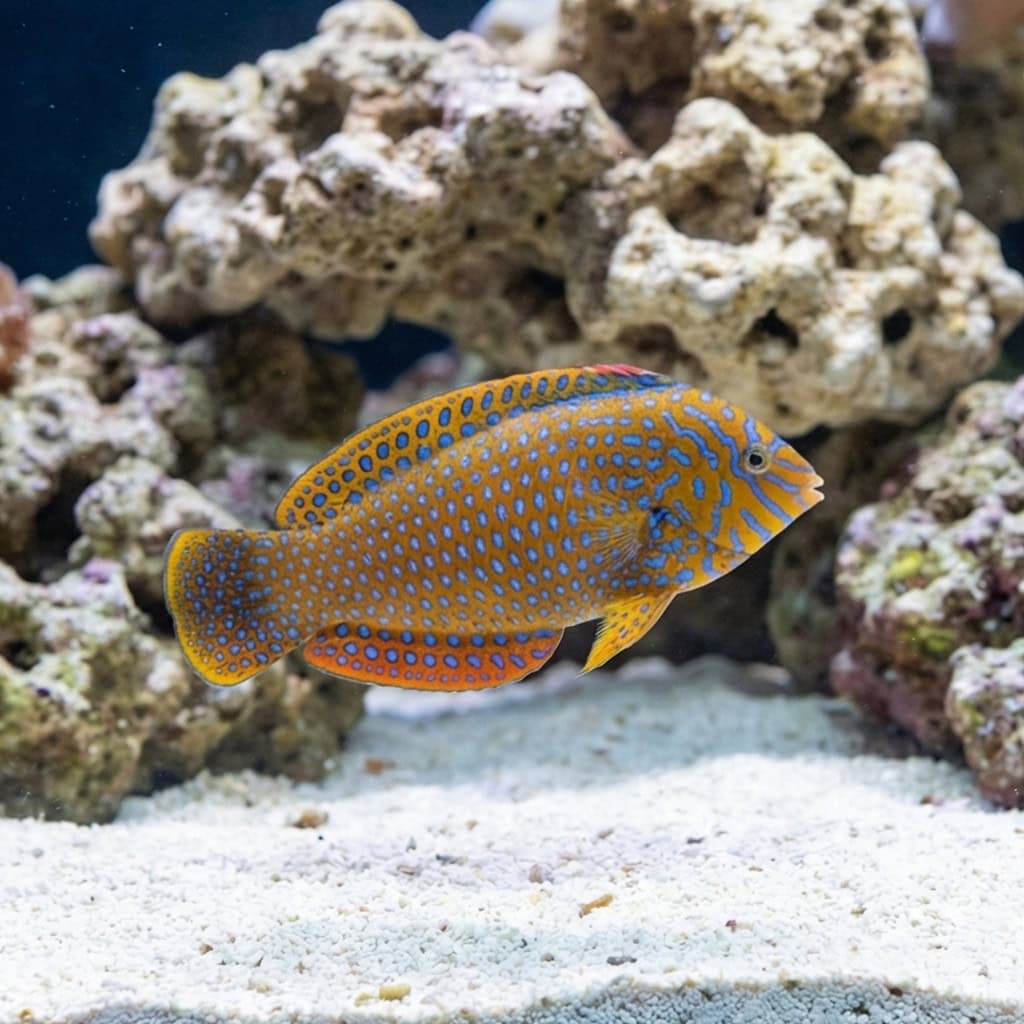
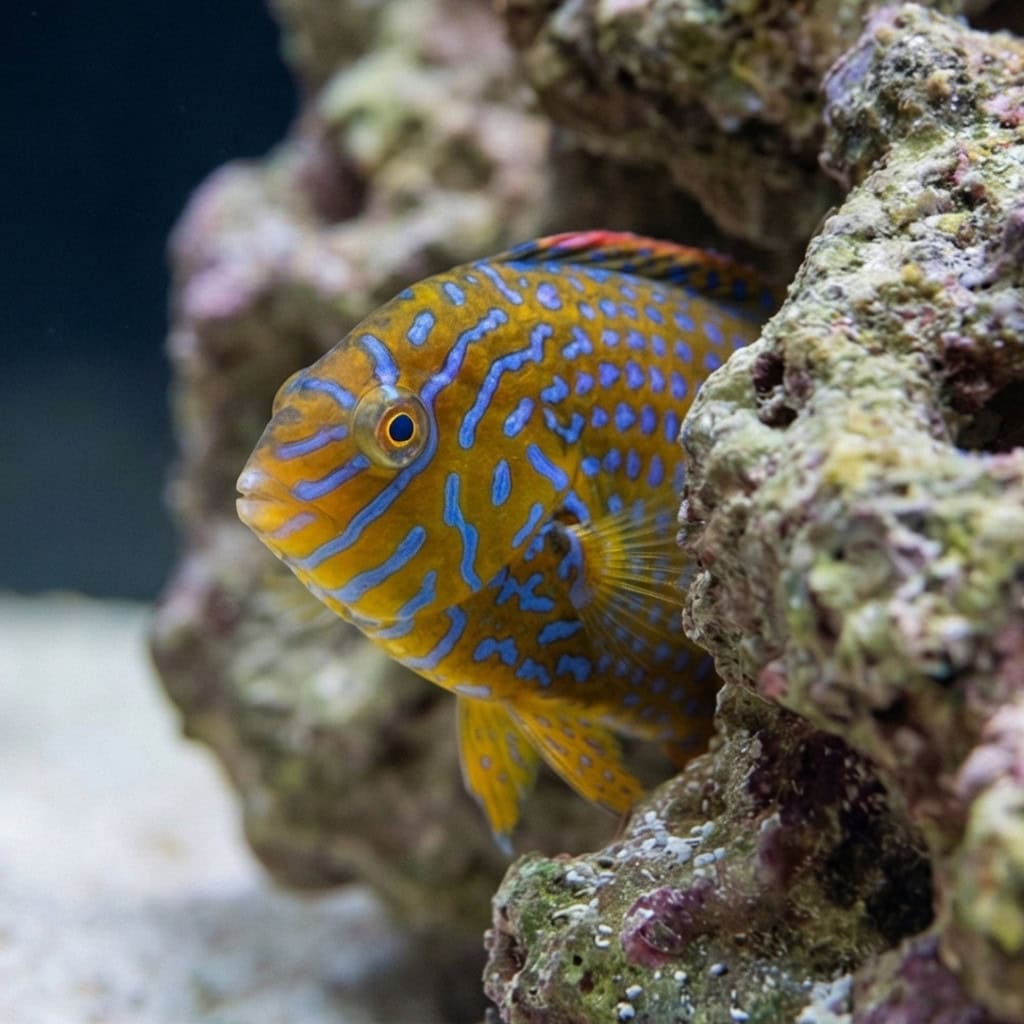
Potters Wrasse
Macropharyngodon geoffroy
| Stock | Variations | Price | Quantity |
|---|
Every order ships with our standard 3-hour live arrival guarantee. Need more time? Add our 5-Day Guarantee at checkout.
Full guarantee terms →Ships Monday – Thursday for next-day arrival at your nearest FedEx Hold location — typically ready by 9 AM. We monitor every delivery.
Shipping details →
Monday – Friday 8 AM – 9 PM
Saturday 12 PM – 4 PM
Sunday 12 PM – 9 PM
Healthy, stable animals from vetted suppliers — inspected before packing, shipped overnight. Decades of experience built this model so we can deliver premium livestock at 30%+ less than you'd pay elsewhere.
| Care Level | Expert |
|---|---|
| Temperament | Peaceful |
| Reef Safe | Yes |
| Functional Benefit | Pest Control |
| Diet Type | Carnivore |
| Mininum Tank Size | 55 gallons |
| Max Size | 5 inches |
| Temperature | 72–78°F |
| pH Range | 8.1–8.4 |
| Specific Gravity | 1.022–1.025 |
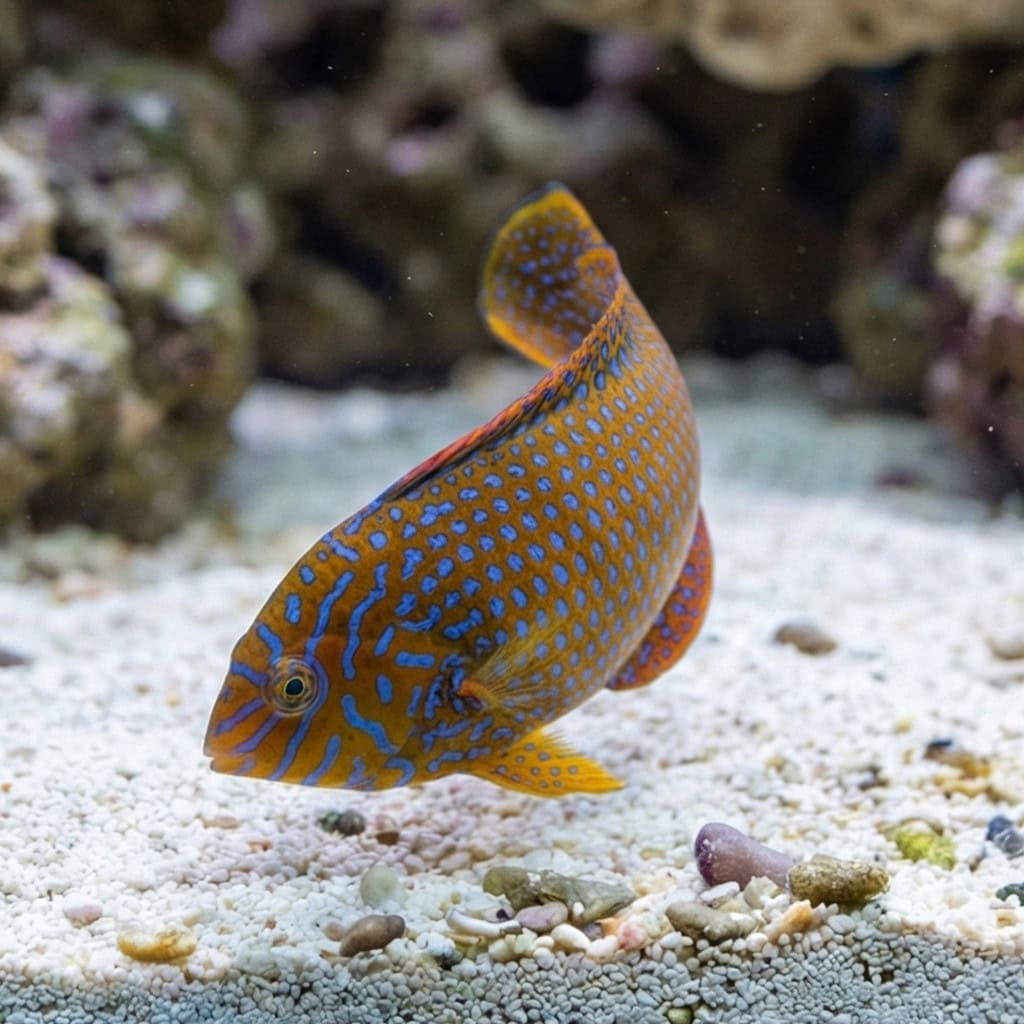
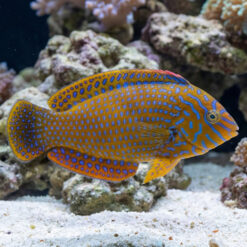
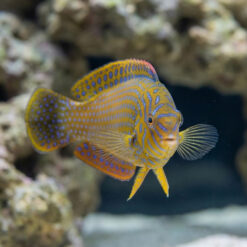
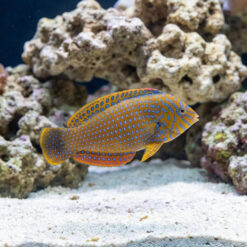
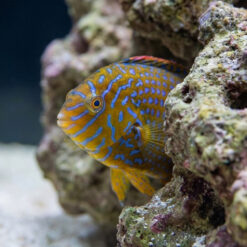
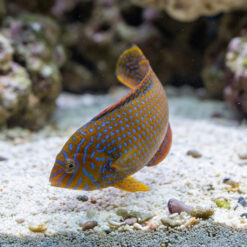
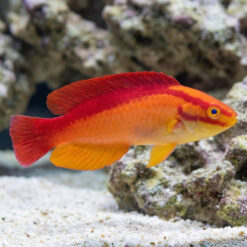
The Potter’s Wrasse (Macropharyngodon geoffroy) is a leopard wrasse that hunts small invertebrates across live rock and sand, and it’s often chosen for clam systems because it can help keep clams clear of “rice snail” pests. Adults are typically orange with many small blue spots, and this species is closely associated with Hawaiian reefs in the aquarium trade.
What You’ll Observe:
- Low, steady cruising over the sand and around rockwork, with frequent quick “pecks” at tiny prey
- Short pauses to inspect crevices, then a return to patrolling the bottom zones
- A consistent lights-out routine, often heading to the sand to settle in for the night
- Increasing daytime visibility as it learns your feeding schedule and the tank’s flow patterns
Provide a mature reef aquarium with fine sand it can use naturally, plus plenty of live rock for foraging. Offer small meaty foods in multiple small feedings so it can graze throughout the day, and keep a tight-fitting lid or cover for a secure, settled routine.
How long might it stay hidden after you add it?
Many keepers report an initial “disappear” phase where it spends a day or two (and sometimes longer) under the sand before it becomes part of the daily tank rhythm.
Will it only eat pods, or will it take frozen foods?
It’s common to see them hunt pods right away, then transition onto small frozen meaty foods once they recognize feeding times.
What’s a simple trick to help it notice food in a busy tank?
Some hobbyists have success temporarily reducing flow and letting small foods sink near the area it’s already patrolling.
Is it normal if you don’t see where it “sleeps” at night?
Yes—many leopard wrasses settle into the sand at lights-out and may do it quickly, so it’s easy to miss in real time.
Can it be kept with other wrasses without constant drama?
Most keepers do best by adding it with other peaceful fish and giving it enough space and structure so it can forage without being crowded at feeding time.
Each fish is checked for strong appetite and activity before we approve it for your tank.
Only logged in customers who have purchased this product may leave a review.
Recently viewed products
Reviews
There are no reviews yet.