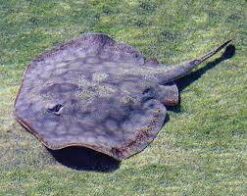
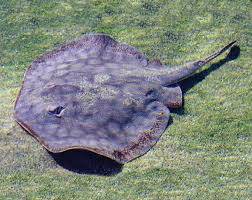
California Stingray
Urolophus sp.
| Stock | Variations | Price | Quantity |
|---|
Every order ships with our standard 3-hour live arrival guarantee. Need more time? Add our 5-Day Guarantee at checkout.
Full guarantee terms →Ships Monday – Thursday for next-day arrival at your nearest FedEx Hold location — typically ready by 9 AM. We monitor every delivery.
Shipping details →
Monday – Friday 8 AM – 9 PM
Saturday 12 PM – 4 PM
Sunday 12 PM – 9 PM
Healthy, stable animals from vetted suppliers — inspected before packing, shipped overnight. Decades of experience built this model so we can deliver premium livestock at 30%+ less than you'd pay elsewhere.
| Care Level | Expert |
|---|---|
| Temperament | Peaceful |
| Reef Safe | With Caution |
| Functional Benefit | Sand Sifting |
| Diet Type | Carnivore |
| Mininum Tank Size | 300 gallons+ |
| Max Size | 24 inches |
| Temperature | 70–74°F |
| pH Range | 8.1–8.4 |
| Specific Gravity | 1.022–1.025 |
The California Stingray is a temperate-water bottom dweller that naturally cruises open sand and gently sifts the substrate while hunting. Its rounded disc and mottled tan-to-brown patterning help it blend in as it settles onto the sandbed between slow laps around the tank.
What You’ll Observe:
- Smooth “gliding” movement along the bottom, often following the tank perimeter
- Burrowing under fine sand with only the eyes and spiracles visible
- Short bursts of digging that leave small pits while it searches for food
- Strong food response at feeding time, especially when target-fed
- Regular use of the widest, most open areas of the aquarium for turning and resting
To succeed, provide a very large, open footprint with a fine, soft sandbed and open turning radius. Maintain cool, well-oxygenated water and keep heaters/intakes well-guarded so the ray can’t press against them while cruising or burying. Offer small portions of meaty marine foods via tongs in a consistent feeding spot so it learns a routine quickly.
How fine should the sand be for a California Stingray?
Most keepers have the best results with very fine, soft sand so the ray can bury comfortably and move without abrasion. A shallow-to-moderate depth that allows full burial is typically used.
Why does it bury itself and “disappear” for long periods?
Burying is a normal resting and security behavior. Many rays stay covered for hours and then emerge predictably when they associate the tank with feeding time.
How do you get it to eat prepared foods consistently?
Target-feeding with tongs and using the same feeding location helps establish a routine. Scent-rich foods (like shrimp, squid, or scallop) are often used to start the response, then variety is added once it’s steady.
How fast do California Stingrays grow in captivity?
Growth can be surprisingly quick when the animal is eating daily and kept in stable conditions. Planning ahead for footprint and turning space is part of long-term success.
How do hobbyists “ray-proof” a tank for this species?
Common approaches include shielding intakes with guards and placing/covering heating elements so the ray can’t rest against them. Keeping rockwork stable and away from primary cruising lanes also helps preserve open sand routes.
Shipped with pure oxygen and temperature control so it arrives stress-free and ready to eat.
Recently viewed products