
-
×
 Red Leg Hermit Crab - Mexico, Size Small
1 × $2.99
Red Leg Hermit Crab - Mexico, Size Small
1 × $2.99


Black Spot Tang
Acanthurus bariene
$294.99
| Stock | Variations | Price | Quantity | |
|---|---|---|---|---|
| Only 1 left | 1.75 - 2.75" - Indo-Pacific | $294.99 |
-
+
|
|
| Out of Stock | 2.75 - 3.75" - Indo-Pacific | $343.99 | Email me |
Arrives Alive. Guaranteed.
▼
Every order ships with our standard 3-hour live arrival guarantee. Need more time? Add our 5-Day Guarantee at checkout.
Full guarantee terms →
FedEx Overnight. Every Order.
▼
Ships Monday – Thursday for next-day arrival at your nearest FedEx Hold location — typically ready by 9 AM. We monitor every delivery.
Shipping details →
Real People. 7 Days a Week.
▼
Monday – Friday 8 AM – 9 PM
Saturday 12 PM – 4 PM
Sunday 12 PM – 9 PM
Phone
Chat
Email
Text
Contact us →
Aquarium-Ready Livestock
▼
Healthy, stable animals from vetted suppliers — inspected before packing, shipped overnight. Decades of experience built this model so we can deliver premium livestock at 30%+ less than you'd pay elsewhere.
| Care Level | Moderate |
|---|---|
| Temperament | Semi-Aggressive |
| Reef Safe | Yes |
| Functional Benefit | Algae Control |
| Diet Type | Herbivore |
| Mininum Tank Size | 300 gallons+ |
| Max Size | 18 inches |
| Temperature | 72–78°F |
| pH Range | 8.1–8.4 |
| Specific Gravity | 1.022–1.025 |
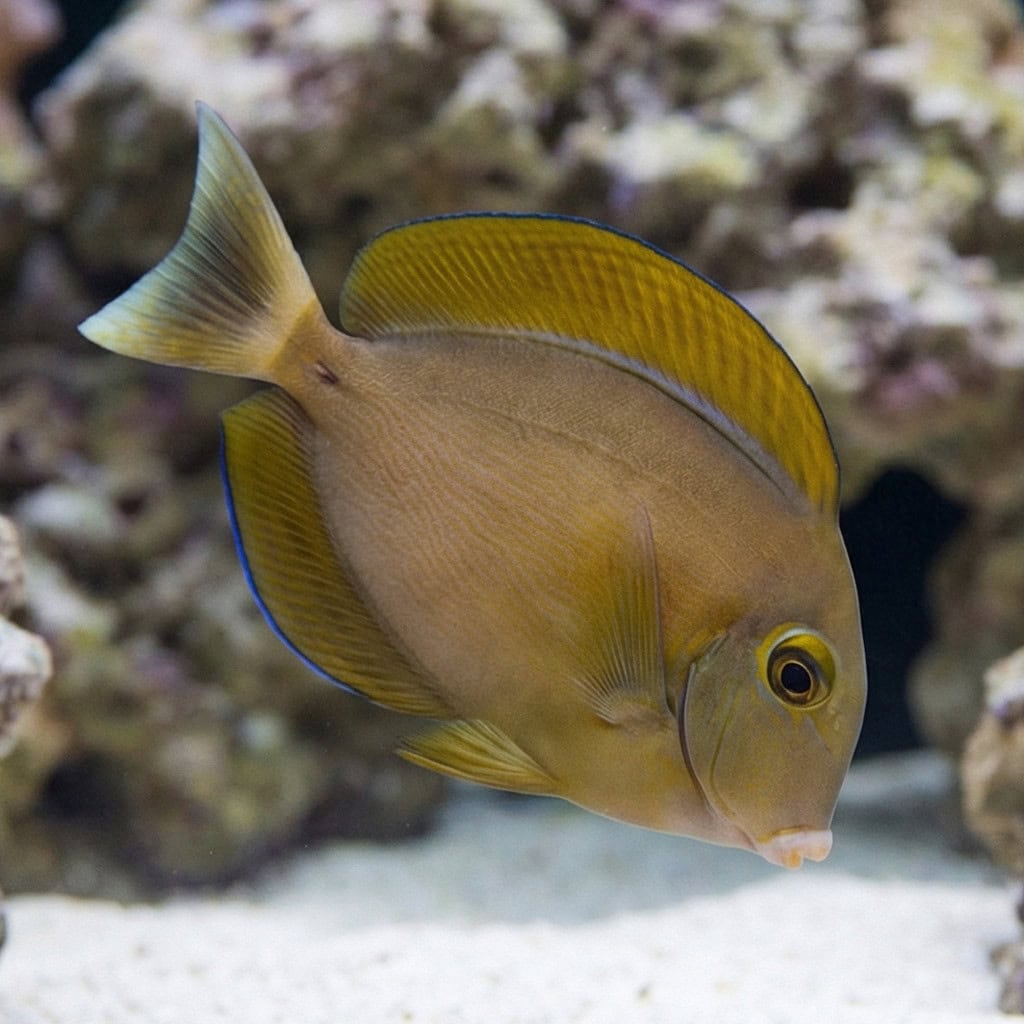
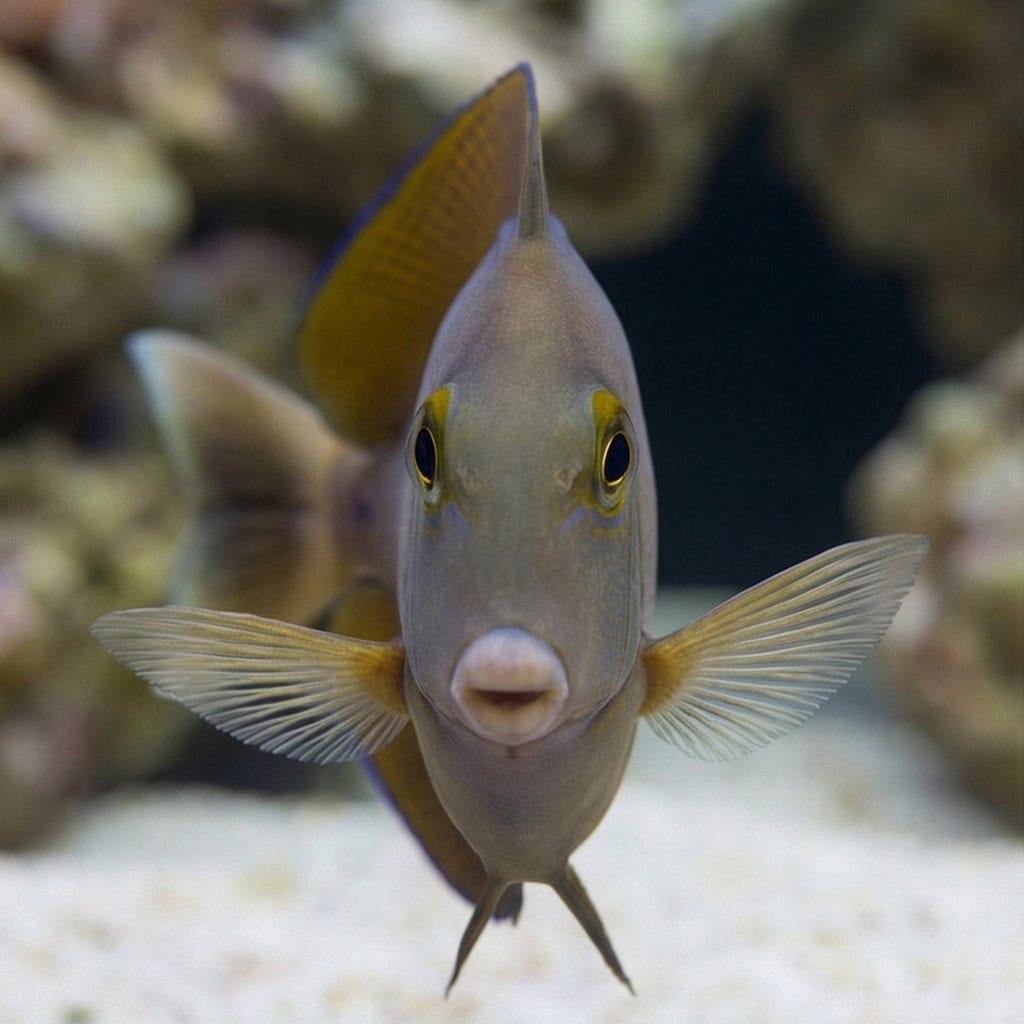
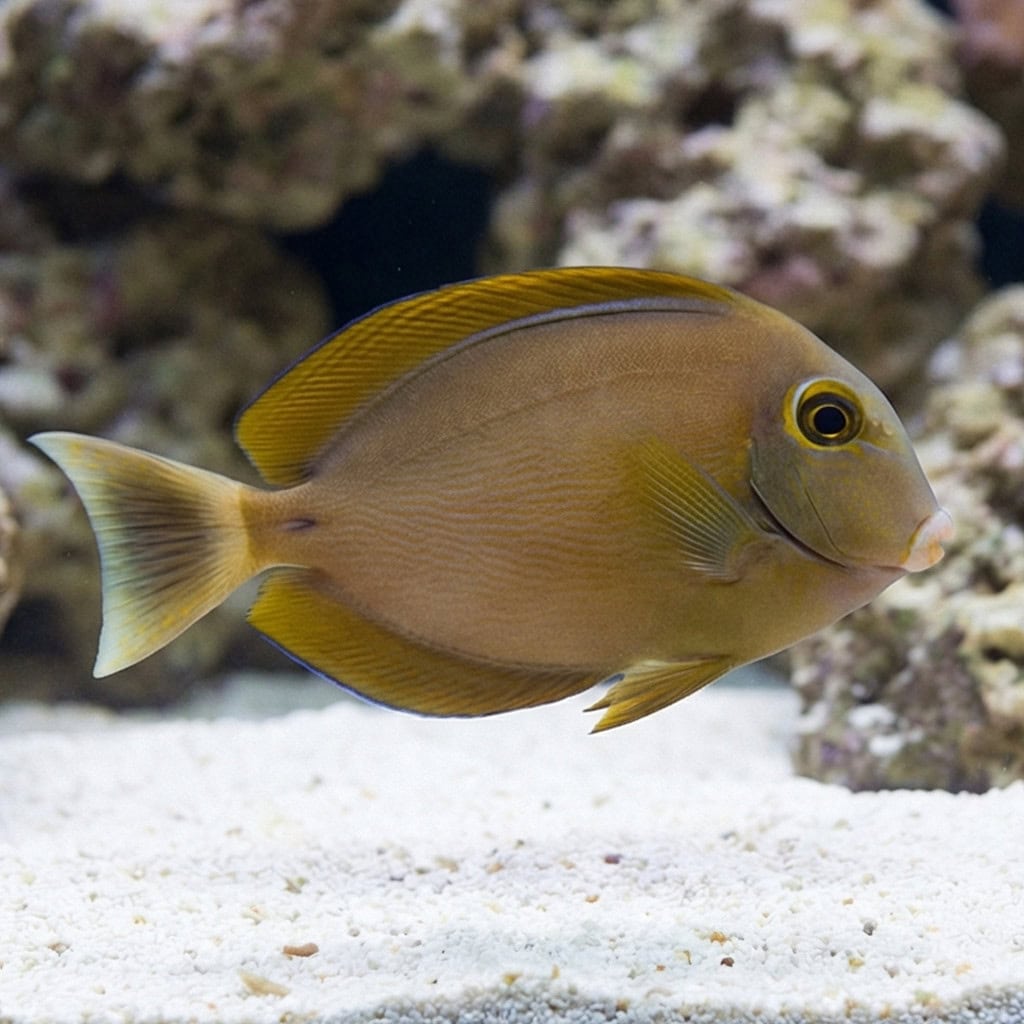
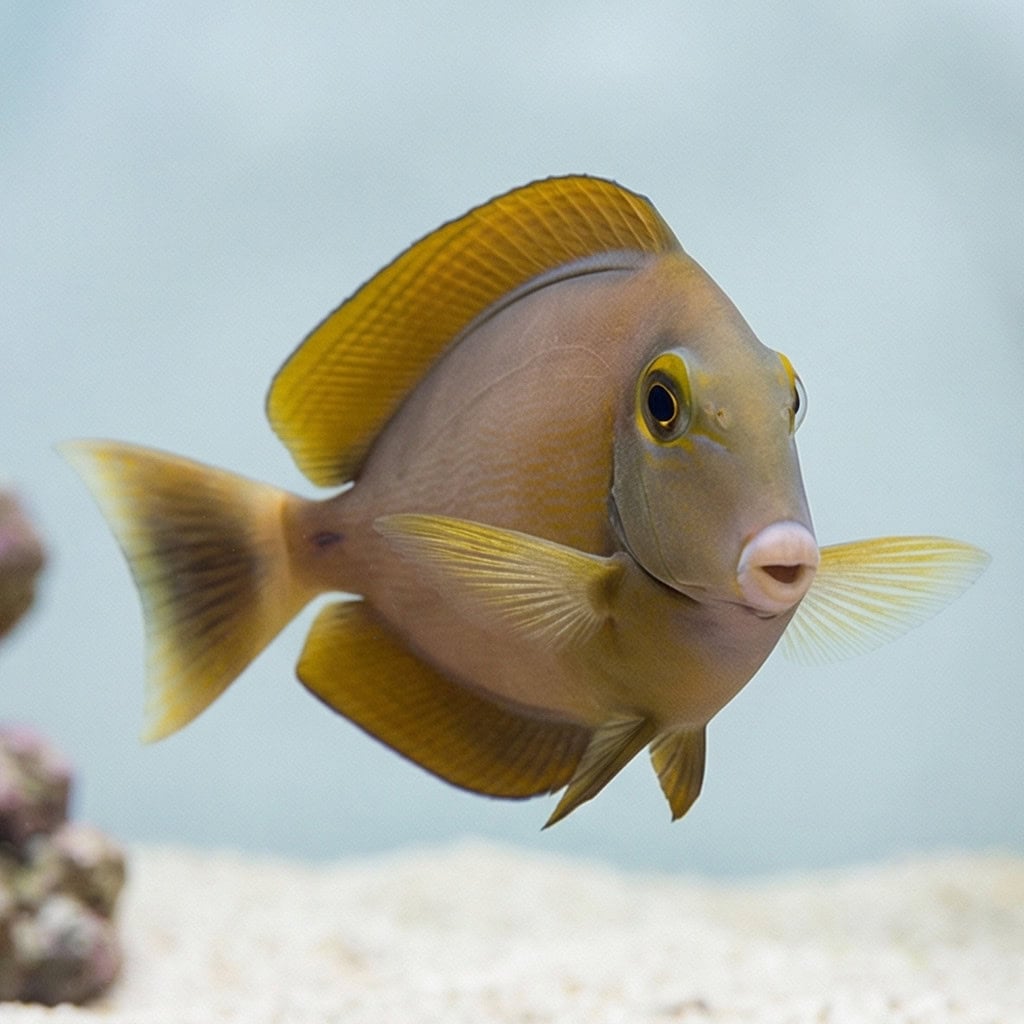
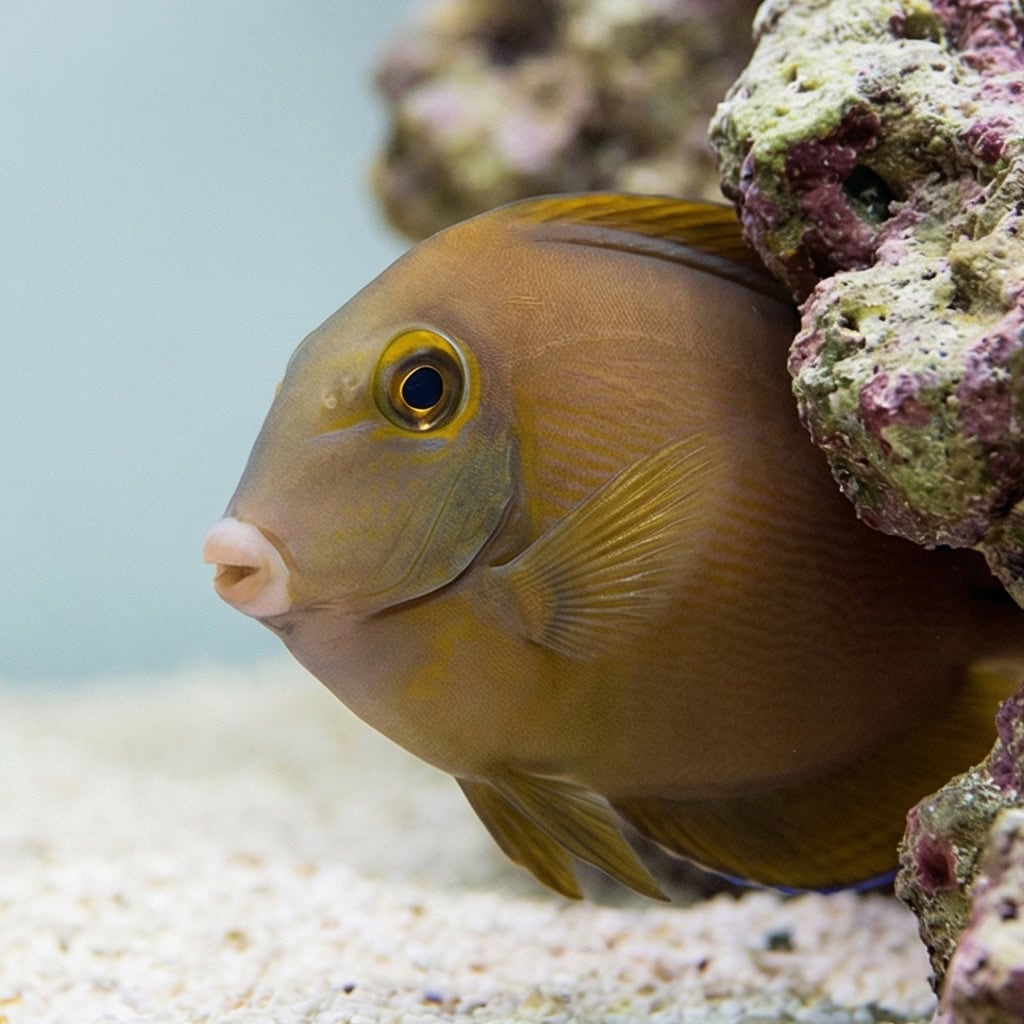
The Black Spot Tang (Bariene / Eye-Spot Surgeonfish) is a constant grazer that helps manage film algae on rockwork while adding a bold, earthy color profile to large reef tanks. Its brown body shows fine bluish lines, with a distinct black “eye spot” near the upper gill opening and yellow accents on the fins.
What You’ll Observe:
- Long, steady swimming laps across open water, then looping back to graze the rocks
- Frequent “pecking” at algae films on bare rock faces and high-light areas
- Regular use of rock arches and ledges as pass-through routes during the day
- A more settled routine after the first 1–2 weeks, with predictable patrol paths
- Brief posture moments with similarly shaped fish, followed by returning to grazing
Provide a very large aquarium with open runway space plus substantial rockwork so it can cruise and graze naturally. Offer algae sheets on a clip and rotate in quality frozen foods and pellets so daily feeding stays consistent. In mixed-tang systems, it typically settles best when introductions are planned so each fish has its own “lane” and grazing zones.
How do I tell a Black Spot (Bariene) Tang from similar Acanthurus juveniles?
Look for the developing dark spot near the gill area and the overall “lined” body pattern; many close relatives look extremely similar when small, so pattern details become clearer as it grows.
Does the spot or body pattern change with mood or lighting?
Many keepers report noticeable shifts under different lighting and during resting hours, where contrast can soften and then return once the fish is fully active again.
What’s a simple way to get it eating confidently in a new tank?
Start with algae on a clip in an open, easy-to-find spot, then keep feeding times consistent; once it recognizes the routine, it usually begins making repeated passes to the same feeding area.
Can it be kept with other tangs if the tank is large enough?
It’s commonly discussed as most straightforward in big systems where each tang has separate grazing zones; aquascape “breaks” (arches, islands, and lanes) help reduce constant face-to-face encounters.
Why does it pace the same route all day?
A repeating patrol loop is a normal surgeonfish behavior in captivity—many owners describe it as a predictable circuit that alternates between open-water cruising and grazing stops.
We work with trusted suppliers who keep our specimens healthy and well-fed before shipping.
Recently viewed products
Black Spot Tang (Acanthurus bariene)
Starting at: $294.99
This product has multiple variants. The options may be chosen on the product page