Flounder: Assorted
Bothus sp.
| Stock | Variations | Price | Quantity | |
|---|---|---|---|---|
| Out of Stock | 3 - 4" - Indo-Pacific | Original price was: $115.99.$60.99Current price is: $60.99. | Email me | |
| Out of Stock | 2 - 3" - Indo-Pacific | Original price was: $93.99.$48.99Current price is: $48.99. | Email me |
Every order ships with our standard 3-hour live arrival guarantee. Need more time? Add our 5-Day Guarantee at checkout.
Full guarantee terms →Ships Monday – Thursday for next-day arrival at your nearest FedEx Hold location — typically ready by 9 AM. We monitor every delivery.
Shipping details →
Monday – Friday 8 AM – 9 PM
Saturday 12 PM – 4 PM
Sunday 12 PM – 9 PM
Healthy, stable animals from vetted suppliers — inspected before packing, shipped overnight. Decades of experience built this model so we can deliver premium livestock at 30%+ less than you'd pay elsewhere.
| Care Level | Moderate |
|---|---|
| Temperament | Semi-Aggressive |
| Reef Safe | With Caution |
| Functional Benefit | Ornamental Only |
| Diet Type | Carnivore |
| Mininum Tank Size | 120 gallons |
| Max Size | 18 inches |
| Temperature | 72–78°F |
| pH Range | 8.1–8.4 |
| Specific Gravity | 1.022–1.025 |
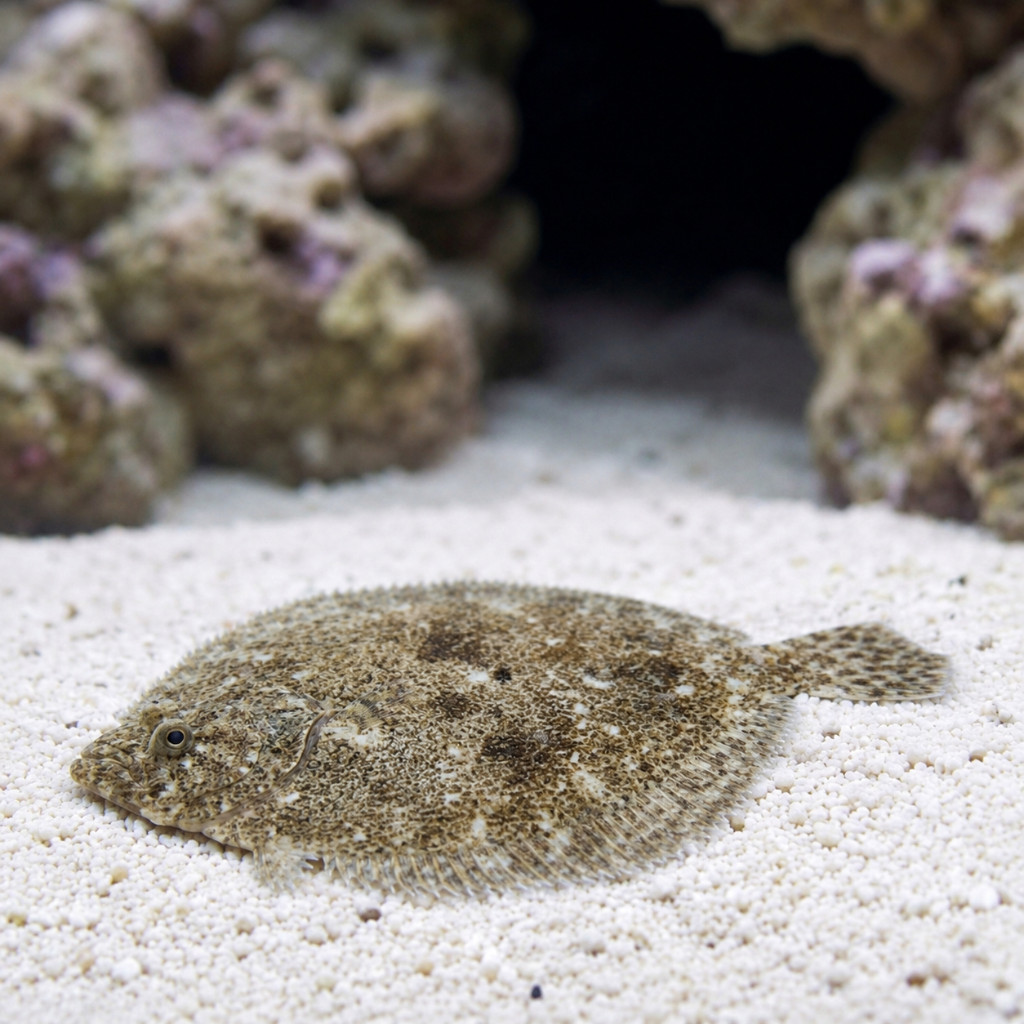
Assorted Bothus Flounder (Bothus sp.) are a sand-dwelling flatfish often sold as peacock, panther, or eyed flounder types. It rests on the bottom and can shift its pattern to blend with sand, rubble, and rock shadows. Like other lefteye flounders, the eyes sit on one side of the head and can move independently.
What You’ll Observe:
- Burrowing into the sand with just the eyes visible, then emerging for short glides along the substrate
- Using camouflage while waiting beside rocks and rubble for food to pass within reach
- Quick, accurate strikes at meaty foods offered near the bottom
- Most activity focused in open, lower areas rather than mid-water swimming
Provide a mature marine aquarium with a smooth sand bed and open lanes so it can settle in and move naturally. Offer small marine meaty foods and place them near the fish on the bottom so it can feed at its own pace. Secure rockwork on the glass or a stable base and keep the sand area unobstructed for resting.
Is it normal if I only see eyes or a fin sticking out of the sand?
Yes—many flounders spend long stretches partially or fully buried, and it’s common to notice them most around feeding times.
Do Bothus flounders need sand access in quarantine or acclimation tubs?
Keepers report they settle best when they can lay on or slightly under sand; even a small sand area can help them rest naturally.
What tankmates tend to work best with peacock/panther-style flounders?
Fish that stay too large to be swallowed are the most consistent match, and a calmer bottom zone helps the flounder stay out in the open.
Why does my flounder change its pattern from hour to hour?
Color and pattern shifting is part of how these fish match different sand and rubble backgrounds as they move around the tank.
Do I really need a tight lid for a flounder?
Yes—hobbyists report they can jump and fit through surprisingly small openings, so snug coverage helps a lot.
Shipped with pure oxygen and temperature control so it arrives stress-free and ready to eat.
Recently viewed products