
Blue Hippo Tang
Paracanthurus hepatus
Price range: $40.99 through $76.99
| Stock | Variations | Price | Quantity | |
|---|---|---|---|---|
| Out of Stock | 1.25 - 2" - South Pacific | Original price was: $119.99.$62.99Current price is: $62.99. | Email me | |
| Out of Stock | 1.25 - 2" - SSC Certified - Central Pacific | Original price was: $88.99.$46.99Current price is: $46.99. | Email me | |
| Out of Stock | 1.25" or smaller - SSC Certified - Central Pacific | Original price was: $88.99.$46.99Current price is: $46.99. | Email me | |
| In Stock | 1.25 - 2" - Indo-Pacific | Original price was: $101.99.$40.99Current price is: $40.99. |
-
+
|
|
| Out of Stock | 1.25 - 2" - Central Pacific | Original price was: $155.99.$81.99Current price is: $81.99. | Email me | |
| Out of Stock | 2.5 - 3.5" - South Pacific | Original price was: $194.99.$102.99Current price is: $102.99. | Email me | |
| Out of Stock | 1.25" or smaller - Indo-Pacific | Original price was: $92.99.$48.99Current price is: $48.99. | Email me | |
| Out of Stock | 1.25" or smaller - South Pacific | Original price was: $79.99.$41.99Current price is: $41.99. | Email me | |
| Out of Stock | 2 - 2.5" - South Pacific | Original price was: $155.99.$81.99Current price is: $81.99. | Email me | |
| Out of Stock | 3.5 - 4.25" - South Pacific | Original price was: $256.99.$134.99Current price is: $134.99. | Email me | |
| In Stock | 2 - 2.5" - Indo-Pacific | Original price was: $146.99.$76.99Current price is: $76.99. |
-
+
|
|
| Out of Stock | 2.5 - 3.5" - Indo-Pacific | Original price was: $199.99.$104.99Current price is: $104.99. | Email me | |
| Out of Stock | 3.5 - 4.25" - Indo-Pacific | Original price was: $252.99.$132.99Current price is: $132.99. | Email me | |
| Out of Stock | 5.25" or larger - Indo-Pacific | Original price was: $490.99.$257.99Current price is: $257.99. | Email me |
Every order ships with our standard 3-hour live arrival guarantee. Need more time? Add our 5-Day Guarantee at checkout.
Full guarantee terms →Ships Monday – Thursday for next-day arrival at your nearest FedEx Hold location — typically ready by 9 AM. We monitor every delivery.
Shipping details →
Monday – Friday 8 AM – 9 PM
Saturday 12 PM – 4 PM
Sunday 12 PM – 9 PM
Healthy, stable animals from vetted suppliers — inspected before packing, shipped overnight. Decades of experience built this model so we can deliver premium livestock at 30%+ less than you'd pay elsewhere.
| Care Level | Moderate |
|---|---|
| Temperament | Semi-Aggressive |
| Reef Safe | Yes |
| Functional Benefit | Algae Control |
| Diet Type | Omnivore |
| Mininum Tank Size | 180 gallons |
| Max Size | 12 inches |
| Temperature | 72–78°F |
| pH Range | 8.1–8.4 |
| Specific Gravity | 1.022–1.025 |
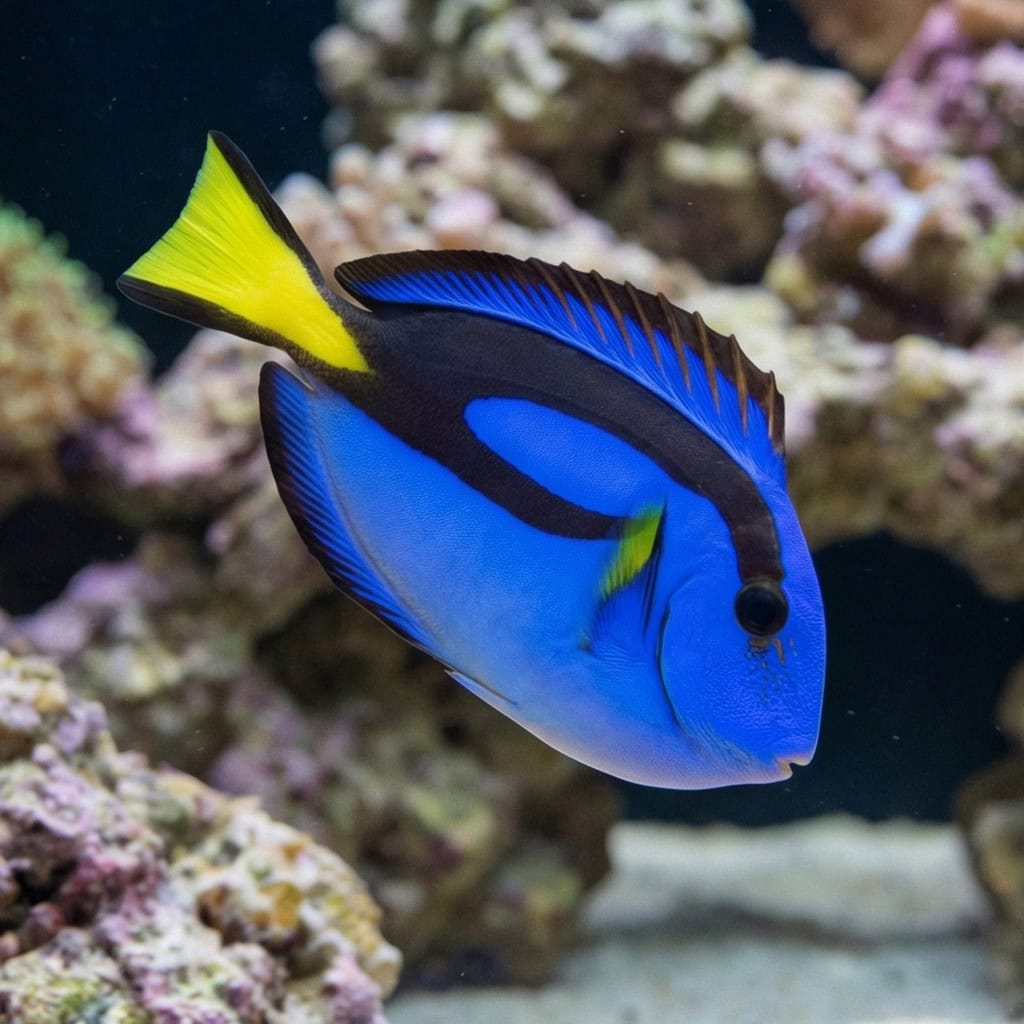
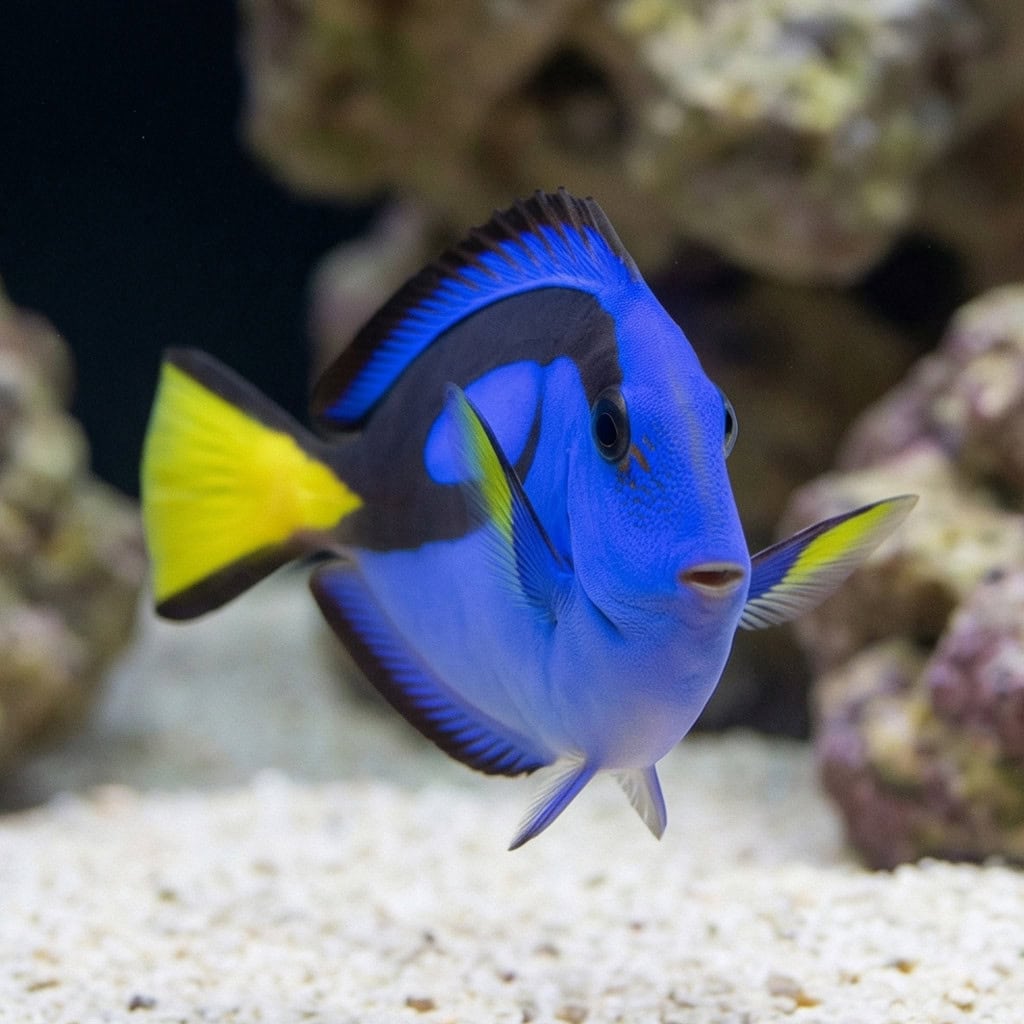
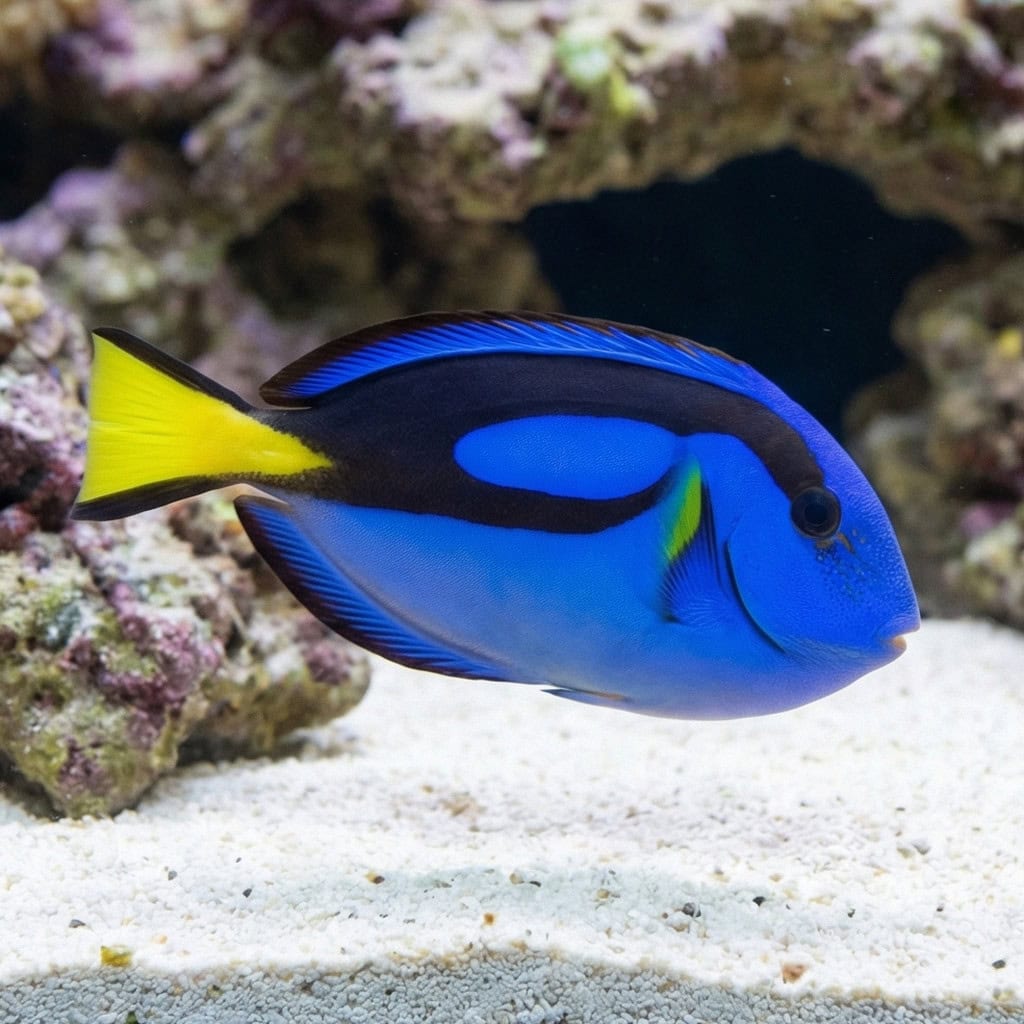
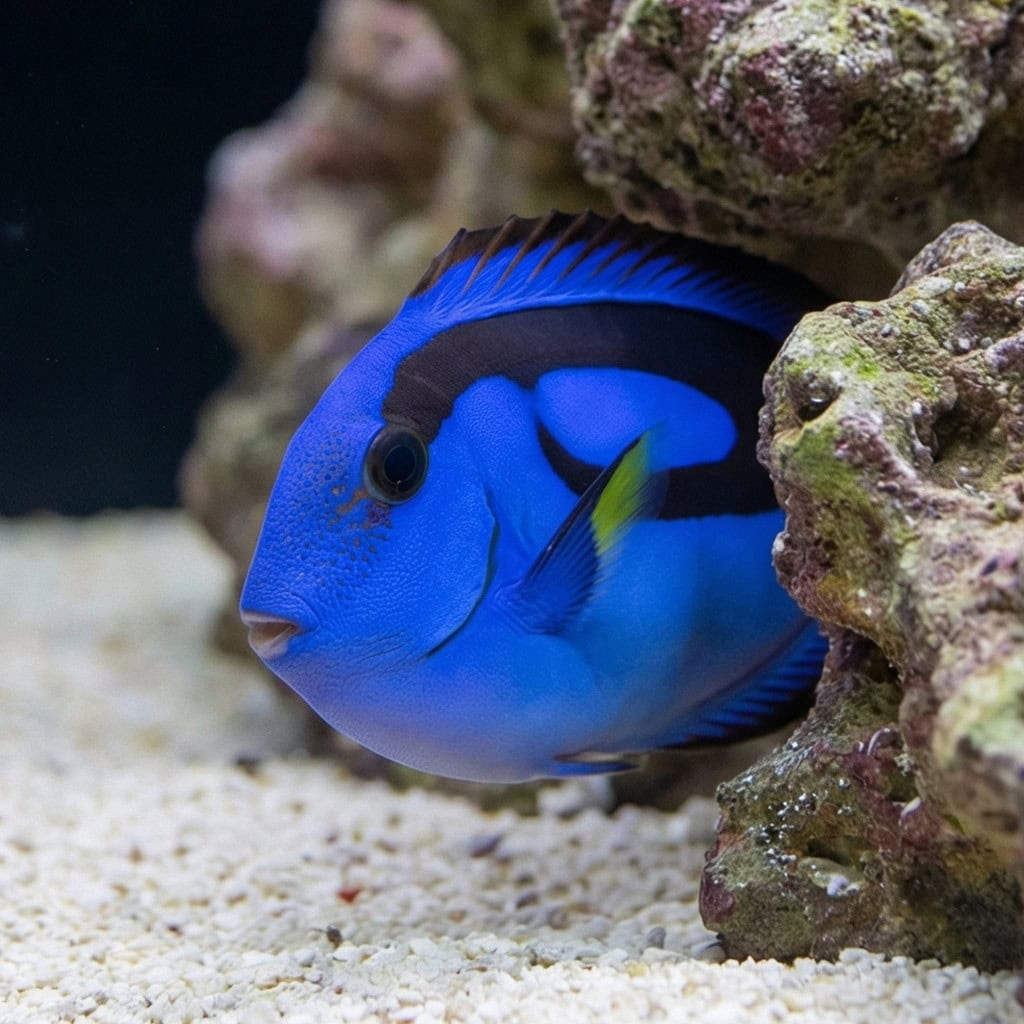
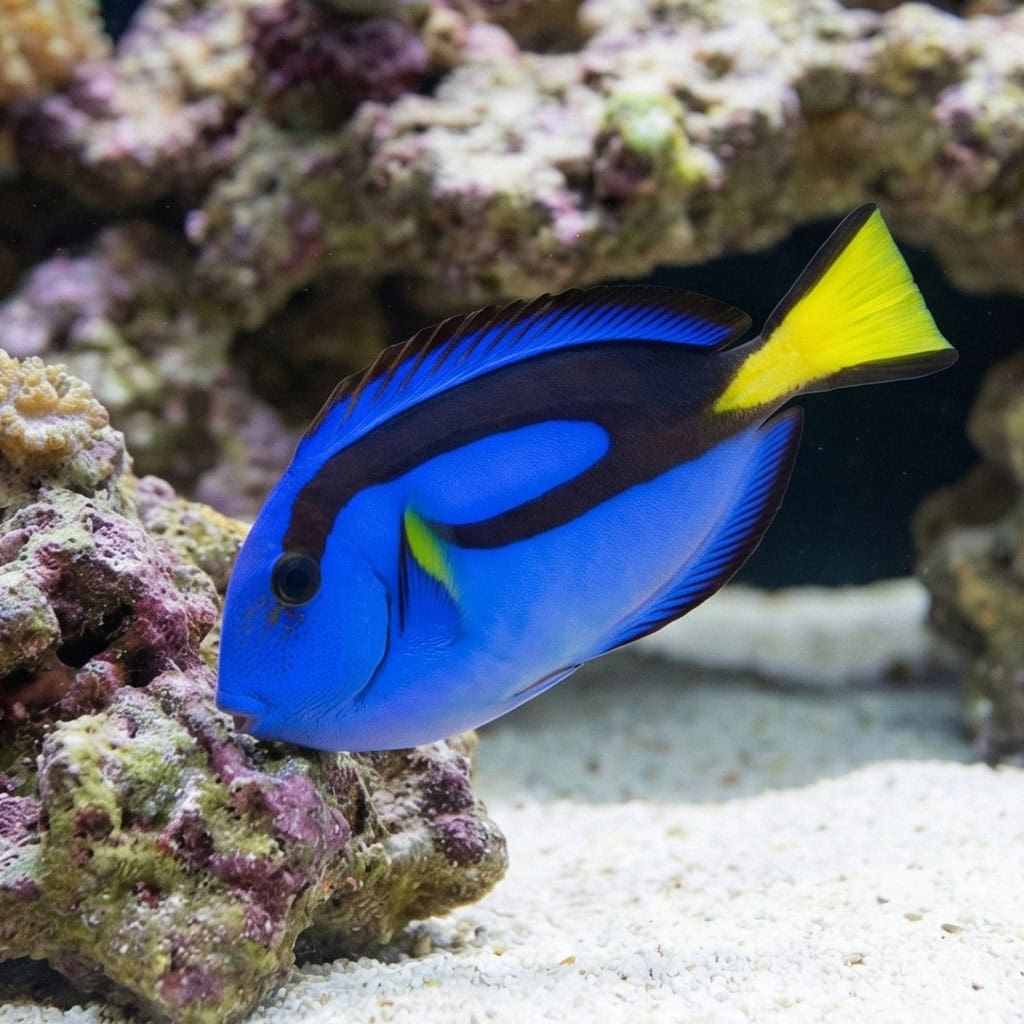
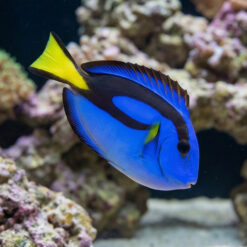
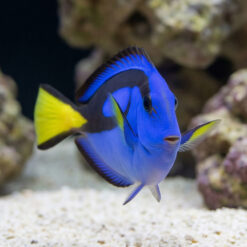
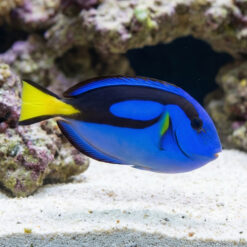
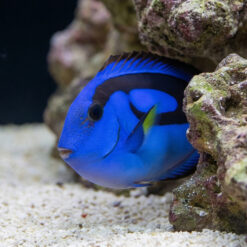
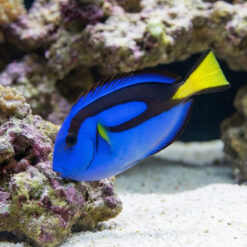
The Blue Hippo Tang is an active, open-water swimmer that spends the day cruising rockwork and picking at natural growth, helping with light algae control. Its royal blue body, black “palette” marking, and bright yellow tail make it easy to spot even in large reef tanks. This species is also commonly sold as a Regal Tang or Pacific Blue Tang.
What You’ll Observe:
- Long, looping swim patterns across the front of the tank, with quick turns through open lanes
- Regular grazing passes over rock and tank panels between meals
- Short “dive-in” rests where it wedges into a favorite rock crevice to reset between laps
- Extra curiosity around new objects (like a clip or magnet) until it becomes part of the routine
Provide plenty of open swimming room with rockwork that includes multiple pass-throughs and at least one deep “sleeping” crevice. Offer a mix of seaweed-based foods plus quality frozen and pellet options so it stays engaged at feeding time. In tang-heavy systems, it does best when introduced with a clear swim lane and enough space for each fish to keep its own route.
Why is my Blue Hippo Tang “fighting” the glass or darting at one spot?
This is often a short adjustment behavior around reflections or movement outside the tank. As the fish settles in and learns the room’s routine, it usually redirects that energy back into normal cruising laps.
My Blue Hippo Tang eats pellets and frozen, but ignores nori—what’s a simple fix?
Try placing seaweed in a less exposed spot (near rock) and leave it consistent for a few days so it becomes “normal.” Many keepers get better results with smaller pieces or different colors (green/red) offered the same way each time.
Is it normal for a Blue Hippo Tang to wedge into rocks to rest?
Yes—many individuals choose a specific crevice and will tuck in at night or during breaks. As long as it comes out to swim and feed on schedule, this is a common day-to-day pattern.
Can I keep a Blue Hippo Tang with other tangs without constant chasing?
It helps when the tank has multiple swim lanes and feeding stations so fish aren’t forced into the same corner. Many hobbyists see the smoothest results when tangs are added close together in time, rather than one being “the established patrol fish” for months.
Do Blue Hippo Tangs change color at night or when startled?
Brief color shifts (darker, lighter, or “blotchy” for a moment) are commonly reported during sleep, stress-startle moments, or fast turns into rockwork. Color typically returns to the normal royal blue once it resumes relaxed swimming.
We source from vetted suppliers known for healthy, long-lived specimens.
Recently viewed products