
Toadfish: Orange
Opsanus beta
| Stock | Variations | Price | Quantity |
|---|
Every order ships with our standard 3-hour live arrival guarantee. Need more time? Add our 5-Day Guarantee at checkout.
Full guarantee terms →Ships Monday – Thursday for next-day arrival at your nearest FedEx Hold location — typically ready by 9 AM. We monitor every delivery.
Shipping details →
Monday – Friday 8 AM – 9 PM
Saturday 12 PM – 4 PM
Sunday 12 PM – 9 PM
Healthy, stable animals from vetted suppliers — inspected before packing, shipped overnight. Decades of experience built this model so we can deliver premium livestock at 30%+ less than you'd pay elsewhere.
| Care Level | Moderate |
|---|---|
| Temperament | Semi-Aggressive |
| Reef Safe | No |
| Functional Benefit | Ornamental Only |
| Diet Type | Carnivore |
| Mininum Tank Size | 90 gallons |
| Max Size | 12 inches |
| Temperature | 76–82°F |
| pH Range | 8.1–8.4 |
| Specific Gravity | 1.022–1.025 |
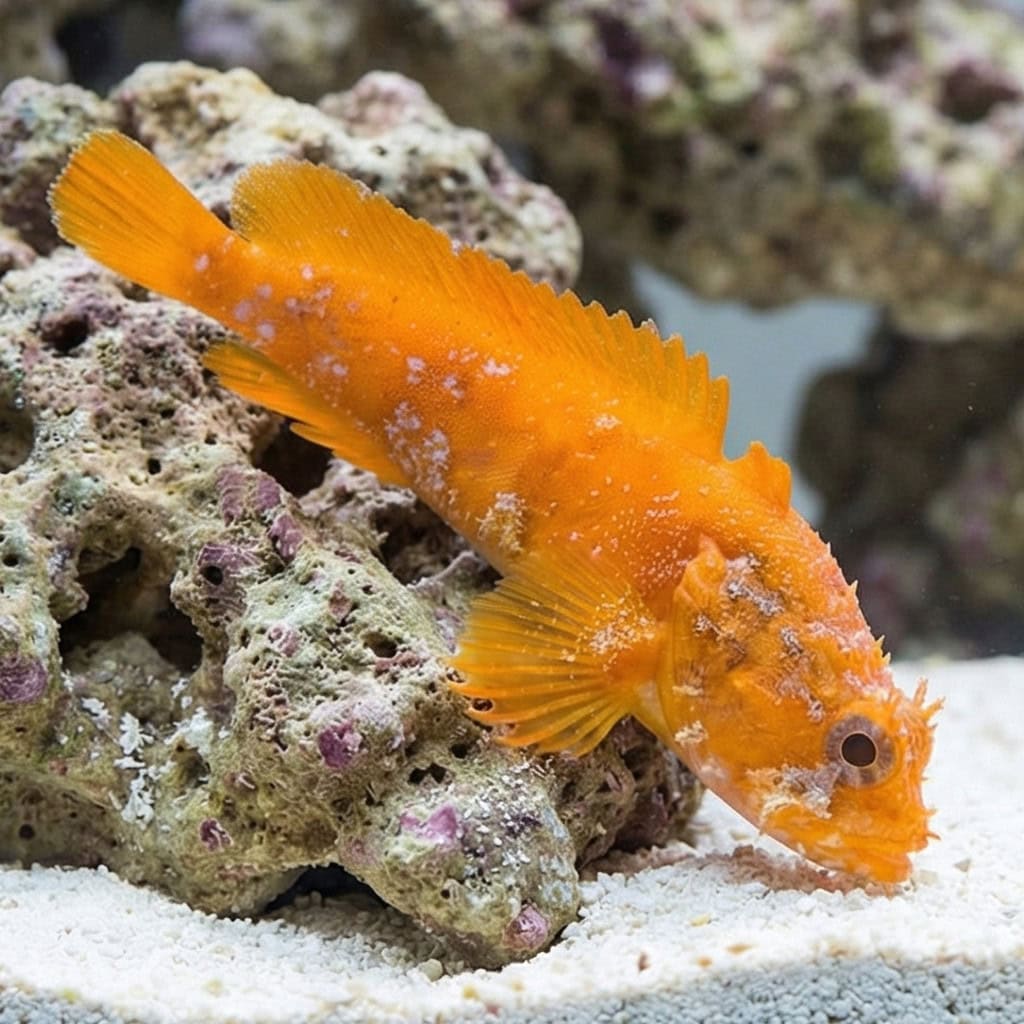
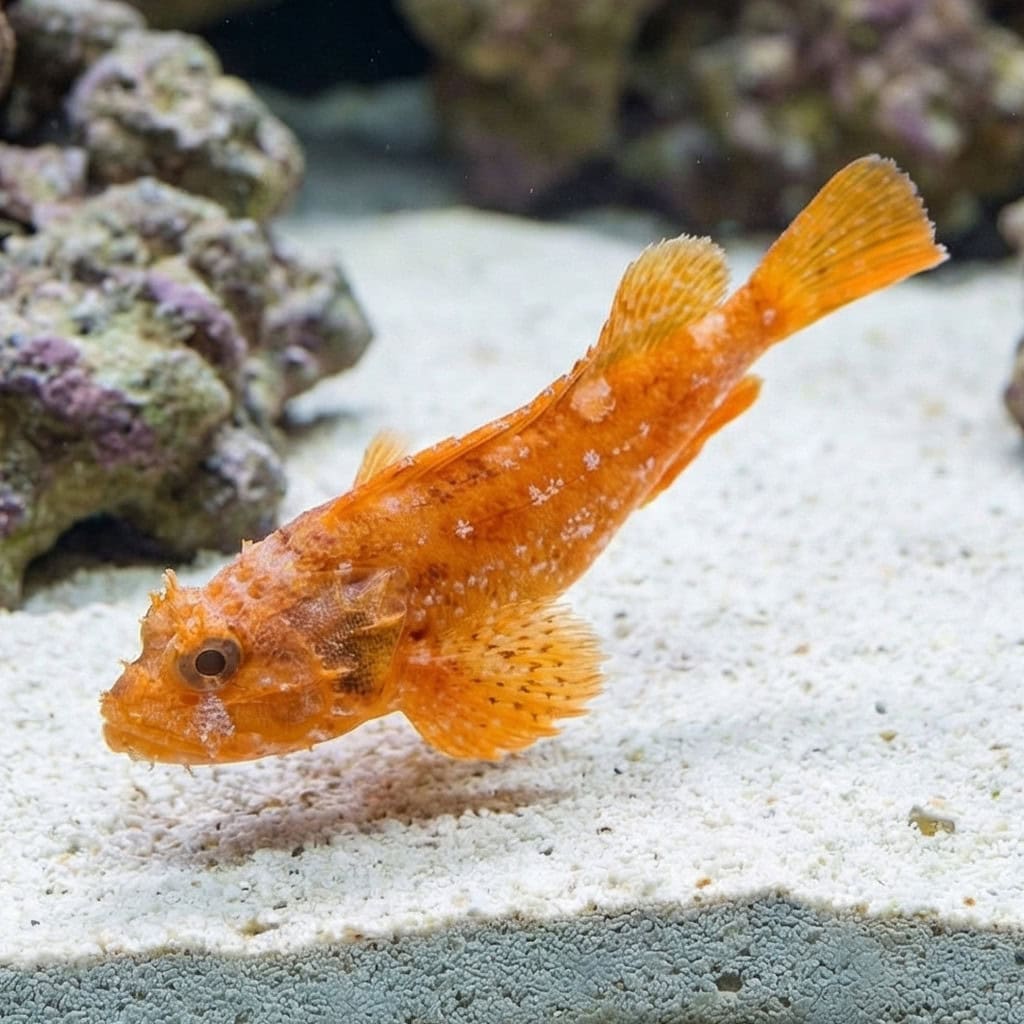
The Orange Toadfish (Opsanus beta) is a bottom-dwelling ambush fish with a broad head, wide mouth, and mottled orange-to-tan patterning that blends into sand and rock. It spends most of its time perched in place, using nearby structure as cover while it watches the tank.
What You’ll Observe:
- “Perching” behavior on the sandbed or against rock ledges, often returning to the same favorite spot
- Short, quick bursts of movement when food hits the water, followed by long periods of stillness
- A strong “sit-and-wait” hunting style—tracking food with its eyes before striking
- Most activity around feeding time, with the rest of the day spent resting in the open or under an overhang
To succeed, provide a stable sandbed with rockwork that creates shaded pockets and low-flow resting zones. Offer marine-based meaty foods (like shrimp, clam, squid, or fish flesh) in bite-sized pieces using tongs so it learns a consistent feeding routine. A roomy footprint and appropriately sized tankmates help this fish settle in and behave naturally.
How do you tell if it’s actually eating if it “just sits there” most of the day?
Many keepers judge success by a consistent feeding response at mealtimes and a gradually “filled-out” body profile over a few weeks.
Is it normal for a toadfish to disappear under rocks or wedge into tight spaces?
Yes—this is typical “home base” behavior, and many individuals rotate between a few preferred hideouts.
Why does it sometimes make soft grunting/croaking sounds?
Toadfish are known for audible calls; in aquariums it often shows up as brief vocalizing during quiet periods or around routine tank activity.
How do you switch one over from live foods to frozen/prepared items?
A common approach is starting with raw seafood on feeding tongs, keeping pieces small, and repeating on a schedule so the fish associates the tongs/spot with food.
Does it redecorate the sandbed or knock things over?
It usually doesn’t “dig” like a goby, but it may shift sand slightly when it settles into a resting spot or wedges itself under a ledge.
We source from vetted suppliers known for healthy, long-lived specimens.
Recently viewed products