
Lyretail Grouper
Variola louti
| Stock | Variations | Price | Quantity | |
|---|---|---|---|---|
| Out of Stock | 2.25 - 3.5" - Indo-Pacific | Original price was: $172.99.$90.99Current price is: $90.99. | Email me |
Every order ships with our standard 3-hour live arrival guarantee. Need more time? Add our 5-Day Guarantee at checkout.
Full guarantee terms →Ships Monday – Thursday for next-day arrival at your nearest FedEx Hold location — typically ready by 9 AM. We monitor every delivery.
Shipping details →
Monday – Friday 8 AM – 9 PM
Saturday 12 PM – 4 PM
Sunday 12 PM – 9 PM
Healthy, stable animals from vetted suppliers — inspected before packing, shipped overnight. Decades of experience built this model so we can deliver premium livestock at 30%+ less than you'd pay elsewhere.
| Care Level | Moderate |
|---|---|
| Temperament | Aggressive |
| Reef Safe | No |
| Functional Benefit | Ornamental Only |
| Diet Type | Carnivore |
| Mininum Tank Size | 300 gallons+ |
| Max Size | 24 inches |
| Temperature | 72–78°F |
| pH Range | 8.1–8.4 |
| Specific Gravity | 1.022–1.025 |
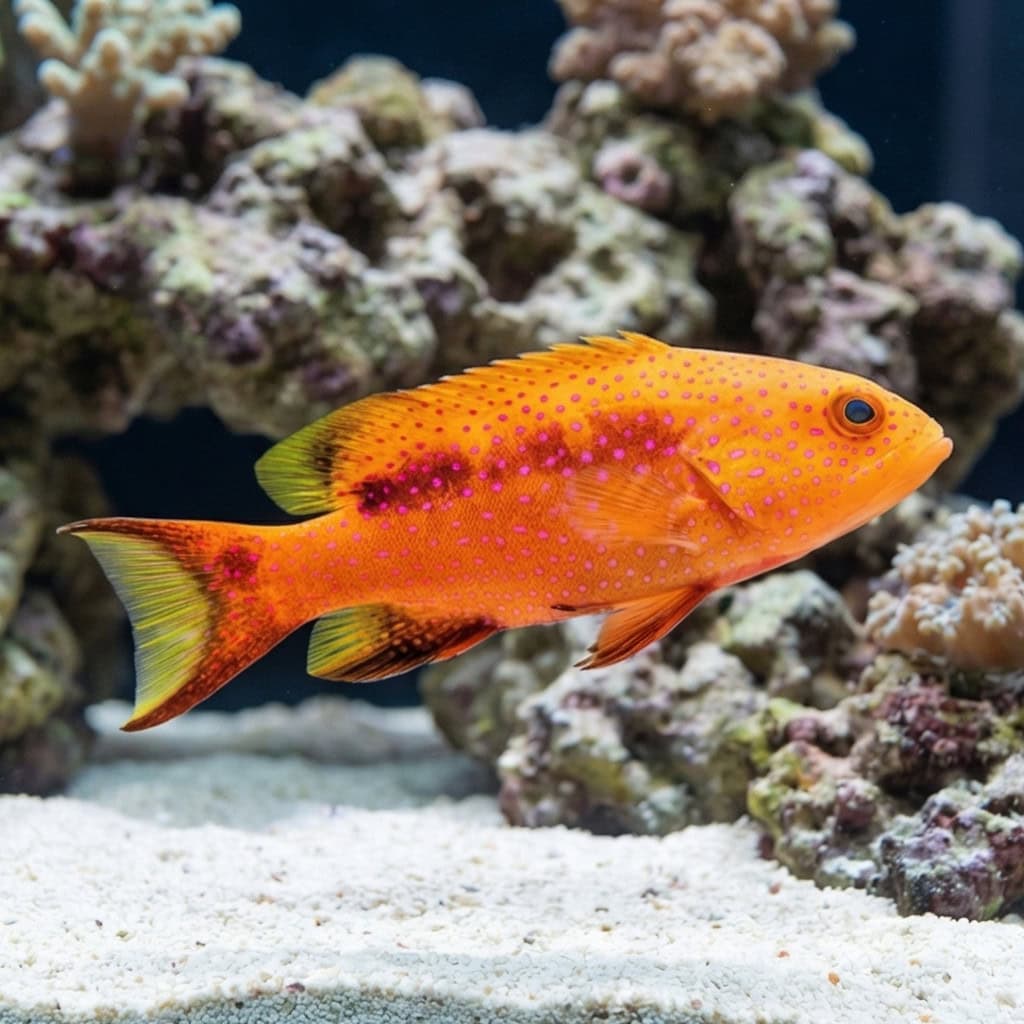
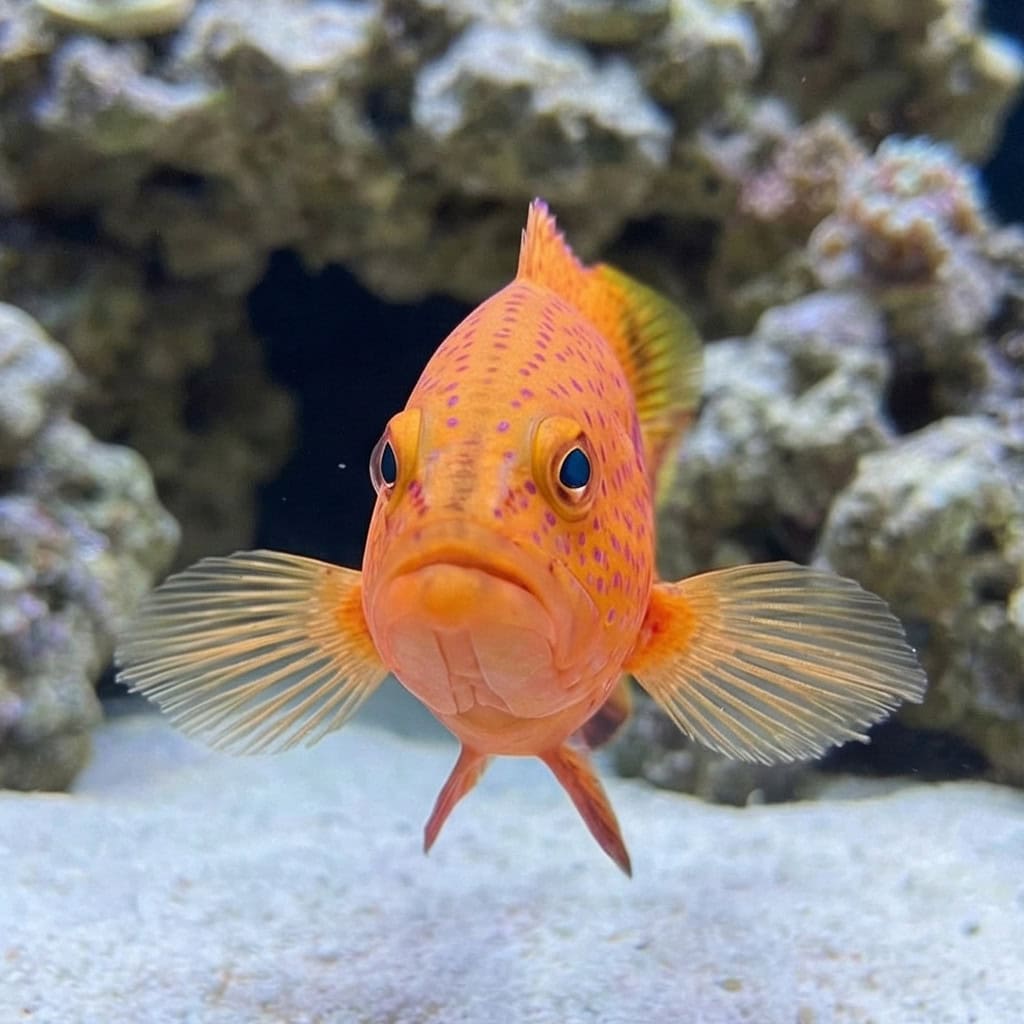
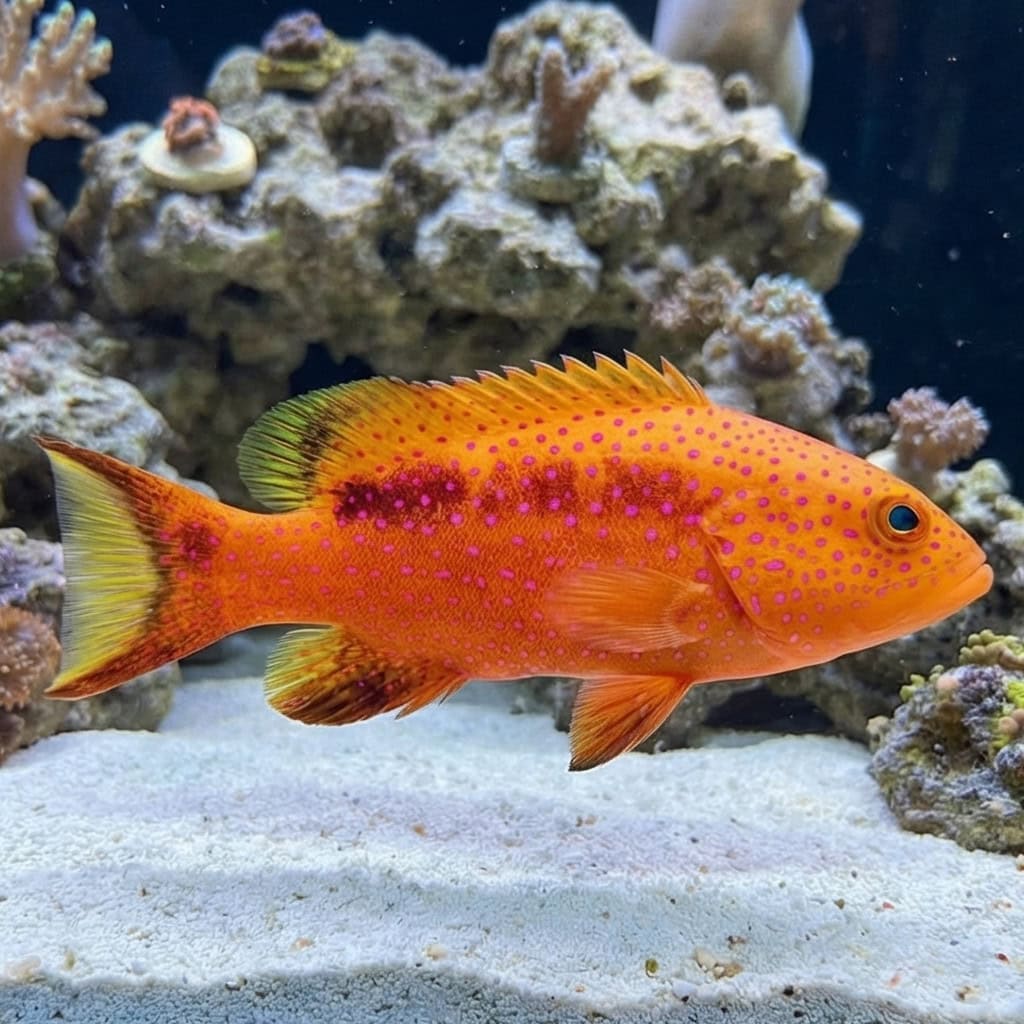
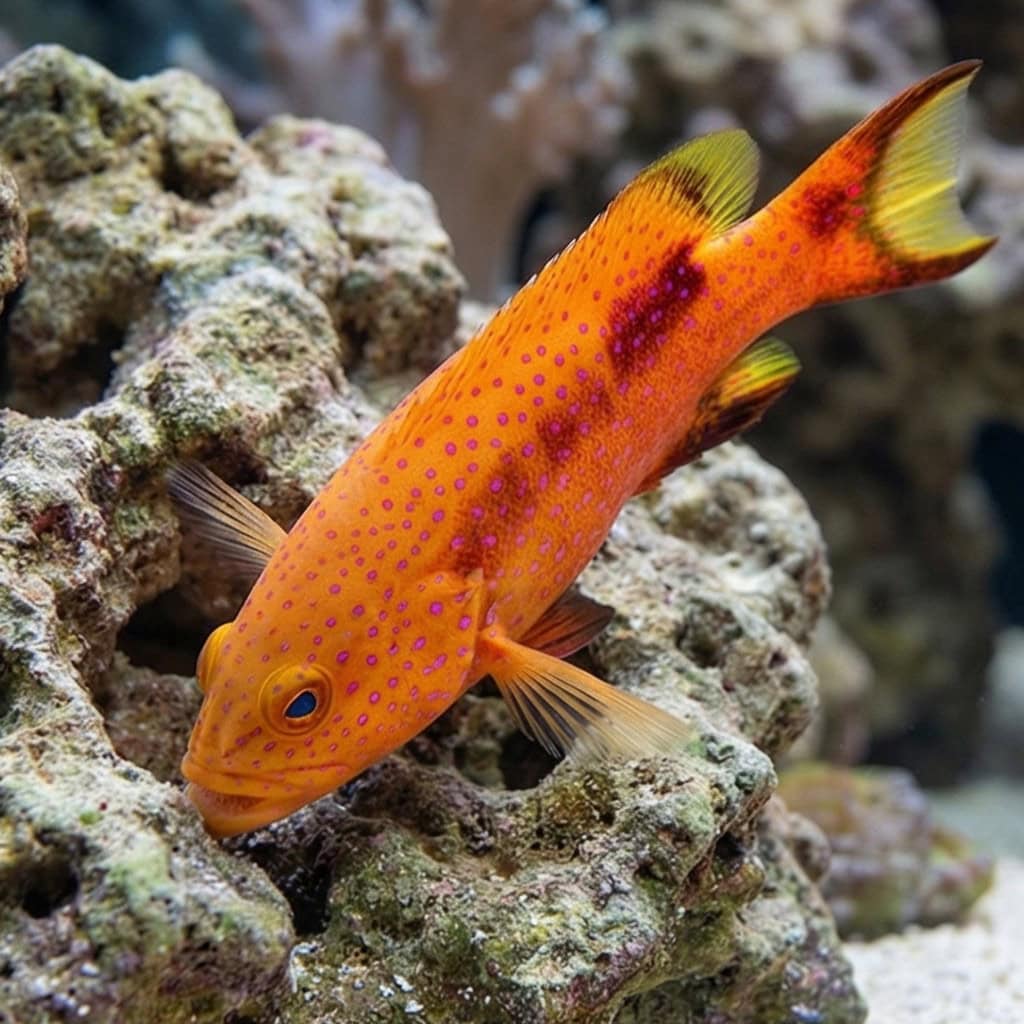
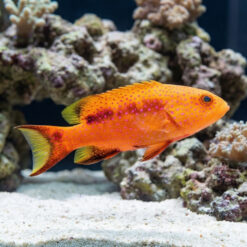
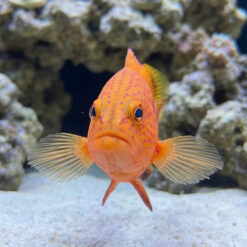
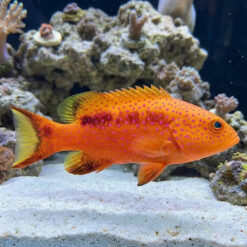
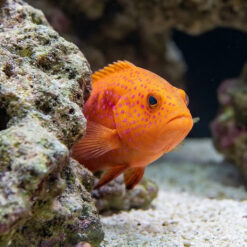
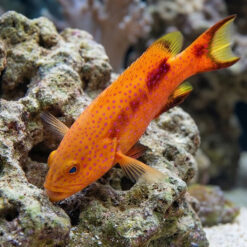
The Lyretail Grouper (Variola louti), also commonly seen as the coronation grouper or yellow-edged lyretail, is a large, reef-associated predator from the Indo-Pacific. Adults show an orange-red to salmon base color with fine bluish spotting and yellow edging on the fins, plus a distinct lyre-shaped tail.
What You’ll Observe:
- Regular “patrol” laps along the rockwork, with short bursts into the open water column
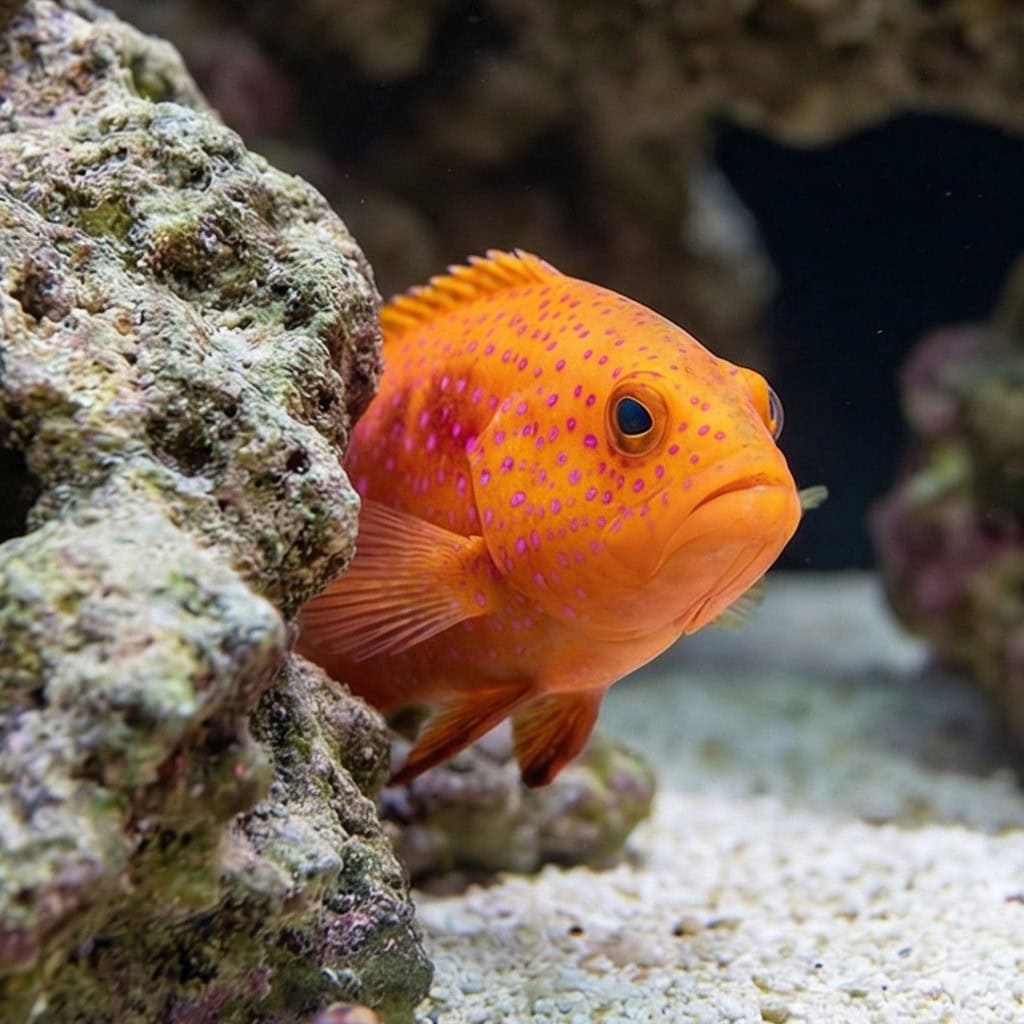
- A consistent home-base cave or ledge it returns to between cruises
- Strong feeding responses once it recognizes the daily routine
- Color pattern shifts as it grows, with juveniles often looking different than adults
Provide a very large aquarium with sturdy rockwork, multiple shelters, and clear open lanes for swimming. Offer a rotation of meaty marine foods (chopped seafood blends, crustacean-based items, and larger frozen pieces as it grows) on a steady schedule. This species is typically kept singly, and it does best when its preferred hiding areas are left undisturbed so it settles in quickly.
Will it stay out in the open, or hide most of the day?
Many keepers report it becomes a visible, “out front” fish once it learns the tank’s routine and has a secure cave to retreat to.
How quickly does it learn to take prepared foods?
Juveniles commonly transition fast when meals are offered consistently in the same spot and portion sizes match the fish’s mouth size.
Does the coloration change as it matures?
Yes—hobbyists frequently note noticeable shifts from juvenile patterning to the more uniform spotted adult look as the fish grows.
Is it normal for it to claim one specific cave or ledge?
Yes—owners often describe a clear “home base,” with the fish doing loops and returning to that same shelter repeatedly.
How do I plan tank layout so maintenance stays practical?
Leave open swim lanes and keep key rocks stable; many large groupers settle better when their main shelter and sightlines don’t change week to week.
Each fish is checked for strong appetite and activity before we approve it for your tank.
Recently viewed products