
Koran Angelfish
Pomacanthus semicirculatus
Price range: $104.99 through $116.99
| Stock | Variations | Price | Quantity | |
|---|---|---|---|---|
| Out of Stock | 1.25 - 2" - Juvenile - Indo-Pacific | Original price was: $159.99.$83.99Current price is: $83.99. | Email me | |
| Out of Stock | 2 - 2.5" - Juvenile - Indo-Pacific | Original price was: $181.99.$95.99Current price is: $95.99. | Email me | |
| Out of Stock | 4.25 - 5.25" - Juvenile - Central Pacific | Original price was: $245.99.$128.99Current price is: $128.99. | Email me | |
| Out of Stock | 1.25 - 2" - Juvenile - Indian Ocean | Original price was: $107.99.$56.99Current price is: $56.99. | Email me | |
| Out of Stock | 2 - 2.5" - Juvenile - Indian Ocean | Original price was: $117.99.$61.99Current price is: $61.99. | Email me | |
| In Stock | 2.5 - 3.5" - Juvenile - Indo-Pacific | Original price was: $199.99.$104.99Current price is: $104.99. |
-
+
|
|
| Only 3 left | 3.5 - 4.25" - Juvenile - Indo-Pacific | Original price was: $221.99.$116.99Current price is: $116.99. |
-
+
|
Every order ships with our standard 3-hour live arrival guarantee. Need more time? Add our 5-Day Guarantee at checkout.
Full guarantee terms →Ships Monday – Thursday for next-day arrival at your nearest FedEx Hold location — typically ready by 9 AM. We monitor every delivery.
Shipping details →
Monday – Friday 8 AM – 9 PM
Saturday 12 PM – 4 PM
Sunday 12 PM – 9 PM
Healthy, stable animals from vetted suppliers — inspected before packing, shipped overnight. Decades of experience built this model so we can deliver premium livestock at 30%+ less than you'd pay elsewhere.
| Care Level | Moderate |
|---|---|
| Temperament | Semi-Aggressive |
| Reef Safe | No |
| Functional Benefit | Ornamental Only |
| Diet Type | Omnivore |
| Mininum Tank Size | 250 gallons |
| Max Size | 18 inches |
| Temperature | 72–78°F |
| pH Range | 8.1–8.4 |
| Specific Gravity | 1.022–1.025 |
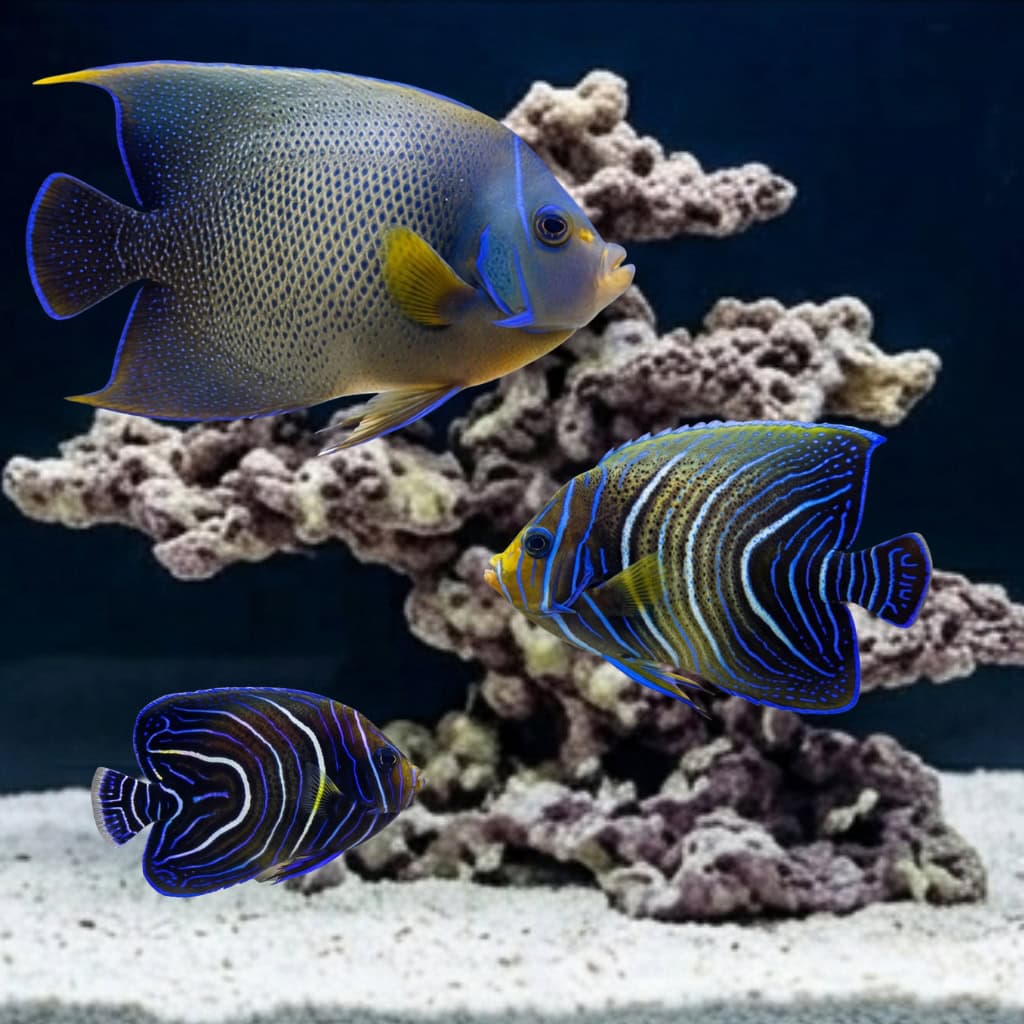
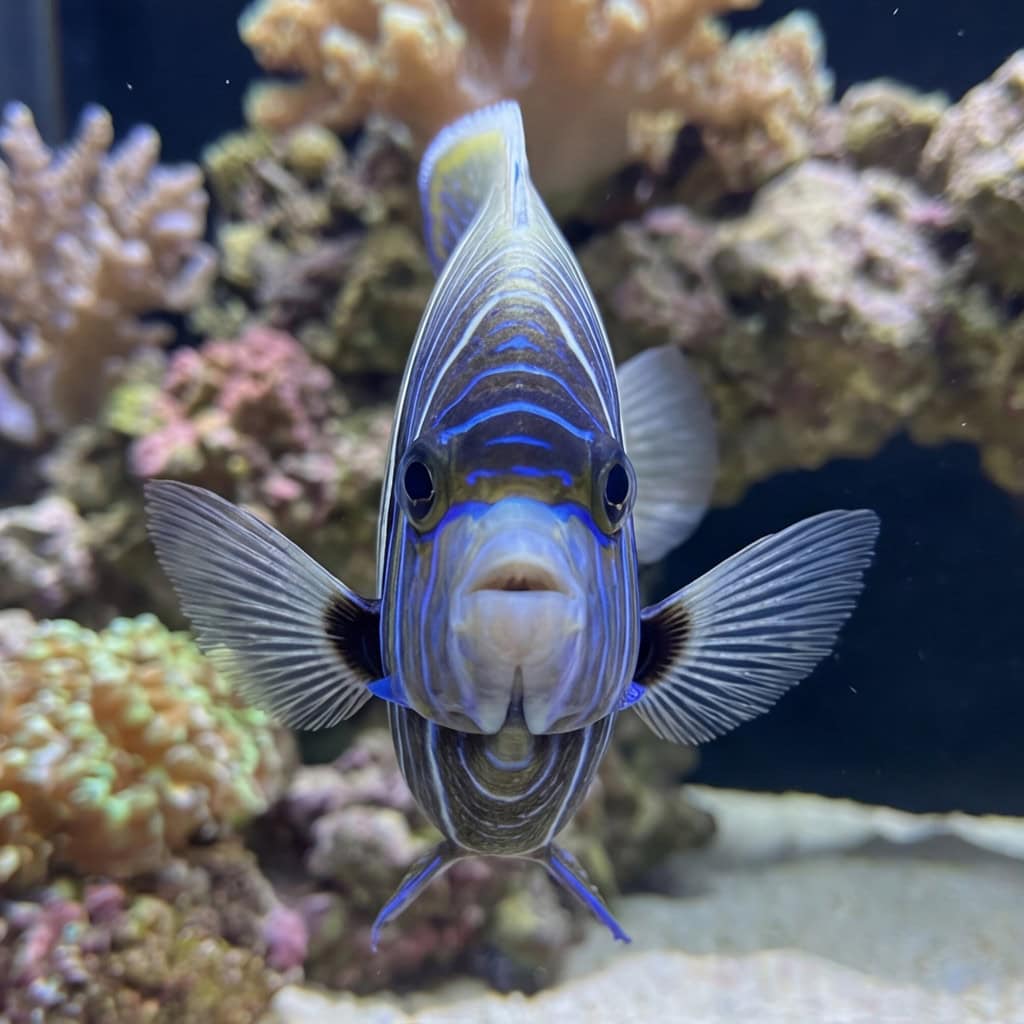
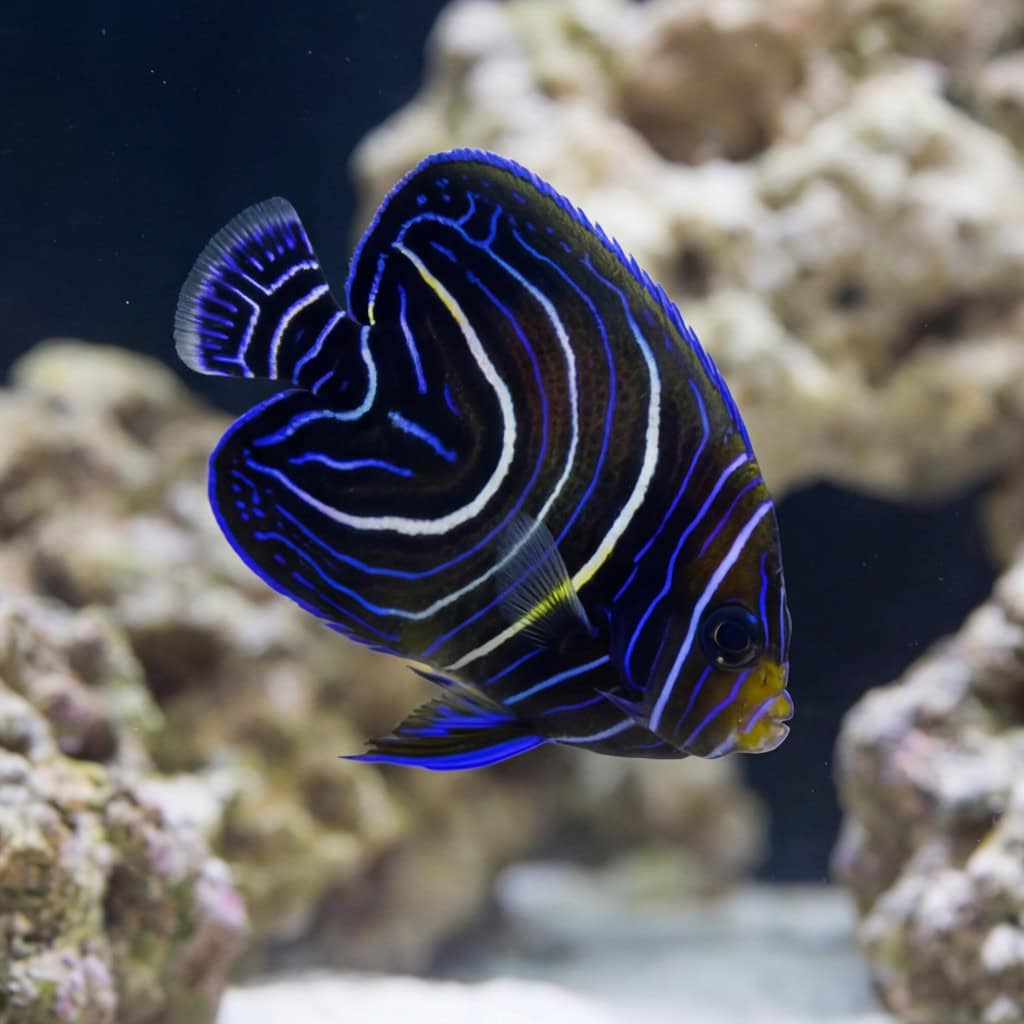
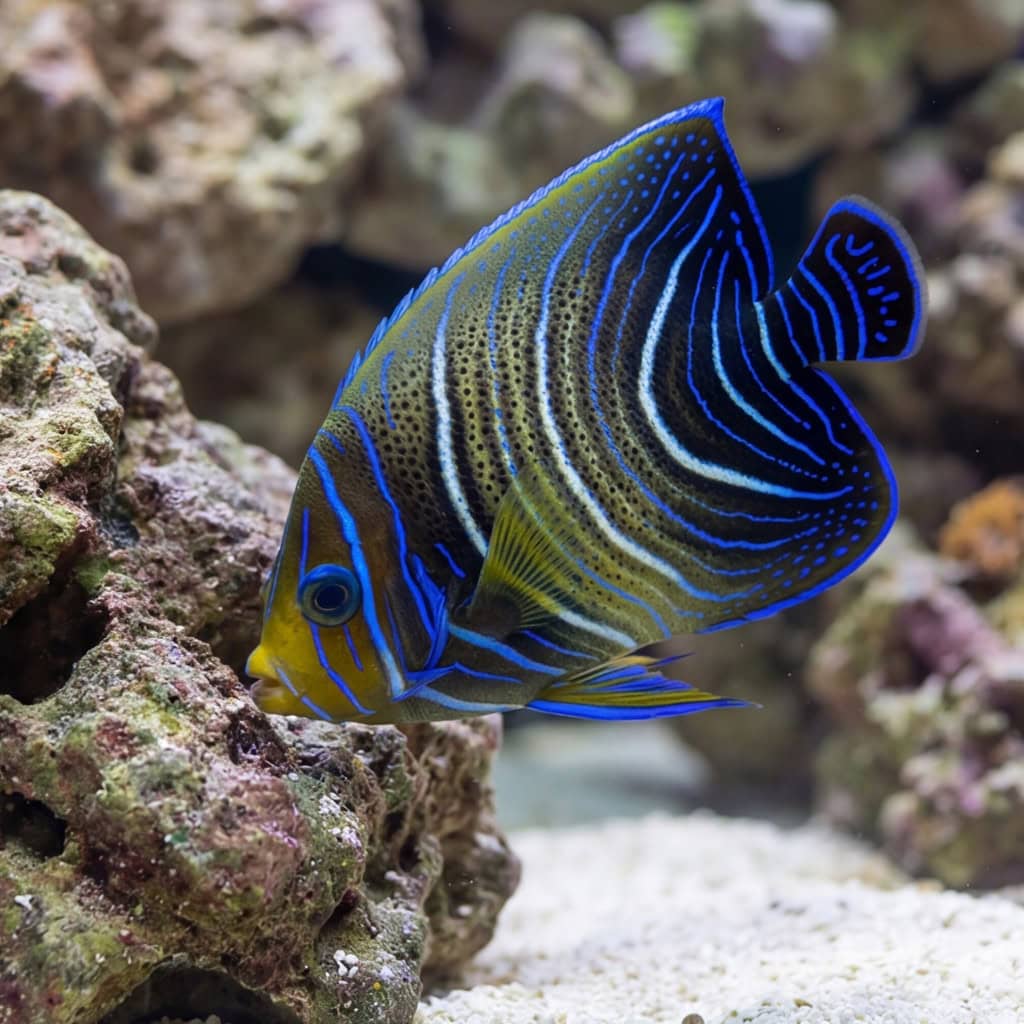
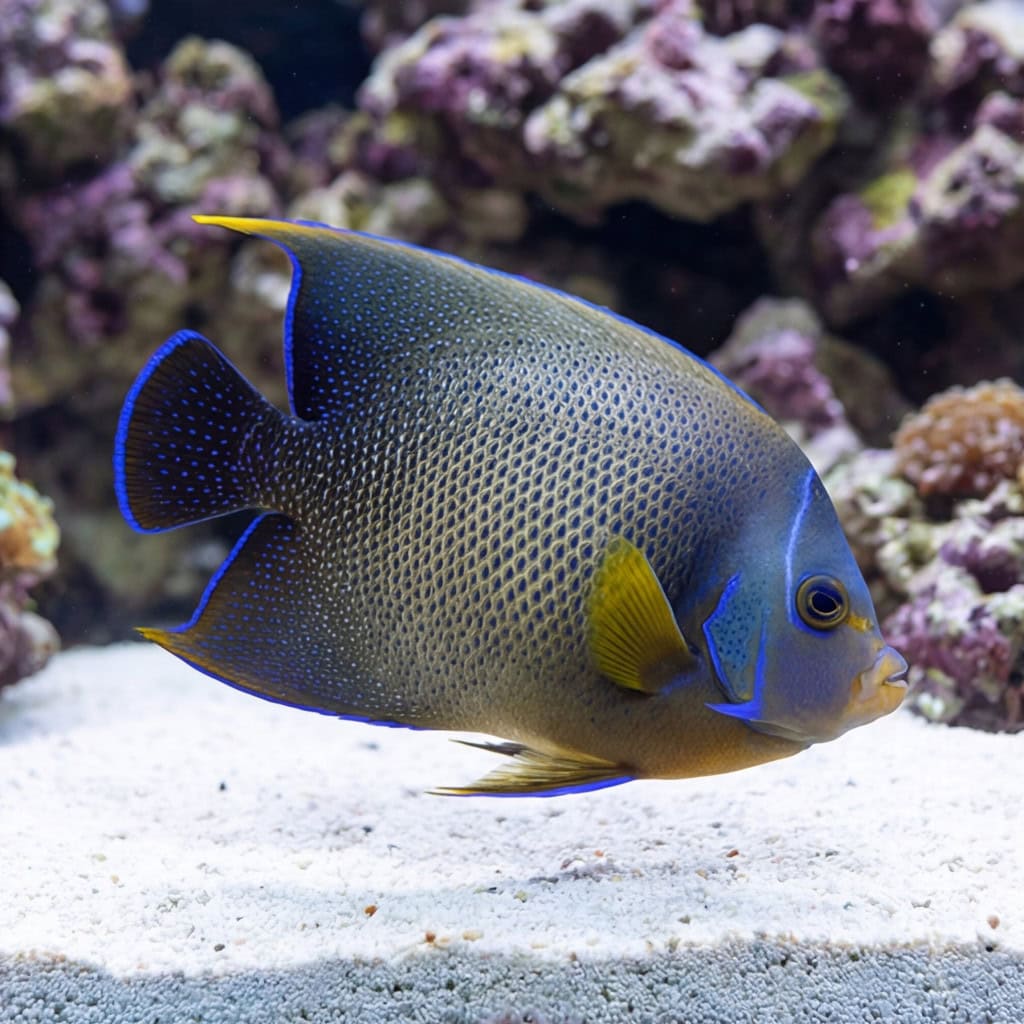
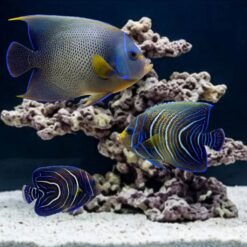
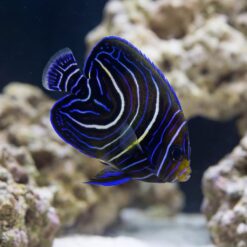
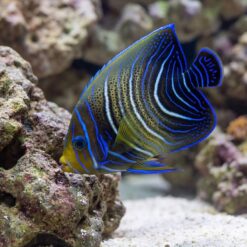
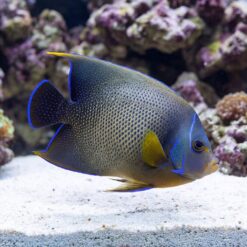
The Koran Angelfish (Pomacanthus semicirculatus) is a large Pomacanthus angelfish from the Indo–West Pacific that’s commonly kept in fish-only-with-live-rock (FOWLR) displays. Juveniles show a dark blue body with curved white striping, then transition into an adult pattern with olive/tan tones, fine blue speckling, and blue-edged fins.
What You’ll Observe:
- Cruises between open water and rockwork, often looping the same routes around the tank
- Picks and “samples” the rock surface throughout the day between scheduled feedings
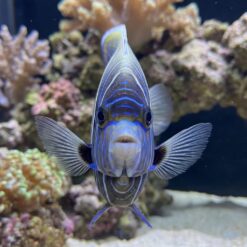
- Learns your routine and often meets you at the front glass at feeding time
- Gradual pattern changes as it grows, moving from juvenile stripes to a mixed “transition” look before adult coloration
Build long swim lanes and sturdy rock structures that create caves and shaded overhangs. Feed a varied omnivore menu with marine algae plus angelfish diets that include sponge matter, alongside mysis and other meaty foods in smaller portions through the day. With a consistent routine and confident tankmates, it settles into an active, out-in-front display fish.
How can I tell a juvenile Koran Angelfish from a juvenile Emperor Angelfish?
Juvenile Korans typically show “half-circle” style curved striping, while juvenile Emperors tend to show more complete ring patterns.
My Koran Angelfish looks darker or paler after I changed my lights—is that normal?
Many keepers report temporary color shifts tied to lighting intensity and sudden changes; a slower ramp-up schedule usually brings behavior and color back to normal.
Why is my Koran Angelfish hiding in the same cave for long stretches?
It’s common for them to choose a “home base” and return there repeatedly, especially after changes to lighting, rockwork, or new additions.
Can smaller established fish bully a newly added Koran Angelfish?
Yes—territorial fish (including some clownfish) may test or chase new arrivals; using a social acclimation box or brief rockwork rearranging often helps reset territories.
Why does it constantly peck at live rock even right after it eats?
That’s typical grazing behavior—many large angelfish keep “browsing” surfaces between meals as part of their normal daily routine.
We work with trusted suppliers who keep our specimens healthy and well-fed before shipping.
Recently viewed products