
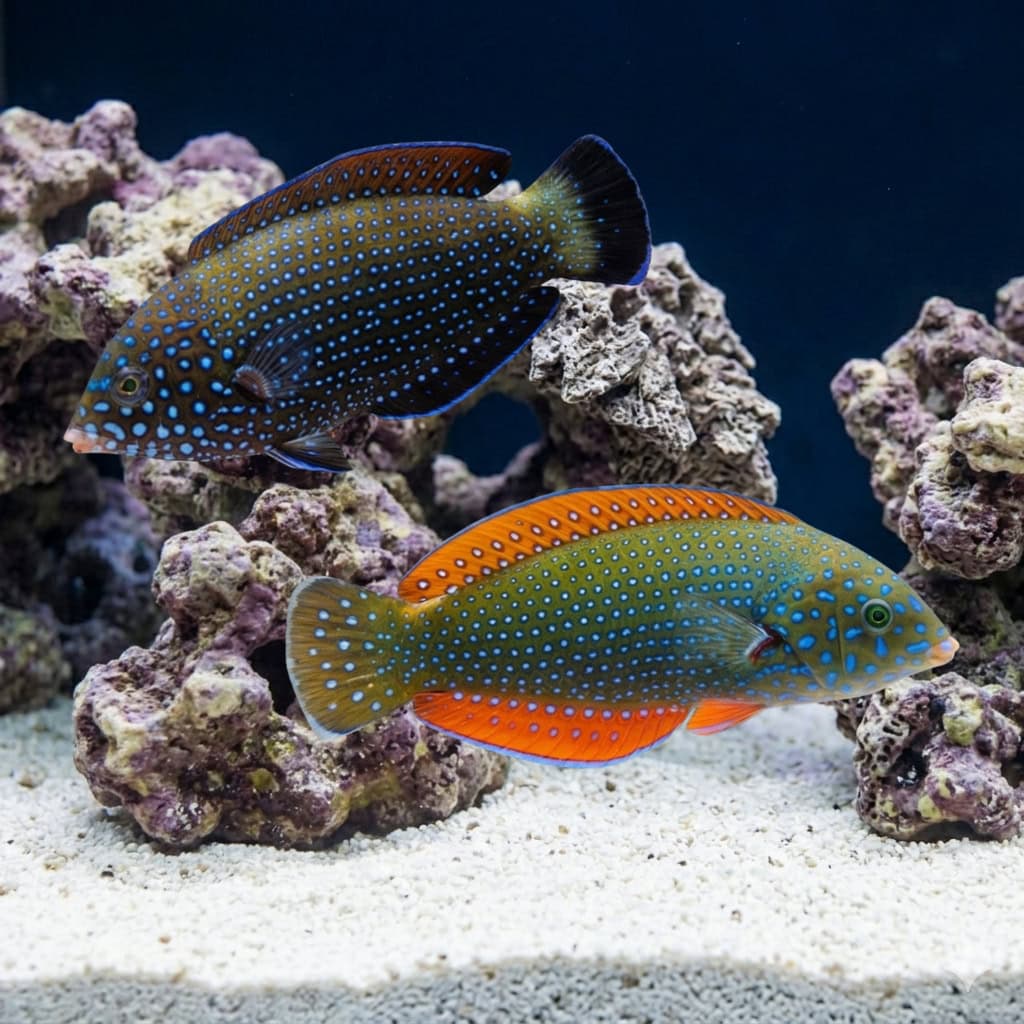
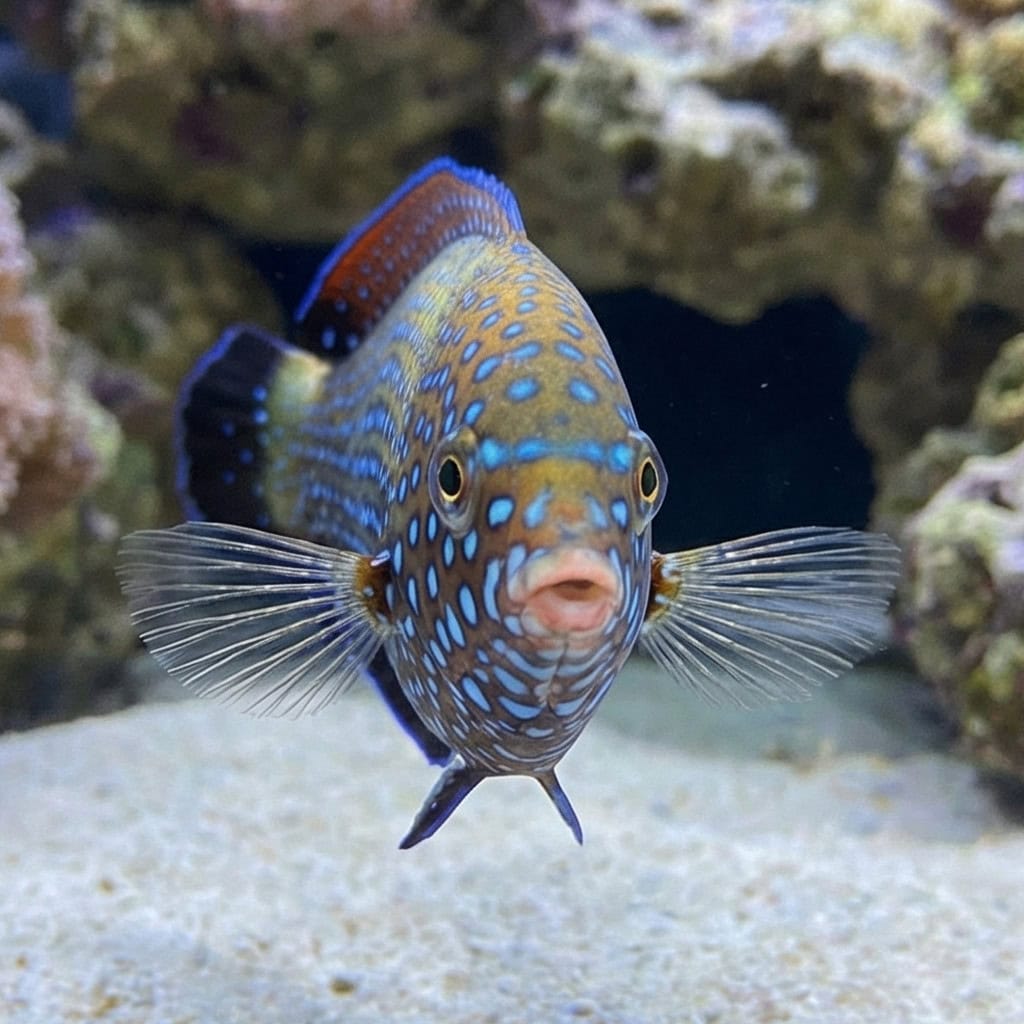
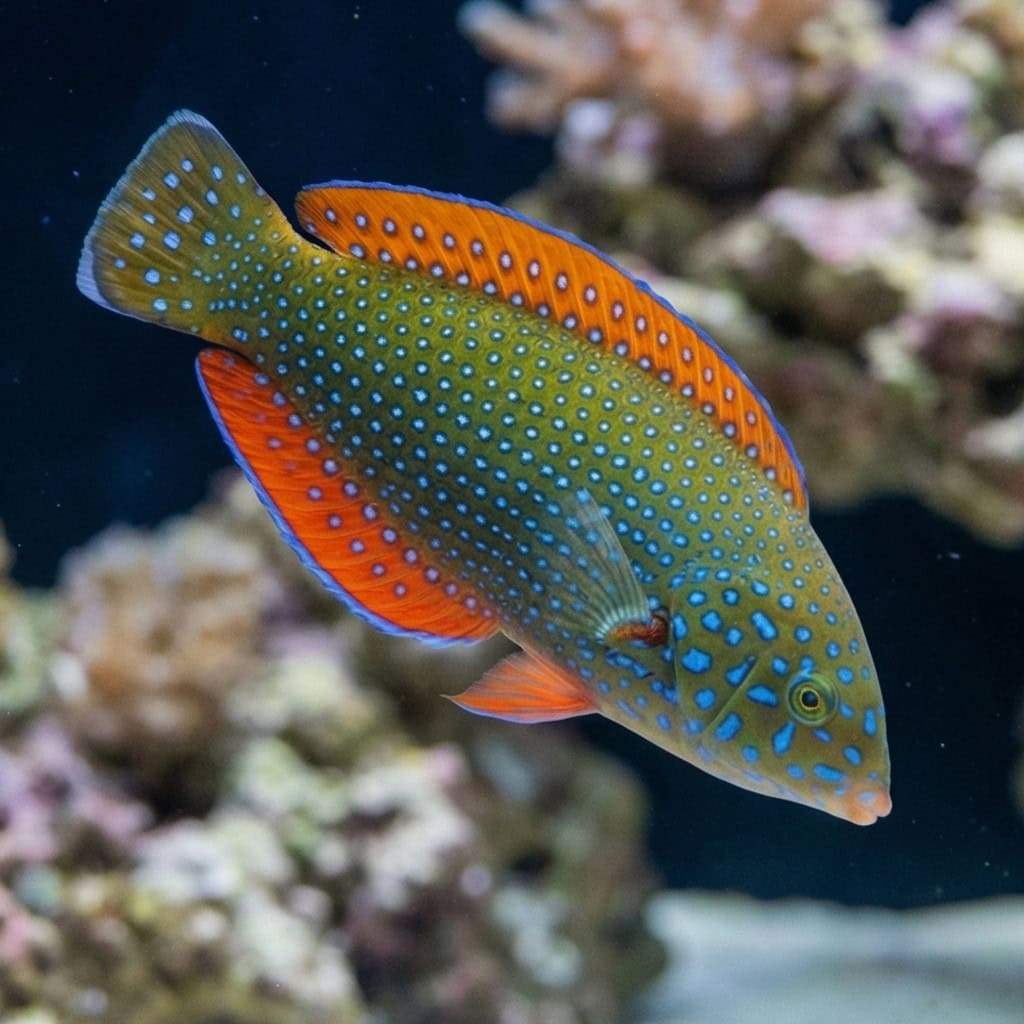
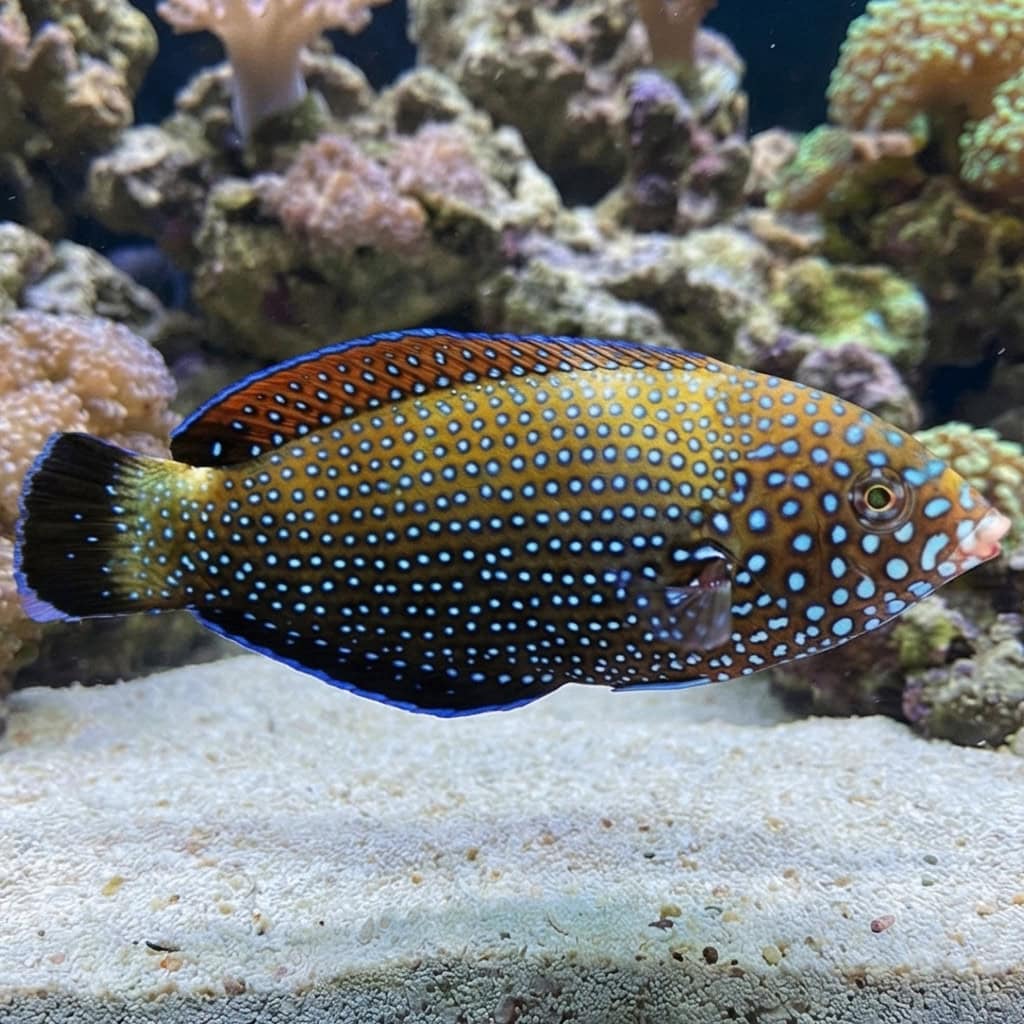
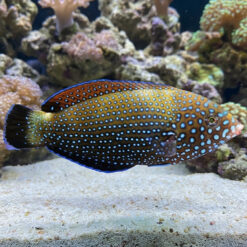
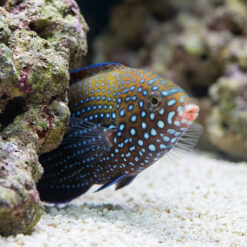
Blue Spotted Tamarin Wrasse
Anampses caeruleopunctatus
| Stock | Variations | Price | Quantity |
|---|
Every order ships with our standard 3-hour live arrival guarantee. Need more time? Add our 5-Day Guarantee at checkout.
Full guarantee terms →Ships Monday – Thursday for next-day arrival at your nearest FedEx Hold location — typically ready by 9 AM. We monitor every delivery.
Shipping details →
Monday – Friday 8 AM – 9 PM
Saturday 12 PM – 4 PM
Sunday 12 PM – 9 PM
Healthy, stable animals from vetted suppliers — inspected before packing, shipped overnight. Decades of experience built this model so we can deliver premium livestock at 30%+ less than you'd pay elsewhere.
| Care Level | Expert |
|---|---|
| Temperament | Peaceful |
| Reef Safe | With Caution |
| Functional Benefit | Pest Control |
| Diet Type | Carnivore |
| Mininum Tank Size | 250 gallons |
| Max Size | 18 inches |
| Temperature | 72–78°F |
| pH Range | 8.1–8.4 |
| Specific Gravity | 1.022–1.025 |
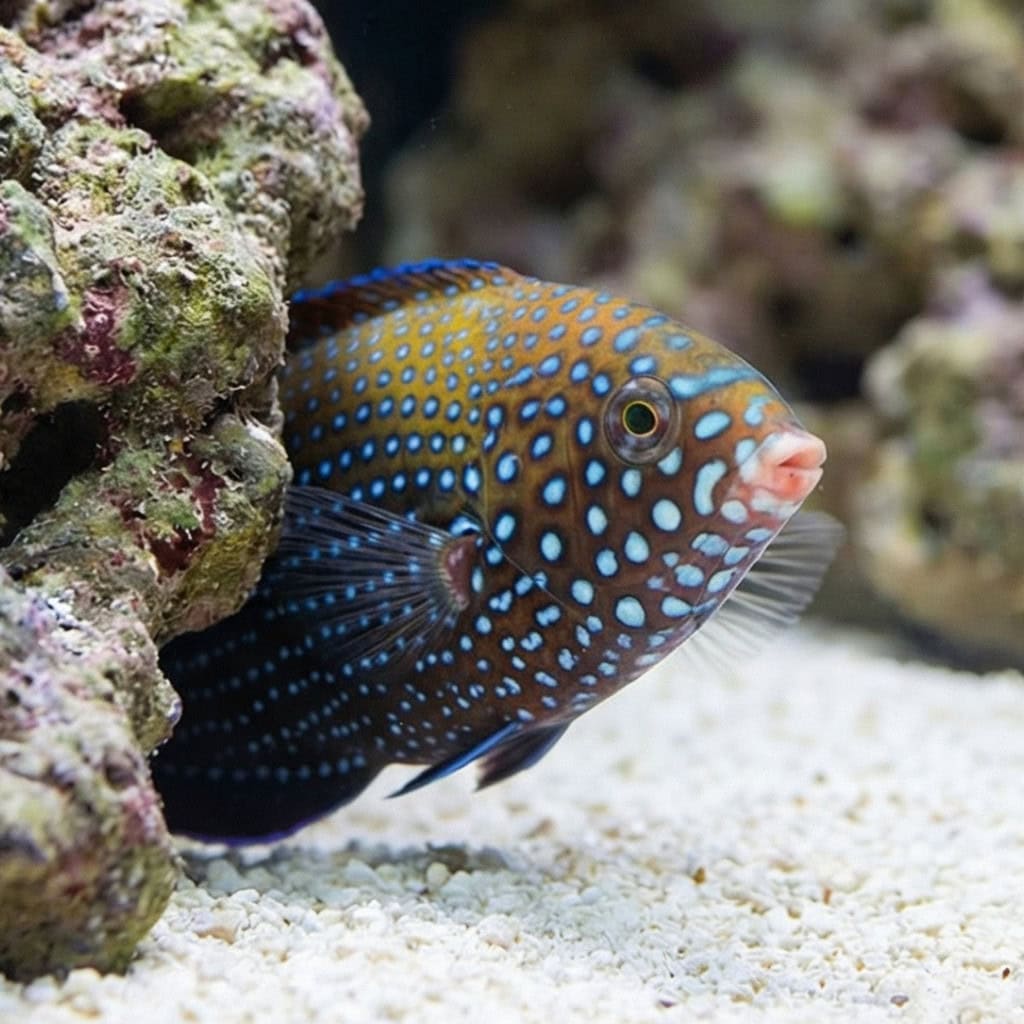
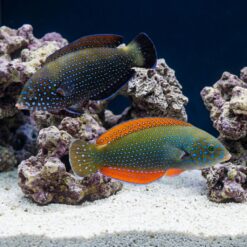
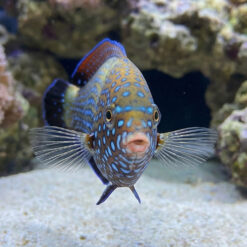
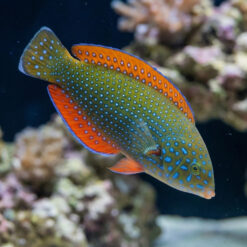
The Blue Spotted Tamarin Wrasse is a constant rock-and-sand forager that can help reduce certain hitchhiker pests, including small snail pests that gather around clam shells. Adults show an olive-to-reddish base color with many crisp blue spots and short blue lines, plus fine blue markings across the face and along the fins.
What You’ll Observe:
- Steady cruising between open water and rockwork, with frequent “pecking” at tiny life on the rocks and sand
- A bedtime routine where it dives into the sand to rest, often emerging shortly after lights come on
- Juveniles that move in a slower, drifting pattern at times, then switch into active hunting along the bottom
- Short bursts of speed when chasing small food items, followed by long periods of methodical picking
To succeed with this species, provide a mature reef aquarium with plenty of live rock and a fine sandbed it can fully bury into at night. Offer small meaty foods in multiple feedings and allow time each day for natural grazing on pods and other microfauna. Stable reef conditions and calm tankmates help it settle into a consistent routine.
Is it normal for this wrasse to vanish right after I add it?
Yes—many sand-sleeping wrasses go straight into the sand on day one and may stay out of sight for several days while they sync to the tank’s light cycle.
Will the pattern look different as it grows?
Often, yes. Juveniles and females can look quite different from mature males, and the spotting/striping pattern can become more bold as the fish transitions.
How do I know it’s eating enough if I rarely see it “join” feeding time?
Look for regular hunting passes over the rockwork and sand, plus a consistently rounded body profile. Many keepers see them take bites all day rather than rushing into the water column.
Do they tend to end up in overflow boxes or other odd places?
They can explore tight areas while foraging. Simple screening over overflow entrances and small gaps helps keep the fish focused on the display where the food is.
Can I keep more than one Blue Spotted Tamarin Wrasse?
In very large systems, groups are sometimes kept (typically one male with multiple females). Adding them at the same time tends to create a smoother social “reset” than adding a second fish later.
We work with trusted suppliers who keep our specimens healthy and well-fed before shipping.
Recently viewed products