
Achilles Tang
Acanthurus achilles
Original price was: $1,019.99.$407.99Current price is: $407.99.
| Stock | Variations | Price | Quantity | |
|---|---|---|---|---|
| Out of Stock | 3.75 - 4.5" - Central Pacific | Original price was: $1,107.99.$581.99Current price is: $581.99. | Email me | |
| In Stock | 2.25 - 3.5" - Juvenile - Central Pacific | Original price was: $1,019.99.$407.99Current price is: $407.99. |
-
+
|
|
| Out of Stock | 4.5 - 5.5" - Central Pacific | Original price was: $1,174.99.$616.99Current price is: $616.99. | Email me | |
| Out of Stock | 5.5 -7" - Central Pacific | Original price was: $1,329.99.$697.99Current price is: $697.99. | Email me | |
| Out of Stock | 3.5 - 4.75" - Juvenile - Central Pacific | Original price was: $1,196.99.$628.99Current price is: $628.99. | Email me |
Every order ships with our standard 3-hour live arrival guarantee. Need more time? Add our 5-Day Guarantee at checkout.
Full guarantee terms →Ships Monday – Thursday for next-day arrival at your nearest FedEx Hold location — typically ready by 9 AM. We monitor every delivery.
Shipping details →
Monday – Friday 8 AM – 9 PM
Saturday 12 PM – 4 PM
Sunday 12 PM – 9 PM
Healthy, stable animals from vetted suppliers — inspected before packing, shipped overnight. Decades of experience built this model so we can deliver premium livestock at 30%+ less than you'd pay elsewhere.
| Care Level | Expert |
|---|---|
| Temperament | Semi-Aggressive |
| Reef Safe | Yes |
| Functional Benefit | Algae Control |
| Diet Type | Herbivore |
| Mininum Tank Size | 180 gallons |
| Max Size | 10 inches |
| Temperature | 72–78°F |
| pH Range | 8.1–8.4 |
| Specific Gravity | 1.022–1.025 |
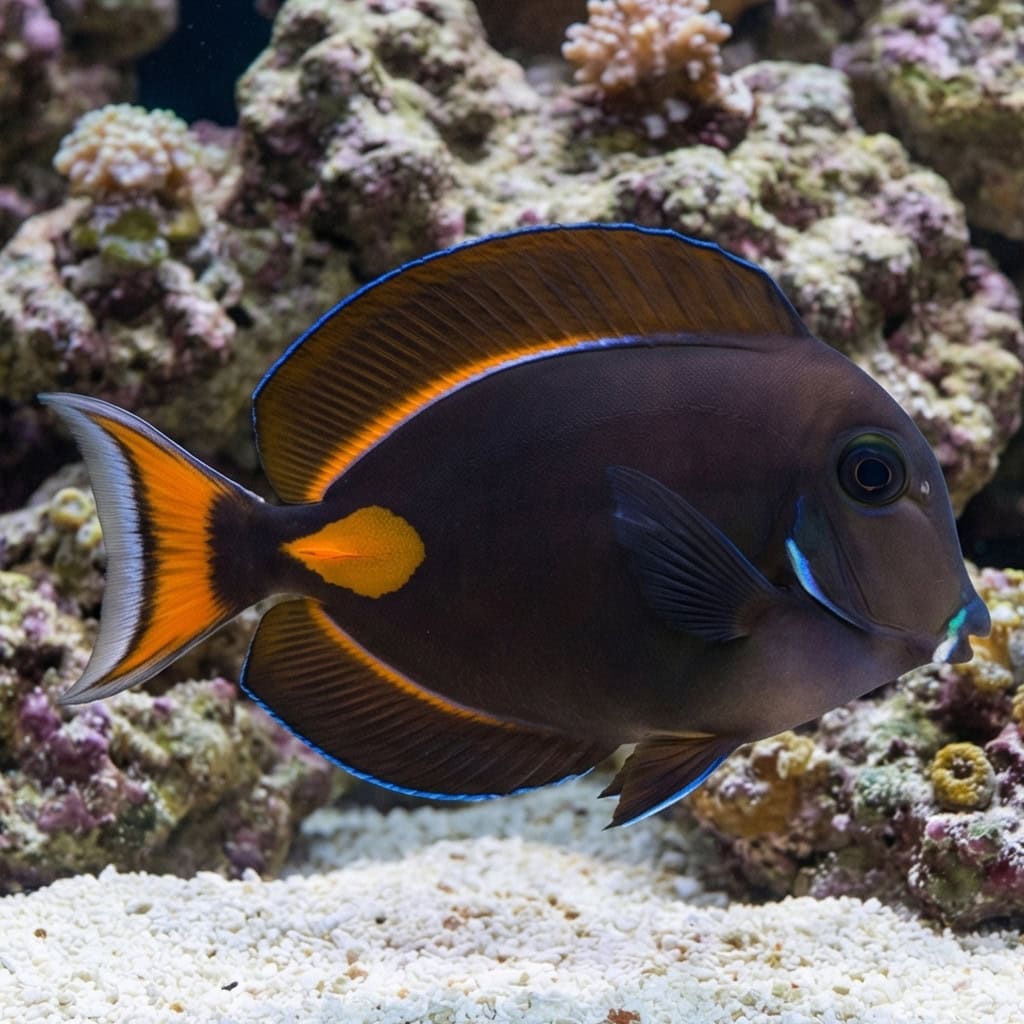
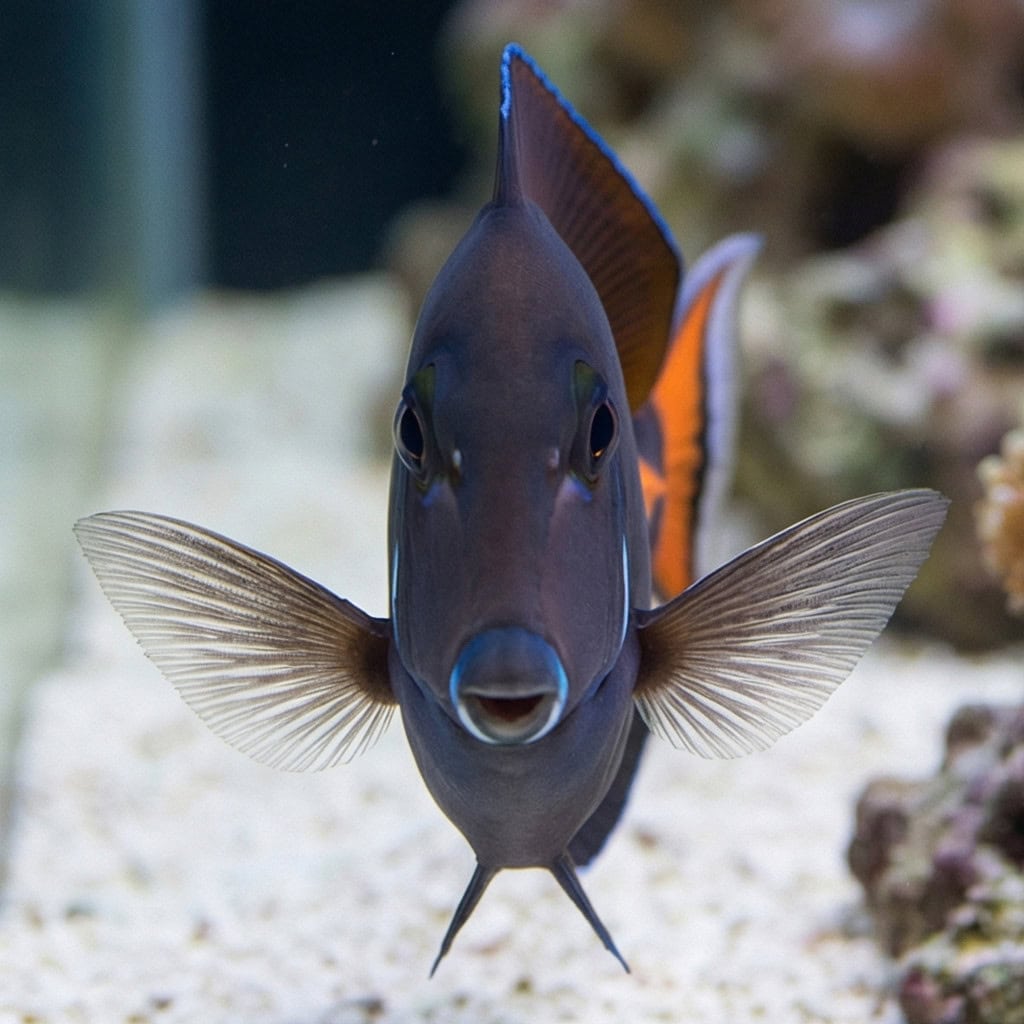
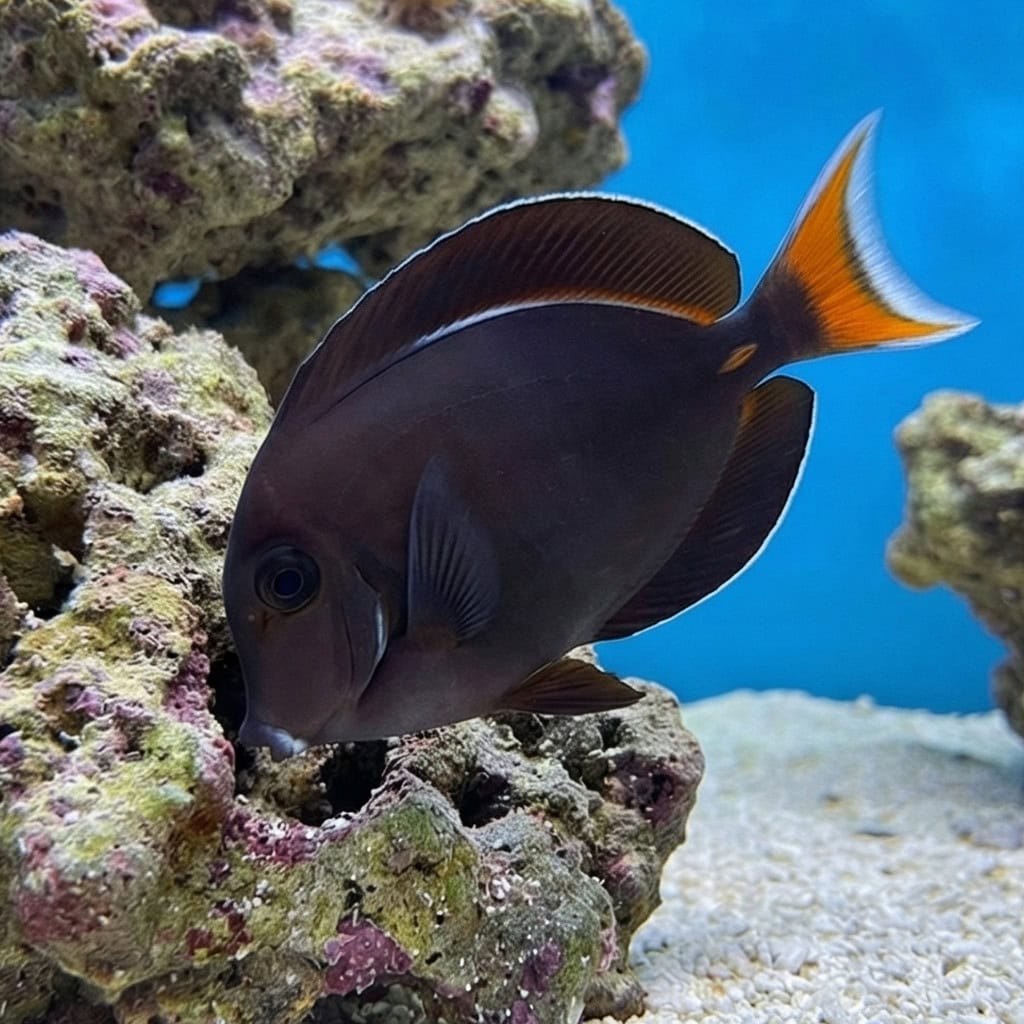
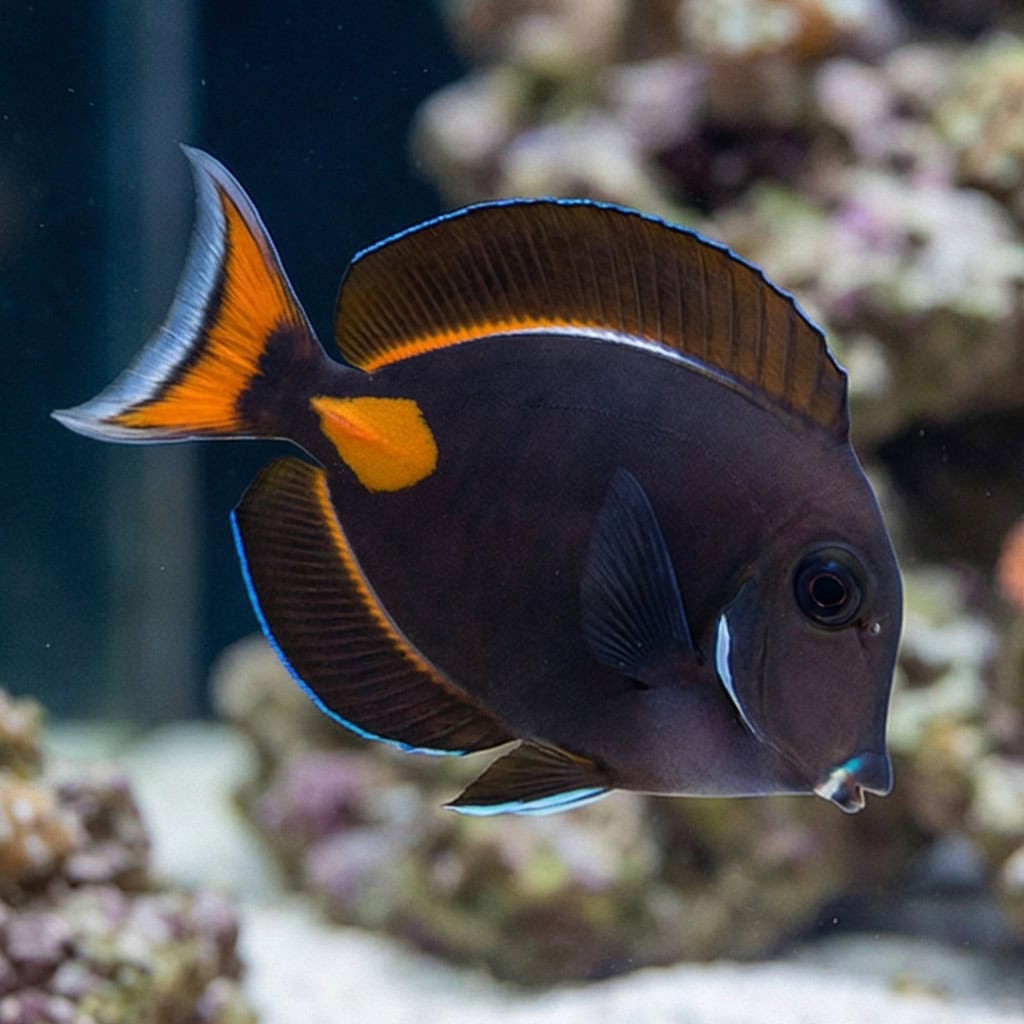
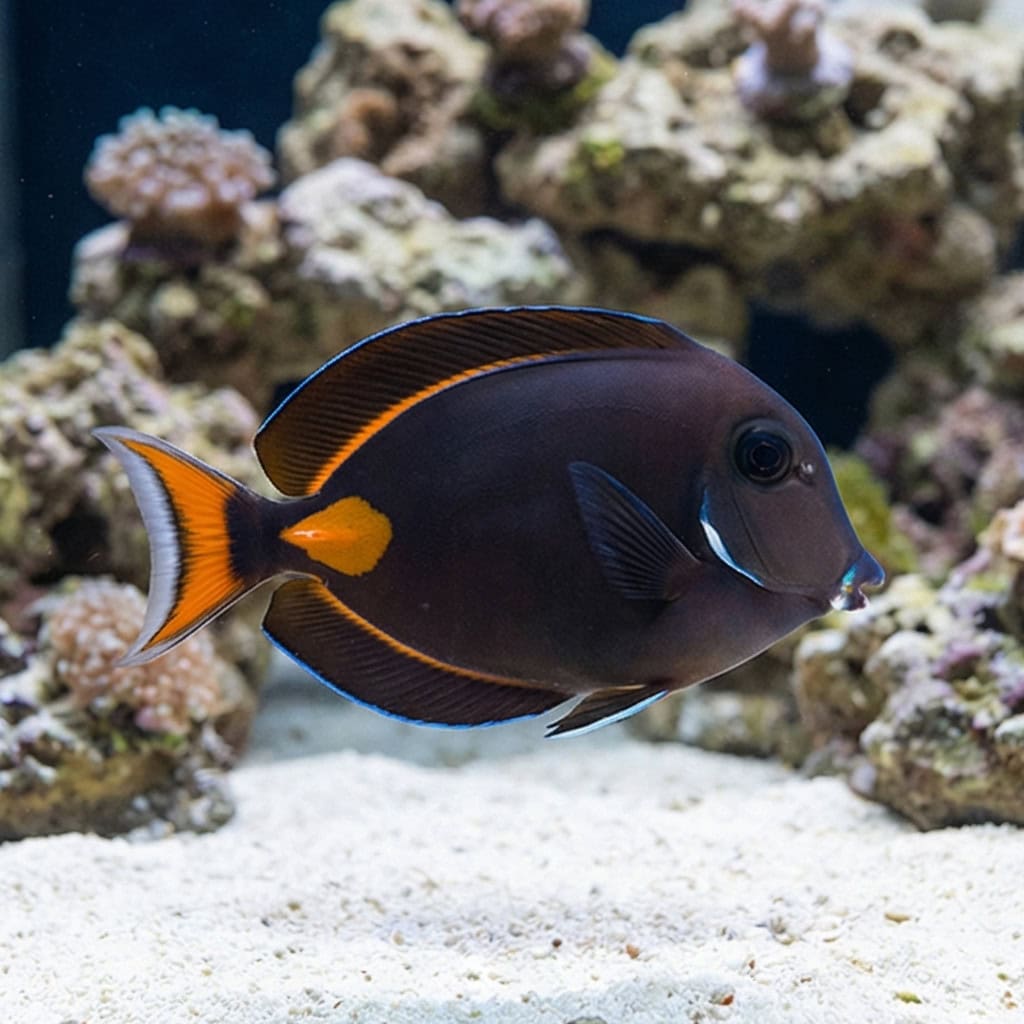
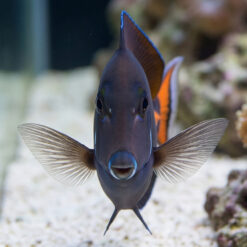
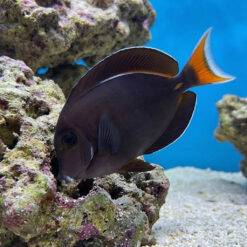
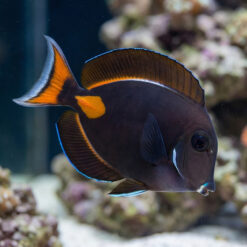
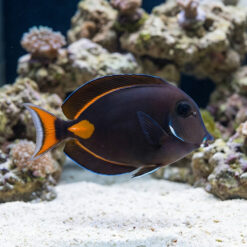
The Achilles Tang is a high-energy algae grazer that spends much of the day cruising open water and picking at rockwork. Its dark body, white facial markings, and orange teardrop patch stand out in high-flow reef tanks, similar to the turbulent reef zones it comes from.
What You’ll Observe:
- Fast, constant laps along the front and length of the aquarium, with short bursts into stronger flow
- Frequent grazing passes over live rock, especially between feedings
- Clear “pecking order” moments with other tangs—brief displays, then back to swimming
- Quick recognition of feeding routines, often returning to the same clip or feeding station
To succeed, provide a mature 180-gallon reef with strong, turbulent circulation and open swimming lanes, plus plenty of rock surfaces for grazing. Feed algae sheets regularly and supplement with varied prepared foods so it can stay active and keep grazing in rhythm with your tank. In tang-heavy systems, keeping multiple feeding stations and using a temporary mirror can help the group settle into a calmer routine.
Is it normal for an Achilles Tang to “swim laps” all day?
Yes—many keepers report they are constant cruisers, especially in tanks with long open lanes and strong flow. The behavior often looks like patrol routes plus quick grazing stops.
How do hobbyists get an Achilles Tang eating right after introduction?
A common approach is to keep algae sheets available and offer small portions of prepared foods more than once per day so the fish can join in without rushing. Some fish start by grazing rock first, then transition to clips and frozen foods.
What’s the most common “plan” for adding one to a tank that already has tangs?
Many aquarists focus on introduction timing and distraction: adding multiple feeding points, and using a mirror for a few days so attention shifts away from the newcomer.
Can I keep two Achilles Tangs together?
Most keepers treat them as best kept singly in home aquariums, since adults are often described as solitary and similar-shaped tangs can compete for the same space.
Do Achilles Tangs need “surge zone” flow, or is normal reef flow fine?
They are repeatedly associated with turbulent, high-oxygen water movement, and hobbyists typically aim for strong, varied flow patterns rather than a single laminar stream.
Each fish is checked for strong appetite and activity before we approve it for your tank.
Recently viewed products