Ambon Damsel
Pomacentrus amboinensis
| Stock | Variations | Price | Quantity | |
|---|---|---|---|---|
| Out of Stock | 1 - 2" - Captive Bred - Indian Ocean | Original price was: $19.99.$10.99Current price is: $10.99. | Email me | |
| Out of Stock | 1" or smaller - Captive Bred - Indian Ocean | Original price was: $17.99.$9.99Current price is: $9.99. | Email me |
Every order ships with our standard 3-hour live arrival guarantee. Need more time? Add our 5-Day Guarantee at checkout.
Full guarantee terms →Ships Monday – Thursday for next-day arrival at your nearest FedEx Hold location — typically ready by 9 AM. We monitor every delivery.
Shipping details →
Monday – Friday 8 AM – 9 PM
Saturday 12 PM – 4 PM
Sunday 12 PM – 9 PM
Healthy, stable animals from vetted suppliers — inspected before packing, shipped overnight. Decades of experience built this model so we can deliver premium livestock at 30%+ less than you'd pay elsewhere.
| Care Level | Easy |
|---|---|
| Temperament | Aggressive |
| Reef Safe | Yes |
| Functional Benefit | Ornamental Only |
| Diet Type | Omnivore |
| Mininum Tank Size | 55 gallons |
| Max Size | 4 inches |
| Temperature | 72–78°F |
| pH Range | 8.1–8.4 |
| Specific Gravity | 1.022–1.025 |
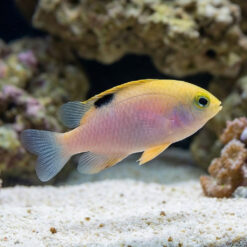
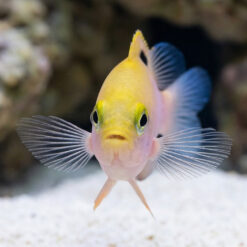
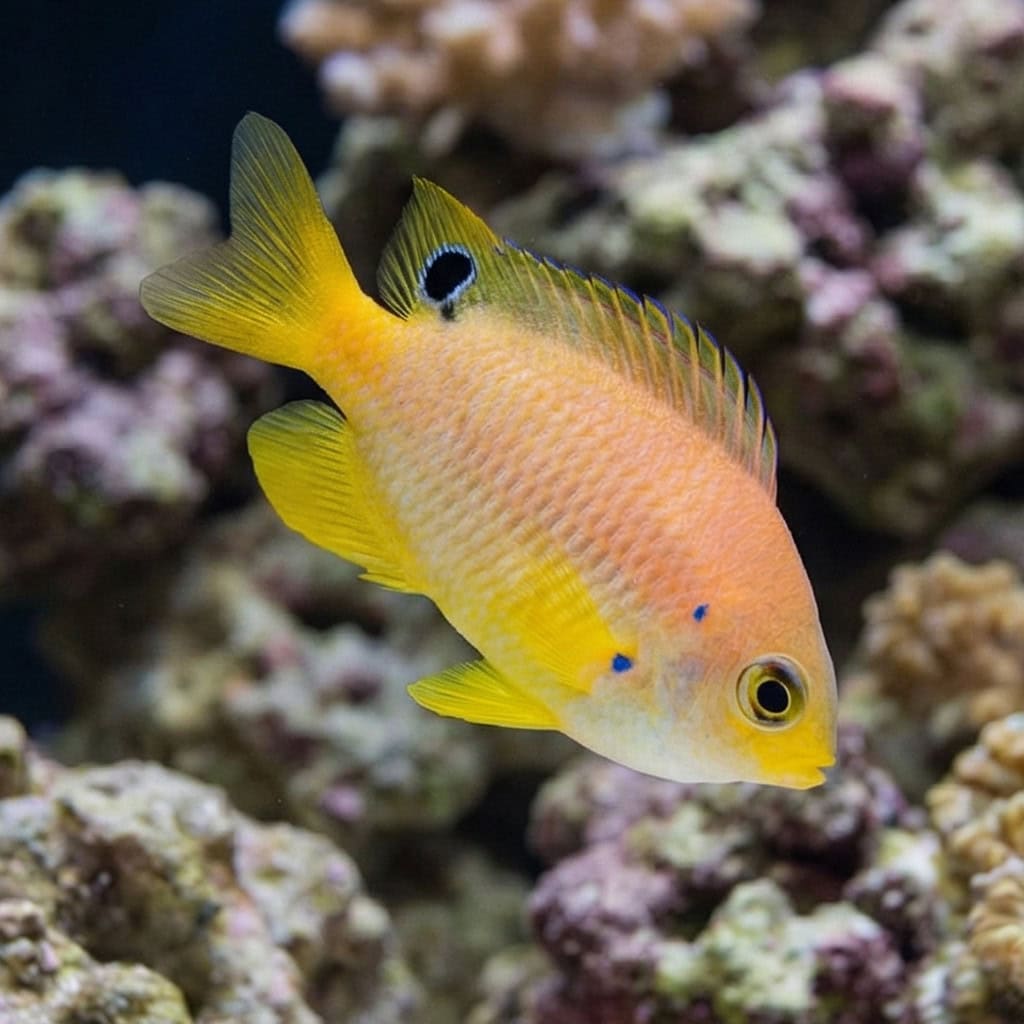
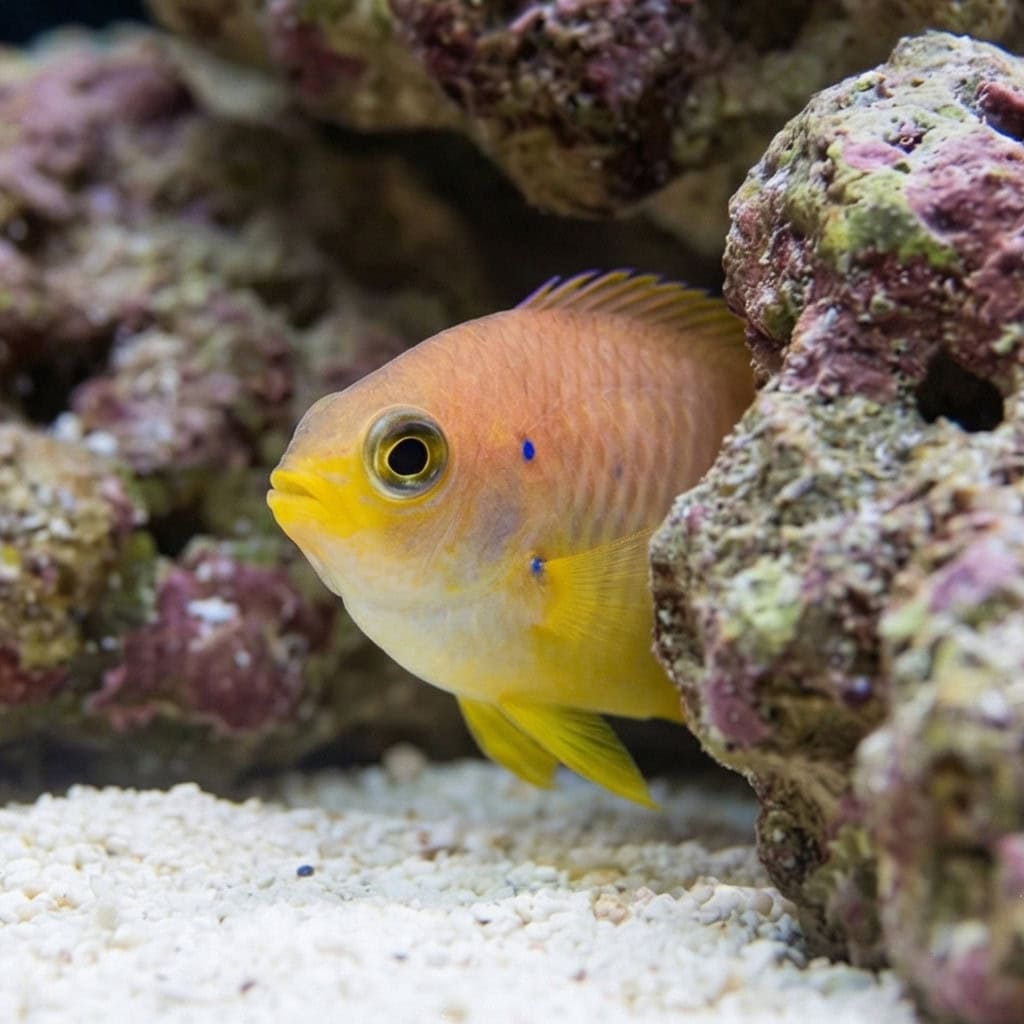
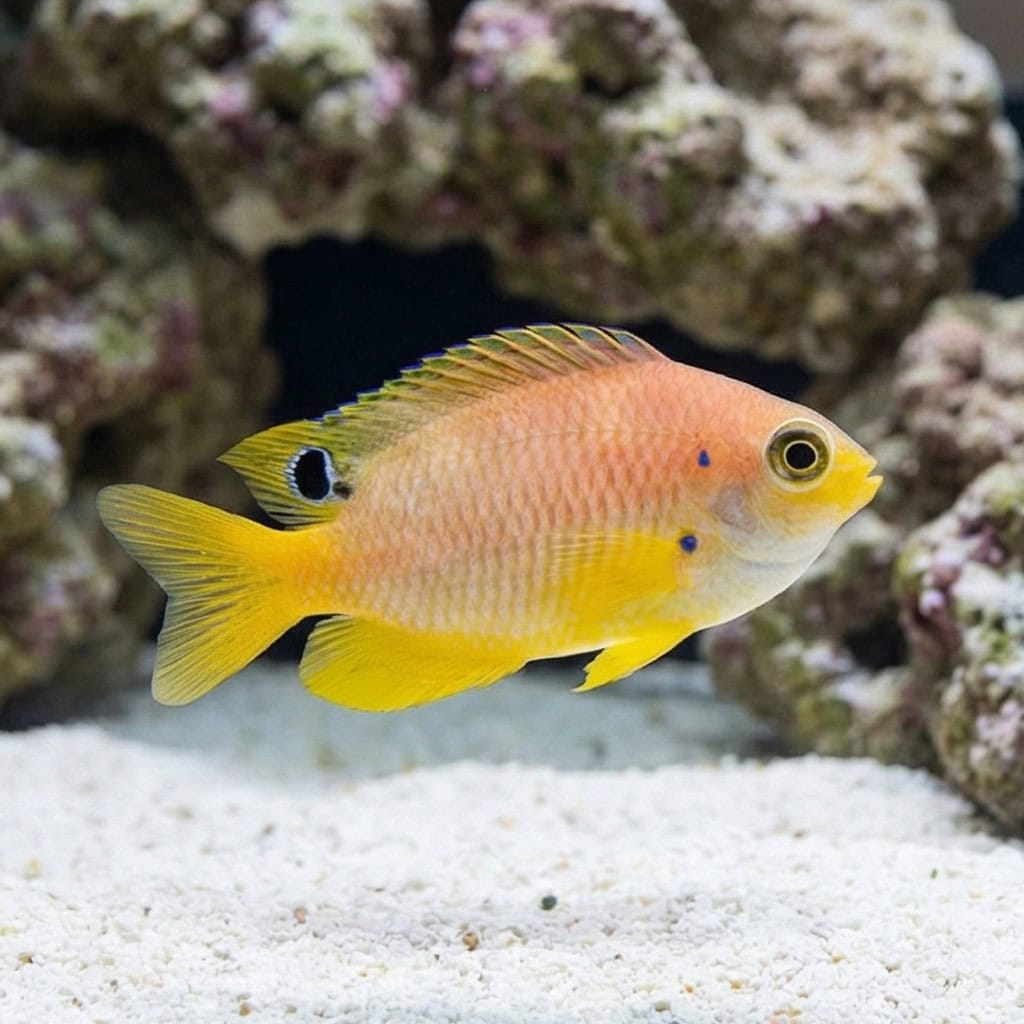
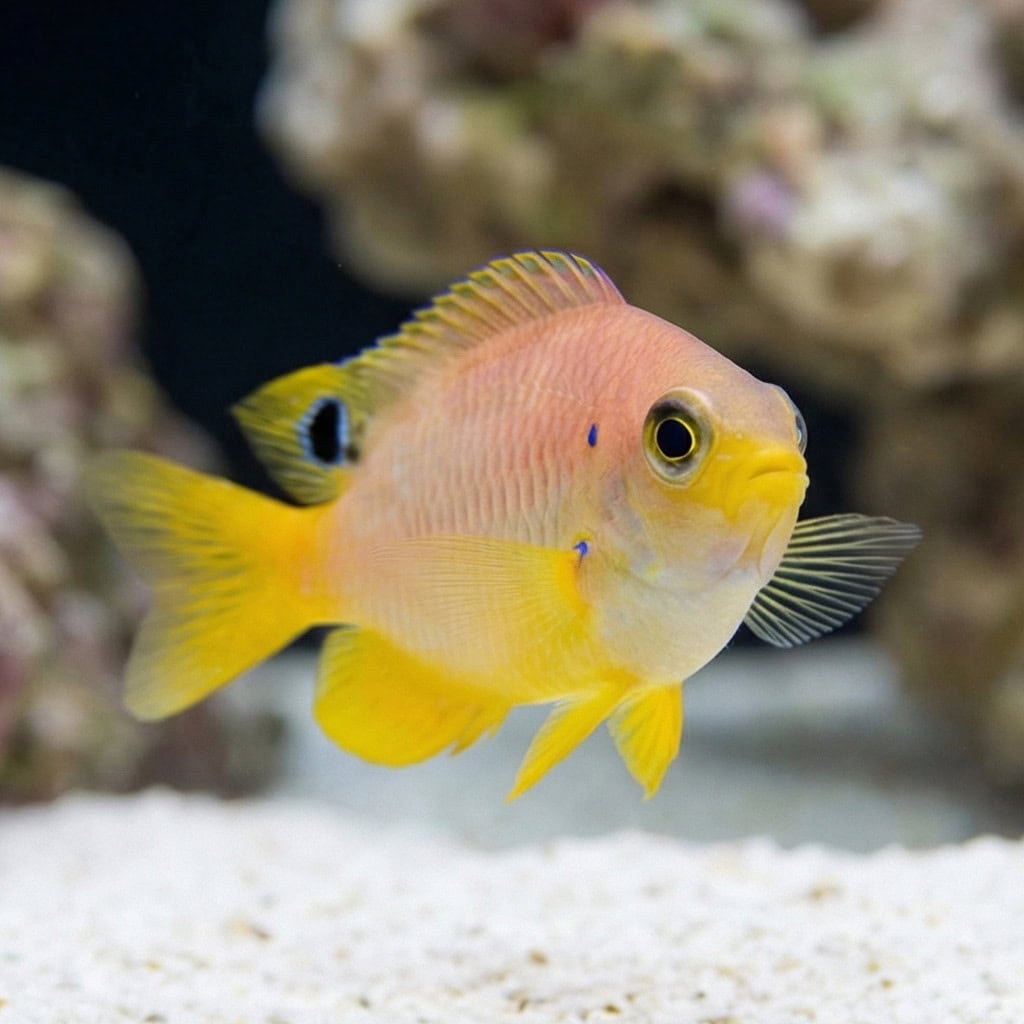
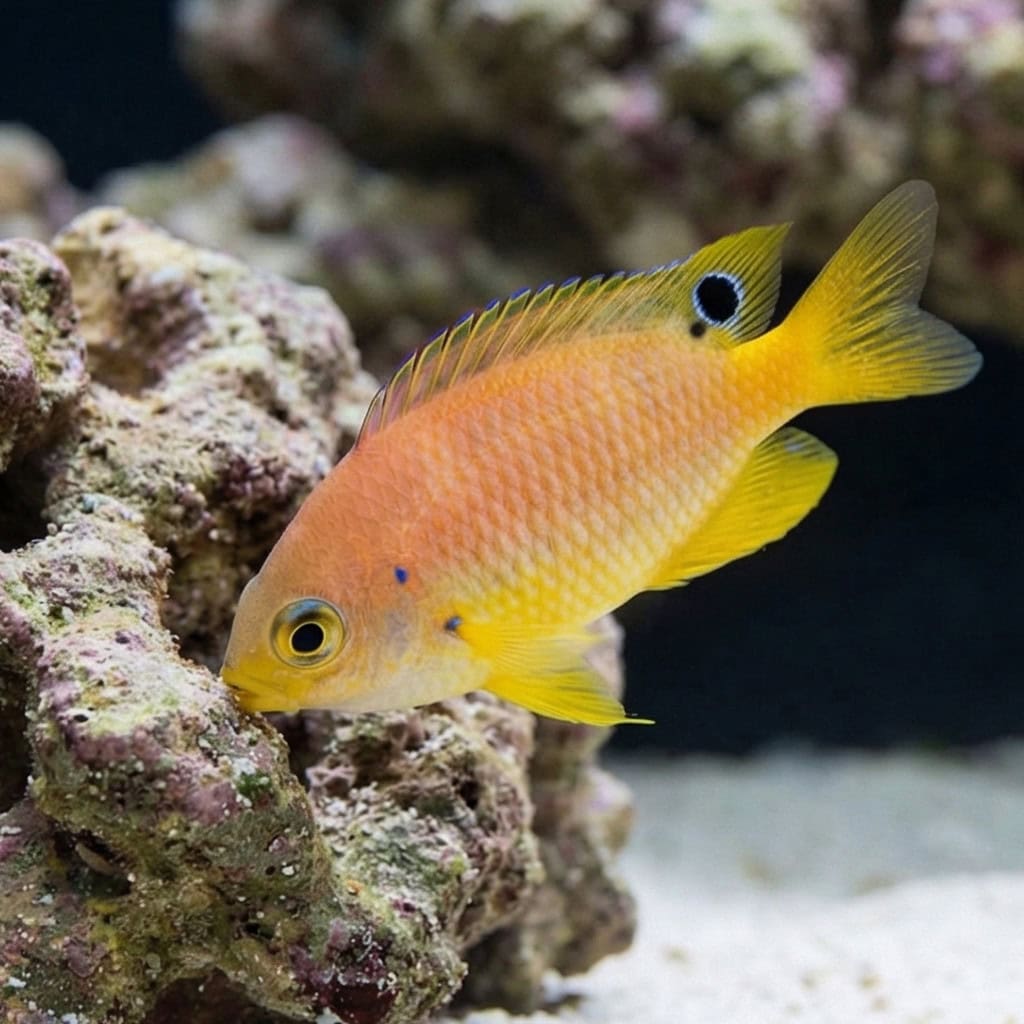
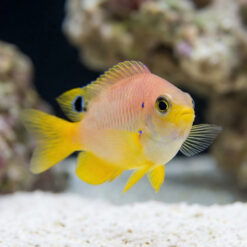
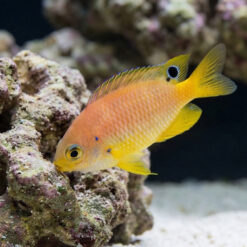
Ambon Damsel (Pomacentrus amboinensis) is a small, reef-associated damselfish from the Western Pacific that commonly shows a yellow-tan body with a dark mark near the base of the pectoral fin. Juveniles often display a false “eyespot” near the rear of the dorsal fin that may fade as the fish matures.
What You’ll Observe:
- Active daytime swimming with frequent stops to inspect rockwork and sand edges
- Regular “patrolling” of a chosen nook or ledge once it settles in
- Quick, confident feeding response in the water column
- Occasional sand-moving under rock ledges as it establishes a preferred resting or nest area
Provide multiple caves and branching rock structure so it can choose a home area without trying to control the entire aquascape. Offer a mixed diet of quality pellets or flakes plus frozen foods, and feed small portions consistently for best results. In community reefs, it does best when the aquascape creates clear “zones” so other fish can keep their own space.
Will the dorsal “eyespot” stay forever?
In many fish, the spot is most obvious when young and becomes less pronounced as the fish grows.
Why is it digging or moving sand under a rock?
Keepers often see them excavate a small spot under a ledge as they pick a home base and (in some cases) a nest site.
Can you keep a trio long-term?
Some hobbyists report a dominant fish forming while the others act more subordinate, especially as the group matures.
Why did it seem calm at first, then started chasing later?
It often becomes more territorial after it fully settles in and begins treating a specific rock area as “its” zone.
Why do some stores label these as a different damsel (like Talbot’s)?
Misidentification comes up fairly often in hobbyist discussions, so matching the fish’s markings and adult size expectations can help confirm what you have.
We work with trusted suppliers who keep our specimens healthy and well-fed before shipping.
Recently viewed products