
Asfur Angelfish
Pomacanthus asfur
Original price was: $834.99.$438.99Current price is: $438.99.
| Stock | Variations | Price | Quantity | |
|---|---|---|---|---|
| Out of Stock | 4.5 - 5.5" - Africa | Original price was: $858.99.$450.99Current price is: $450.99. | Email me | |
| Only 3 left | 3.75 - 4.5" - Africa | Original price was: $834.99.$438.99Current price is: $438.99. |
-
+
|
Every order ships with our standard 3-hour live arrival guarantee. Need more time? Add our 5-Day Guarantee at checkout.
Full guarantee terms →Ships Monday – Thursday for next-day arrival at your nearest FedEx Hold location — typically ready by 9 AM. We monitor every delivery.
Shipping details →
Monday – Friday 8 AM – 9 PM
Saturday 12 PM – 4 PM
Sunday 12 PM – 9 PM
Healthy, stable animals from vetted suppliers — inspected before packing, shipped overnight. Decades of experience built this model so we can deliver premium livestock at 30%+ less than you'd pay elsewhere.
| Care Level | Moderate |
|---|---|
| Temperament | Semi-Aggressive |
| Reef Safe | No |
| Functional Benefit | Ornamental Only |
| Diet Type | Omnivore |
| Mininum Tank Size | 250 gallons |
| Max Size | 18 inches |
| Temperature | 72–78°F |
| pH Range | 8.1–8.4 |
| Specific Gravity | 1.022–1.025 |
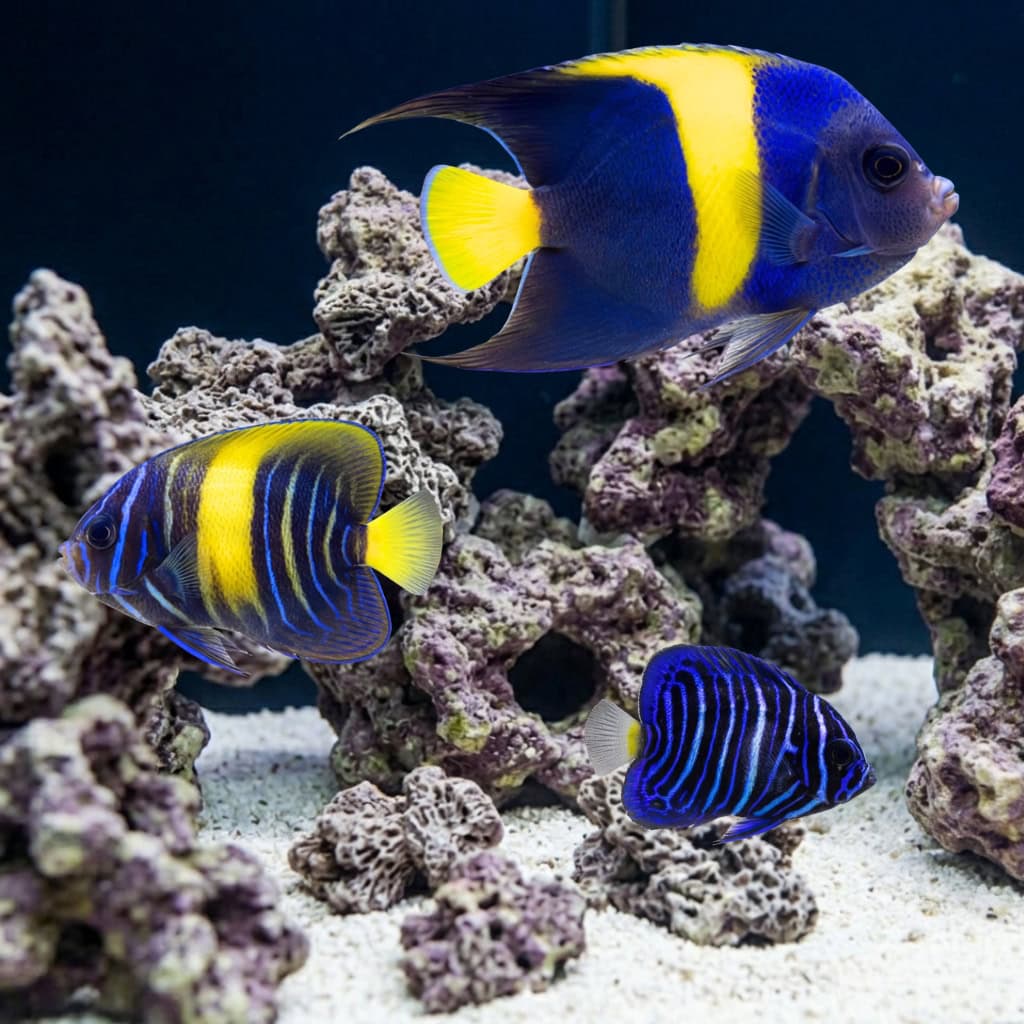
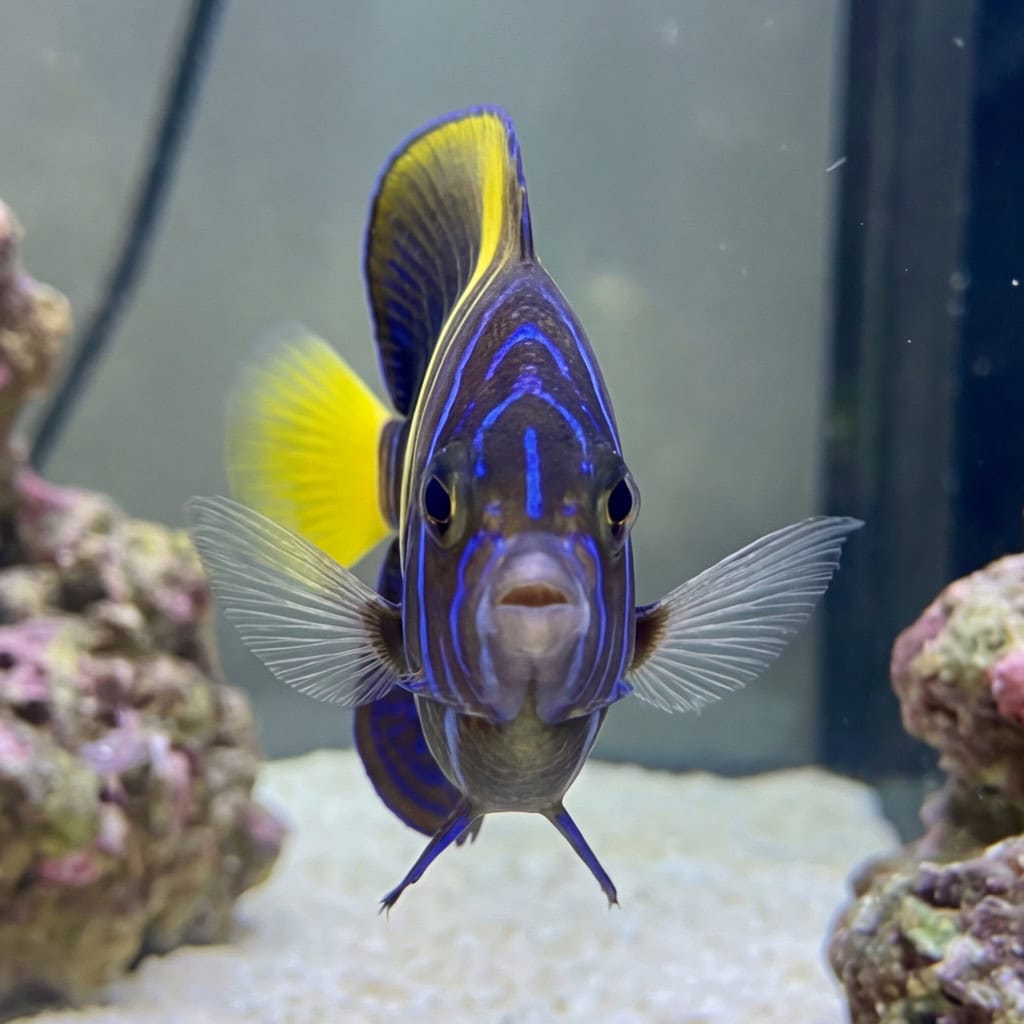
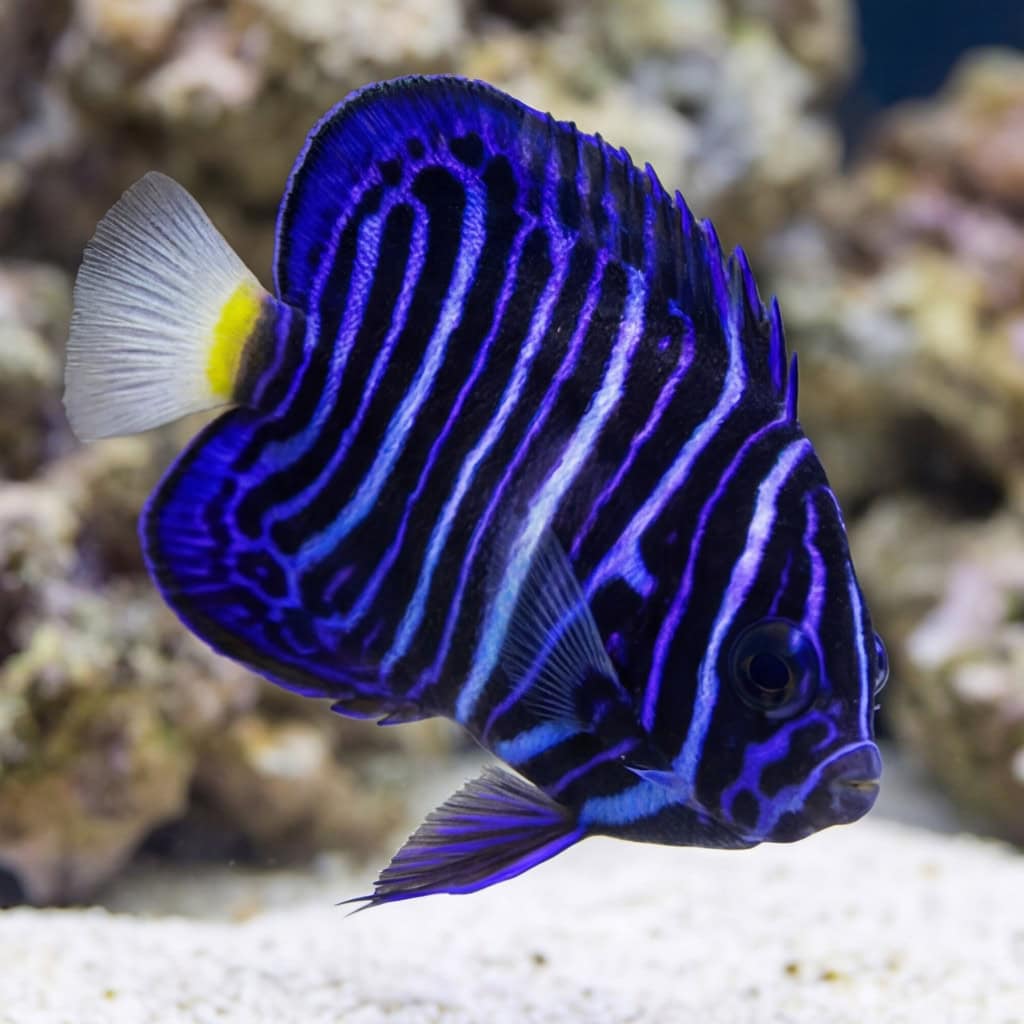
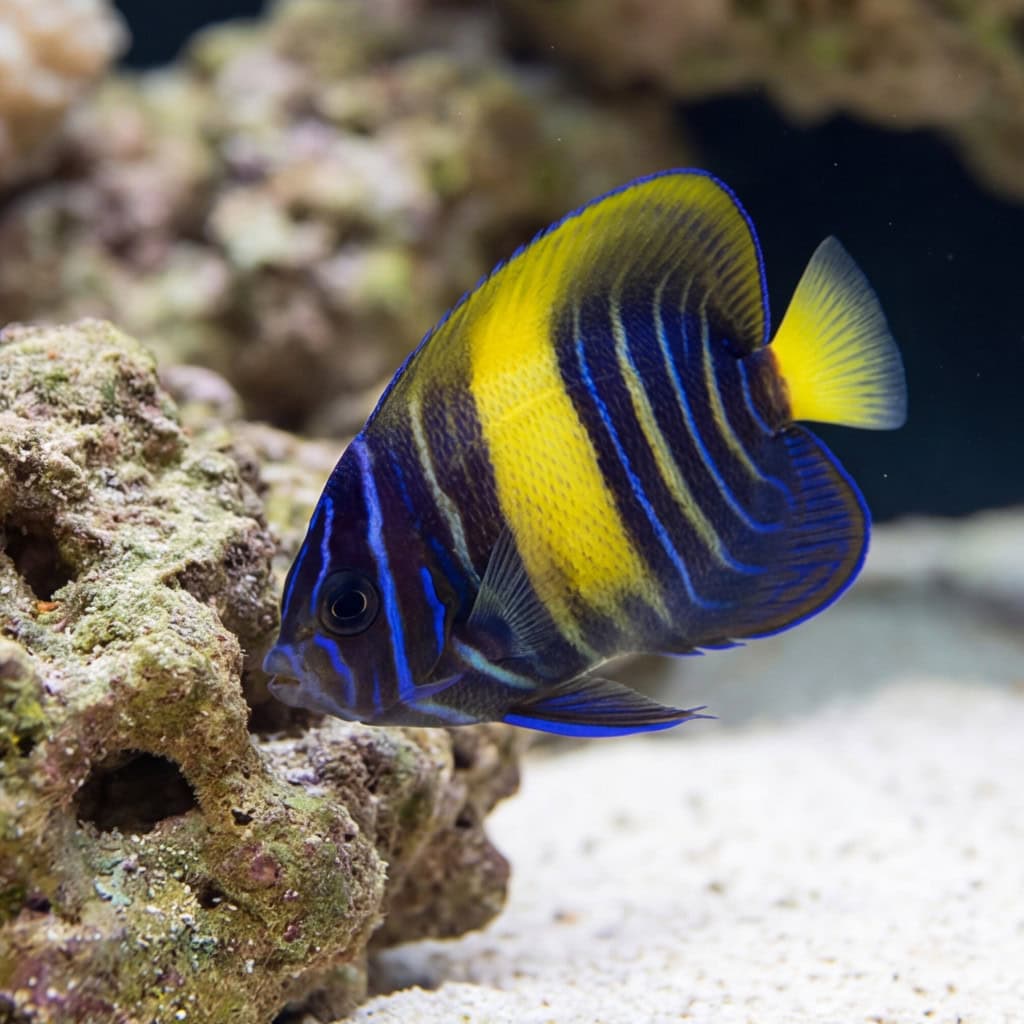
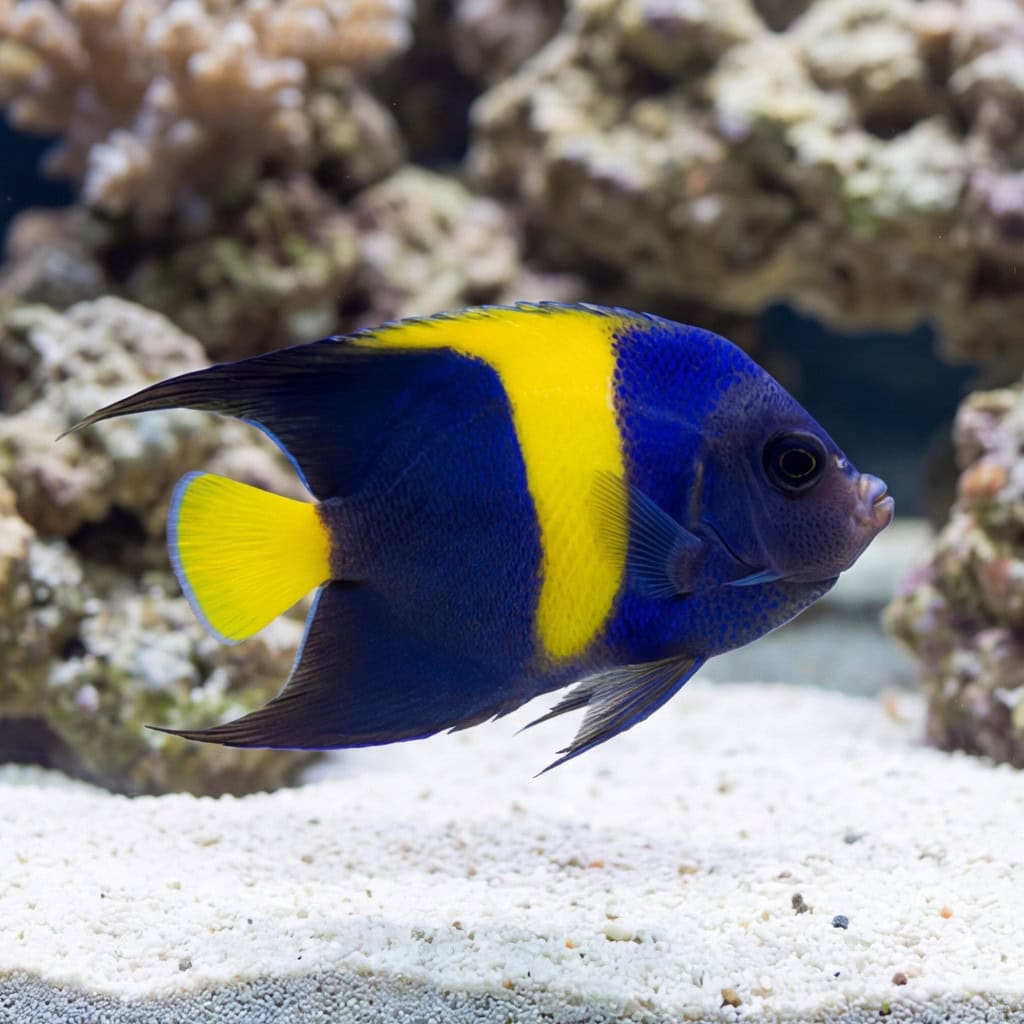
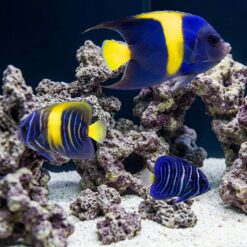
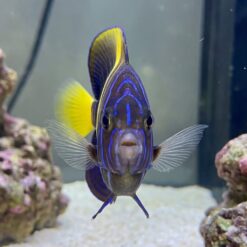
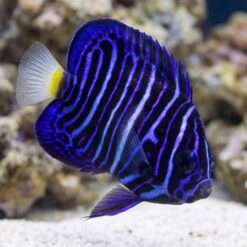
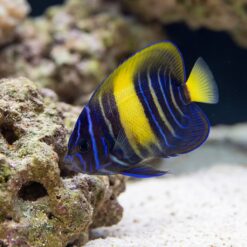
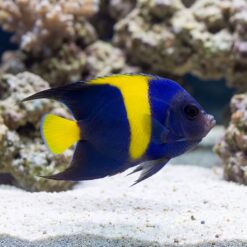
The Asfur Angelfish (Pomacanthus asfur) is a large Pomacanthus angelfish from the Red Sea and nearby western Indian Ocean reefs. Adults are deep blue to black with a broad yellow crescent across the body and a yellow tail, while juveniles show curved white-and-blue striping.
What You’ll Observe:
- Repeated “patrol loops” along rock faces, then returns to a preferred cave or ledge
- Regular picking at the rockwork between feedings, especially once it learns your schedule
- A mostly-solo centerpiece fish that holds to a main zone and inspects anything new in its area
- Strong interest in a mixed diet, including angelfish preparations and larger frozen foods
Provide open swimming room plus tall rockwork with caves so it can cruise and retreat between passes. Offer a varied omnivore menu—prepared angelfish foods that include sponge, plus nori/spirulina and meaty frozen foods—and feed multiple small meals daily for best consistency.
How long does it take for a juvenile to transition into adult coloration?
The change is gradual and often passes through “in-between” patterns as it grows, with the yellow areas becoming more defined over time.
Do Asfurs stay smaller in captivity or grow slowly?
Many long-term keepers describe them as relatively slow-growing compared with some other large angels, but it’s still best to plan around full adult potential.
Is it normal for an Asfur to spend a lot of time near one cave?
Yes—many individuals establish a favorite crevice or overhang and make short circuits that start and end at that “home base,” especially once they settle in.
Can an Asfur be kept with other large angelfish?
In very large systems, hobbyists often report success by introducing at similar size and giving each fish its own rock structure to orient around; using an acclimation box early on is a common method.
Will an Asfur eat Majanos or other pest anemones?
Some reef keepers try them with that goal, but interest varies by individual—when it happens, it typically shows up as opportunistic grazing during rockwork patrols.
Our selection process means you get robust, well-adjusted specimens that settle in quickly.
Only logged in customers who have purchased this product may leave a review.
Recently viewed products
Reviews
There are no reviews yet.