
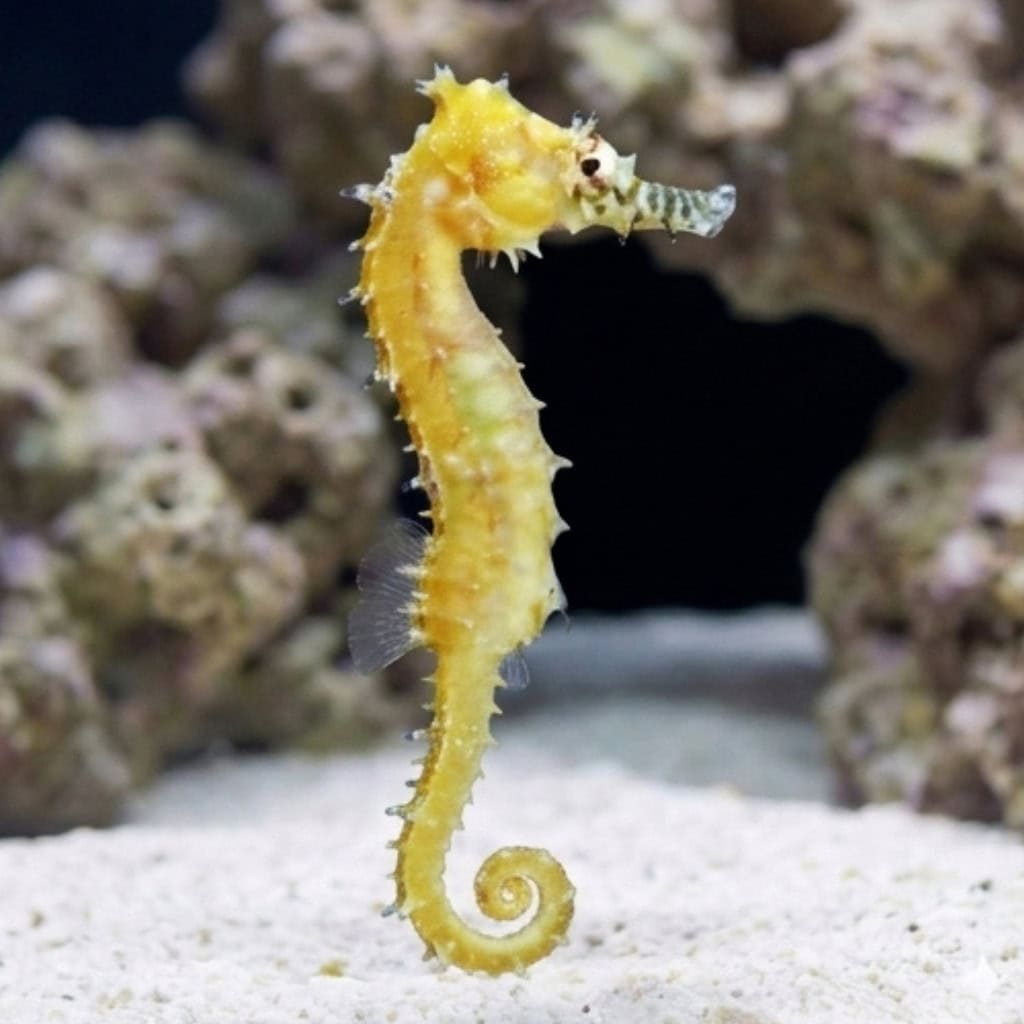
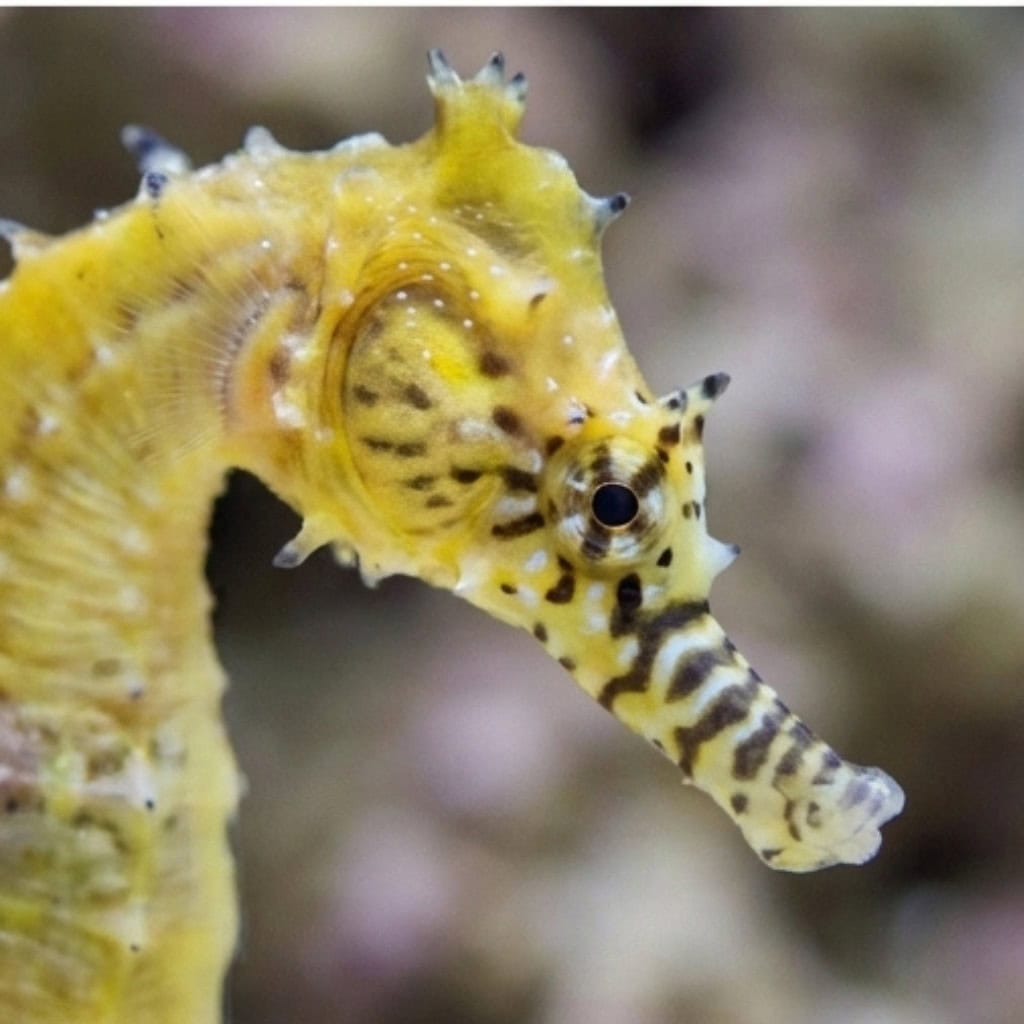
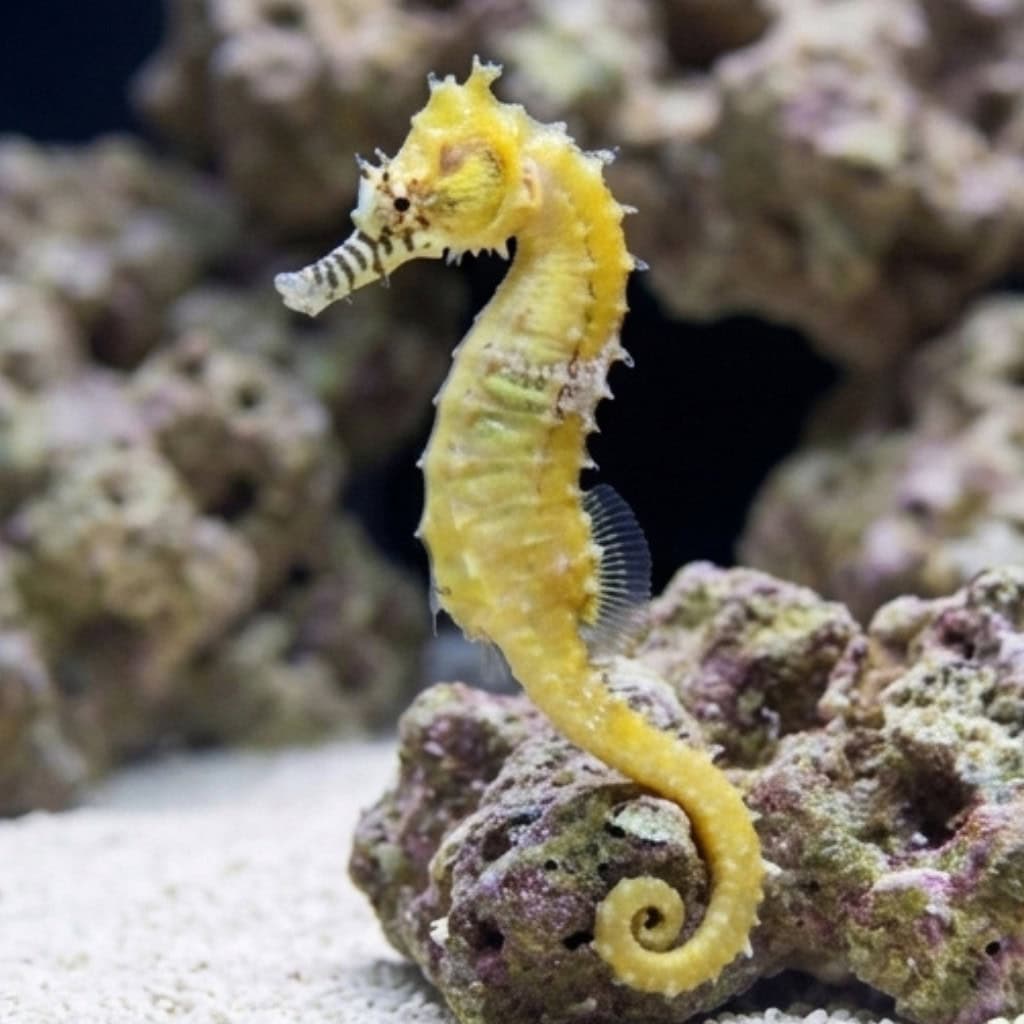
Barbouri Seahorse
Hippocampus barbouri
| Stock | Variations | Price | Quantity | |
|---|---|---|---|---|
| Out of Stock | 2.25 - 3.25" - Captive Bred - Australia | Original price was: $381.99.$200.99Current price is: $200.99. | Email me |
Every order ships with our standard 3-hour live arrival guarantee. Need more time? Add our 5-Day Guarantee at checkout.
Full guarantee terms →Ships Monday – Thursday for next-day arrival at your nearest FedEx Hold location — typically ready by 9 AM. We monitor every delivery.
Shipping details →
Monday – Friday 8 AM – 9 PM
Saturday 12 PM – 4 PM
Sunday 12 PM – 9 PM
Healthy, stable animals from vetted suppliers — inspected before packing, shipped overnight. Decades of experience built this model so we can deliver premium livestock at 30%+ less than you'd pay elsewhere.
| Care Level | Expert |
|---|---|
| Temperament | Peaceful |
| Reef Safe | Yes |
| Functional Benefit | Ornamental Only |
| Diet Type | Carnivore |
| Mininum Tank Size | 30 gallons |
| Max Size | 8 inches |
| Temperature | 72–78°F |
| pH Range | 8.1–8.4 |
| Specific Gravity | 1.022–1.025 |
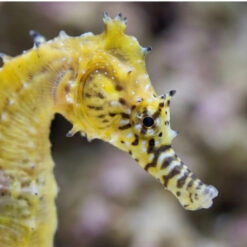
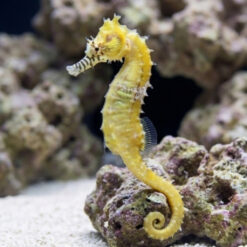
Barbouri Seahorse (Hippocampus barbouri) is a reef-associated seahorse known for a naturally yellow body, a zebra-striped snout, and a textured, spined look that stands out in a seahorse tank. In the wild it’s found around Indonesia, Malaysia, and the Philippines, where it spends its time hitched to grasses and roots rather than cruising open water.
What You’ll Observe:
- Long “perch-and-hunt” sessions’staying hitched in one spot, then snapping up passing food with quick strikes
- A consistent preference for hitching posts (macroalgae, artificial plants, or gorgonians) as favorite “stations” in the aquascape
- Noticeable routine around feeding time, including learning to check a feeding dish/feeding station once established
- Occasional “riding” gentle flow to move across the tank, then returning to a perch
To succeed with this species, provide a calm layout with plenty of secure hitching points and protected intakes on pumps/powerheads. Offer small meaty foods like mysis in multiple small feedings each day, and many keepers simplify cleanup by using a feeding dish and briefly reducing flow during meals. Maintain stable reef parameters and enough vertical room for natural upright swimming and displays.
Will it eat from a feeding dish, or does it need food scattered in the tank?
Many keepers start by offering mysis in a consistent spot, and the seahorse learns the routine. A dish also helps you remove leftovers more easily after feeding.
What kinds of hitching posts work best long-term?
Soft macroalgae, artificial plants, and non-stinging gorgonians are commonly used so the tail can wrap securely. The main goal is lots of “grabbable” structure at different heights.
Is it normal for a seahorse to ignore food for a bit, then suddenly start hunting hard?
Yes’keepers often describe a delay where the seahorse watches first, then switches into active hunting once it recognizes the food is available. Consistent timing helps build that pattern.
Do they actually like any water movement, or should the tank be almost still?
Most seahorse tanks aim for gentle, predictable flow patterns rather than blasting current. Some keepers observe them using mild output flow to “glide,” then returning to a perch.
Can a macroalgae/gorgonian-style display tank work well for seahorses?
Many hobbyists build macroalgae-focused systems specifically for the added structure and perching options. These setups also make it easier to design calm zones where the seahorses spend most of their day.
Each fish is checked for strong appetite and activity before we approve it for your tank.
Recently viewed products