
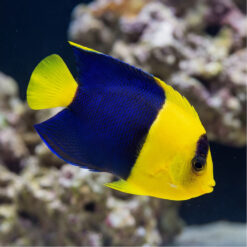
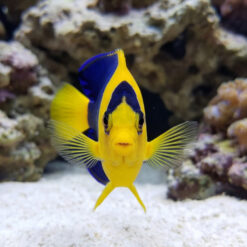
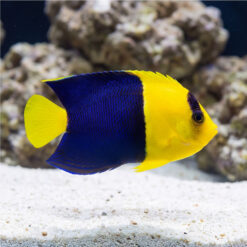
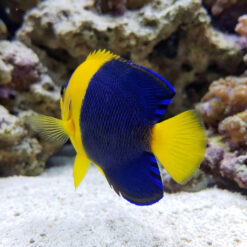
Bicolor Angelfish
Centropyge bicolor
Price range: $44.99 through $46.99
| Stock | Variations | Price | Quantity | |
|---|---|---|---|---|
| Out of Stock | 3 - 4" - Central Pacific | Original price was: $92.99.$48.99Current price is: $48.99. | Email me | |
| In Stock | 2 - 3" - Central Pacific | Original price was: $88.99.$46.99Current price is: $46.99. |
-
+
|
|
| Out of Stock | 2" or smaller - Central Pacific | Original price was: $84.99.$44.99Current price is: $44.99. | Email me | |
| Out of Stock | 2 - 3" - Indo-Pacific | Original price was: $122.99.$64.99Current price is: $64.99. | Email me | |
| Out of Stock | 2" or smaller - Indo-Pacific | Original price was: $107.99.$56.99Current price is: $56.99. | Email me | |
| Only 4 left | 3 - 4" - SSC Certified - Central Pacific | Original price was: $88.99.$46.99Current price is: $46.99. |
-
+
|
|
| In Stock | 2 - 3" - SSC Certified - Central Pacific | Original price was: $84.99.$44.99Current price is: $44.99. |
-
+
|
|
| In Stock | 2" or smaller - SSC Certified - Central Pacific | Original price was: $84.99.$44.99Current price is: $44.99. |
-
+
|
Every order ships with our standard 3-hour live arrival guarantee. Need more time? Add our 5-Day Guarantee at checkout.
Full guarantee terms →Ships Monday – Thursday for next-day arrival at your nearest FedEx Hold location — typically ready by 9 AM. We monitor every delivery.
Shipping details →
Monday – Friday 8 AM – 9 PM
Saturday 12 PM – 4 PM
Sunday 12 PM – 9 PM
Healthy, stable animals from vetted suppliers — inspected before packing, shipped overnight. Decades of experience built this model so we can deliver premium livestock at 30%+ less than you'd pay elsewhere.
| Care Level | Moderate |
|---|---|
| Temperament | Semi-Aggressive |
| Reef Safe | With Caution |
| Functional Benefit | Algae Control |
| Diet Type | Omnivore |
| Mininum Tank Size | 70 gallons |
| Max Size | 6 inches |
| Temperature | 72–78°F |
| pH Range | 8.1–8.4 |
| Specific Gravity | 1.022–1.025 |
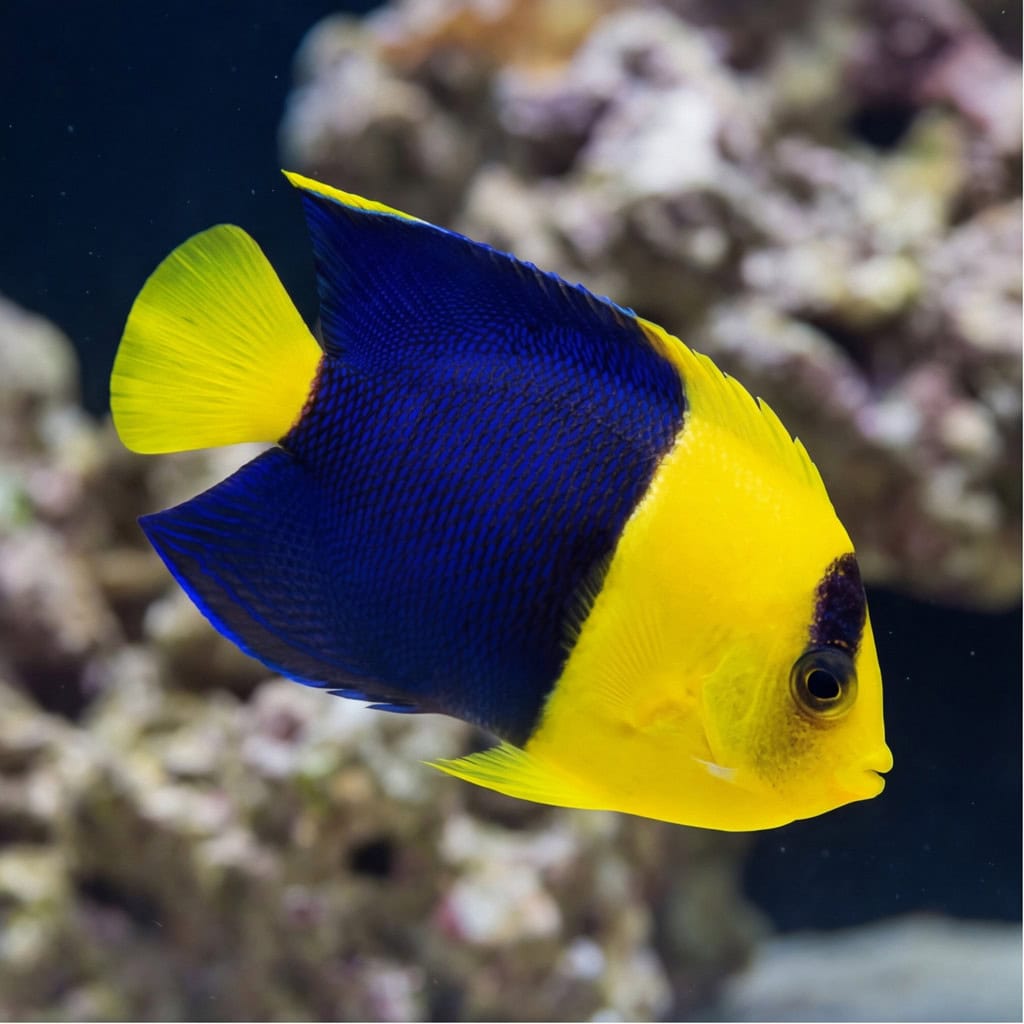
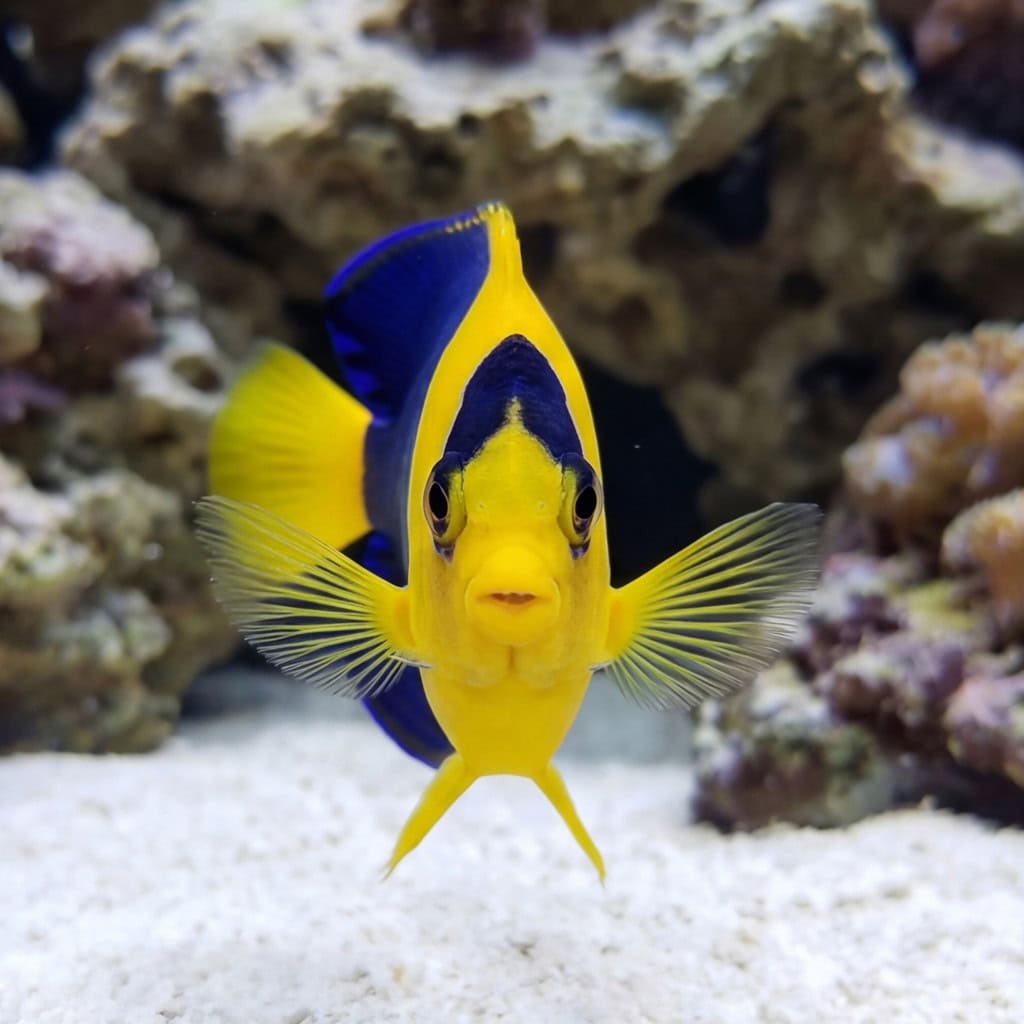
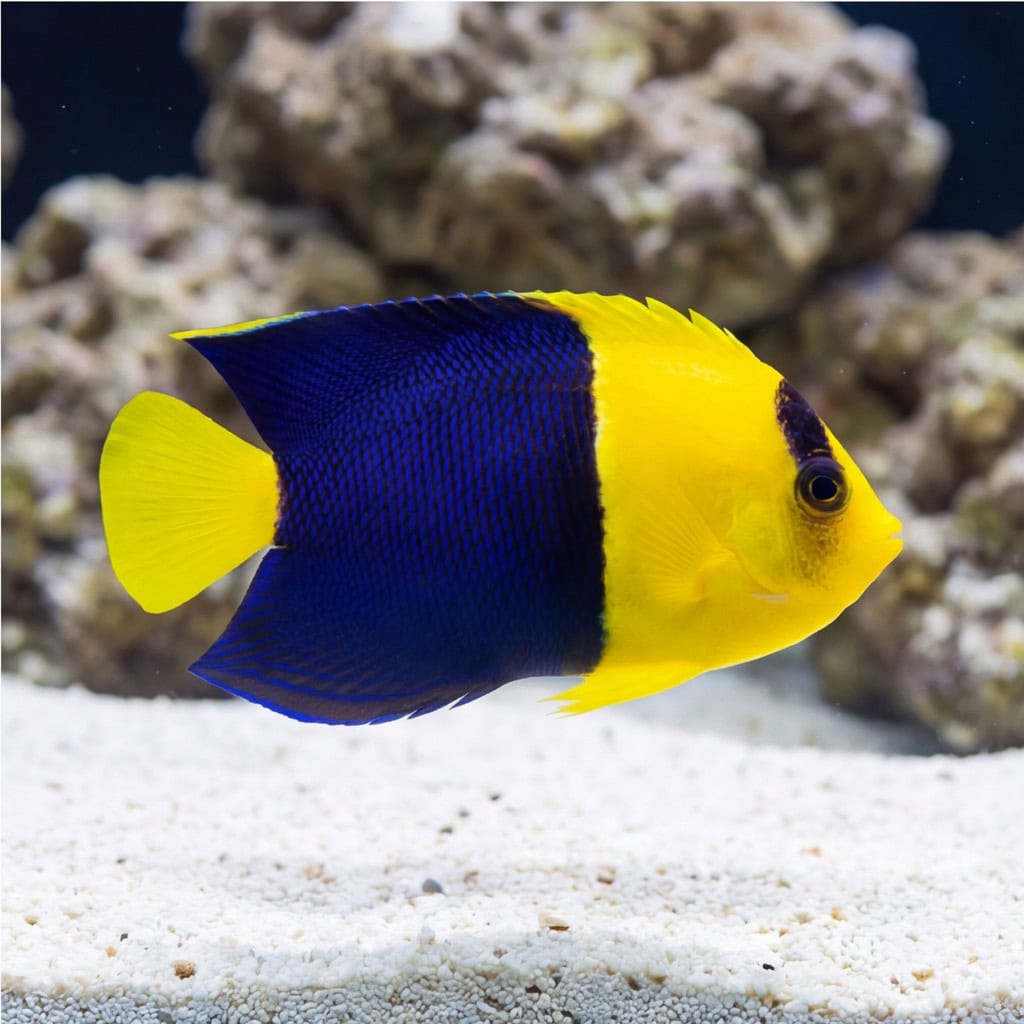
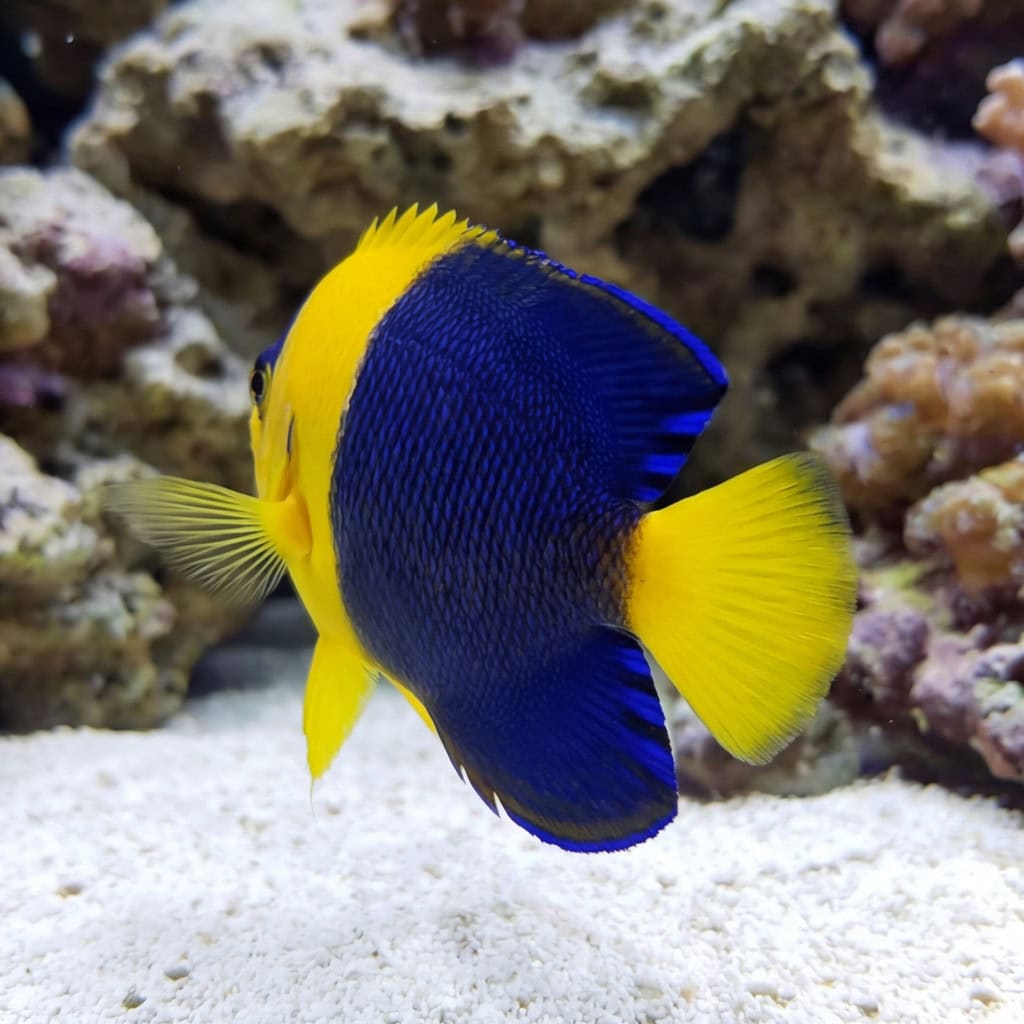
The Bicolor Angelfish (Centropyge bicolor) is an active dwarf angelfish that spends the day grazing rock surfaces and picking at natural growth between feedings. It has a sharp two-tone look—yellow across the head and tail, with deep blue across the back half—and comes from Indo-Pacific reef zones.
What You’ll Observe:
- Short “patrol laps” around favorite rockwork routes
- Quick darts in and out of caves while it explores
- Frequent grazing on film algae and biofilm on live rock
- A steady, confident presence in the mid-to-lower rockwork zones
Provide a mature aquarium with plenty of live rock, crevices, and open swim space; a larger setup supports more natural grazing behavior and helps the fish settle into a routine. Offer a varied omnivore menu (marine algae/spirulina, quality angelfish foods that include sponge matter, plus mysis and other meaty items) fed 2–3 times daily.
Is it normal for a Bicolor Angelfish to have two orange spots on its sides?
Many keepers report those orange “shoulder” spots as part of the normal pattern, and they can be more noticeable depending on lighting and angle.
How long does it take for a new Bicolor Angelfish to start doing “patrol laps” in the open?
A common pattern is spending extra time in the rockwork at first, then gradually expanding its loop as it learns the tank’s caves and feeding schedule.
Will a Bicolor Angelfish help with Asterina starfish?
Some hobbyists report their bicolor picking at small starfish, but it’s best viewed as an occasional bonus rather than a guaranteed solution.
Do they do better with nori on a clip, or only prepared frozen foods?
Many keepers have the best consistency when they offer both: a daily algae option to graze plus mixed frozen/prepared foods at feeding time.
Can you keep two Bicolor Angelfish together long-term?
Some aquarists report better results when angels are introduced at the same time into a spacious, rockwork-rich aquarium, especially if they’re an established pair or closely matched.
Each fish is checked for strong appetite and activity before we approve it for your tank.
Recently viewed products