
Black-Backed Wrasse
Anampses neoguinaicus
| Stock | Variations | Price | Quantity | |
|---|---|---|---|---|
| Out of Stock | 2.75 - 3.75" - Central Pacific | Original price was: $119.99.$62.99Current price is: $62.99. | Email me | |
| Out of Stock | 2.75 - 3.75" - Indo-Pacific | Original price was: $98.99.$51.99Current price is: $51.99. | Email me | |
| Out of Stock | 3.75 - 4.5" - Indo-Pacific | Original price was: $107.99.$56.99Current price is: $56.99. | Email me | |
| Out of Stock | 1.25 - 1.75" - Indo-Pacific | Original price was: $88.99.$46.99Current price is: $46.99. | Email me | |
| Out of Stock | 1.75 - 2.75" - Indo-Pacific | Original price was: $93.99.$48.99Current price is: $48.99. | Email me | |
| Out of Stock | 2.75 - 3.75" - SSC Certified - Central Pacific | Original price was: $119.99.$62.99Current price is: $62.99. | Email me |
Every order ships with our standard 3-hour live arrival guarantee. Need more time? Add our 5-Day Guarantee at checkout.
Full guarantee terms →Ships Monday – Thursday for next-day arrival at your nearest FedEx Hold location — typically ready by 9 AM. We monitor every delivery.
Shipping details →
Monday – Friday 8 AM – 9 PM
Saturday 12 PM – 4 PM
Sunday 12 PM – 9 PM
Healthy, stable animals from vetted suppliers — inspected before packing, shipped overnight. Decades of experience built this model so we can deliver premium livestock at 30%+ less than you'd pay elsewhere.
| Care Level | Expert |
|---|---|
| Temperament | Semi-Aggressive |
| Reef Safe | With Caution |
| Functional Benefit | Ornamental Only |
| Diet Type | Carnivore |
| Mininum Tank Size | 90 gallons |
| Max Size | 8 inches |
| Temperature | 72–78°F |
| pH Range | 8.1–8.4 |
| Specific Gravity | 1.022–1.025 |
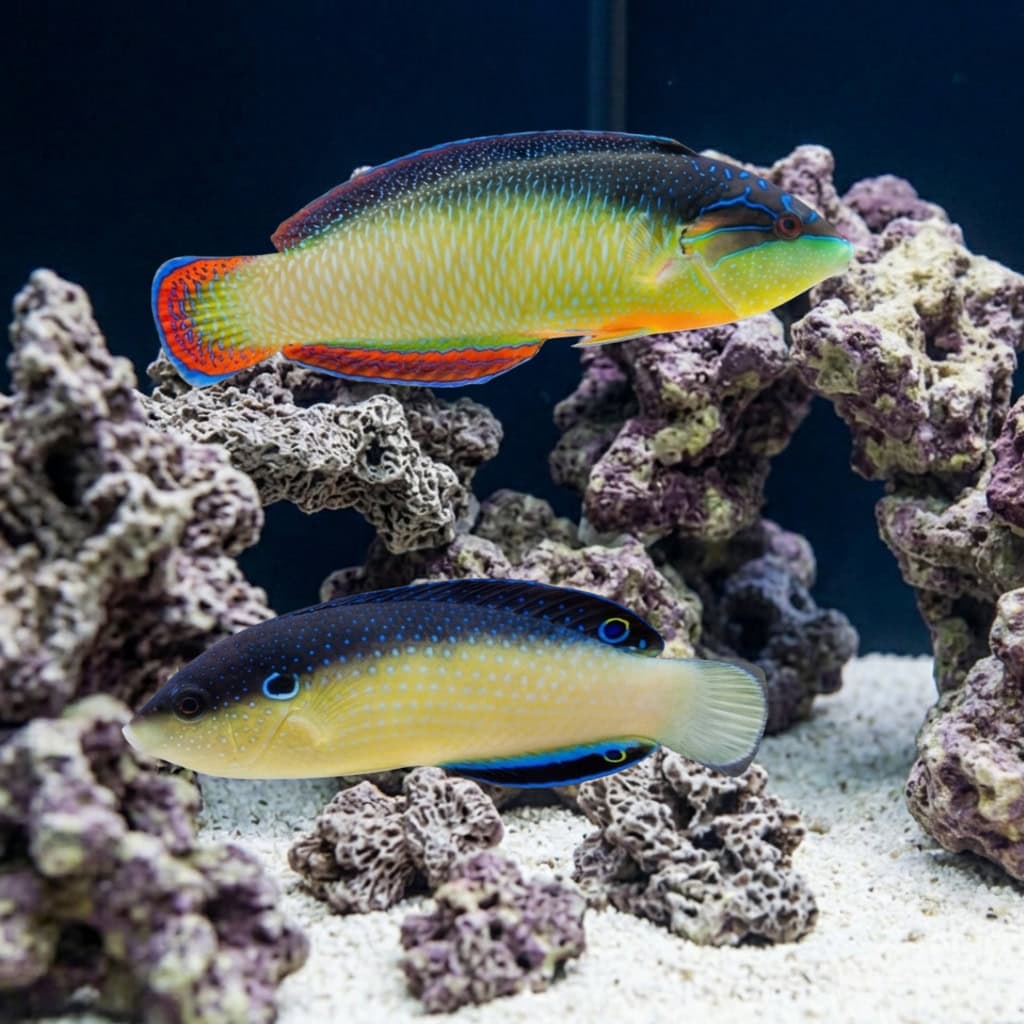
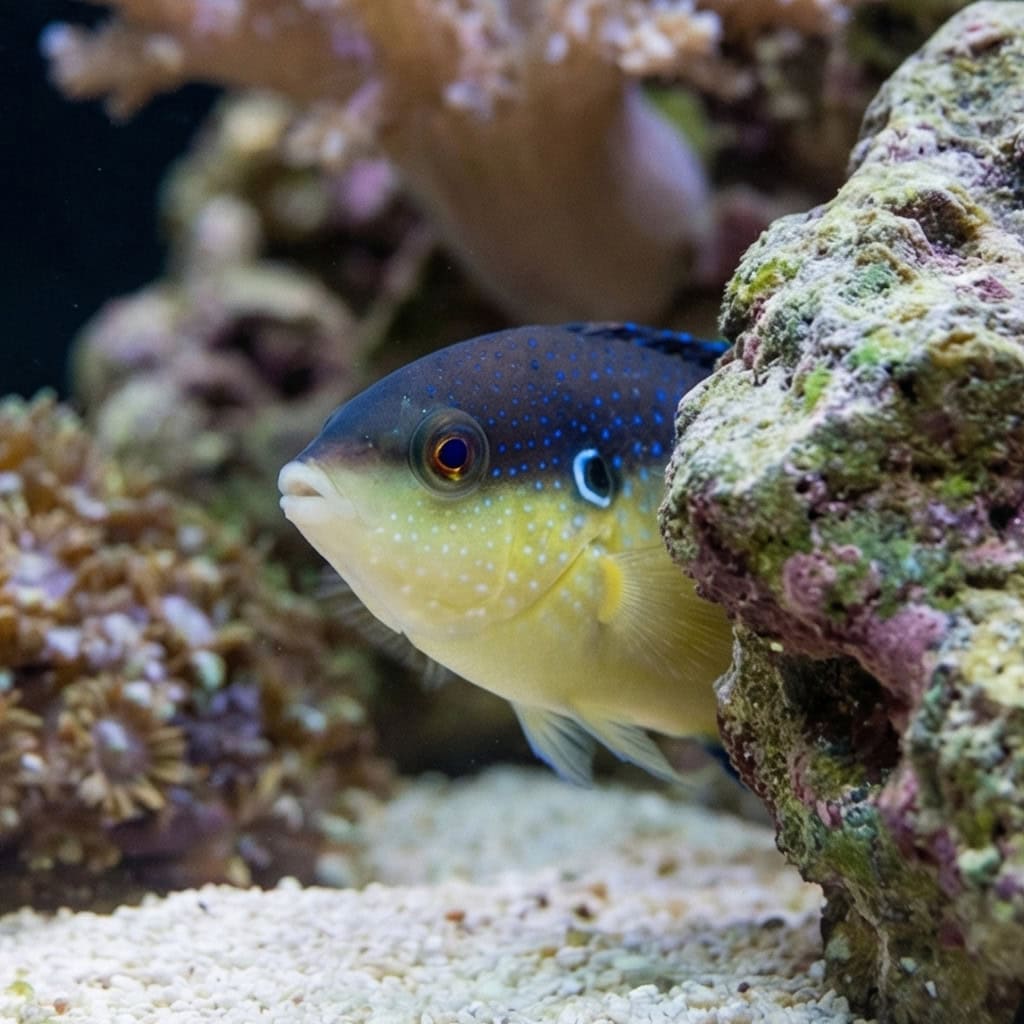
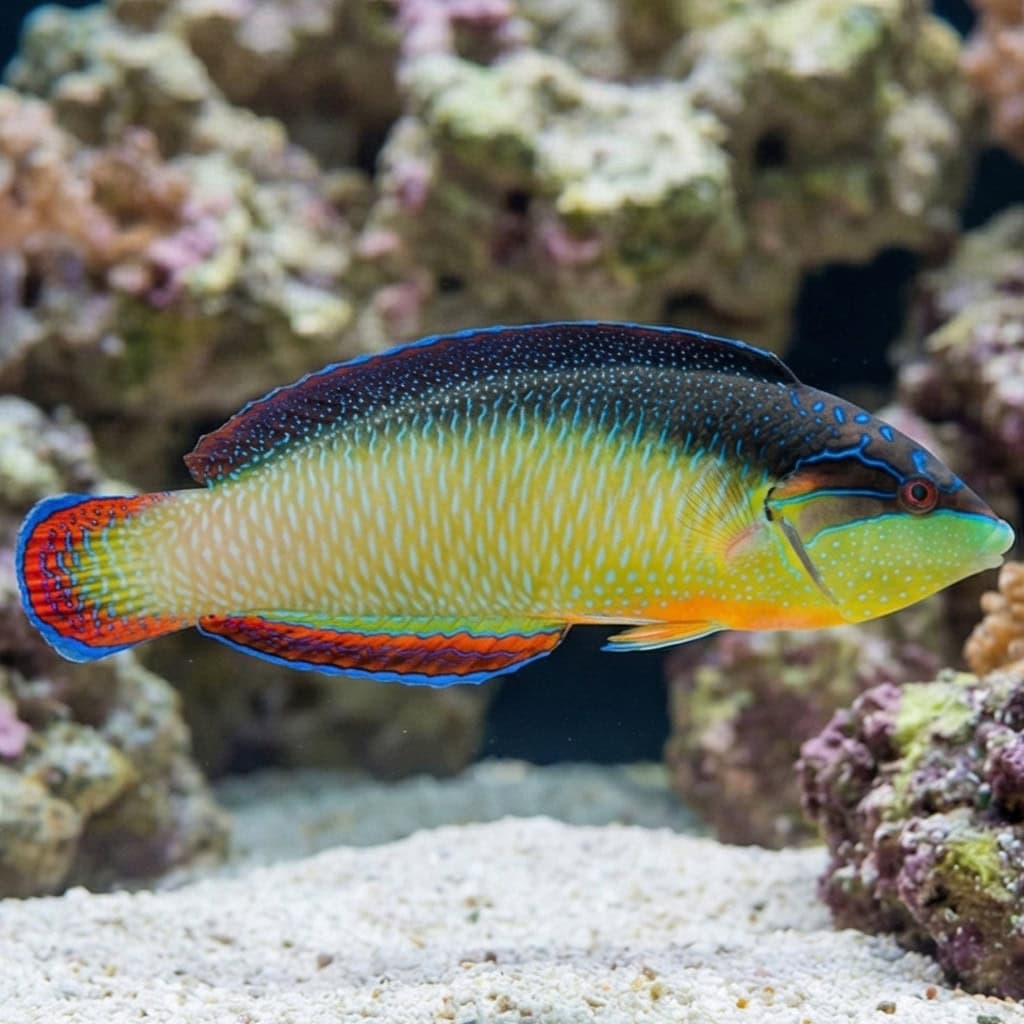
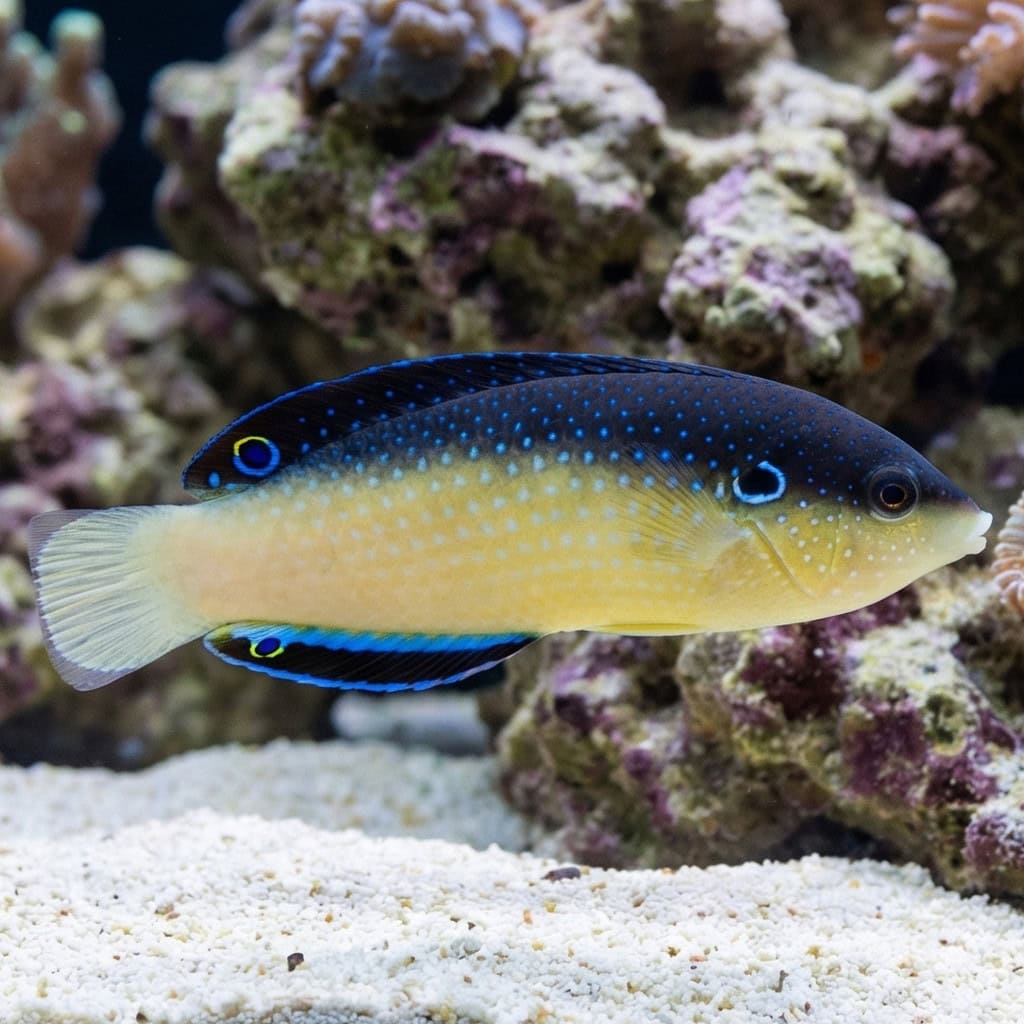
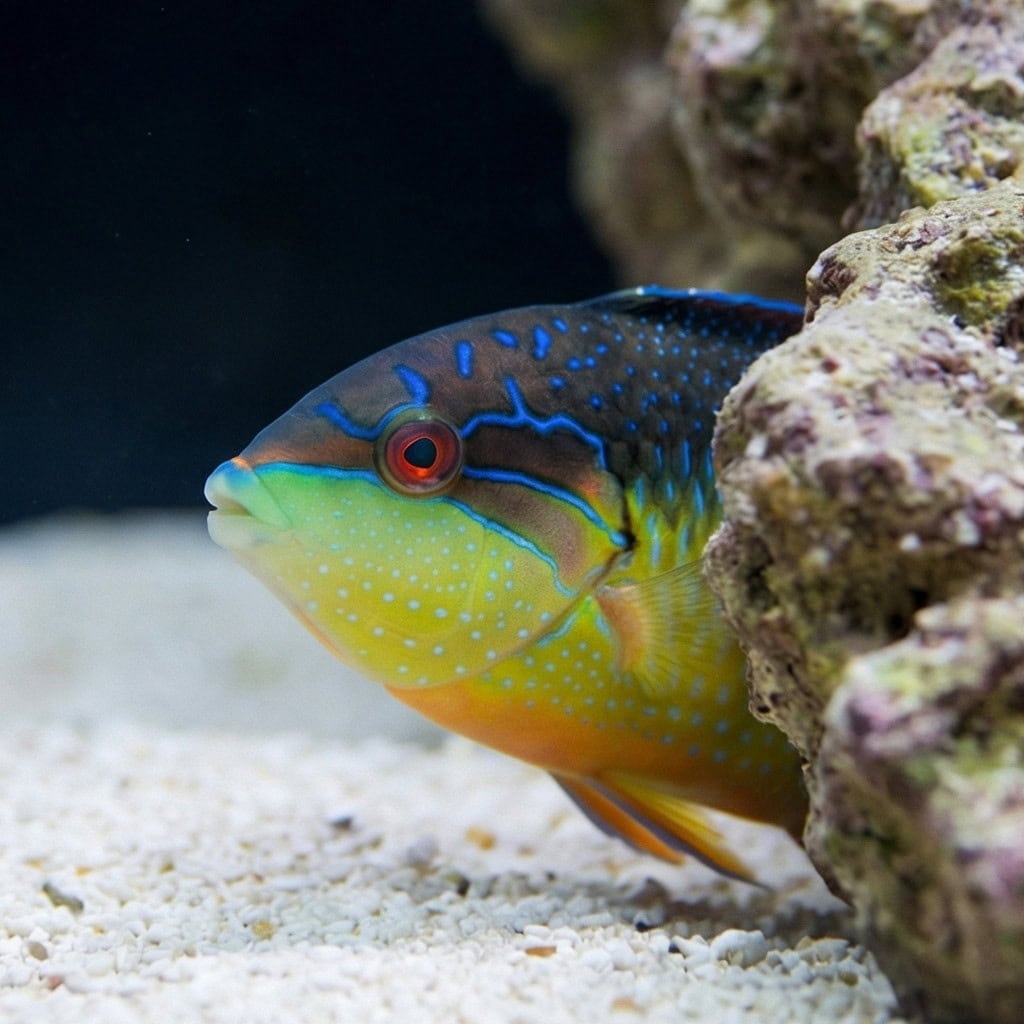
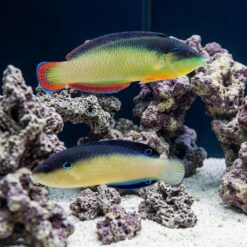
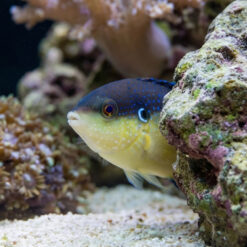
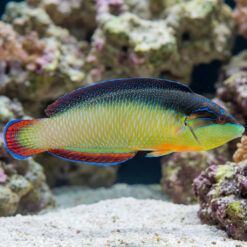
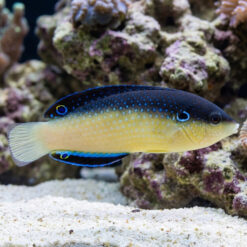
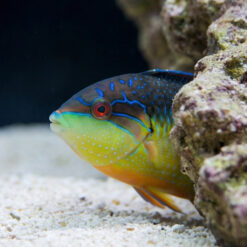
The Black-Backed Wrasse (Anampses neoguinaicus)—often listed as the New Guinea or China wrasse—has a dark “cap” along the back over a lighter body with fine spotting. Juveniles and females commonly show small eye-spots near the rear of the dorsal and anal fins.
What You’ll Observe:
- Daytime cruising along rockwork and the sand line, with frequent “pecking” at tiny items on surfaces
- A consistent sand-diving routine at lights-out, then reappearing after the tank settles
- A clear foraging pattern that continues even after it learns your feeding schedule
- More confident, regular midwater laps once it establishes a preferred sleeping spot
To succeed long-term, provide a mature reef with plenty of live rock plus an open area of fine sand (about 2 inches deep) for nightly burrowing. Offer small meaty foods in several small feedings each day, and use a tight-fitting lid. Does best when tankmates give it space during feeding so it can settle into a steady routine.
Why does it “disappear” for hours (or even a day) after introduction?
It’s common for this species to use the sandbed as a primary shelter. Many keepers report it becomes more consistently visible once it locks in a predictable lights-out sleeping pattern.
If it’s picking at rocks and sand constantly, is it actually eating?
That steady picking is typical foraging behavior. Once it starts recognizing broadcast feeding, it often keeps grazing between meals as part of its normal routine.
Do they usually accept frozen and pellet foods right away?
Some individuals transition quickly, while others take a longer “settling-in” window and start by sampling small frozen items first. Keepers often see the first clear, repeatable feeding response develop over the first week or two.
How do they act toward other wrasses over time?
Reports commonly mention best results when it’s not forced to compete closely for the same sleeping/foraging zones. In mixed-wrasse tanks, giving each fish distinct rockwork “lanes” tends to produce calmer day-to-day behavior.
Will it ever bother corals or clams even if it seems fine at first?
Most observations focus on it hunting small invertebrate foods, but some keepers report occasional interest in clam mantles or coral tissue that can show up later. Many hobbyists respond by keeping feeding frequent and consistent so its attention stays on available foods in the water column.
Shipped with pure oxygen and temperature control so it arrives stress-free and ready to eat.
Recently viewed products