
Black (Grey) Angelfish
Pomacanthus arcuatus
| Stock | Variations | Price | Quantity |
|---|
Every order ships with our standard 3-hour live arrival guarantee. Need more time? Add our 5-Day Guarantee at checkout.
Full guarantee terms →Ships Monday – Thursday for next-day arrival at your nearest FedEx Hold location — typically ready by 9 AM. We monitor every delivery.
Shipping details →
Monday – Friday 8 AM – 9 PM
Saturday 12 PM – 4 PM
Sunday 12 PM – 9 PM
Healthy, stable animals from vetted suppliers — inspected before packing, shipped overnight. Decades of experience built this model so we can deliver premium livestock at 30%+ less than you'd pay elsewhere.
| Care Level | Moderate |
|---|---|
| Temperament | Semi-Aggressive |
| Reef Safe | No |
| Functional Benefit | Ornamental Only |
| Diet Type | Omnivore |
| Mininum Tank Size | 250 gallons |
| Max Size | 24 inches |
| Temperature | 72–78°F |
| pH Range | 8.1–8.4 |
| Specific Gravity | 1.022–1.025 |
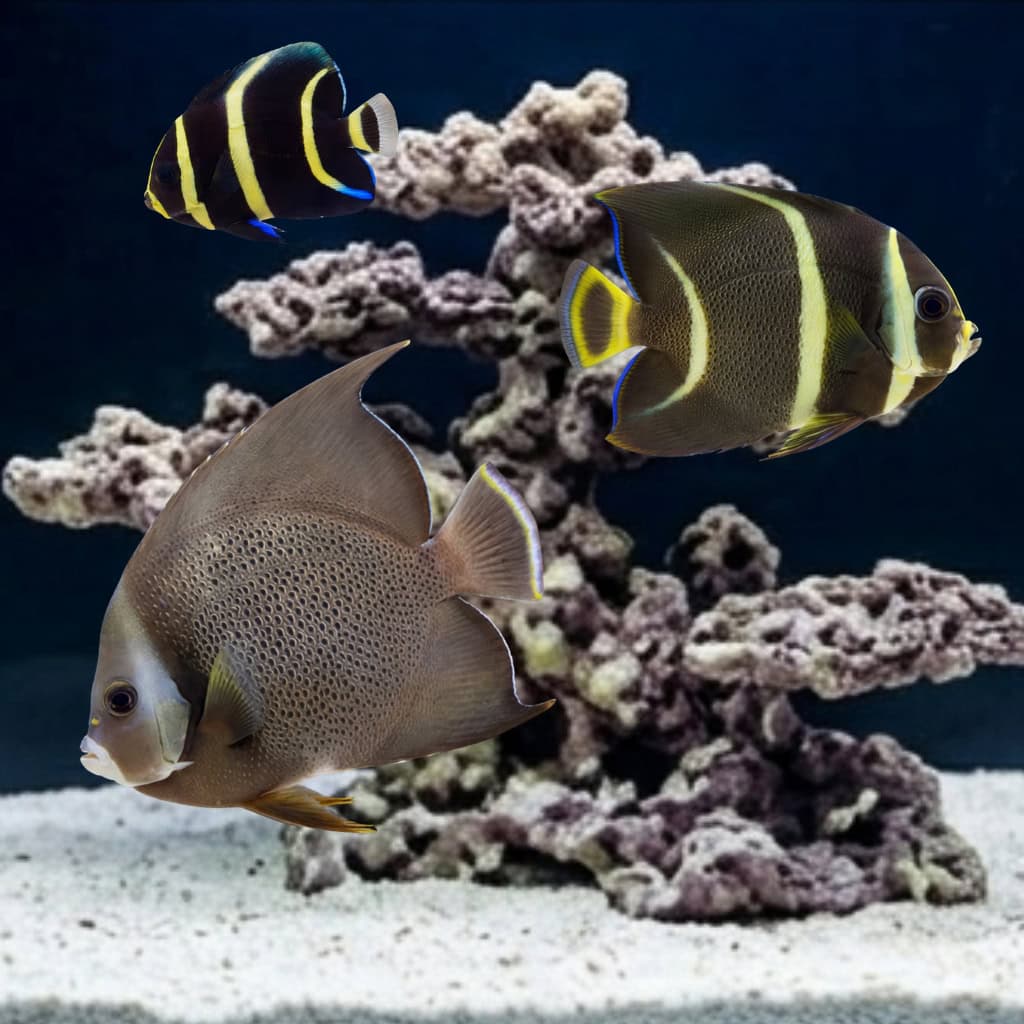
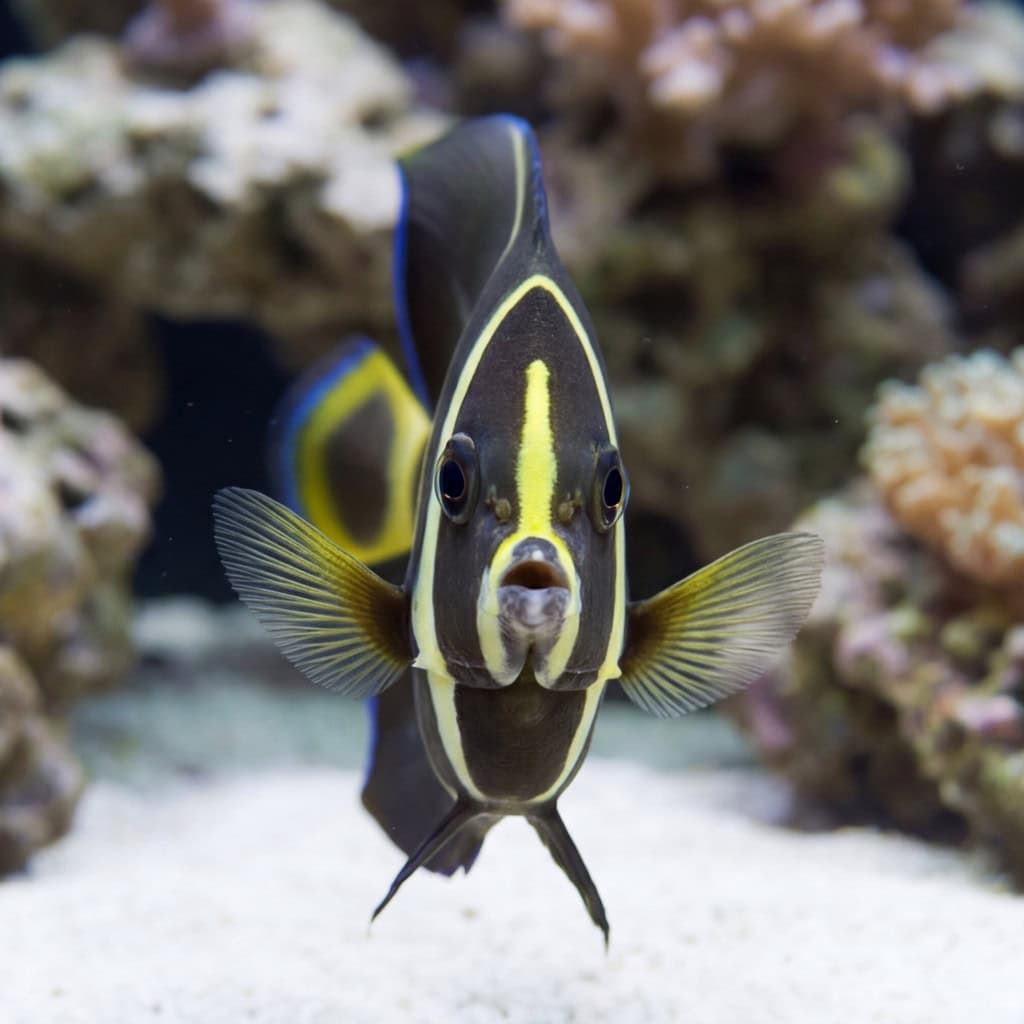
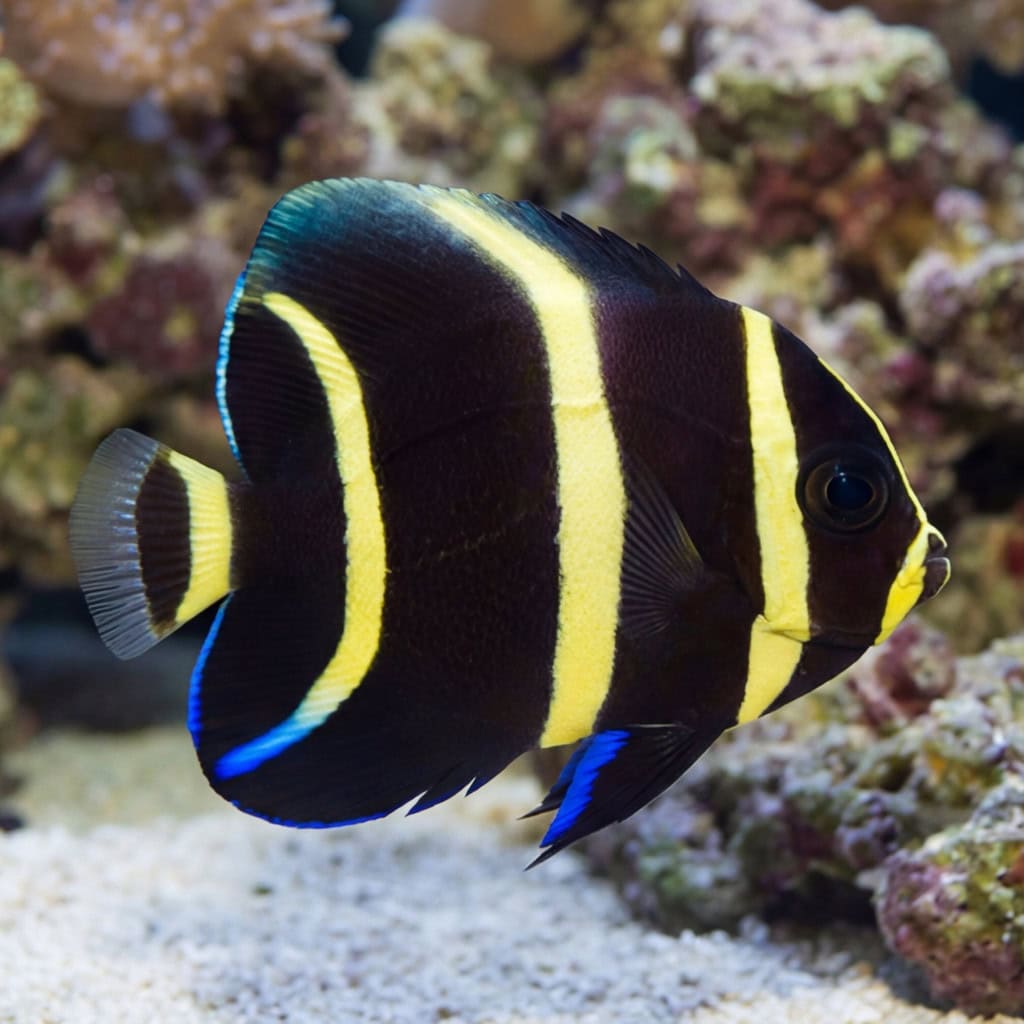
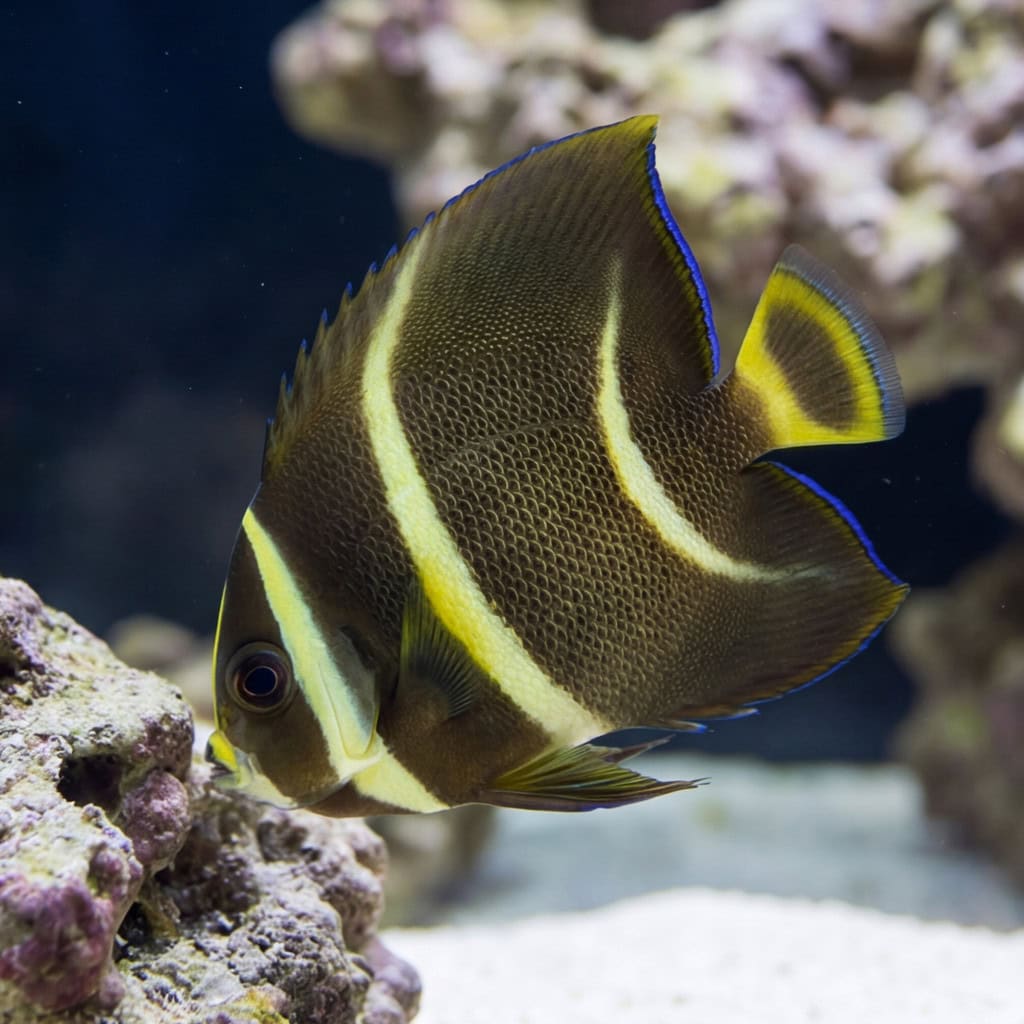
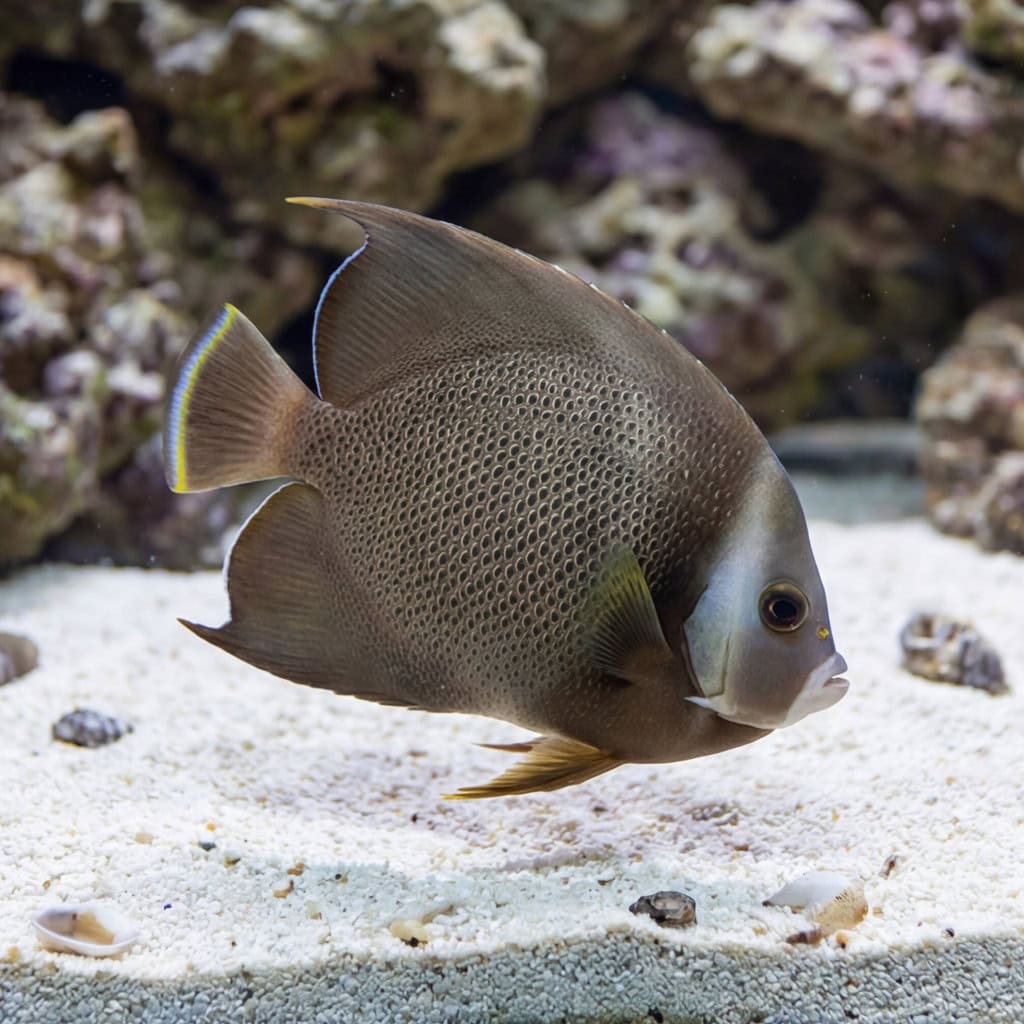
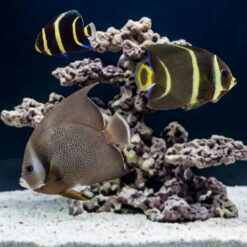
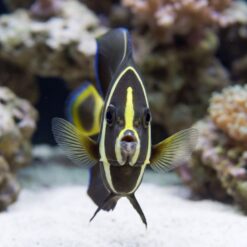
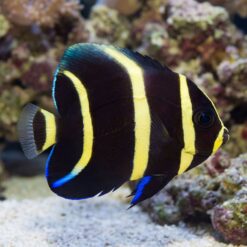
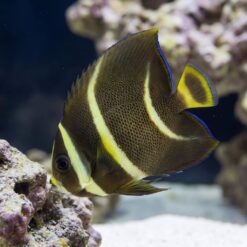
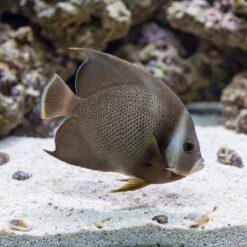
The Black (Grey) Angelfish (Pomacanthus arcuatus) is a large Western Atlantic angelfish that transitions from a black juvenile with pale yellow striping into a silvery-gray adult with a fine, dotted pattern. With adult size around 20 inches, it’s best suited to very large marine aquariums with open swimming room.
What You’ll Observe:
- Regular cruising loops through open water, with frequent passes along rock faces
- Short, repeated “browsing” stops where it pecks at the rock surface between feedings
- A consistent daily routine—more visible and active once it learns your feeding schedule
- Use of caves and overhangs as quick rest stops, then back out into the open
Provide extensive live rock for grazing lanes and multiple cave options, while keeping broad open areas for turning and swimming. Offer a varied menu that mixes algae-based foods and angelfish preparations with meaty items like mysis or chopped frozen blends. With stable water quality and a consistent feeding routine, it settles into a steady, active pattern in the display.
How long does it take for the juvenile stripes to fade into adult coloration?
Most keepers see a long “in-between” phase where the pattern changes gradually over months, not days, and the fish can show mixed markings as it grows.
Why does it constantly peck at the live rock even after it eats prepared food?
That pecking is normal browsing behavior; it’s often looking for natural growth on the rock and treats the aquascape like a feeding route between meals.
Can I keep it with another angelfish if the tank is large enough?
In very large systems, hobbyists commonly have the best results by mixing different-looking angelfish and giving each fish its own rockwork zone.
What helps it settle in faster during the first week?
Many aquarists use a calm introduction (like an acclimation box) and establish a predictable feeding spot so it learns where food appears.
Will it learn to recognize the keeper?
Keepers often report that large angels become routine-driven and will approach the front glass at feeding times once they associate you with food.
We work with trusted suppliers who keep our specimens healthy and well-fed before shipping.
Recently viewed products