
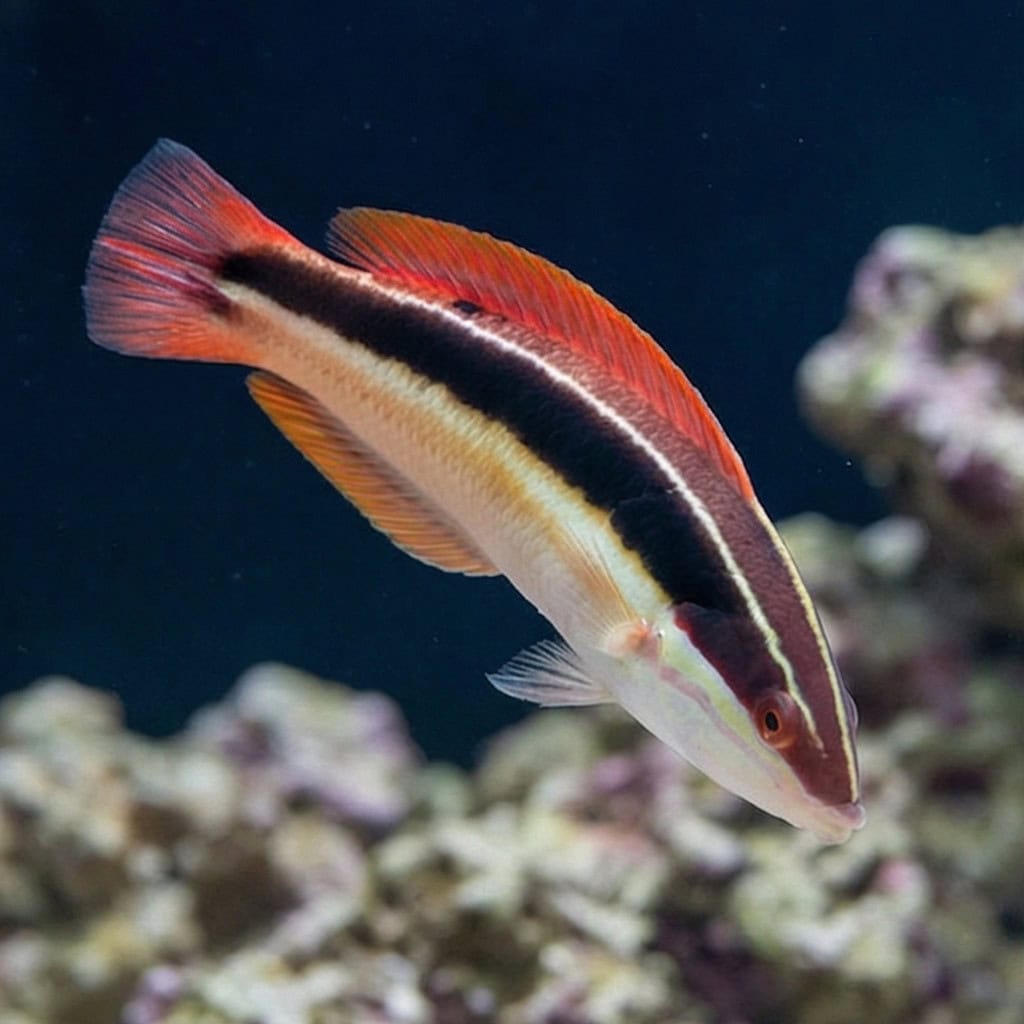
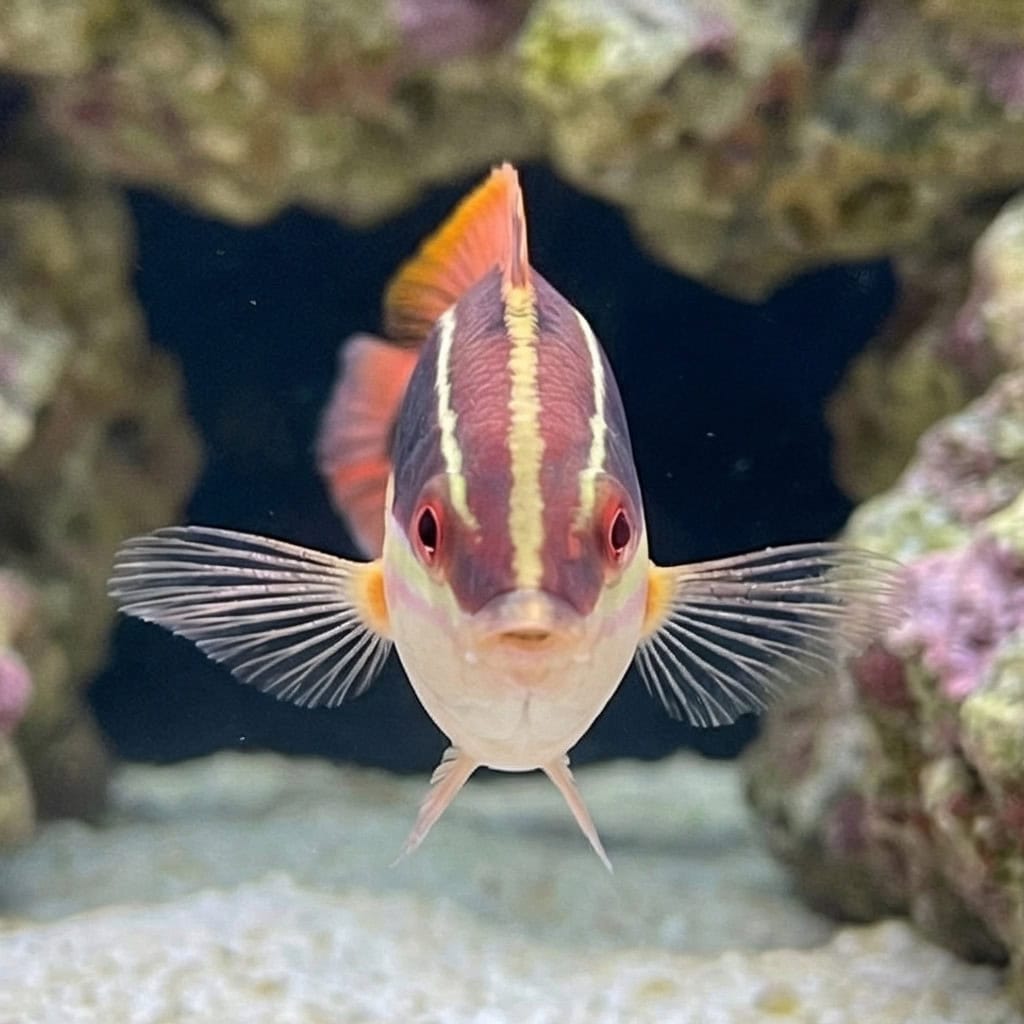
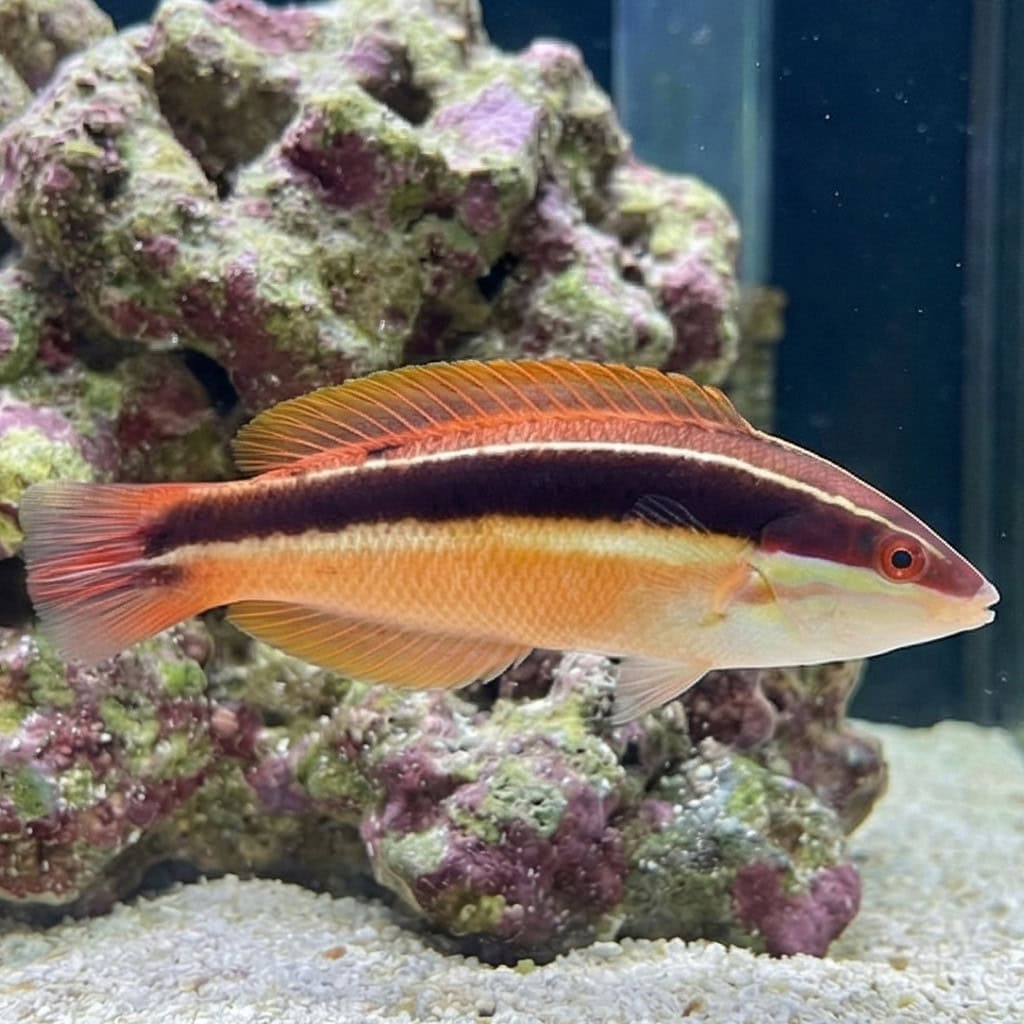
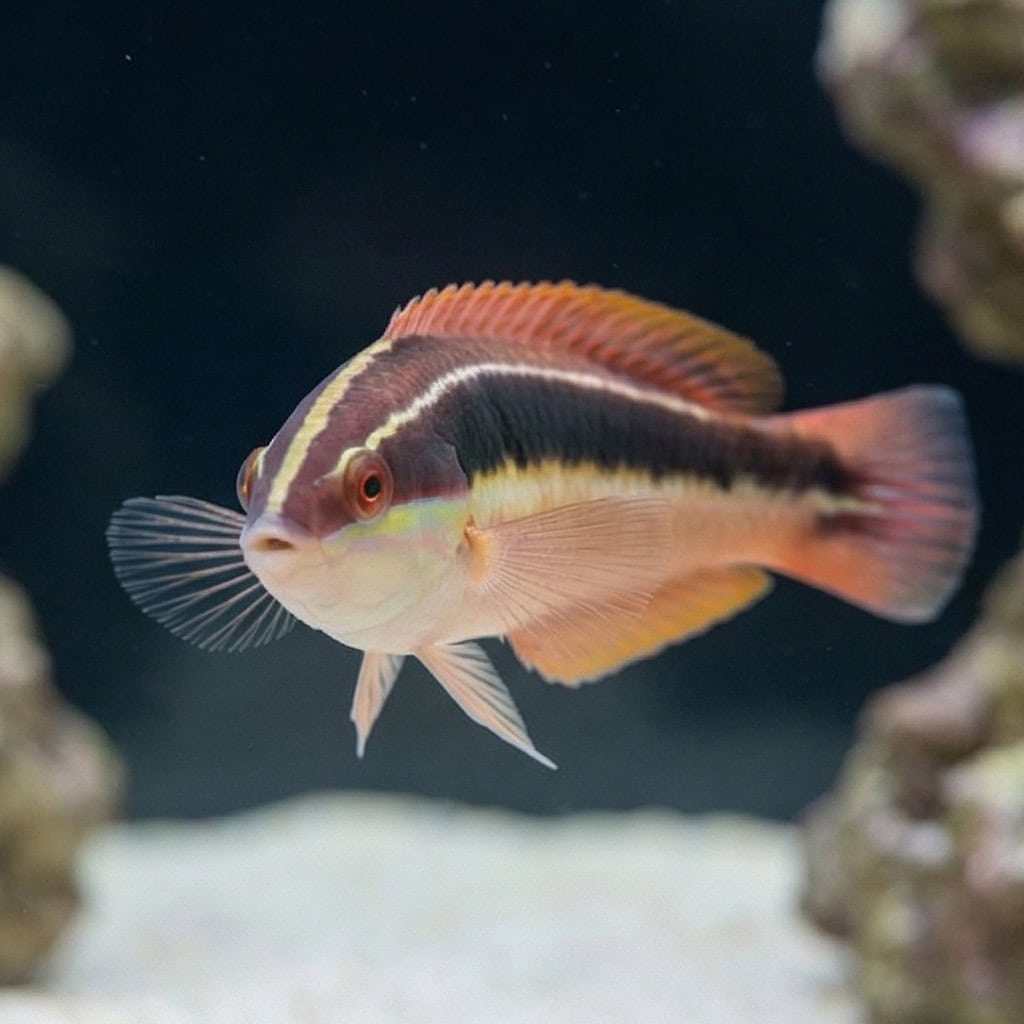
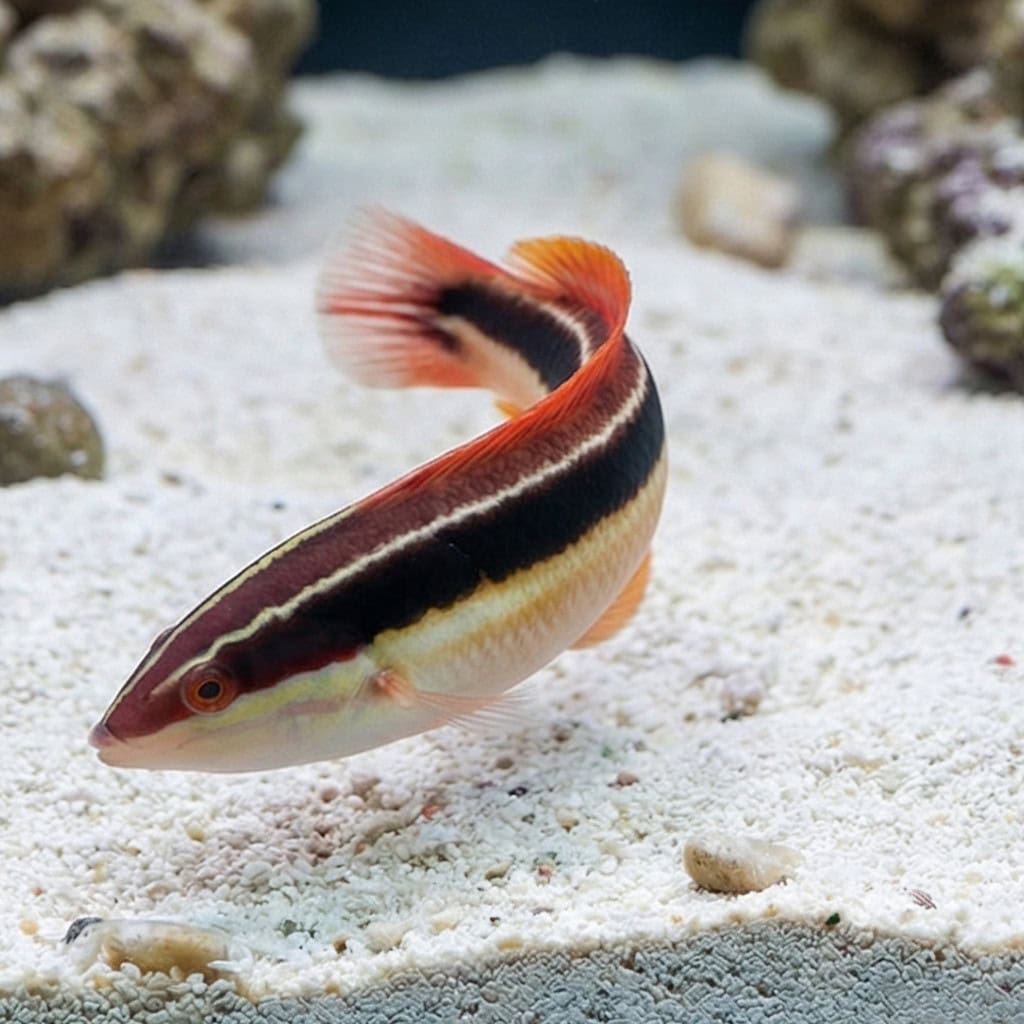
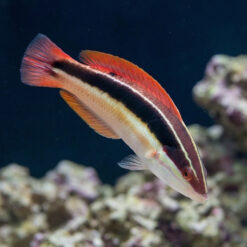
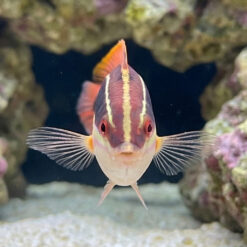
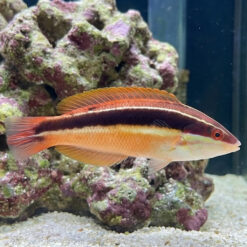
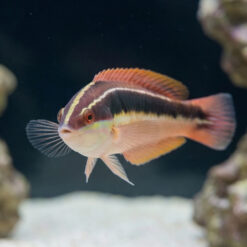
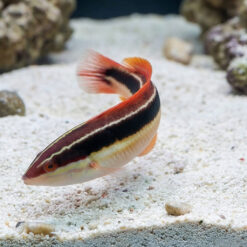
Blackstipe Coris Wrasse
Coris pictoides
| Stock | Variations | Price | Quantity |
|---|
Every order ships with our standard 3-hour live arrival guarantee. Need more time? Add our 5-Day Guarantee at checkout.
Full guarantee terms →Ships Monday – Thursday for next-day arrival at your nearest FedEx Hold location — typically ready by 9 AM. We monitor every delivery.
Shipping details →
Monday – Friday 8 AM – 9 PM
Saturday 12 PM – 4 PM
Sunday 12 PM – 9 PM
Healthy, stable animals from vetted suppliers — inspected before packing, shipped overnight. Decades of experience built this model so we can deliver premium livestock at 30%+ less than you'd pay elsewhere.
| Care Level | Moderate |
|---|---|
| Temperament | Semi-Aggressive |
| Reef Safe | With Caution |
| Functional Benefit | Ornamental Only |
| Diet Type | Carnivore |
| Mininum Tank Size | 90 gallons |
| Max Size | 6 inches |
| Temperature | 72–78°F |
| pH Range | 8.1–8.4 |
| Specific Gravity | 1.022–1.025 |
The Blackstipe Coris Wrasse (Coris pictoides), often called the Blackstripe Coris, is a sand-associated wrasse from the Western Pacific region (commonly reported around the Philippines, Indonesia, Taiwan, and parts of Australia).
It has a streamlined “Coris wrasse” body shape and an active, cruising swimming style that keeps it visible in the open for much of the day.
What You’ll Observe:
- Patrols the rockwork and open sand in a steady loop, pausing to investigate crevices
- Uses the sandbed as a “sleeping spot,” diving in quickly at lights-out or when startled
- May stay buried longer than expected at times, then reappear and resume normal daytime activity
- Becomes most interactive at feeding time and learns the tank’s routine quickly
To succeed, provide a mature aquarium with open swimming room, stable rockwork, and a fine sandbed it can comfortably bury into. Offer a variety of meaty foods (frozen and prepared) in multiple small feedings, and plan your invertebrate choices carefully since Coris wrasses commonly pick at snails and other mobile inverts.
Why did my wrasse “vanish” into the sand after introduction?
Many sand-sleeping wrasses settle in by burying, and it can stay hidden longer than people expect before it resumes a regular day/night routine.
Will it rearrange my sandbed or undermine frags?
It tends to dive into the sand in a single spot and can kick sand around; keeping frags and small rocks secured helps the aquascape stay tidy.
Does it need live food long-term?
Most keepers use live foods only as a short-term appetite starter if needed, then transition to frozen and quality prepared meaty options once the fish is eating confidently.
Will it change appearance as it grows?
Like many wrasses, color and contrast can shift with age and mood, and individuals may look different under different lighting and stress levels.
Why do I see multiple “common names” for similar-looking wrasses online?
Wrasses are frequently mislabeled in the trade; relying on the scientific name (Coris pictoides) is the best way to confirm what you’re actually buying.
Each fish is checked for strong appetite and activity before we approve it for your tank.
Recently viewed products