
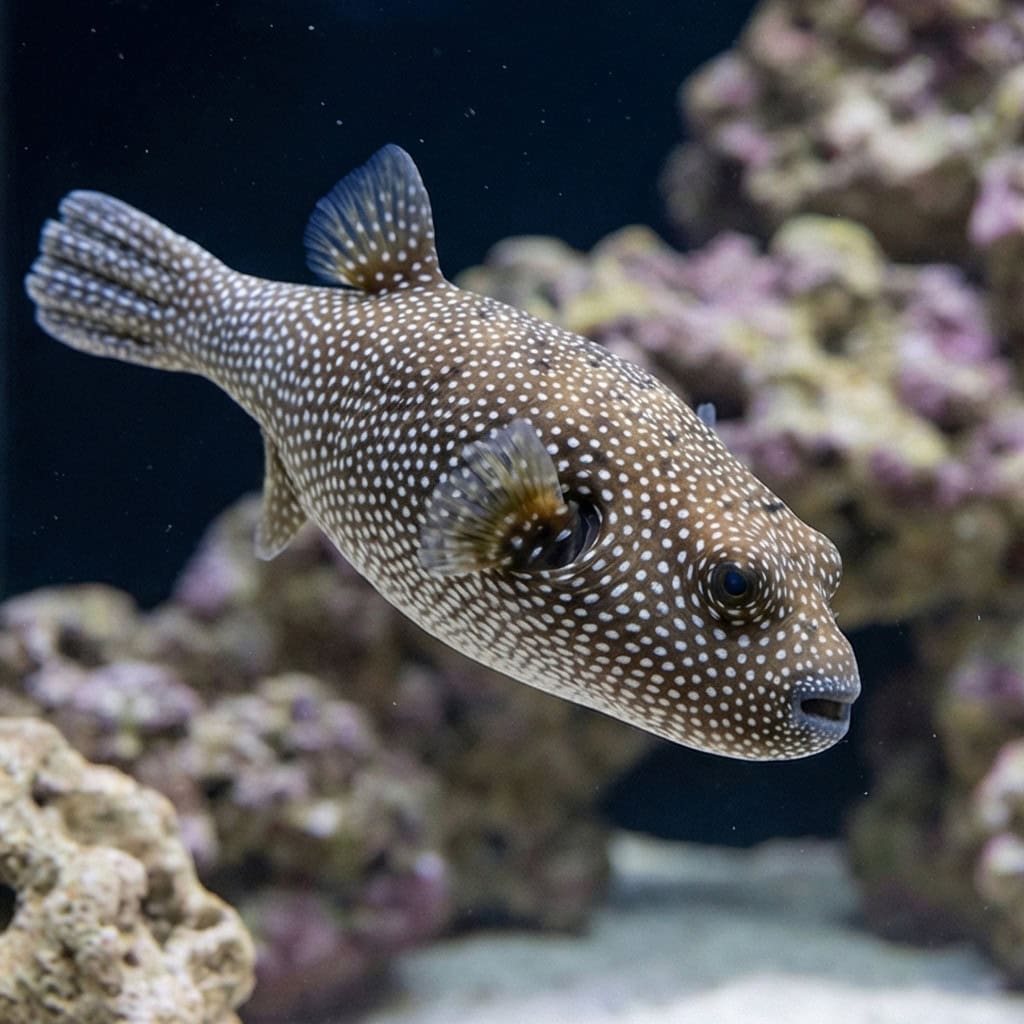
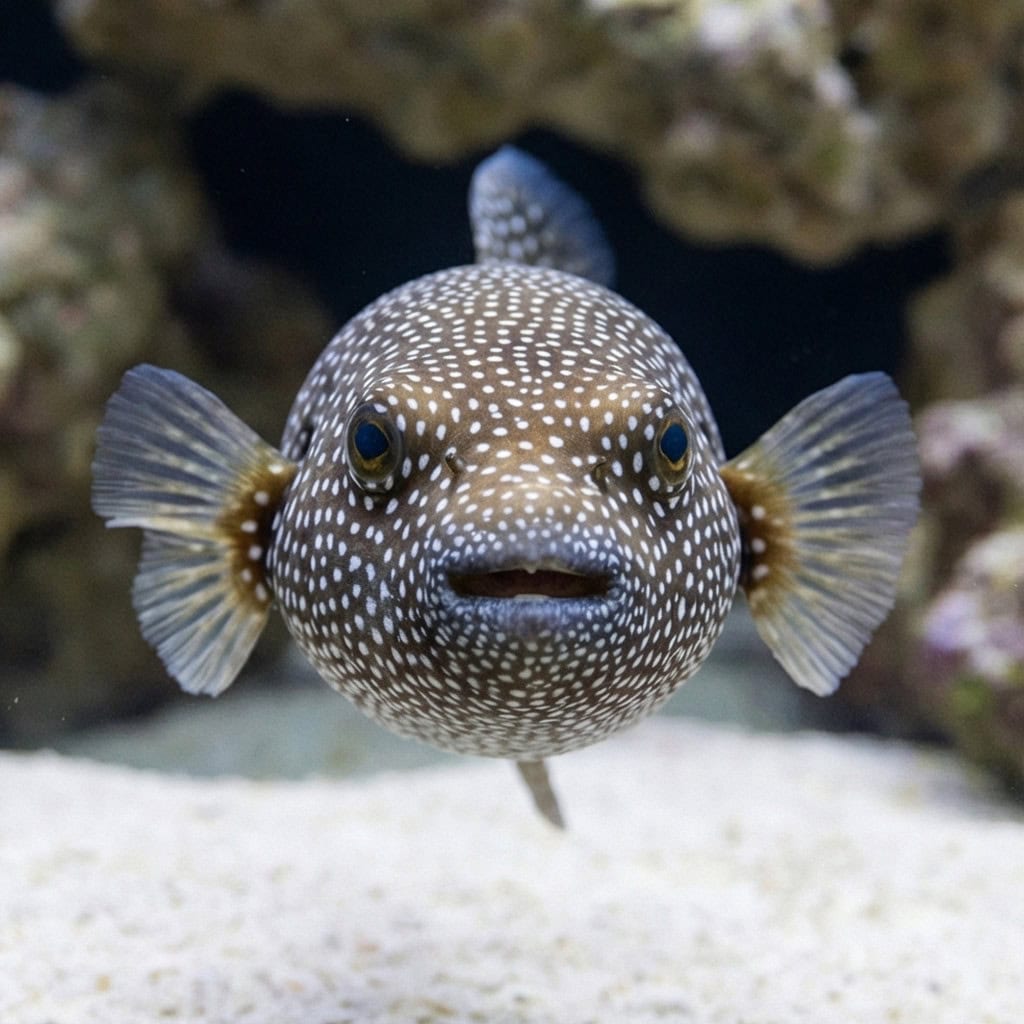
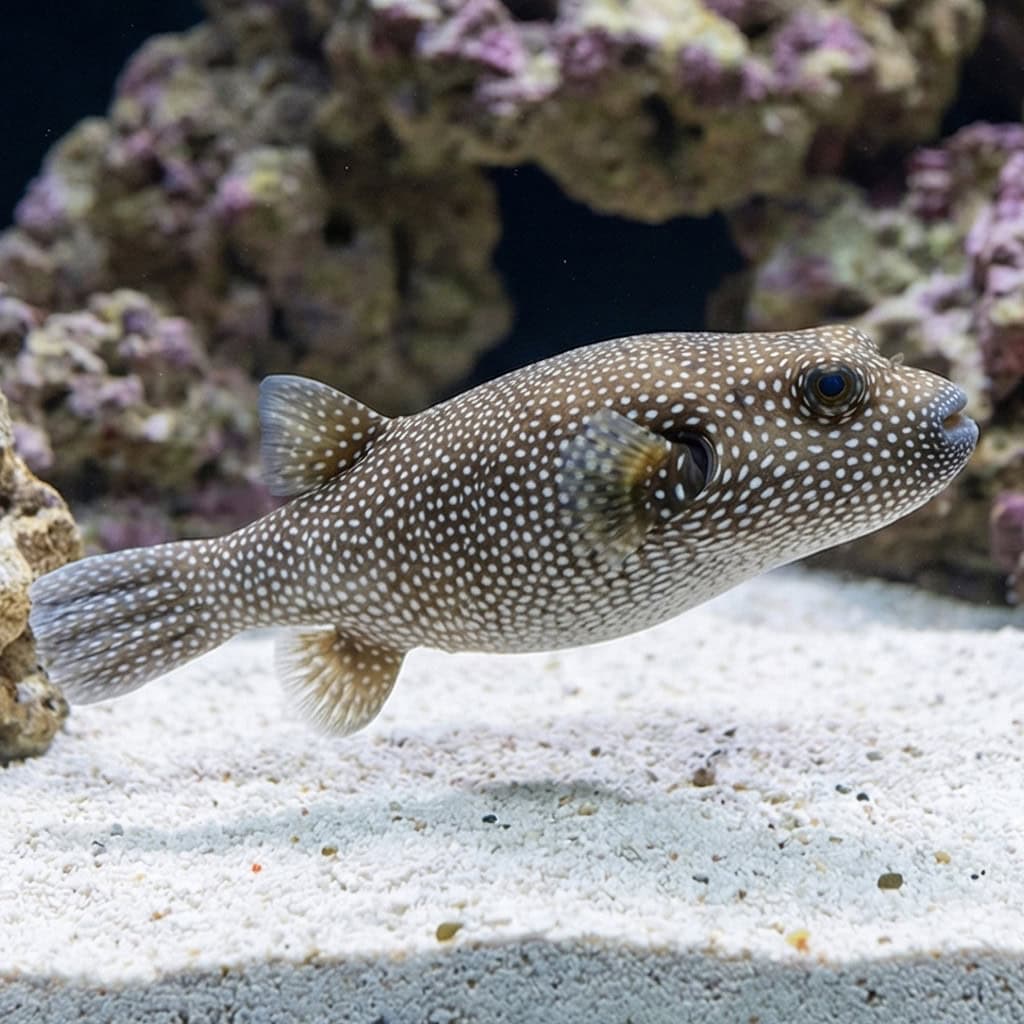
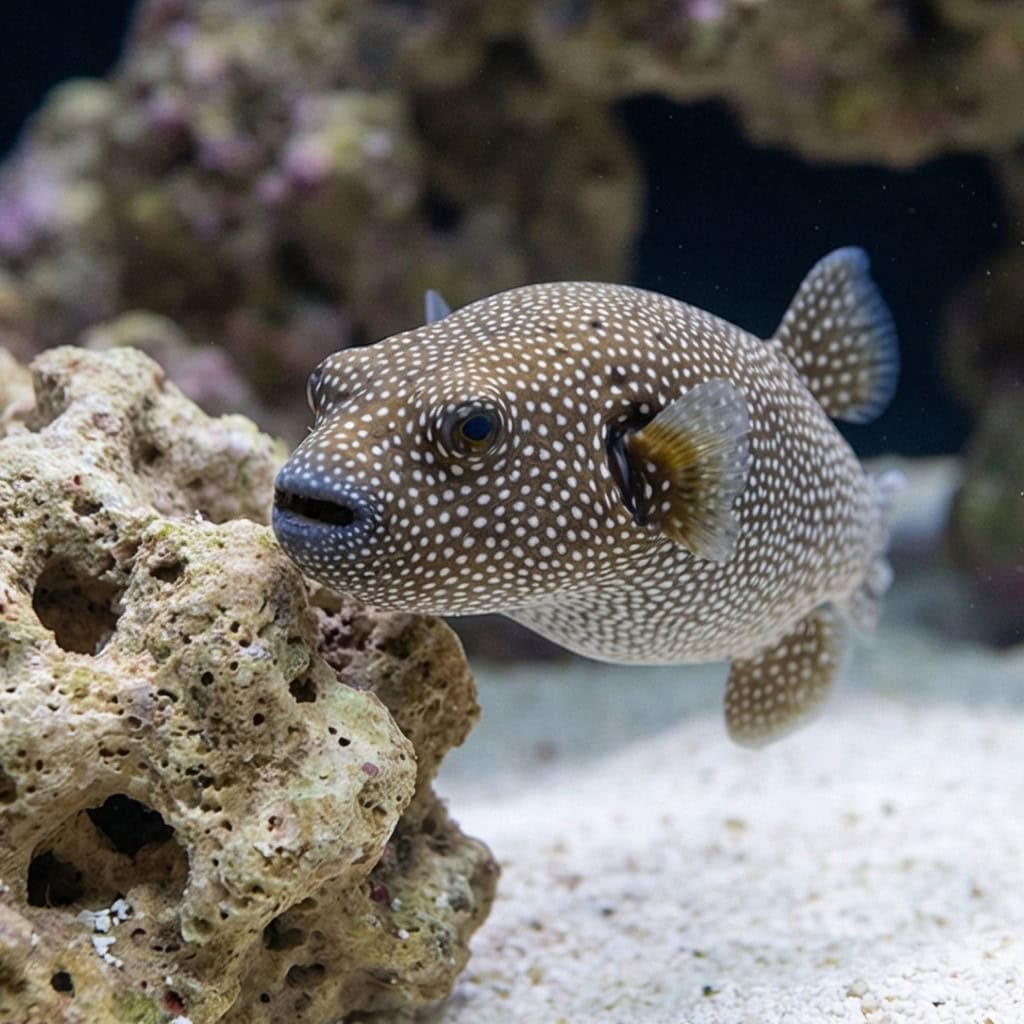
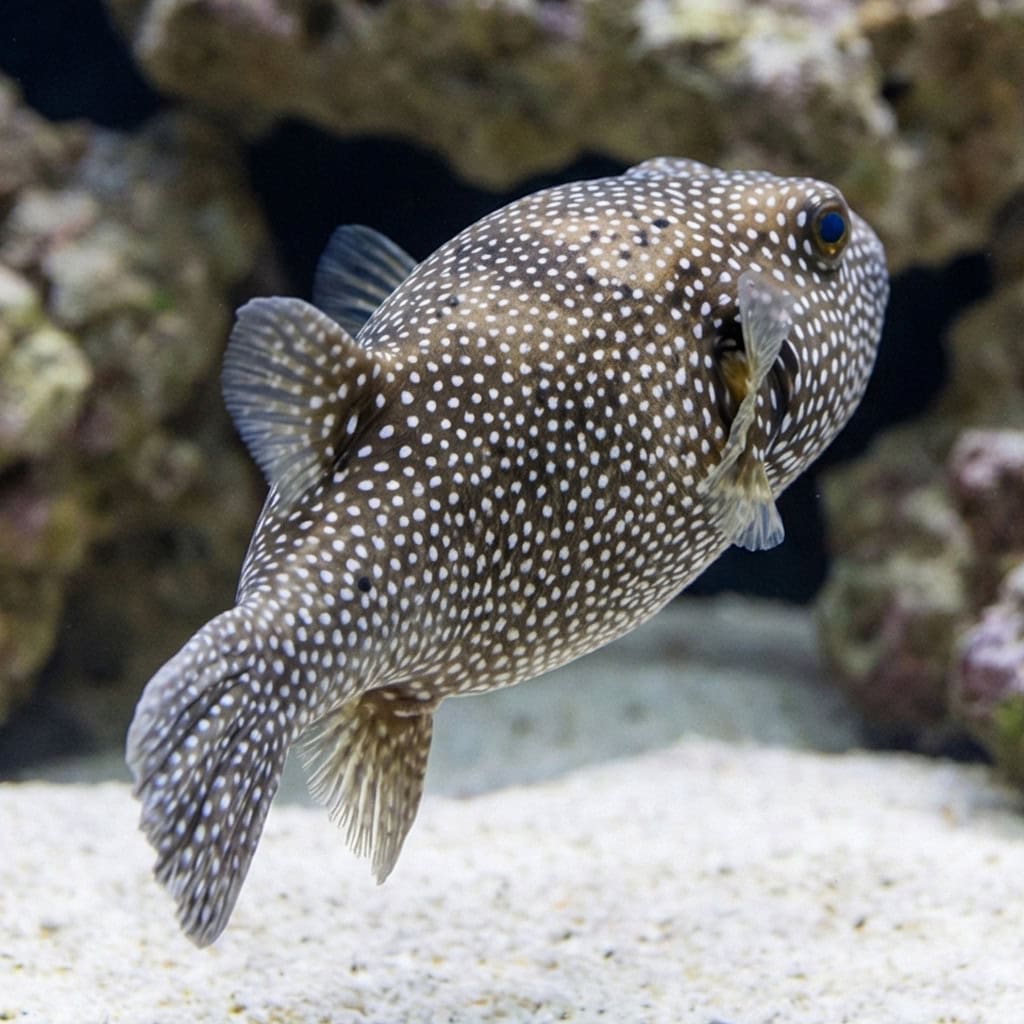
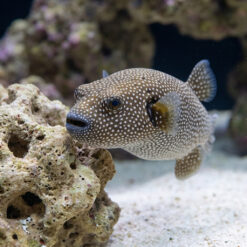
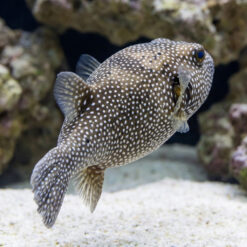
Blue and White Spotted Puffer
Arothron meleagris
| Stock | Variations | Price | Quantity |
|---|
Every order ships with our standard 3-hour live arrival guarantee. Need more time? Add our 5-Day Guarantee at checkout.
Full guarantee terms →Ships Monday – Thursday for next-day arrival at your nearest FedEx Hold location — typically ready by 9 AM. We monitor every delivery.
Shipping details →
Monday – Friday 8 AM – 9 PM
Saturday 12 PM – 4 PM
Sunday 12 PM – 9 PM
Healthy, stable animals from vetted suppliers — inspected before packing, shipped overnight. Decades of experience built this model so we can deliver premium livestock at 30%+ less than you'd pay elsewhere.
| Care Level | Moderate |
|---|---|
| Temperament | Semi-Aggressive |
| Reef Safe | No |
| Functional Benefit | Ornamental Only |
| Diet Type | Carnivore |
| Mininum Tank Size | 180 gallons |
| Max Size | 24 inches |
| Temperature | 72–78°F |
| pH Range | 8.1–8.4 |
| Specific Gravity | 1.022–1.025 |
The Blue and White Spotted Puffer (Arothron meleagris) is a bold, large-bodied puffer known for its high-contrast spotting and expressive “beak” mouth. Color patterns vary by individual, including dark-with-white-spots and lighter yellow/gold forms.
What You’ll Observe:
- Cruising open areas and then pausing to “hover” while it studies rockwork and seams
- Using strong, deliberate bites to test surfaces, food items, and sometimes aquarium objects
- Becoming more interactive at feeding time, often learning a consistent feeding routine
- Sleeping tucked into a preferred nook or under an overhang once settled in
Provide a roomy, fish-only setup with sturdy rockwork, a defined retreat, and strong filtration sized for heavy feeding. Offer a variety of meaty foods, and regularly include hard items (like clam on the half shell) so it can grind and wear down its beak naturally.
Will it take food from feeding tongs, or does it prefer food placed in the tank?
Many learn tongs quickly, but some eat more confidently when food is placed on the substrate or in a feeding dish so they can approach on their own schedule.
How do I keep the beak worn down without having to trim it?
Rotate in hard, crunchy foods routinely (for example, shell-on items or clam on the half shell) so the fish can grind while it eats.
Is it normal for a puffer to ignore a new food even if it’s eating other items?
Yes—puffers often “inspect” unfamiliar foods repeatedly before accepting them, and some show strong preferences for certain textures.
Why does it bite at rocks, equipment, or cords?
This species explores with its mouth; providing appropriate hard foods and enrichment at feeding time helps keep that behavior focused on safe targets.
Can it be kept with another large puffer long-term?
Some hobbyists report success in very large systems with ample space and multiple retreats, but it typically does best as the clear “centerpiece” fish with plenty of personal room.
Shipped with pure oxygen and temperature control so it arrives stress-free and ready to eat.
Recently viewed products