
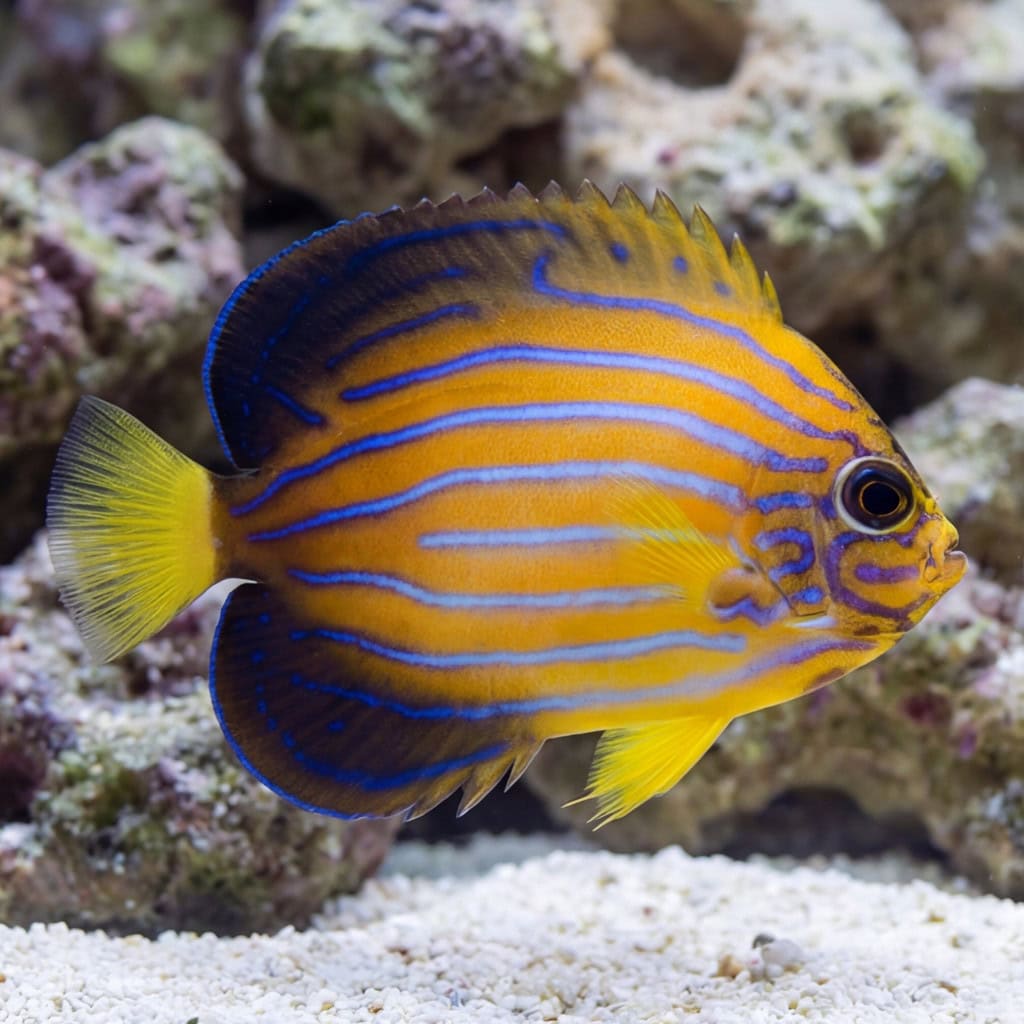
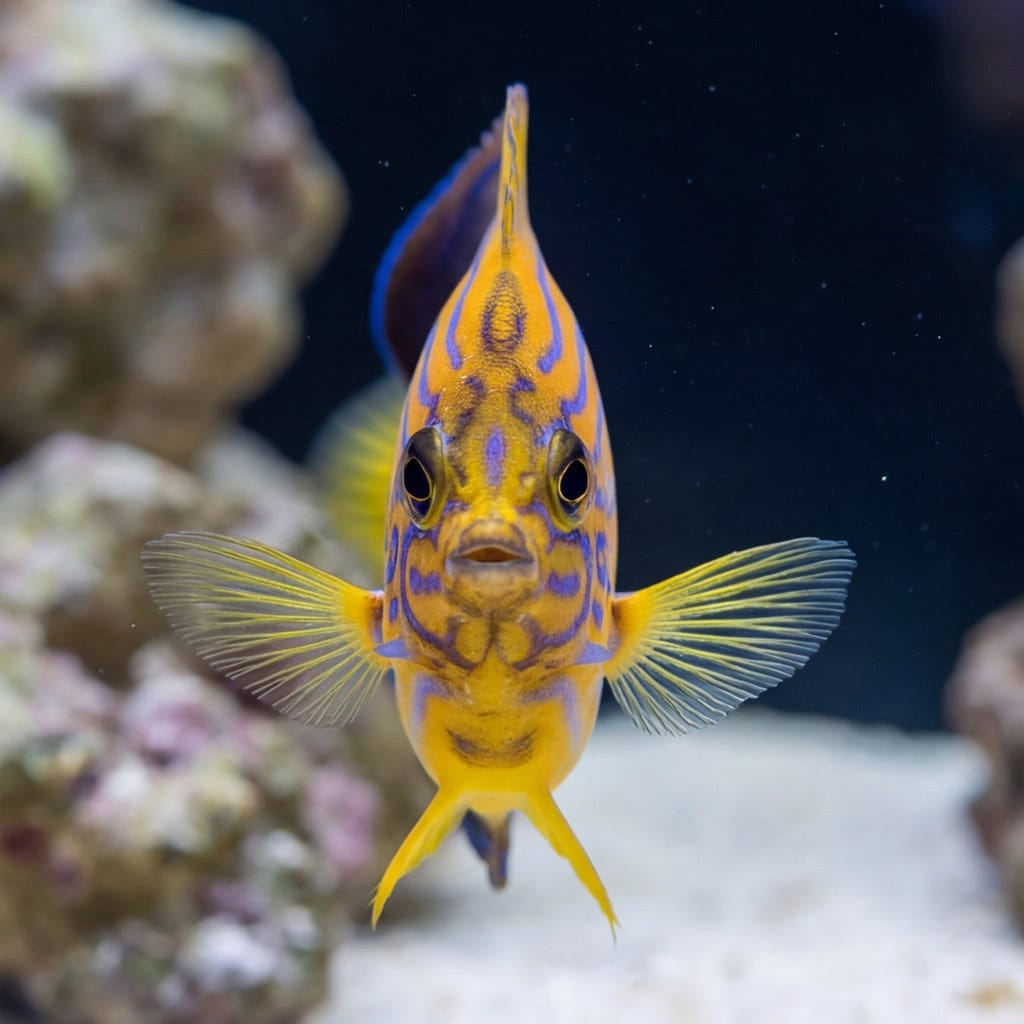
Blue Line Angelfish
Chaetodontoplus septentrionalis
| Stock | Variations | Price | Quantity | |
|---|---|---|---|---|
| Out of Stock | 1.25 - 1.75" - Indo-Pacific | Original price was: $509.99.$267.99Current price is: $267.99. | Email me | |
| Out of Stock | 1.75 - 2.75" - Indo-Pacific | Original price was: $531.99.$279.99Current price is: $279.99. | Email me |
Every order ships with our standard 3-hour live arrival guarantee. Need more time? Add our 5-Day Guarantee at checkout.
Full guarantee terms →Ships Monday – Thursday for next-day arrival at your nearest FedEx Hold location — typically ready by 9 AM. We monitor every delivery.
Shipping details →
Monday – Friday 8 AM – 9 PM
Saturday 12 PM – 4 PM
Sunday 12 PM – 9 PM
Healthy, stable animals from vetted suppliers — inspected before packing, shipped overnight. Decades of experience built this model so we can deliver premium livestock at 30%+ less than you'd pay elsewhere.
| Care Level | Moderate |
|---|---|
| Temperament | Semi-Aggressive |
| Reef Safe | With Caution |
| Functional Benefit | Ornamental Only |
| Diet Type | Omnivore |
| Mininum Tank Size | 180 gallons |
| Max Size | 8 inches |
| Temperature | 72–78°F |
| pH Range | 8.1–8.4 |
| Specific Gravity | 1.022–1.025 |
The Blue Line Angelfish (Chaetodontoplus septentrionalis) is a large angelfish with a tan-to-golden body crossed by clean blue horizontal striping and a yellow tail. It’s a Western Pacific species associated with rocky and coral reef areas, and it’s often kept as a centerpiece fish in big marine displays.
What You’ll Observe:
- Spends much of the day cruising the rockwork, pausing to “inspect” surfaces and pick as it goes
- A steady, confident swimmer once settled, moving between open water and caves
- Strong food response at feeding time, often learning your routine quickly
- Juveniles gradually transition from darker patterns into the blue-lined adult look as they grow
Provide a mature aquarium with plenty of live rock, caves, and clear swim lanes so it can move and graze naturally. Offer a varied menu of meaty frozen foods plus algae-based options, and keep portions coming consistently so it stays engaged with prepared foods. In mixed coral displays, most keepers plan the livestock mix around the fish’s natural browsing habits.
How fast does the juvenile-to-adult color change happen?
Many hobbyists report the adult striping comes in as the fish reaches the small-to-mid juvenile sizes, and the pattern sharpens noticeably as it continues to grow.
Is it normal if it hides a lot right after introduction?
Yes’keepers commonly describe an initial “cave phase,” followed by longer and longer patrol loops once it learns the tank layout and feeding schedule.
What foods do people use to get a new specimen started?
A lot of keepers mention starting with familiar frozen meaty foods, then building variety; some also use clam-on-the-half-shell as a strong “first bite” option.
Can you keep two of them (or multiple large angels) together?
Some hobbyists have success when angels are introduced small and at the same time, but long-term compatibility tends to depend on tank size, rockwork separation, and how the fish mature.
What’s the first “browsing” behavior owners usually notice?
Many people notice the fish repeatedly tracing the same rock faces, picking and tasting as it goes’especially around mature live rock with natural growth.
Shipped with pure oxygen and temperature control so it arrives stress-free and ready to eat.
Recently viewed products