
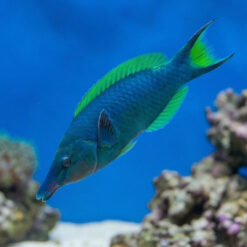
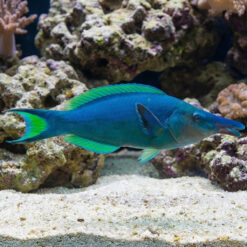
Blue/Green Bird Wrasse
Gomphosus caeruleus
| Stock | Variations | Price | Quantity |
|---|
Every order ships with our standard 3-hour live arrival guarantee. Need more time? Add our 5-Day Guarantee at checkout.
Full guarantee terms →Ships Monday – Thursday for next-day arrival at your nearest FedEx Hold location — typically ready by 9 AM. We monitor every delivery.
Shipping details →
Monday – Friday 8 AM – 9 PM
Saturday 12 PM – 4 PM
Sunday 12 PM – 9 PM
Healthy, stable animals from vetted suppliers — inspected before packing, shipped overnight. Decades of experience built this model so we can deliver premium livestock at 30%+ less than you'd pay elsewhere.
| Care Level | Moderate |
|---|---|
| Temperament | Semi-Aggressive |
| Reef Safe | With Caution |
| Functional Benefit | Ornamental Only |
| Diet Type | Carnivore |
| Mininum Tank Size | 120 gallons |
| Max Size | 12 inches |
| Temperature | 72–78°F |
| pH Range | 8.1–8.4 |
| Specific Gravity | 1.022–1.025 |
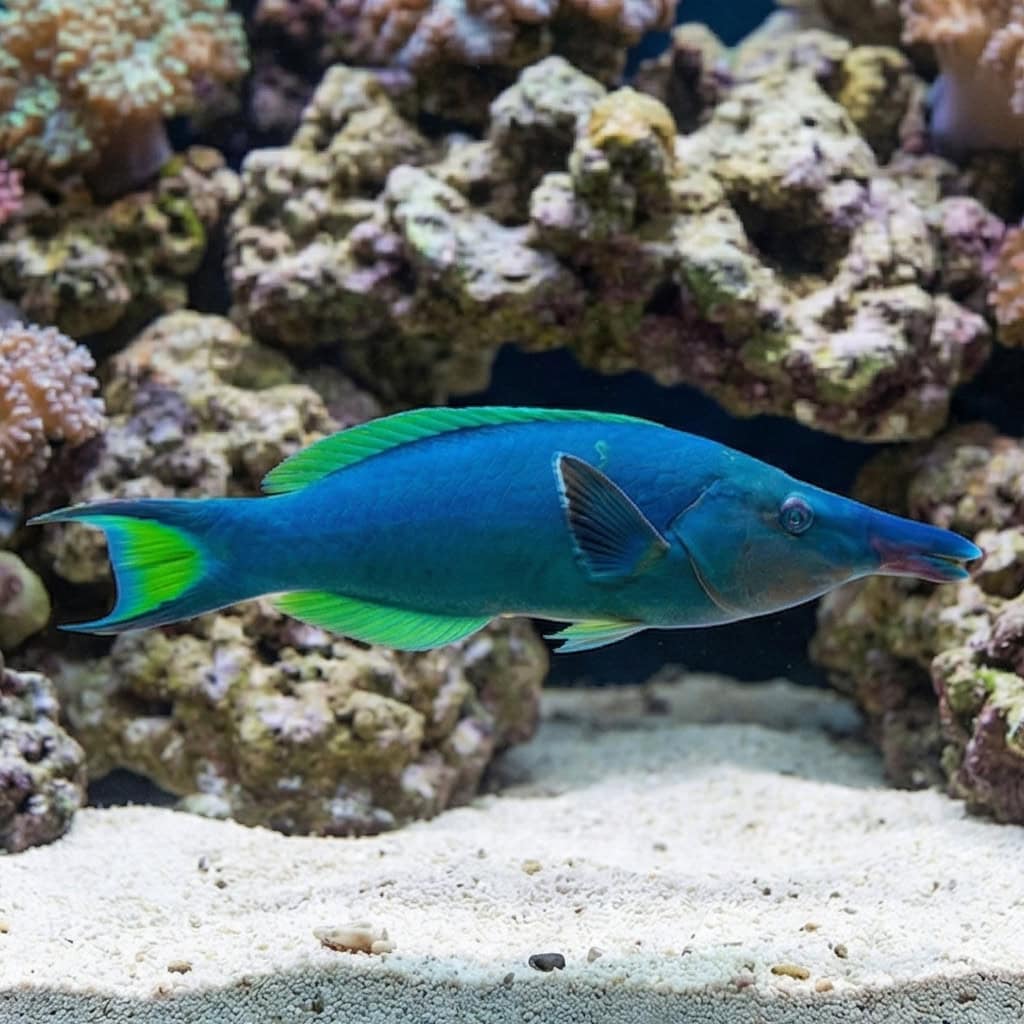
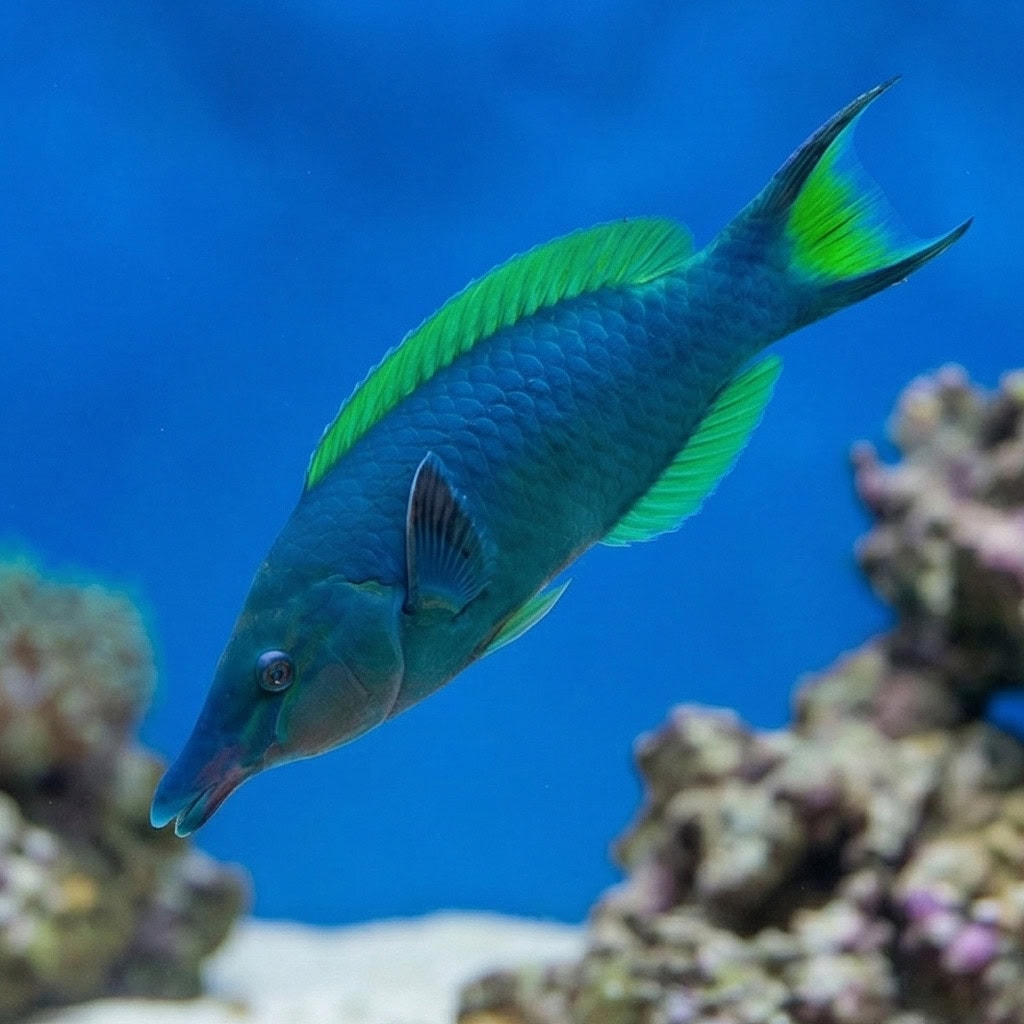
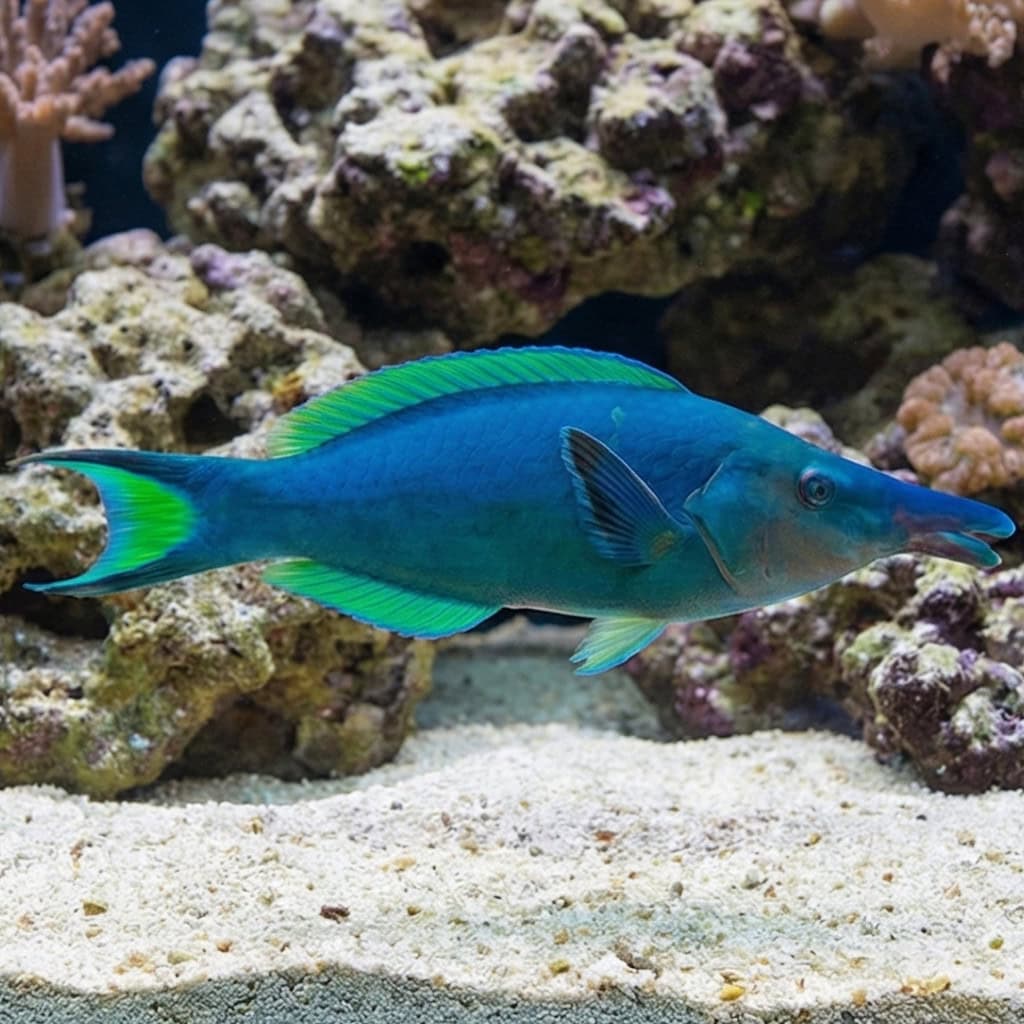
The Blue/Green Bird Wrasse (Gomphosus caeruleus) is a fast-moving birdmouth (birdnose) wrasse with a long, beak-like snout used to probe for small invertebrates. Color shifts by life stage and sex, with males showing deeper blue-green tones and females often showing lighter body tones with yellow accents.
What You’ll Observe:
- Constant cruising through open water with quick turns along rock edges
- Short “inspection passes” where it pecks and probes for tiny food items
- Noticeably higher activity around feeding time and tank interaction
- A consistent sleep routine, often settling down into the substrate overnight
Provide open swimming room plus rockwork it can weave through, and keep a fine sand bed available for its nightly routine. Offer a variety of meaty frozen foods and quality pellets on a steady schedule so it stays engaged and active in your display.
Does it ever “disappear” after being added?
It’s common for this type of wrasse to stay buried or out of sight for a short settling-in period before it starts doing regular laps again.
Why does it seem to rearrange frags and loose items?
Many keepers notice it bumps into or topples unsecured pieces while it cruises and hunts—stable placement helps.
Will it change from female to male over time?
Like many wrasses, the dominant fish in a group can transition as it matures, and color patterns may shift gradually.
Can I keep two together if I want a pair?
Pairs are usually attempted by adding a smaller fish first and introducing the second later, with plenty of space and structure.
Is nonstop swimming normal for this wrasse?
Yes—steady, active patrolling is a typical “bird wrasse” behavior, especially in larger tanks with open lanes.
We source from vetted suppliers known for healthy, long-lived specimens.
Recently viewed products