
-
×
 Purple Queen Anthias, Size < 2.25 inches
1 × $43.99
Purple Queen Anthias, Size < 2.25 inches
1 × $43.99



Choati Wrasse
Macropharyngodon choati
| Stock | Variations | Price | Quantity | |
|---|---|---|---|---|
| Out of Stock | 2 - 3" - Australia | Original price was: $624.99.$327.99Current price is: $327.99. | Email me |
Arrives Alive. Guaranteed.
▼
Every order ships with our standard 3-hour live arrival guarantee. Need more time? Add our 5-Day Guarantee at checkout.
Full guarantee terms →
FedEx Overnight. Every Order.
▼
Ships Monday – Thursday for next-day arrival at your nearest FedEx Hold location — typically ready by 9 AM. We monitor every delivery.
Shipping details →
Real People. 7 Days a Week.
▼
Monday – Friday 8 AM – 9 PM
Saturday 12 PM – 4 PM
Sunday 12 PM – 9 PM
Phone
Chat
Email
Text
Contact us →
Aquarium-Ready Livestock
▼
Healthy, stable animals from vetted suppliers — inspected before packing, shipped overnight. Decades of experience built this model so we can deliver premium livestock at 30%+ less than you'd pay elsewhere.
| Care Level | Expert |
|---|---|
| Temperament | Peaceful |
| Reef Safe | Yes |
| Functional Benefit | Pest Control |
| Diet Type | Carnivore |
| Mininum Tank Size | 55 gallons |
| Max Size | 4 inches |
| Temperature | 72–78°F |
| pH Range | 8.1–8.4 |
| Specific Gravity | 1.022–1.025 |
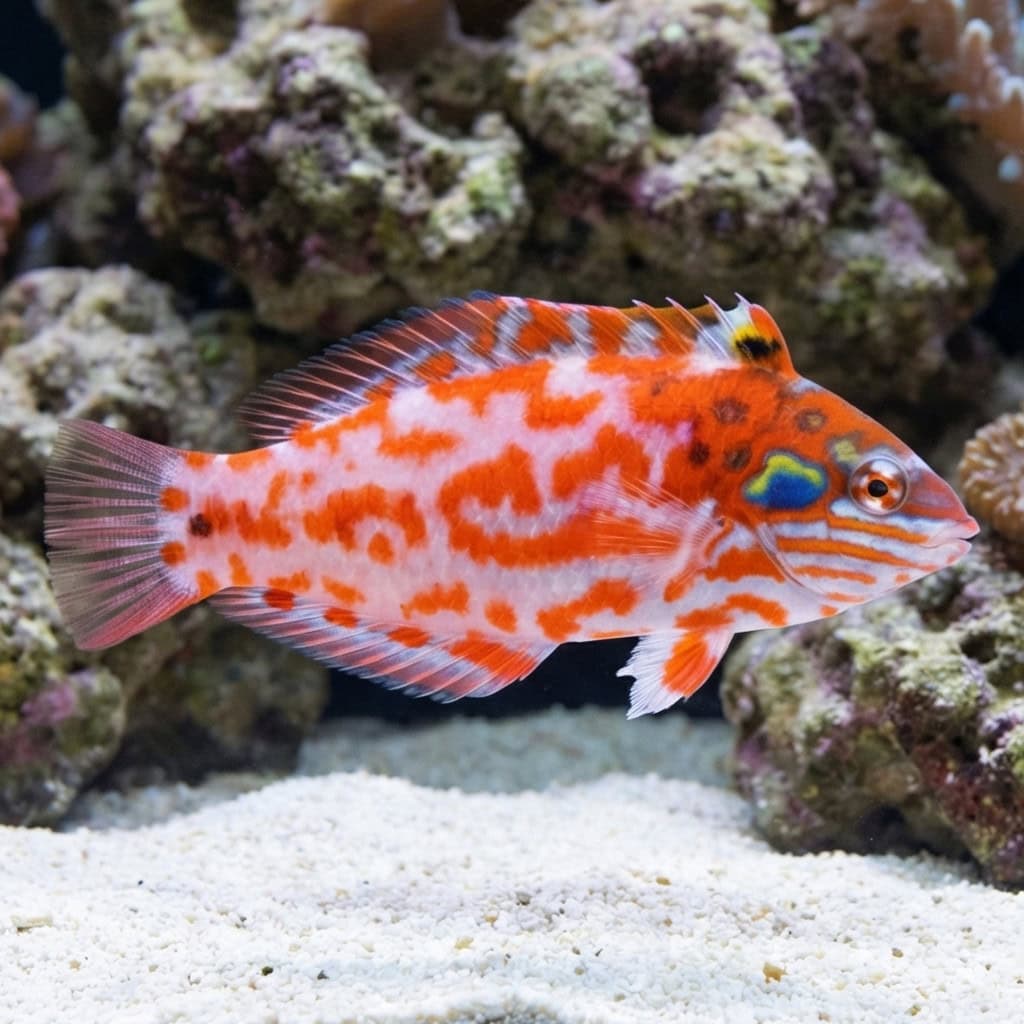
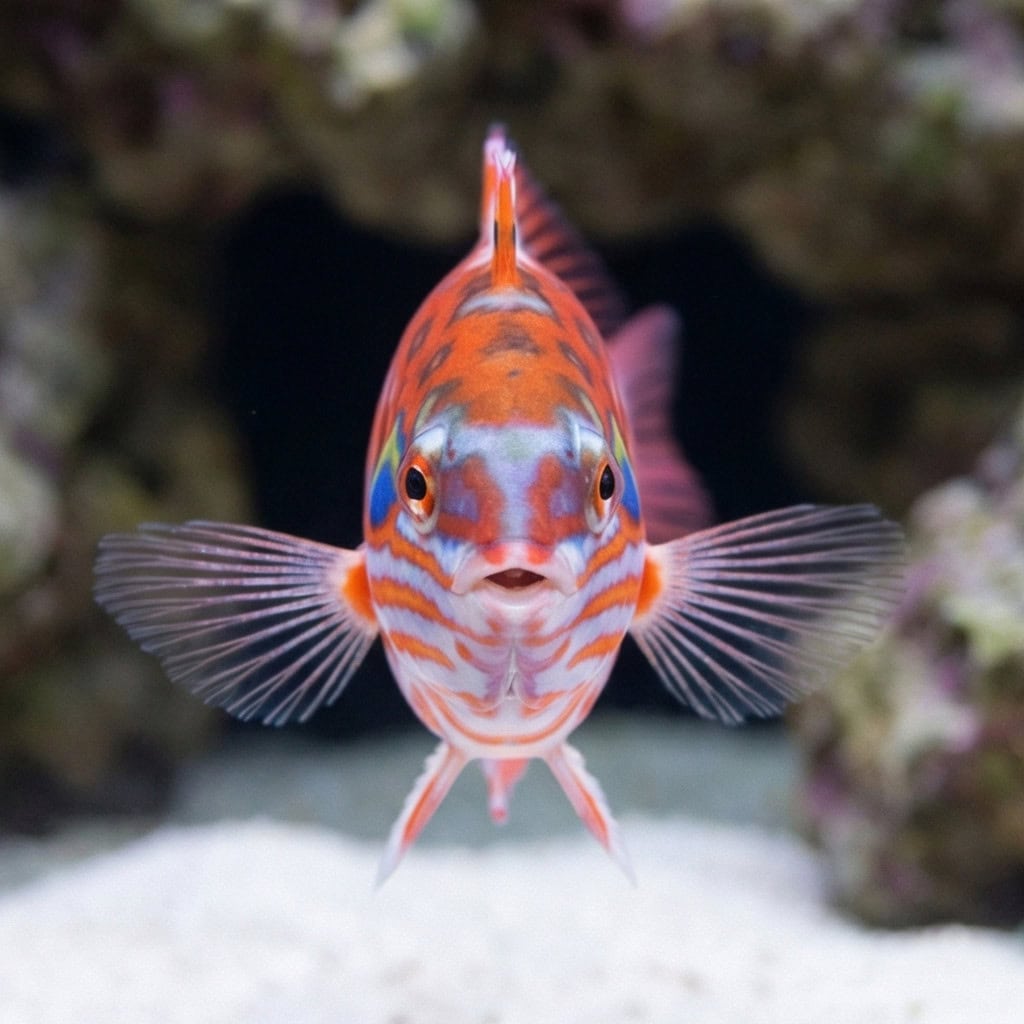
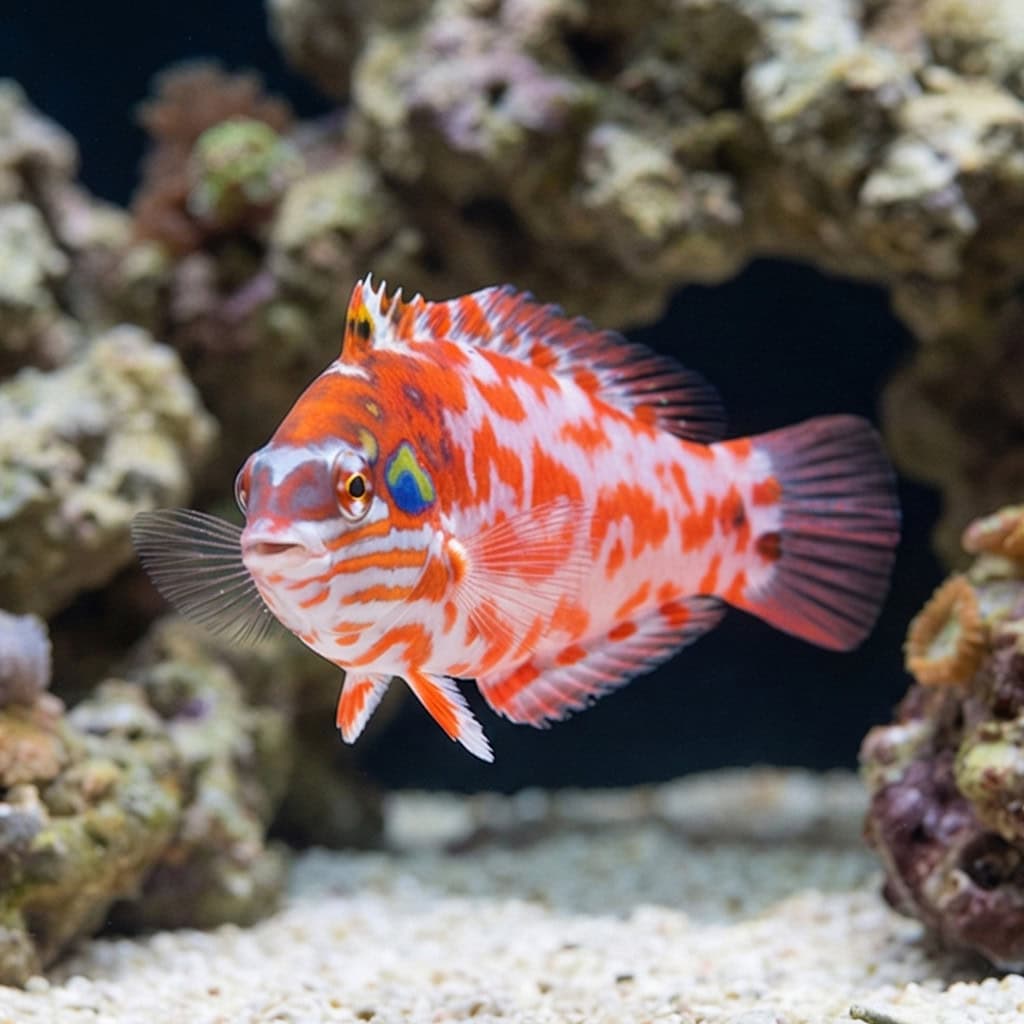
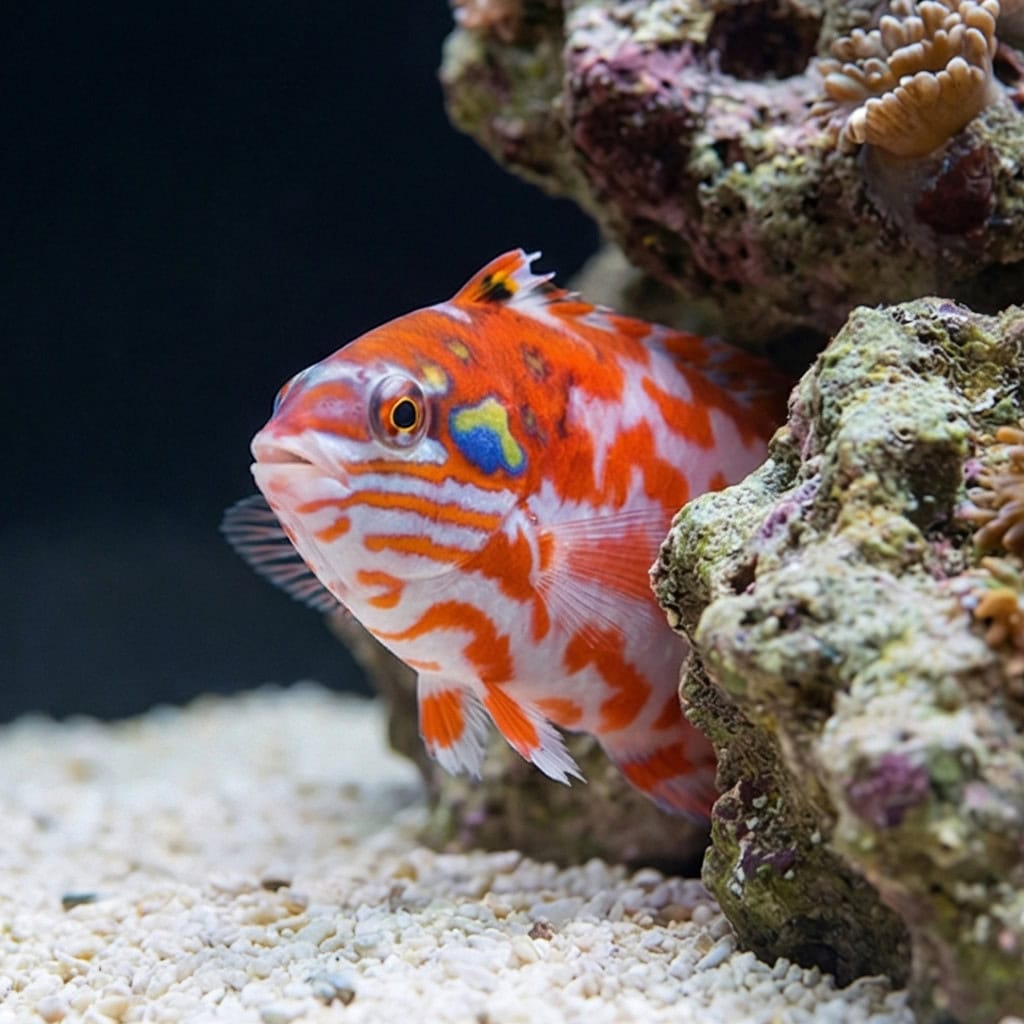
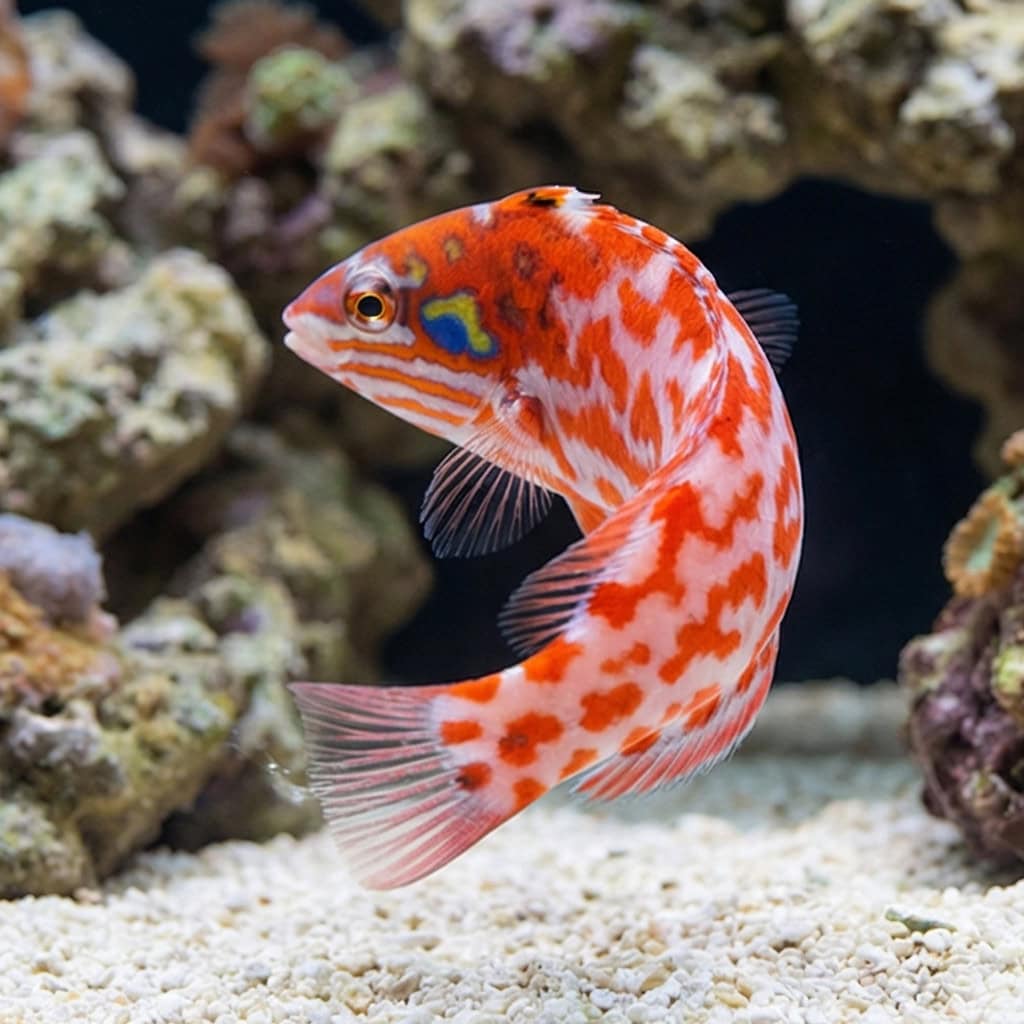
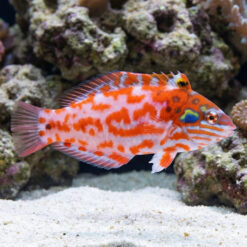
The Choati Wrasse (Macropharyngodon choati) is an Australian leopard wrasse known for a pale body with irregular orange-red blotches and a dark “ear” spot near the gill cover. It naturally works the sand-and-rock boundary and will use soft sand as a quick retreat, which is a hallmark of sand-sleeping wrasses.
What You’ll Observe:
- Low, cruising patrols over the substrate with frequent “pick-and-peck” hunting
- A consistent routine of diving into sand at lights-out and emerging with daytime light
- Short, focused bursts of searching around rubble and rock bases for tiny prey items
- Subtle pattern and color shifts as it settles into your tank’s daily rhythm
Provide a mature reef with fine sand and plenty of open sand lanes alongside rockwork so it can forage naturally and bury when it wants to reset. Offer small meaty foods multiple times daily, and expect some individuals to take several days to fully convert to prepared frozen options. A snug lid helps keep an active wrasse where it belongs, and steady conditions lead to confident daytime foraging.
How long is it normal for a Choati Wrasse to stay buried after introduction?
It’s common for sand-sleeping wrasses to disappear for a few days, and some take about a week before you see a consistent daily routine.
Will it take frozen foods right away?
Some begin eating prepared foods quickly, while others respond best after repeated small offerings spread through the day, especially when the tank already has natural microfauna to hunt.
Does it need sand in quarantine?
Many hobbyists use a small, removable container of fine sand so the wrasse can bury normally without making the whole quarantine tank hard to keep clean.
Can I keep more than one leopard wrasse together?
It’s usually most successful when added together and given multiple “burial zones,” so each fish can settle into its own space without being crowded.
Why does it spend so much time scanning the sand even after it’s eating?
That constant inspecting is normal for Macropharyngodon—prepared foods become a major diet item, but the fish still spends the day hunting tiny live snacks between meals.
Hand-selected for vibrant color and active behavior—arrives ready to thrive in your reef.
Recently viewed products
Out of stock
Choati Wrasse (Macropharyngodon choati)
Starting at: $321.99
This product has multiple variants. The options may be chosen on the product page