
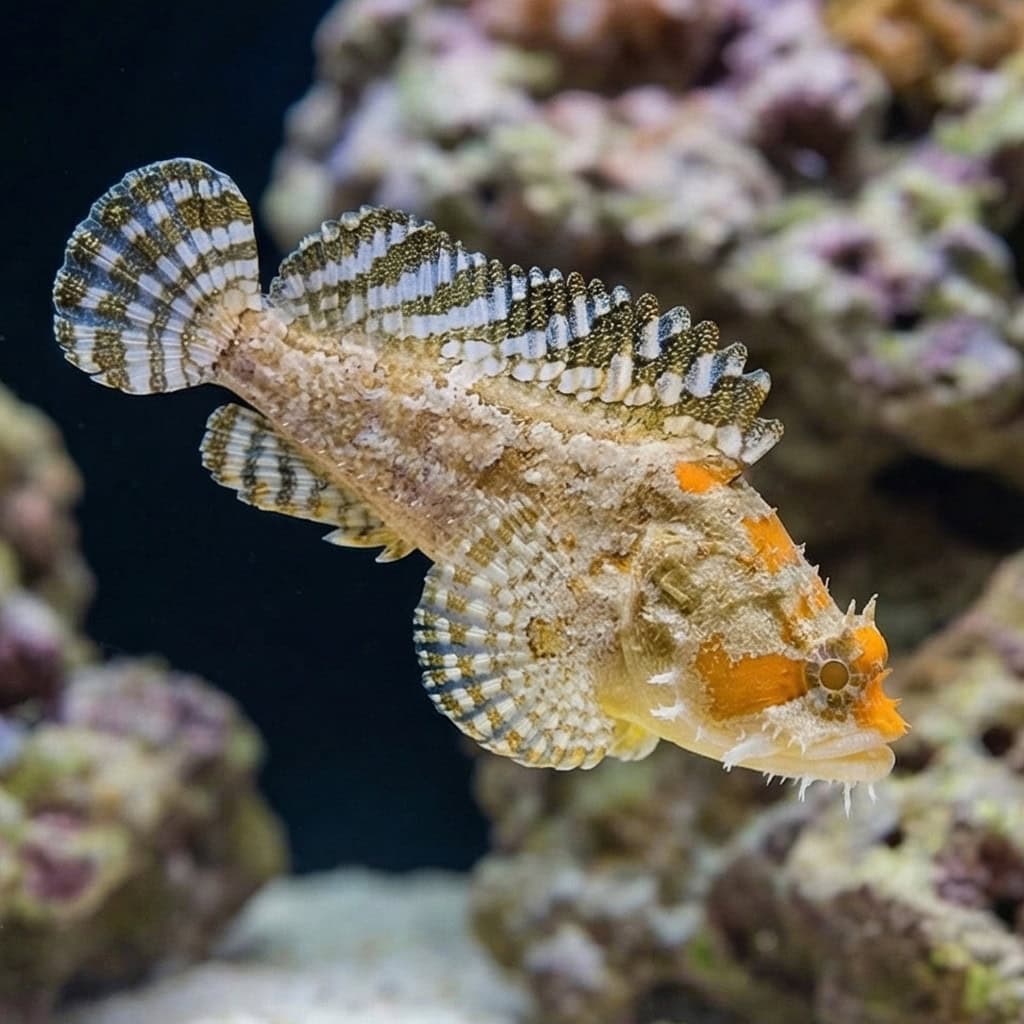
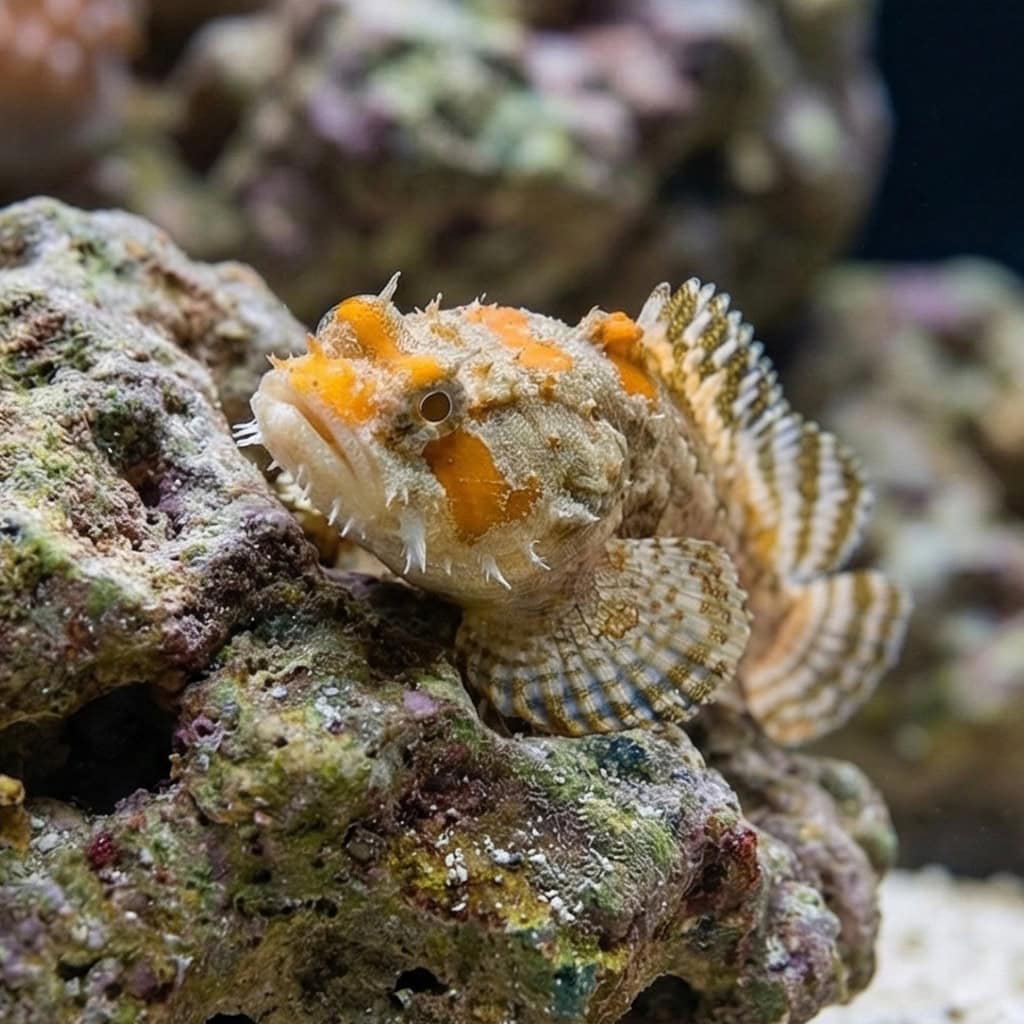
Colored Toadfish
Halophryne sp.
| Stock | Variations | Price | Quantity |
|---|
Every order ships with our standard 3-hour live arrival guarantee. Need more time? Add our 5-Day Guarantee at checkout.
Full guarantee terms →Ships Monday – Thursday for next-day arrival at your nearest FedEx Hold location — typically ready by 9 AM. We monitor every delivery.
Shipping details →
Monday – Friday 8 AM – 9 PM
Saturday 12 PM – 4 PM
Sunday 12 PM – 9 PM
Healthy, stable animals from vetted suppliers — inspected before packing, shipped overnight. Decades of experience built this model so we can deliver premium livestock at 30%+ less than you'd pay elsewhere.
| Care Level | Moderate |
|---|---|
| Temperament | Semi-Aggressive |
| Reef Safe | With Caution |
| Functional Benefit | Ornamental Only |
| Diet Type | Carnivore |
| Mininum Tank Size | 55 gallons |
| Max Size | 10 inches |
| Temperature | 72–78°F |
| pH Range | 8.1–8.4 |
| Specific Gravity | 1.022–1.025 |
Colored Toadfish (Halophryne sp.) is a bottom-dwelling ambush predator with a broad, “toad-like” head and mottled patterning meant to blend into sand and rock. In a marine aquarium it spends much of the day settled into the substrate or tucked under ledges, watching the open water from a fixed perch.
What You’ll Observe:
- Long “sit-and-wait” periods where it stays planted in one spot, then short bursts of movement to reposition or strike at food
- A strong preference for a favorite cave, overhang, or sand pocket it returns to after feeding
- Feeding behavior that looks like a quick inhale—food disappears in a single rapid gulp
- Occasional “redecorating,” where it nudges sand and rubble to improve its resting spot
To succeed, provide a stable, fully-cycled tank with sand or fine rubble and sturdy rockwork that creates low, shaded hiding areas. Offer meaty frozen foods (shrimp, krill, clam, or marine fish pieces) using tongs or by placing food close to its resting spot so it can feed confidently. Pair it with tankmates that are too large to be swallowed and that won’t constantly crowd its chosen hiding area.
How do I help a toadfish switch from live food to frozen?
Many keepers do best by offering small, scent-rich pieces (raw shrimp or marine fish) placed right at its resting spot, then repeating at consistent feeding times so it learns the routine.
Is it normal for a toadfish to “do nothing” most of the day?
Yes—this is typical ambush-predator behavior. In an aquarium, you’ll often see the most activity around feeding time or when lighting changes.
Why does it keep moving sand or wedging itself under rocks?
This is normal “nesting” behavior where it improves its cover and comfort. A stable rock structure and a sand/rubble zone give it safe options to settle in.
Can I keep ornamental shrimp or small cleanup crew with it?
Some individuals ignore larger snails, but small shrimp and tiny crabs are often treated like food; choose sturdier cleanup options if you want invertebrates in the same system.
How often should I feed once it’s eating prepared foods reliably?
A consistent schedule works best—most owners settle into modest, regular portions rather than large meals, adjusting based on body condition and how quickly food is taken.
Shipped with pure oxygen and temperature control so it arrives stress-free and ready to eat.
Recently viewed products