
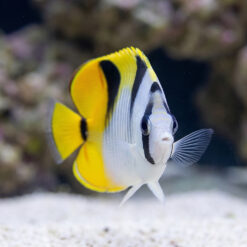
Double Saddle Butterfly
Chaetodon falcula
Original price was: $407.99.$213.99Current price is: $213.99.
| Stock | Variations | Price | Quantity | |
|---|---|---|---|---|
| Out of Stock | 2.25" or smaller - Indian Ocean | Original price was: $358.99.$188.99Current price is: $188.99. | Email me | |
| Only 8 left | 2.25 - 3.5" - Indian Ocean | Original price was: $407.99.$213.99Current price is: $213.99. |
-
+
|
|
| Out of Stock | 3.5 - 4.75" - Indian Ocean | Original price was: $471.99.$247.99Current price is: $247.99. | Email me |
Every order ships with our standard 3-hour live arrival guarantee. Need more time? Add our 5-Day Guarantee at checkout.
Full guarantee terms →Ships Monday – Thursday for next-day arrival at your nearest FedEx Hold location — typically ready by 9 AM. We monitor every delivery.
Shipping details →
Monday – Friday 8 AM – 9 PM
Saturday 12 PM – 4 PM
Sunday 12 PM – 9 PM
Healthy, stable animals from vetted suppliers — inspected before packing, shipped overnight. Decades of experience built this model so we can deliver premium livestock at 30%+ less than you'd pay elsewhere.
| Care Level | Moderate |
|---|---|
| Temperament | Peaceful |
| Reef Safe | No |
| Functional Benefit | Ornamental Only |
| Diet Type | Carnivore |
| Mininum Tank Size | 90 gallons |
| Max Size | 8 inches |
| Temperature | 72–78°F |
| pH Range | 8.1–8.4 |
| Specific Gravity | 1.022–1.025 |
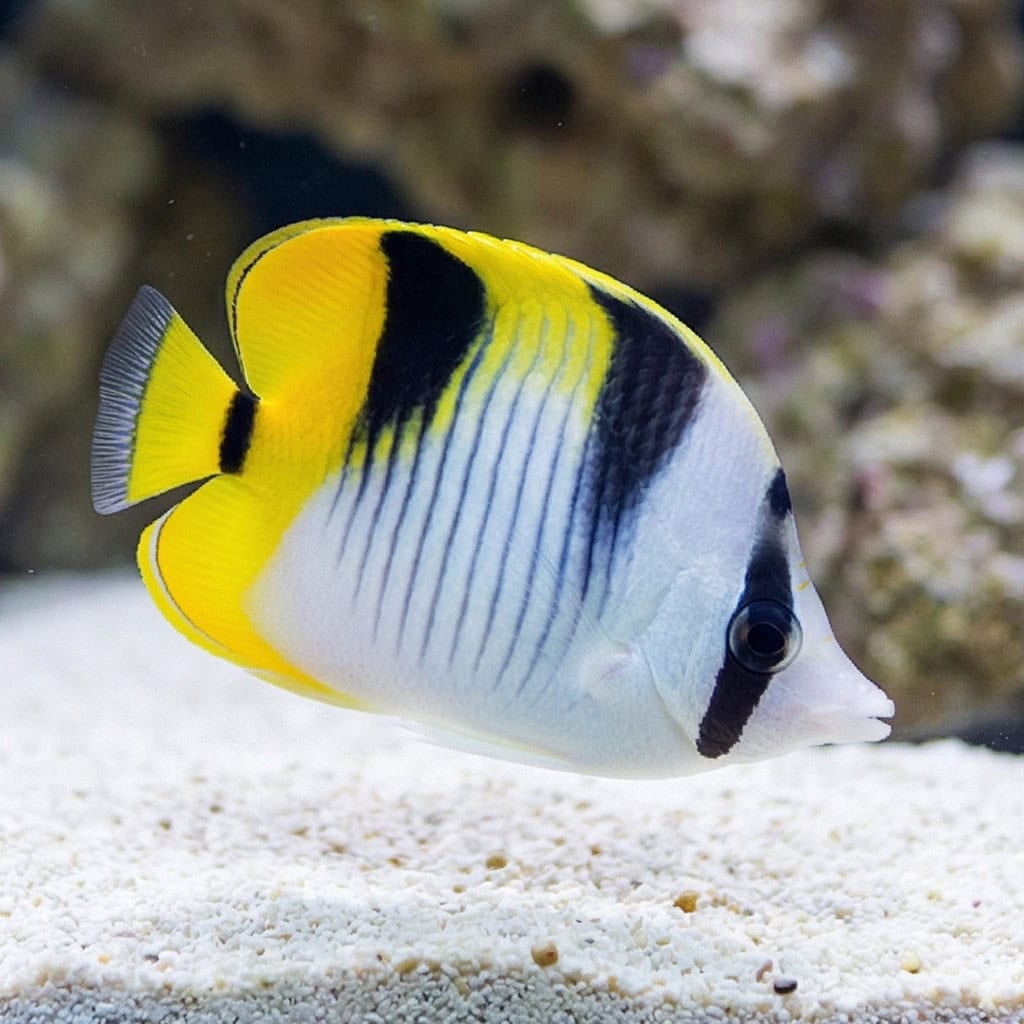
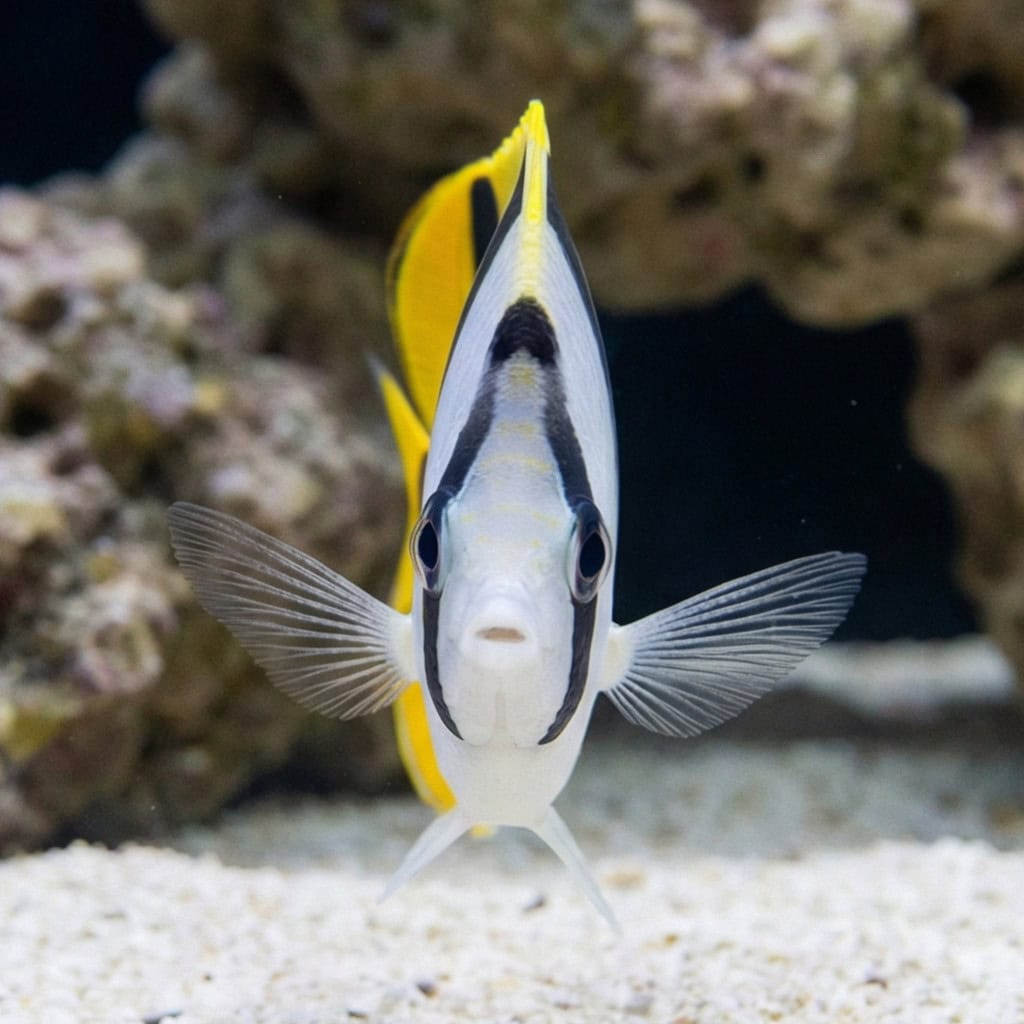
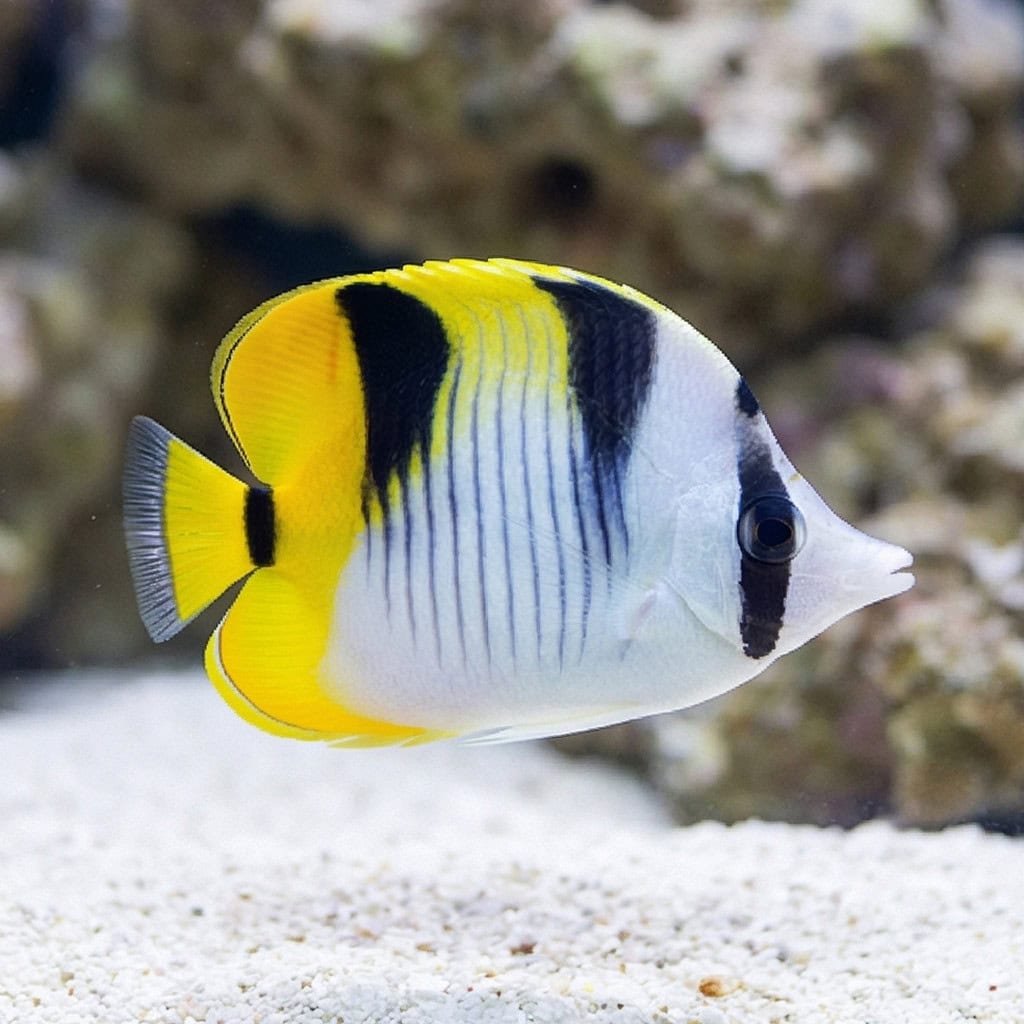
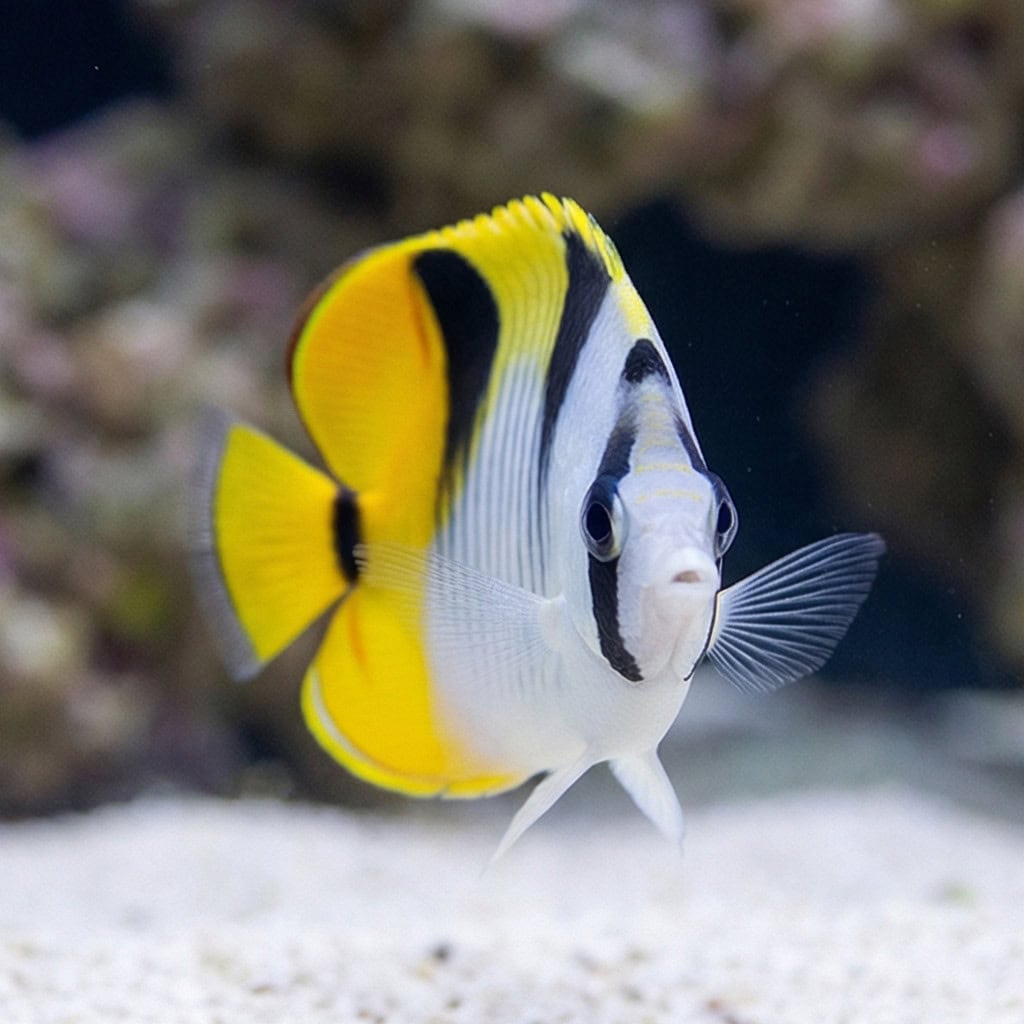
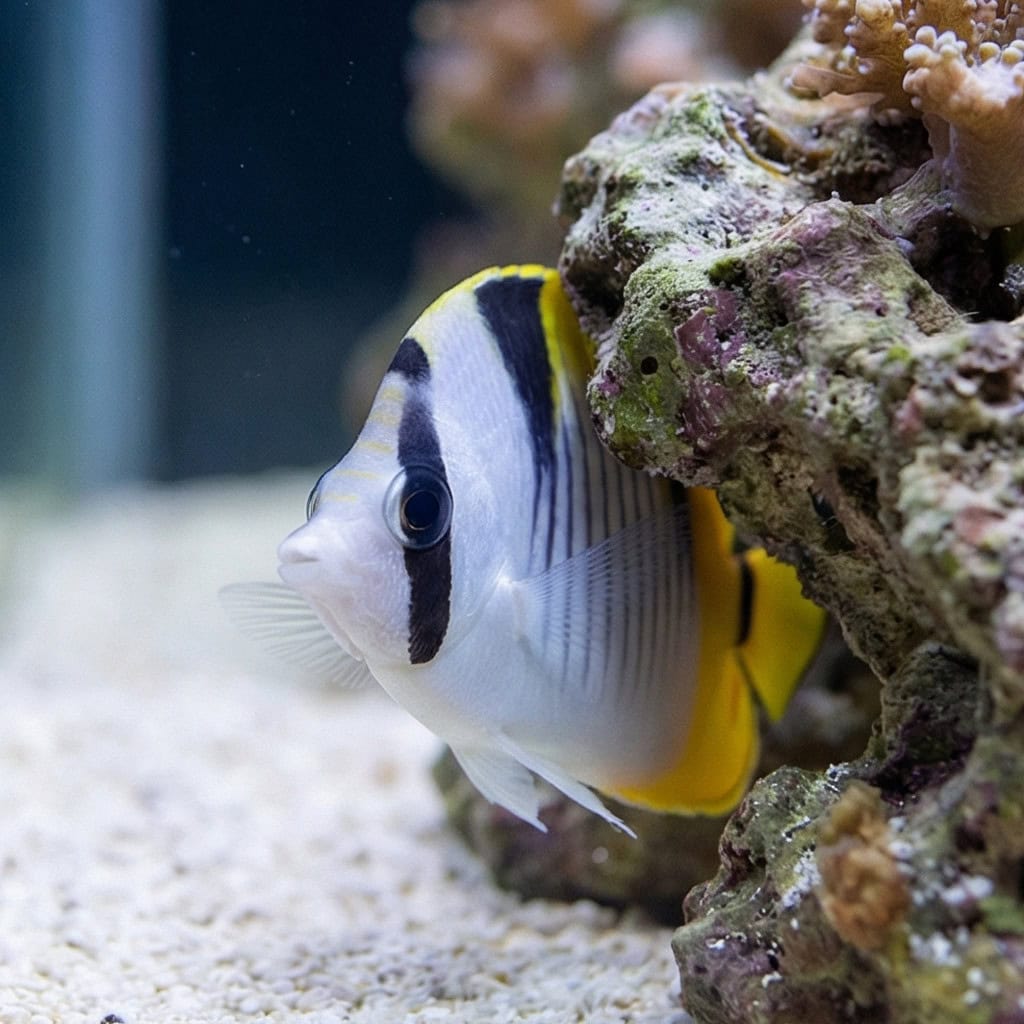
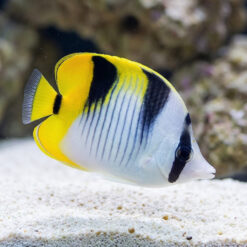
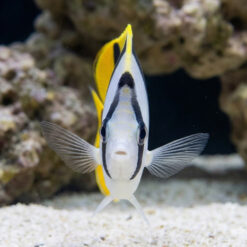
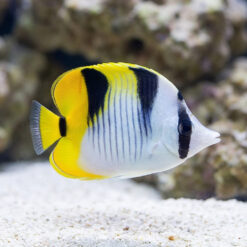
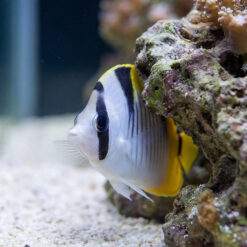
The Double Saddle Butterfly (Chaetodon falcula) is a butterflyfish with a white body lined in fine dark stripes and two bold black “saddles” along the back. Yellow edging on the dorsal and anal fins gives it a high-contrast look that stands out in fish-only and large reef systems.
What You’ll Observe:
- Cruises open areas of the aquarium, then turns to inspect rockwork and surfaces up close
- Often settles into a predictable route and becomes most active when food is introduced
- Commonly shows pair-oriented behavior, staying close to a preferred area and tankmate
- Spends time “testing” spots with quick pecks as it explores the tank
To do well long-term, provide open swimming room with structured rockwork so it can move between cover and open water. Offer a varied mix of small meaty foods (like mysis, finely chopped seafood, and quality frozen blends) on a consistent schedule so it learns where food arrives. Stable, established systems help this species settle into a steady daily routine.
Can it be kept with soft corals if you want a “mostly reef” look?
Some keepers report better results in mixed setups focused on soft corals, while treating SPS/LPS as higher-interest targets; a well-fed fish in a large, established aquarium tends to spend more time grazing rockwork.
What foods get the best first response during the first week?
Many hobbyists start with highly scented frozen options (mysis, clam, shrimp) and feed smaller portions more often so the fish can recognize the feeding zone quickly.
Is it normal for it to peck at rock and equipment all day?
Yes—many butterflyfish constantly inspect surfaces for tiny invertebrates, and that “searching” behavior often increases as it becomes comfortable and starts mapping the tank.
Can you keep two together without constant chasing?
Pairs are most successful when added at the same time and given enough space to establish a shared route; otherwise, many hobbyists stick with a single specimen as the centerpiece.
Does it usually help with Aiptasia?
Reports are mixed; some butterflies sample pest anemones while others ignore them, so most aquarists treat any Aiptasia-eating as a bonus rather than a guarantee.
We work with trusted suppliers who keep our specimens healthy and well-fed before shipping.
Recently viewed products