Dwarf Zebra Lionfish
Dendrochirus zebra
Price range: $37.99 through $106.99
| Stock | Variations | Price | Quantity | |
|---|---|---|---|---|
| Only 1 left | 4" or larger - Venomous - Indo-Pacific | Original price was: $203.99.$106.99Current price is: $106.99. |
-
+
|
|
| Only 6 left | 2 - 3" - Venomous - Indo-Pacific | Original price was: $84.99.$44.99Current price is: $44.99. |
-
+
|
|
| Only 7 left | 3 - 4" - Venomous - Indo-Pacific | Original price was: $110.99.$58.99Current price is: $58.99. |
-
+
|
|
| Only 2 left | 2" or smaller - Venomous - Indo-Pacific | Original price was: $70.99.$37.99Current price is: $37.99. |
-
+
|
Every order ships with our standard 3-hour live arrival guarantee. Need more time? Add our 5-Day Guarantee at checkout.
Full guarantee terms →Ships Monday – Thursday for next-day arrival at your nearest FedEx Hold location — typically ready by 9 AM. We monitor every delivery.
Shipping details →
Monday – Friday 8 AM – 9 PM
Saturday 12 PM – 4 PM
Sunday 12 PM – 9 PM
Healthy, stable animals from vetted suppliers — inspected before packing, shipped overnight. Decades of experience built this model so we can deliver premium livestock at 30%+ less than you'd pay elsewhere.
| Care Level | Moderate |
|---|---|
| Temperament | Semi-Aggressive |
| Reef Safe | No |
| Functional Benefit | Ornamental Only |
| Diet Type | Carnivore |
| Mininum Tank Size | 55 gallons |
| Max Size | 8 inches |
| Temperature | 72–78°F |
| pH Range | 8.1–8.4 |
| Specific Gravity | 1.022–1.025 |
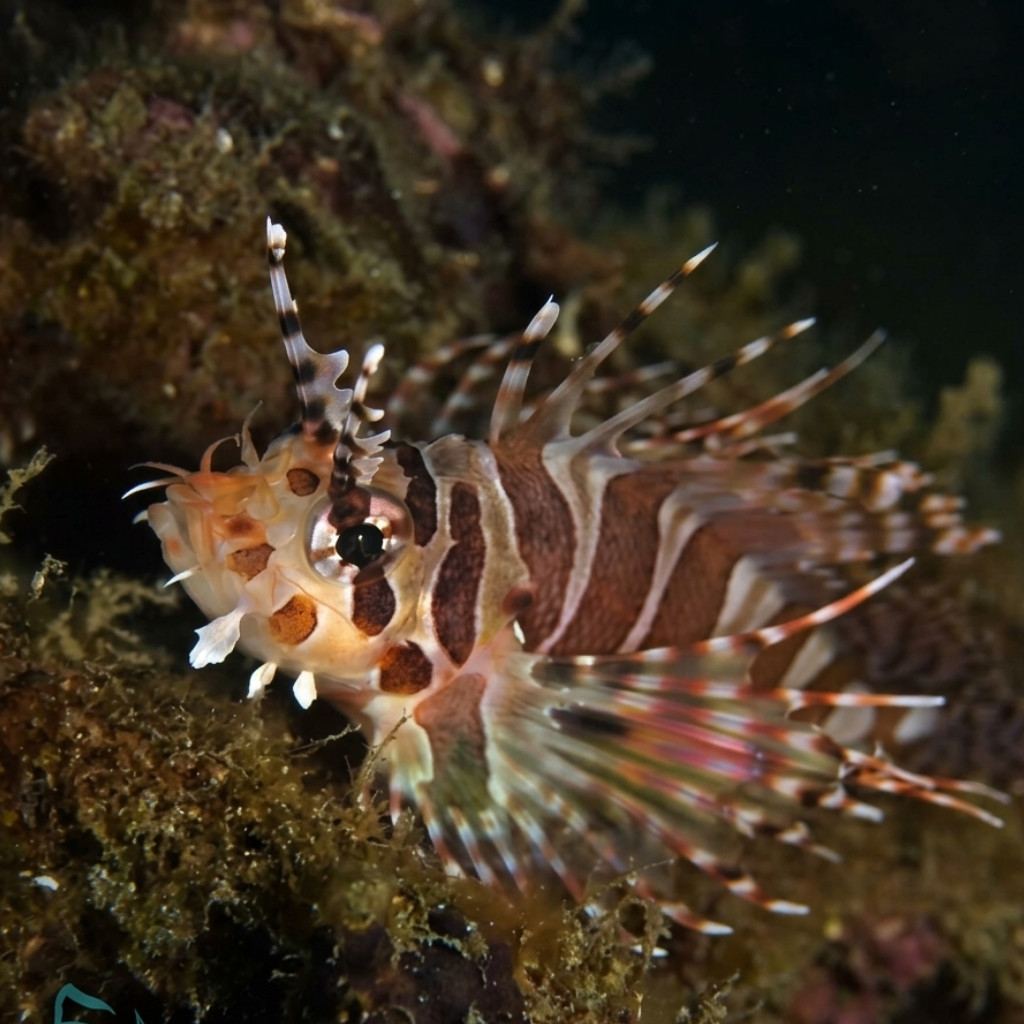
The Dwarf Zebra Lionfish (Dendrochirus zebra) is a compact dwarf lionfish with red, white, and black vertical striping, broad fan-like pectoral fins, and tall dorsal spines. It’s an Indo-West Pacific species that often perches on rockwork and uses caves and ledges as “resting” spots between short, deliberate patrols.
What You’ll Observe:
- Perching under overhangs, then moving out when the room lights dim or when food is offered
- Slow, stalking movements followed by very fast feeding strikes
- “Fin-fanning” displays when it hovers in place or repositions on the rockwork
- A consistent routine around feeding time, often appearing from the same cave/ledge
To succeed, provide multiple shaded caves and overhangs plus some open space for short hunting runs. Offer meaty foods like thawed shrimp, krill, and marine fish flesh with feeding tongs; many specimens start by taking live saltwater feeder shrimp and then transition to frozen foods. Maintain efficient filtration and steady maintenance so the tank stays clean after messy feedings.
Do they tend to be more active at dusk, and is daytime “perching” normal?
Many keepers observe them resting under ledges during the day and becoming more active when lighting is lower or when food is presented.
What’s a reliable way to transition one onto frozen foods?
Start with a strong feeding response (often using live shrimp), then offer thawed items on a feeding stick/tongs and gradually reduce live offerings as frozen is taken consistently.
How do I judge whether a fish or shrimp is “too small” to keep with it?
A good rule is mouth size: if a tankmate can fit in the lionfish’s mouth, it may be viewed as food once the lionfish is settled in.
Can I keep two together long-term?
Some hobbyists report success when both fish have plenty of separate perches and are fed in a way that reduces competition, especially when introduced at similar sizes.
What’s the best way to work in the tank safely during maintenance?
Use long tools (tongs/scrapers), keep track of where the fish is perched before placing your hands in, and move slowly and deliberately around its resting spots.
Each fish is checked for strong appetite and activity before we approve it for your tank.
Recently viewed products